
半导体显示

Search documents
翰博高新(301321) - 2026年3月13日投资者关系活动记录表
2026-03-16 07:51
Group 1: Company Overview - The company aims to become the preferred partner in the semiconductor display industry, providing comprehensive solutions including optical design, light guide plate design, precision mold design, and intelligent manufacturing [2] - The main products include backlight display modules and related components, applicable in laptops, tablets, desktop displays, automotive displays, medical displays, industrial control displays, and VR devices [3] Group 2: Product Development and Market Position - The company has developed technologies for lightweight, narrow bezel, irregular screens, and high-brightness backlight display modules, achieving mass production [3] - Increased R&D investment is focused on Mini-LED technology, enhancing reliability and stability in display modules [3] - The company has a comprehensive understanding of customer needs and market trends, which aids in product development and enhances competitiveness [3] Group 3: Share Repurchase and Reduction Plan - As of March 11, 2026, the company has repurchased 1,864,350 shares, accounting for 1% of total share capital, with total proceeds of approximately ¥42.82 million [4] - The share repurchase plan is subject to market conditions and may involve uncertainties regarding timing, quantity, and price [5] Group 4: Acquisition Progress - The company established a joint venture, Chip Dongjin, with a registered capital of ¥440 million, holding 45.4545% of the shares [6] - Chip Dongjin plans to acquire 70% of a special purpose company related to Korean Dongjin for $142.1 million, which includes 100% equity of nine target companies and 24 related patents [6] Group 5: Financial Performance and Outlook - The company expects a net loss of ¥55 million to ¥90 million for 2025, with a significant reduction in loss compared to 2024 [7] - Revenue for the first three quarters of 2025 reached ¥2.424 billion, a year-on-year increase of 44.06%, indicating strong growth momentum [8] - Despite increased manufacturing costs due to new investment projects, the company is focused on cost reduction and efficiency improvements, with a gross profit increase of approximately ¥100 million [8]
港股IPO/奠基,两家显示设备公司传新动态
WitsView睿智显示· 2026-03-16 07:30
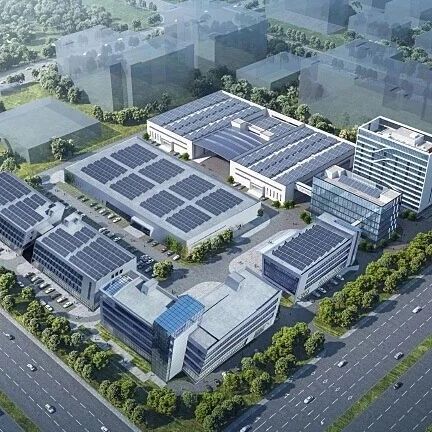
Core Viewpoint - Recent developments in the display and semiconductor equipment sector include the IPO application of chip manufacturer Chip Qu Microelectronics and the establishment of a semiconductor front-end measurement equipment smart manufacturing base by Zhongjia Weishi in Chengdu [2][3][6]. Group 1: Chip Qu Microelectronics - On March 15, Chip Qu Microelectronics submitted its IPO application to the Hong Kong Stock Exchange, focusing on direct imaging equipment and direct-write lithography equipment for semiconductor manufacturing [3]. - Financial projections for Chip Qu Microelectronics indicate revenues of 829 million, 954 million, and 1.408 billion yuan for 2023, 2024, and 2025 respectively, with gross profits of 339 million, 339 million, and 551 million yuan, and profit margins of 21.6%, 16.8%, and 20.6% [4]. - The company's revenue structure shows that PCB equipment currently dominates, with projected revenue from PCB direct imaging equipment reaching 1.08 billion yuan in 2025, accounting for 76.7% of total revenue, while semiconductor equipment revenue is expected to grow by 112.5% to 233 million yuan, making up 16.6% of total revenue [5]. Group 2: Zhongjia Weishi - On March 16, Zhongjia Weishi held a groundbreaking ceremony for its semiconductor front-end measurement equipment smart manufacturing base in Chengdu, which will serve as a core engine for its international strategy [6][8]. - The company specializes in the development, production, and sales of optical inspection machines (AOI) and laser cutting machines for the TFT-LCD, OLED, and semiconductor industries, with existing orders exceeding 500 million yuan from major panel manufacturers [8]. - Zhongjia Weishi is also expanding its presence in South China, with a new facility in Bao'an District expected to produce hundreds of high-end inspection devices annually, contributing over 1 billion yuan in output value to the local semiconductor industry over the next three years [9].


惠科IPO注册生效!
WitsView睿智显示· 2026-03-15 11:54
Core Viewpoint - The article discusses the approval of Huike Co., Ltd.'s IPO registration by the China Securities Regulatory Commission, highlighting the company's plans to raise approximately 8.5 billion yuan for various projects and operational needs [2][4]. Group 1: IPO Details - Huike plans to raise around 8.5 billion yuan, with funds allocated for projects including 2.5 billion yuan for OLED R&D upgrades, 3 billion yuan for Oxide R&D and industrialization, 2 billion yuan for Mini LED smart manufacturing, and 1 billion yuan for working capital and bank loan repayment [4]. - The approval for the IPO is valid for 12 months from the date of registration, and the company must report any significant events to the Shenzhen Stock Exchange before the issuance is completed [4]. Group 2: Business Performance - For the period from January to September 2025, Huike reported revenue of 29.238 billion yuan, a slight decrease of 0.36% year-on-year, attributed to increased IT panel sales offsetting declines in TV panel sales [5]. - The company anticipates revenue of 9.762 to 10.362 billion yuan for the first quarter of 2026, representing a year-on-year growth of 0.68% to 6.87%, while net profit attributable to shareholders is expected to decline by 14.81% to 7.57% [5].
刚刚!IPO审1过1
梧桐树下V· 2026-03-03 13:06
Core Viewpoint - Huike Co., Ltd. has received approval from the Shenzhen Stock Exchange for its main board IPO application, indicating a positive outlook for the company's future growth and market presence [1]. Group 1: Company Overview - Huike Co., Ltd. specializes in the research, manufacturing, and sales of semiconductor display panels and smart display terminals, with products used in various applications including consumer electronics and industrial control [4]. - The company was established in December 2001 and transitioned to a joint-stock company in April 2016, currently having a total share capital of 6,568,051,262 shares [4]. Group 2: Shareholding Structure - The controlling shareholder, Huike Investment Holdings, owns 298,316.0458 million shares, accounting for 45.42% of the total share capital before the IPO [5]. - Wang Zhiyong, the actual controller, holds a combined voting power of 52.31% through Huike Investment Holdings and Shenzhen Huitong, influencing major decision-making processes [5]. Group 3: Financial Performance - The company's revenue for the reporting period was 2,696,450.99 million, 3,582,448.53 million, 4,028,182.77 million, and 1,899,719.99 million, with net profits (deducting non-recurring gains and losses) of -333,294.05 million, 144,830.42 million, 256,961.44 million, and 157,776.47 million respectively [6]. - As of June 30, 2025, total assets amounted to 10,322,240.53 million, with equity attributable to shareholders of the parent company at 2,310,907.44 million [7]. Group 4: Listing Standards - The company has chosen to apply the listing standards under the Shenzhen Stock Exchange's revised rules, which require a market value of no less than 10 billion and a positive net profit in the most recent year, along with an annual revenue of at least 1 billion [8]. Group 5: Future Performance Inquiry - The company is expected to address inquiries regarding the stability of its future operating performance, considering industry cycles, technological advancements, market competition, and its competitive advantages [9].
估值超百亿,即将冲击主板IPO!
Sou Hu Cai Jing· 2026-02-27 23:41
Core Viewpoint - Huike Co., Ltd. is set to undergo its initial public offering (IPO) review on March 3, 2026, by the Shenzhen Stock Exchange Listing Review Committee, aiming to strengthen its position in the semiconductor display sector and enhance its global brand influence [1][3]. Company Overview - Huike Co., Ltd. is a leading technology company in the semiconductor display field, focusing on the research, manufacturing, and sales of semiconductor display panels and smart display terminals [3]. - The company has over 20 years of experience in the display sector and is recognized as one of the top three large-size LCD panel manufacturers globally [4]. Market Position - In 2024, Huike ranked third in global TV panel shipment area, fourth in display monitor panel shipment area, and third in smartphone panel shipment area [4]. - The company holds a significant lead in the 85-inch and larger display panel market, being the top supplier in that category [4]. Financial Performance - The company's revenue for the reporting period was 26,964.51 million yuan, 35,824.49 million yuan, 40,281.83 million yuan, and 18,997.20 million yuan, with net profits of -2,092.54 million yuan, 2,845.08 million yuan, 3,650.45 million yuan, and 2,218.56 million yuan respectively [6]. - As of June 30, 2025, total assets amounted to 103,222.41 million yuan, with a debt-to-asset ratio of 66.87% [7]. Shareholding Structure - Huike Investment holds 298,316.05 million shares, accounting for 45.42% of the total share capital before the IPO, and will decrease to 40.88% post-issuance [4][5]. - The company plans to issue 72,978.35 million shares, which will constitute 10% of the total shares after the IPO [5]. Use of Proceeds - The funds raised from the IPO will be allocated to several projects, including: - 250 million yuan for the new OLED R&D upgrade project - 300 million yuan for the Oxide R&D and industrialization project - 200 million yuan for the Mini-LED smart manufacturing project - 100 million yuan for working capital and bank loan repayment [8]. Customer Sales - In the first half of 2025, the top five customers contributed 730.61 million yuan, representing 38.46% of total revenue, with TCL Group, Samsung Group, and Hisense Group being the largest clients [8][9].
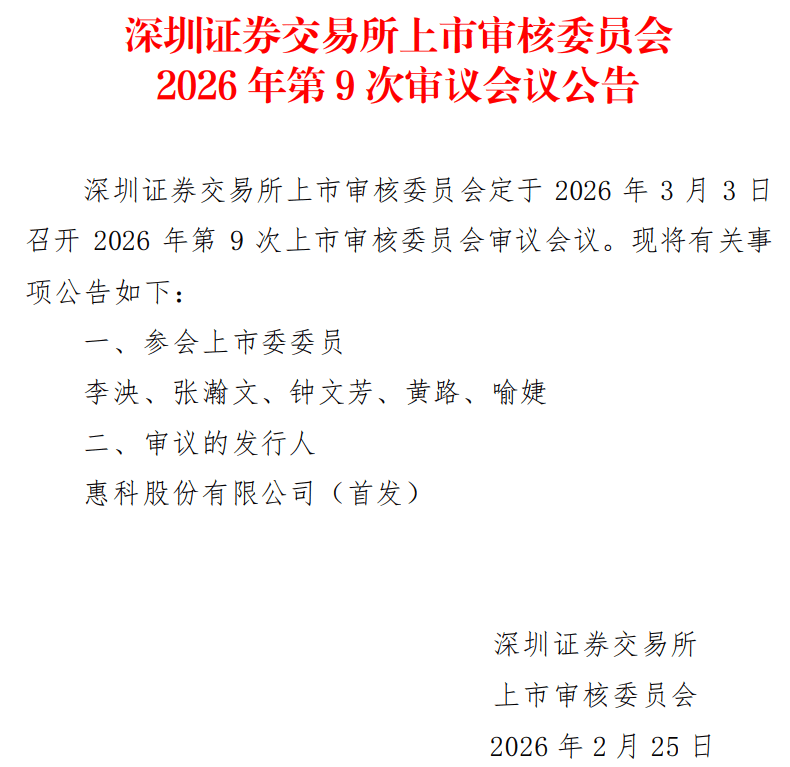
TCL华星第8.6代印刷OLED产线配套项目启动
WitsView睿智显示· 2026-02-11 04:34
Core Viewpoint - Guangzhou Industrial Control Group's subsidiary, Guanggang Gas, will supply electronic gases for TCL Huaxing's 8.6-generation printed OLED display panel production line project, known as the "t8 project" [1][2]. Group 1: TCL Huaxing t8 Project - The TCL Huaxing t8 project has a total investment of 29.5 billion yuan and will have a processing capacity of approximately 22,500 glass substrates measuring 2290mm × 2620mm per month upon completion [2]. - The production line utilizes TCL Huaxing's self-developed, cutting-edge 8.6-generation substrate specifications and inkjet printing technology, which is significant for advancing China's semiconductor display industry [2]. Group 2: Role of Electronic Gases - Electronic gases are crucial throughout the manufacturing process of semiconductor display panels, impacting thin film deposition, etching, and packaging, with their purity and stability directly affecting product yield and performance [2]. - Guanggang Gas will provide high-quality, high-purity electronic gas solutions for the t8 project, marking a deepening of the collaboration between Guanggang Gas and TCL Huaxing, which has lasted for 15 years [2]. Group 3: Other Projects in the Industry - Besides TCL Huaxing, projects for gas supply to BOE and Visionox's 8.6-generation OLED production lines are also progressing: - In May 2025, Messer's bulk gas station system project will be established in Hefei High-tech Zone, with a total investment of 340 million yuan, expected to start production in the second half of 2026 [4]. - In June 2025, a gas supply project for BOE's Chengdu 8.6-generation AMOLED production line will commence, with an initial investment of approximately 250 million yuan [4].


TCL科技:领先科技,和合共生-20260203
China Post Securities· 2026-02-03 10:25
Investment Rating - The investment rating for the company is "Buy" and it is maintained [1] Core Insights - The company demonstrates strong growth momentum with a revenue increase of 10.50% year-on-year, reaching 1360.65 billion yuan in the first three quarters of 2025. The net profit attributable to shareholders increased by 99.75% to 30.47 billion yuan, while the net profit excluding non-recurring items surged by 233.33% to 24.29 billion yuan [4] - The semiconductor display business shows multiple breakthroughs, with significant growth in both large and small-sized displays. The market share for large-sized displays increased by 5 percentage points to 25%, and the small-sized display segment has become a core growth engine [5] - The company is effectively integrating its T11 production line and optimizing its product matrix and capacity configuration, while maintaining a steady operational rhythm in its OLED business, ranking fourth globally in flexible OLED smartphone shipments [5][6] Financial Performance - The company is expected to achieve revenues of 1903 billion yuan, 2236 billion yuan, and 2636 billion yuan for the years 2025, 2026, and 2027 respectively. The net profit attributable to shareholders is projected to be 43.2 billion yuan, 80.0 billion yuan, and 107.7 billion yuan for the same years [7] - The financial metrics indicate a significant recovery, with a projected EBITDA of 45105.49 million yuan in 2025, increasing to 60952.89 million yuan by 2027 [10]
隆华科技:在半导体相关领域主要围绕金属靶材和ITO靶材两大产品线展开布局
Zheng Quan Ri Bao Zhi Sheng· 2026-02-01 13:12
Core Viewpoint - Longhua Technology is focusing on the semiconductor sector, particularly in metal and ITO target materials, with an emphasis on semiconductor display and photovoltaic applications [1] Group 1: Product Focus - The company is strategically positioning itself in the metal target material sector to meet the diverse needs of semiconductor display technologies, which are evolving rapidly due to advancements like foldable screens and high-end automotive displays [1] - There is a growing demand for reflective layer materials, large-size molybdenum targets, and molybdenum alloy targets suitable for 4K/8K ultra-high-definition displays, indicating a trend towards highly specialized target materials [1] - Longhua Technology has completed its layout for metal targets in emerging display technologies such as Micro LED and Mini LED, aiming to seize market opportunities [1] Group 2: Future Plans - In the integrated circuit sector, the company plans to focus on storage-related target materials and is currently in discussions with partners to advance this initiative [1] - Leveraging existing production equipment and technical foundations, the company has developed a certain level of technical reserves in this area, although it has not yet established a significant competitive advantage in specialized equipment and market channel development [1] - By 2025, the company intends to increase investments in the semiconductor field, particularly in the research and industrialization of storage target materials like molybdenum and copper [1] Group 3: Current Capabilities - The company has accumulated relevant technology in high-purity copper targets and has established a certain industrial chain foundation, although this business segment is currently smaller compared to display target materials, indicating substantial growth potential in the future [1]

专访王东升——时代潮流 国家需要
半导体行业观察· 2026-01-29 01:15
Core Viewpoint - The article emphasizes the importance of having the right direction in business, stating that difficulties can be overcome if the direction is correct, while self-doubt can lead to disastrous outcomes [1]. Group 1: Company Background - Xi'an Yiswei Materials has become the largest 12-inch silicon wafer manufacturer in mainland China, ranking first domestically and sixth globally, with a successful listing on the STAR Market on October 28, 2025 [5][29]. - The company aims to achieve profitability for its first factory by the second half of 2025 and for its second factory by the second half of 2027, with a goal of consolidated profitability by 2027 [28][29]. Group 2: Leadership Insights - Wang Dongsheng, the chairman of Yiswei, believes that the motivation for his second entrepreneurial venture is to align with "the trends of the times and national needs" [6][8]. - He highlights the importance of self-reliance and innovation in the semiconductor industry, emphasizing that true innovation requires foundational technology rather than mere assembly [7][8]. Group 3: Industry Context - The article discusses the evolution of China's industrial landscape over the past four decades, noting the transition from assembly-based industries to a focus on self-sustaining, innovative enterprises [6][7]. - Wang stresses that the semiconductor industry must overcome challenges posed by international trade tensions and technological barriers, advocating for a shift from reliance on external paths to innovative solutions [26][27]. Group 4: Regional Development - The article highlights the supportive role of the local government in Xi'an, which has fostered a conducive environment for Yiswei's growth, including successful financial backing and strategic collaboration [17][20]. - Wang expresses optimism about the potential for Xi'an to become a significant player in the semiconductor industry, similar to other major cities like Beijing and Shanghai [21][22]. Group 5: Future Aspirations - Yiswei aims to achieve a 50% share of its revenue from overseas markets, indicating a strategic focus on both domestic and international growth [29][31]. - The company is committed to addressing common industry challenges and positioning itself as a leader in the semiconductor sector through continuous technological innovation [19][27].

中韩经贸关系从垂直分工走向多层次水平合作
Di Yi Cai Jing· 2026-01-18 12:54
Core Insights - The trade relationship between China and South Korea has significant potential for growth, with South Korea being China's second-largest trading partner for two consecutive years [3][4]. Group 1: Trade Statistics - In 2022, China's total import and export value reached 45.47 trillion yuan (approximately 6.3 trillion USD), marking a year-on-year growth of 3.8% and maintaining its position as the world's largest trader for nine consecutive years [1]. - South Korea's total trade volume was 1.3414 trillion USD in 2022, with exports at 709.7 billion USD (up 3.8%) and imports at 631.7 billion USD (down 0.02%), resulting in a trade surplus of 78 billion USD [2]. - The bilateral trade volume between China and South Korea is projected to reach 2.37 trillion yuan by 2025, with a year-on-year growth of 1.7% [3]. Group 2: Economic Cooperation and Strategy - The South Korean government recognizes the necessity to shift its perception of bilateral economic cooperation, moving from a vertical division of labor to a more horizontal collaboration model [4]. - The "China-Korea Business Forum" held in Beijing emphasizes the importance of innovation in manufacturing, new consumer markets, and service industry cooperation [5]. - The Long Triangle region has become a significant hub for South Korean trade with China, accounting for about 40% of South Korea's trade with China, with Shanghai alone representing around 10% [9]. Group 3: Technological Collaboration - There is a strong potential for collaboration in emerging fields such as artificial intelligence, semiconductors, and new energy vehicles, as highlighted by industry leaders [6][7]. - The recent visit of the South Korean President to Shanghai underscores the importance of fostering an environment conducive to entrepreneurship and cross-border technological cooperation [10].