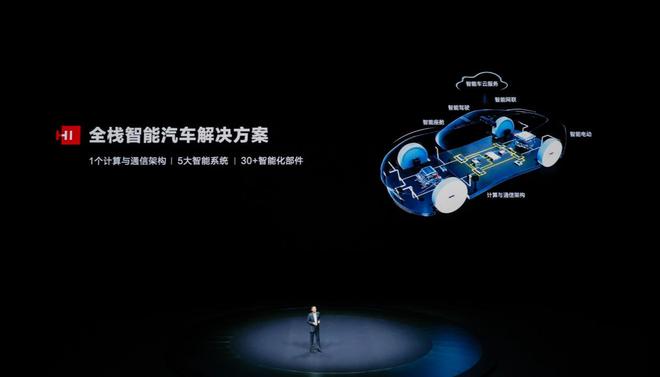
华为与车企合作模式

Search documents
汽车业务利润暴涨,华为越生越有?
3 6 Ke· 2025-12-04 10:26
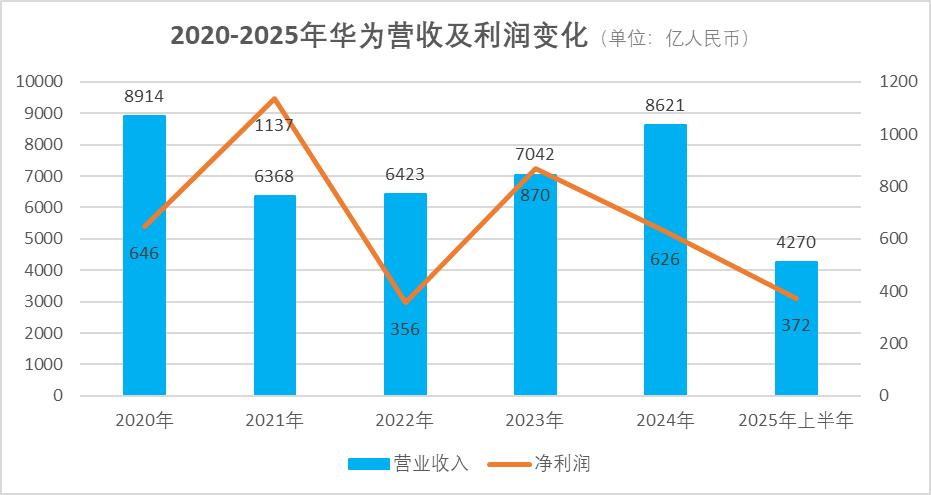
Core Insights - Huawei's collaboration with GAC and Dongfeng has led to the launch of the "Qijing" and "Yijing" brands, showcasing a competitive spirit among partners [1] - The monthly sales data for Hongmeng Zhixing reached 81,900 units, marking a record high and surpassing the monthly delivery ceiling for new car manufacturers [2] - Huawei's overall revenue for the first half of the year was 427.039 billion yuan, with a net profit of 37.195 billion yuan, reflecting a 3.95% year-on-year increase in revenue despite a 32% decline in net profit [4] Group 1: Huawei's Performance - The cumulative delivery of Hongmeng Zhixing surpassed one million units in October, achieving the fastest record among new forces in the automotive sector [4] - The automotive business unit (BU) reported a revenue of 27 billion yuan in the first half of the year, a 110% year-on-year increase, marking its first profitable period [4][5] - Huawei's strategy to enter the automotive market was aimed at compensating for declining smartphone sales, which appears to have been successful [4] Group 2: Competitive Dynamics - The introduction of the "Jing" series has intensified competition among Huawei's various brands, leading to concerns about internal competition and resource allocation [5][11] - The collaboration models between Huawei and car manufacturers vary, with Huawei taking on different roles from product definition to being a full-stack solution provider [7] - As more car manufacturers join Huawei's ecosystem, the resources and attention each brand receives may diminish, necessitating unique positioning to capture market share [11] Group 3: Challenges for Partner Car Manufacturers - Car manufacturers like BAIC Blue Valley and Jianghuai have seen their losses widen since partnering with Huawei, despite some achieving high gross margins [9] - The financial burden of sales service fees paid to Huawei impacts the net profit margins of these manufacturers, creating a paradox in their financial performance [9] - The competitive landscape is shifting as more traditional car manufacturers adopt Huawei's smart components, reducing the uniqueness of each brand [12]

“五界”之后又多“两境”:车企需要何种身份的华为?
Guan Cha Zhe Wang· 2025-11-22 10:00
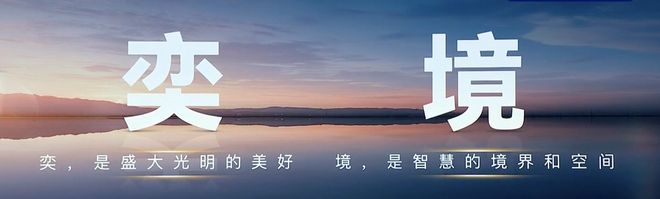
Core Insights - The future survival of automotive brands may hinge less on technology itself and more on the unique value that car manufacturers can offer as smart technology becomes standardized [12] Group 1: New Brand Launch - Huawei introduced two new high-end smart electric vehicle brands, "Yijing" and "Qijing," in collaboration with Dongfeng Motor and GAC Group, respectively [1] - These brands are the first results of a new cooperation model between Huawei and car manufacturers, alongside the existing "Five Realms" brands under the "Hongmeng Intelligent Driving" ecosystem [3] Group 2: Cooperation Models - There are three cooperation models between Huawei and car manufacturers: "Component Supply Model," "Smart Selection Car Model," and "HI Model" [3][5] - The "Component Supply Model" involves Huawei providing standardized components and technical solutions, while the "Smart Selection Car Model" allows for deeper collaboration, including product definition and marketing [5] - The "HI Model" offers a middle ground where Huawei provides comprehensive intelligent vehicle solutions without participating in product definition and marketing [5] Group 3: Brand Positioning and Challenges - The "Yijing" and "Qijing" brands will see Huawei participating more deeply in product definition and design compared to the HI Model, but car manufacturers will retain more autonomy in branding and production [6][10] - Concerns arise regarding the balance of power in collaborations, as some manufacturers fear losing brand identity when partnering with Huawei [6][8] - The "HI Model" has not achieved ideal market feedback, leading to questions about whether the new "境" brands can address these challenges [9][10] Group 4: Market Dynamics - As consumer attitudes shift towards advanced driving assistance and smart cockpit technologies, traditional manufacturers face pressure to enhance their smart capabilities [6] - The increasing complexity of collaboration models raises the challenge of maintaining brand differentiation and avoiding homogenization in the market [11] - The evolution of these partnerships reflects ongoing experimentation in the integration of automotive and technology sectors, necessitating a redefinition of boundaries as collaborations deepen [11]
广州车展观察|车企争相入局 华为“境”“界”赛马
Zhong Guo Jing Ji Wang· 2025-11-21 04:18
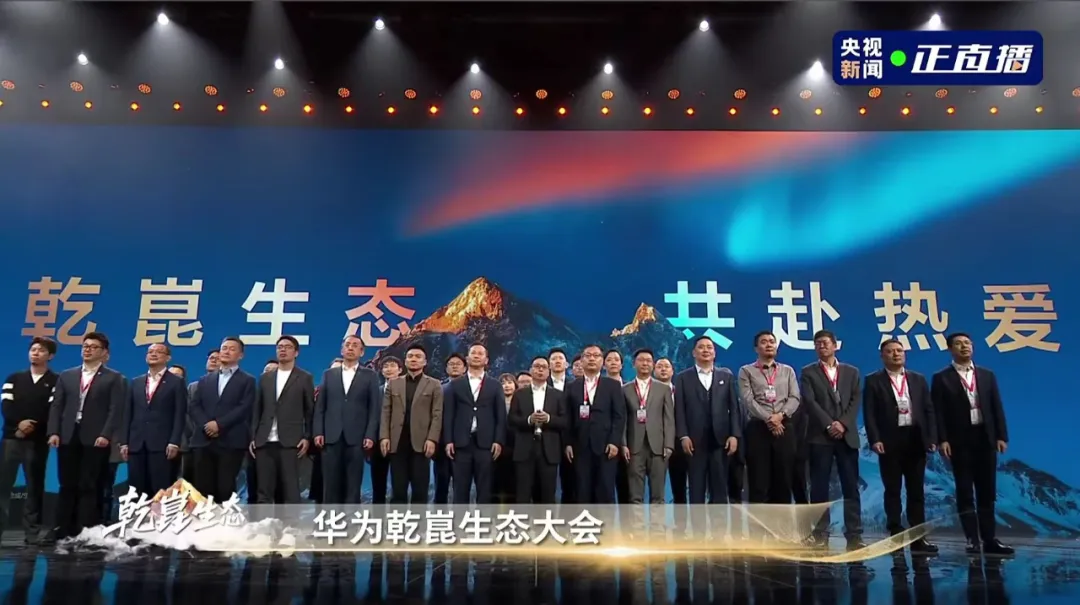
Core Insights - GAC Group and Huawei's collaboration on the "Qijing" brand marks a significant entry into the automotive market, showcasing Huawei's ambition in vehicle marketing and technology [1][4] - The competition between GAC's "Qijing" and Dongfeng's "Yijing" highlights the strategic positioning of Huawei's automotive business unit (BU) as it transitions from a supplier to a full-fledged vehicle brand [1][5] - The "Jing" series represents a new competitive landscape within Huawei, where the automotive BU and the terminal BG are both vying for market share in the automotive sector [1][3] Summary by Sections Brand Launch and Competition - The "Qijing" brand was publicly announced on September 16, 2023, by GAC Group and Huawei, aiming to seize the first-mover advantage in the "Jing" series [4] - Dongfeng's "Yijing" project, which has been in development for three years, officially revealed its name during the Huawei QianKun Ecosystem Conference, indicating a competitive dynamic between the two brands [4][5] Strategic Positioning - The automotive BU's approach involves direct integration with car manufacturers, with teams embedded in GAC's and Dongfeng's operations to enhance collaboration [5][10] - Both "Qijing" and "Yijing" are set to launch their first vehicles by mid-2024, reflecting a strong competitive spirit between the two brands [5][6] Market Dynamics - Huawei's "Jing" series is positioned as a technical powerhouse, while the "Wujie" series benefits from Huawei's strong marketing channels, creating a dual strategy in the automotive market [1][10] - The competition between "Jing" and "Wujie" is seen as a way to expand the overall market, with both teams expressing a desire for healthy competition to grow the automotive sector [5][10] Collaboration and Synergy - The launch of the "Jing" series is viewed as a validation of the "Wujie" model, indicating that the market can support multiple brands under Huawei's umbrella [11] - Huawei's internal collaboration strategy allows for a coordinated approach to market presence, with the "Jing" series complementing the existing "Wujie" offerings [11]
与车企合作方式不断“进化”,传华为将发布“HI PLUS”模式
Guan Cha Zhe Wang· 2025-09-02 08:55
Core Viewpoint - Huawei is set to launch a new collaboration model with automotive companies within the year, which differs from its existing HUAWEI INSIDE (HI) and "Smart Selection Car" models, focusing more on development rather than sales [1][3]. Group 1: New Collaboration Model - The new model, tentatively referred to as "HI PLUS," is expected to be officially announced at the Guangzhou Auto Show in November [3]. - Dongfeng's new energy off-road brand, Mengshi, is identified as a key pilot for this new model, with potential collaboration also with GAC Group [3][5]. - Currently, Huawei employs three main collaboration models with automotive companies: Smart Selection Car, HI model, and a traditional TIER 1 supplier model [5][6]. Group 2: Existing Collaboration Models - The Smart Selection Car model involves Huawei assisting in product design and leveraging its sales channels to help automotive companies sell cars, leading to the "Hongmeng Zhixing" brand [5][6]. - The HI model provides a complete set of hardware and intelligent driving solutions to automotive companies, although the "HI PLUS" model remains unconfirmed [6]. - The traditional TIER 1 supplier model focuses on supplying hardware and software components, with Huawei's collaboration with Mengshi being more in-depth than typical supplier relationships [6][11]. Group 3: Market Performance and Future Outlook - As of August this year, the cumulative delivery of vehicles under the Hongmeng Zhixing brand has surpassed 900,000 units, with the most successful collaboration being with Seres, which has achieved profitability [7][11]. - In contrast, brands using the HI model have received mixed market feedback, impacting their financial performance [7][11]. - The future success of Huawei's new collaboration model will depend on the market performance of the vehicles equipped with its technologies, as more products are launched [11].