
周期成长股

Search documents
牛市中的“红利骑兵”,这只红利ETF进攻性拉满
Sou Hu Cai Jing· 2026-01-28 03:45
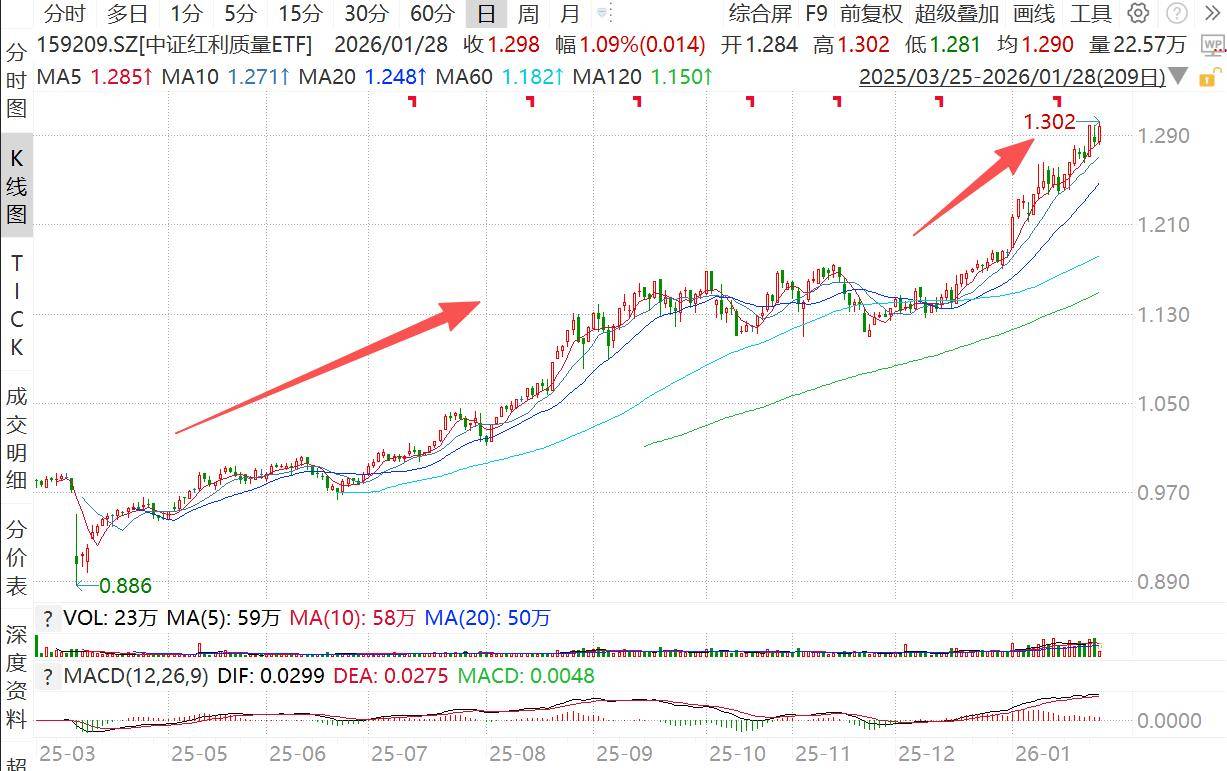
Core Viewpoint - The article highlights the emergence of the China Securities Dividend Quality ETF (159209) as a "third path" in investment strategy, combining dividend safety with strong offensive elasticity, distinguishing it from traditional defensive dividend stocks and growth stocks [1]. Group 1: Investment Strategy - Traditional dividend strategies are often linked to defensive sectors like banking, coal, and utilities, which tend to underperform in a bull market [3]. - The China Securities Dividend Quality Index incorporates quality factors (high ROE, stable growth, excellent cash flow) to transform traditional dividend stocks, resulting in a selection of companies that not only pay dividends but also have the capacity for endogenous growth through high-quality operations [3]. Group 2: Sector Performance - The leading sectors in the China Securities Dividend Quality Index include non-ferrous metals, media, and basic chemicals, which align perfectly with the current market trends of economic recovery and industrial prosperity [3][4]. - Non-ferrous metals serve as a core vehicle for inflation trades and global manufacturing recovery, with price elasticity directly translating into profit surges for leading companies [4]. - The media sector, particularly gaming and film, benefits from AI-driven cost reductions and consumer recovery, presenting significant profit recovery and valuation enhancement opportunities [4]. Group 3: Market Dynamics - The interconnected rise of these three sectors is not merely a beta market trend but a result of the "high quality" selection criteria, ensuring the index captures high-dividend, cyclical growth stocks during economic upturns [6]. - The China Securities Dividend Quality ETF (159209) evolves from being a defensive tool to an offensive strategy, allowing investors to embrace bull markets without sacrificing dividend income for volatility control [6].

有色金属大涨,这三位知名投资人却对黄金前景看法不一
Sou Hu Cai Jing· 2025-12-03 15:24
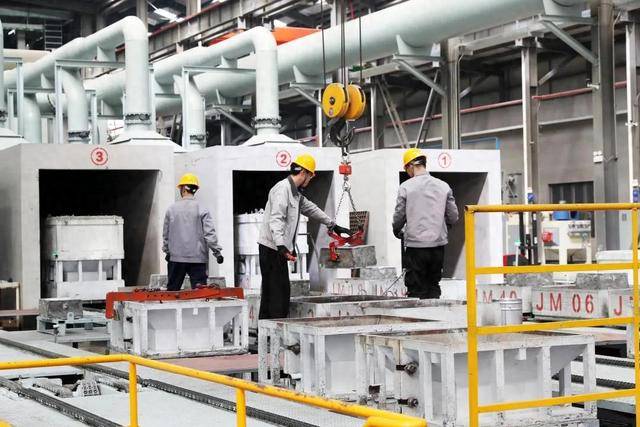
Group 1: Overview of the Metal Market - The non-ferrous metal sector has emerged as a strong performer in the capital market this year, with significant price increases, particularly in precious metals like gold and silver [1][3] - International gold prices have seen substantial gains, with silver prices increasing by 15% in a single week and nearly doubling over the year [1][3] Group 2: Drivers of Price Increases - The anticipated interest rate cuts by the Federal Reserve have contributed to the bullish sentiment in the market, leading to a weaker dollar, which in turn has boosted the prices of metals priced in dollars [3][4] - The global economy is experiencing a mild recovery, which has supported demand for industrial metals like copper and aluminum [6] - The intersection of energy transition and artificial intelligence is driving demand for copper and aluminum, as electric vehicles and renewable energy sectors require these materials [8] Group 3: Supply Constraints - The supply side is facing challenges, with declining production from existing copper mines and limited new mines coming online, exacerbated by production issues [8] - Domestic aluminum production is heavily regulated under "dual carbon" policies, further constraining supply [8] Group 4: Market Dynamics and Investment Sentiment - The current market for non-ferrous metals is characterized as "cyclical growth stocks," combining cyclical elasticity with long-term growth potential due to sustained demand from energy transition and AI developments [11] - The transparency of the investment logic in the non-ferrous metal sector, with publicly available price and inventory data, attracts investors seeking certainty [13] Group 5: Gold Market Analysis - Central banks globally continue to purchase gold, with a survey indicating that 95% of central banks plan to maintain or increase their gold holdings, providing long-term support for gold prices [15] - There is a divergence in opinions regarding gold's future, with some analysts predicting prices could reach between $4,500 and $5,000, while others caution about potential price corrections [15][17] Group 6: Changing Dynamics of Gold Pricing - The traditional pricing logic for gold, which relied on the US dollar and real interest rates, appears to be shifting, with new factors influencing its valuation [19] - Geopolitical tensions and concerns over the reliability of certain national currencies have increased gold's appeal as a "borderless currency" [22] Group 7: Future Outlook for Non-Ferrous Metals and Gold - The value of the non-ferrous metal sector has been redefined, transitioning from a purely cyclical market to one that incorporates growth attributes due to technological advancements and geopolitical changes [24] - The complexities of the gold market's pricing logic indicate that it will become increasingly intricate, presenting both opportunities and risks for investors [26]
华新水泥20250825
2025-08-25 14:36
Summary of Huaxin Cement Conference Call Company Overview - Huaxin Cement is a leading domestic cement company with a major shareholder being LafargeHolcim, the largest cement company globally. The second-largest shareholder is the Hubei State-owned Assets Supervision and Administration Commission. The management team is stable and experienced in industry operations. The total production capacity is approximately 126 million tons, including joint ventures. The company has established a presence in 12 countries, including Tajikistan, Kyrgyzstan, Uzbekistan, Cambodia, Nepal, Tanzania, Libya, Botswana, Zambia, and Malawi, becoming a leader in the Central Asian and African markets. By the end of 2024, overseas production capacity is expected to reach 25 million tons [3][4][6]. Key Points and Arguments - **Overseas Expansion**: Huaxin Cement has achieved an overseas production capacity of 25 million tons, with nearly 50% of total revenue coming from international markets, amounting to 8 billion yuan. The company is actively expanding through mergers and acquisitions and a light-asset model [2][6]. - **Aggregate Business**: The aggregate business is a significant profit source, contributing 50%-60% of total profits. Demand for aggregates is less correlated with the real estate cycle, making it more resilient. The company has a production capacity of approximately 285 million tons and sales of about 140 million tons, with 70% of sales coming from Hubei [2][4][5]. - **African Market Potential**: The African cement market has significant growth potential, with demand expected to increase by 2-3 times in the future. Huaxin Cement, leveraging advanced technology and management capabilities, is well-positioned for efficient expansion in Africa, supported by its major shareholder's international experience [2][6]. - **Acquisition in Indonesia**: The company announced an acquisition of an 80% stake in an Indonesian cement company for over 80 billion yuan, with a production capacity of 10 million tons and an expected annual output of 7 million tons. Although the static price-to-earnings ratio is high, there is substantial potential for profit improvement, with projections indicating profits could exceed 1 billion yuan by 2026 [2][8]. - **Strategic Development**: The company plans to continue expanding overseas through mergers and acquisitions and light-asset operations to reduce investment costs and improve returns. Projects in Nigeria are expected to contribute to profits by 2026, while the company aims to strengthen its presence in Central Asia and Southeast Asia [7][9]. Additional Important Insights - **Domestic Market Status**: The domestic cement industry is currently at a low point, with a 10% decline in production expected in 2024. However, improvements in profitability are anticipated due to falling coal prices and the implementation of production control measures. The company is well-positioned to benefit from regional demand increases driven by large infrastructure projects in Southwest China [10][11]. - **Profit Expectations**: The domestic cement industry is projected to turn from losses to slight profits in 2025, with profits per ton expected to recover to 10-15 yuan. The overseas market is expected to continue growing, supporting the company's positioning as a cyclical growth stock. The projected net profit for 2025 is 2.6 billion yuan, potentially reaching 3-3.5 billion yuan in 2026, indicating significant upside potential in valuation [12].

德康农牧20250616
2025-06-16 15:20
Summary of the Conference Call for Dekang Agriculture Industry Overview - The current period is considered a favorable time to invest in the pig farming sector as the downward price cycle has been resolved, with policy guidance and restored market confidence expected to drive stock prices higher [2][5] - The pig farming industry has completed initial scaling, with future competition focusing on leading enterprises, emphasizing management, breeding costs, and cash flow value creation capabilities [2][6] Company Profile: Dekang Agriculture - Dekang Agriculture is the sixth largest pig farming company and the third largest yellow chicken farming company in China, with a compound annual growth rate (CAGR) of approximately 35% in pig output over the past three years, and an expected CAGR of nearly 25% over the next three years [2][7] - The company is projected to reach a pig output of approximately 11 million heads by 2025 and 15 million heads by 2026 [7] Business Model Innovation - Dekang has innovated a light asset model by outsourcing breeding to partner farmers, avoiding capital expenditures on sow farms while leveraging the same funds for greater operational leverage [2][10] - This model has resulted in a higher long-term return on assets, with an average return on equity (ROE) of nearly 12% from 2018 to 2024, compared to the industry leader at 19% [10][12] Financial Performance - In 2024, Dekang's net profit per pig was approximately 360 yuan, significantly above the industry average, with overall costs continuing to decline in 2025 [3][12] - The company’s sales net profit margin averaged around 10% from 2018 to 2024, with asset turnover rates being higher due to lower capital investment in sow farms [12] - The expected net profit before fair value adjustments for biological assets in 2025 is close to 3.5 billion yuan, reflecting a year-on-year growth of approximately 16% [14] Market Position and Valuation - Dekang's stock has shown significant growth in the Hong Kong agricultural sector, with a price-to-earnings (P/E) ratio of about 8 times for 2025, still below the industry average of 15 times [15][18] - The company is viewed as a cyclical growth stock with substantial valuation recovery potential, driven by rapid output growth and favorable pricing dynamics [16][18] Future Outlook - Dekang is expected to maintain rapid growth based on its innovative light asset farming model, supported by a favorable talent environment and strategic foresight [13] - The company’s poultry farming business is projected to maintain an output of around 90 million birds in 2025, with a conservative sales price expectation of 14.3 yuan per kilogram [13] Key Recommendations - Dekang Agriculture is recommended as a focus for investment due to its robust growth in poultry farming, reasonable sales price expectations, and significant growth in net profit before fair value adjustments [17][18] - The overall market confidence in the pig farming sector has improved, suggesting a potential catalyst for further growth in the coming months [16]