固态电池技术发展

Search documents
固态高峰论坛拾贝,凝聚共识,洞察趋势
2026-02-10 03:24
Summary of Solid-State Battery Industry Conference Call Industry Overview - The conference focused on the solid-state battery industry, particularly its development trajectory for 2026 and beyond, emphasizing the necessity of solid-state batteries for future advancements [1] - The global battery research has transitioned from laboratory breakthroughs to engineering and mass production preparations, with significant advancements noted in companies like Solid Power collaborating with major automakers [2] Key Developments and Projections - By 2026, companies like Toyota and Zhenhua will begin mass production of high-durability solid-state batteries, with Zhenhua also establishing the world's first sulfide solid-state electrolyte factory [2] - The industry aims to achieve a solid-state battery with a capacity of 300 Wh/kg by the end of 2027, progressing to 500 Wh/kg by 2030 [3] - The focus remains on sulfide solid-state batteries, with ongoing research into materials such as high-nickel ternary and lithium-rich manganese-based materials to enhance performance [4][5] Material and Manufacturing Innovations - Innovations in electrode materials are crucial, with efforts to improve stability and capacity through interface optimization and advanced material designs [4][5] - The dry electrode process is gaining attention, with companies developing technologies to enhance production efficiency and reduce costs [9][10] - The solid electrolyte segment is primarily focused on sulfide electrolytes, with advancements in production techniques and material properties being reported [7][8] Challenges and Solutions - Key challenges include interface stability and batch consistency in solid-state electrolytes, particularly under varying pressure and temperature conditions [7][8] - Companies are exploring various strategies to enhance the performance and safety of anodes, including silicon-based and lithium metal anodes [6] Investment Opportunities - The conference highlighted potential investment opportunities in both equipment and materials sectors of the solid-state battery industry, suggesting a focus on companies with established technologies and production capabilities [15][16] - Specific companies mentioned for investment consideration include Naco, Xianhui, and leading firms in the solid-state battery equipment sector [16] Conclusion - The solid-state battery industry is experiencing rapid advancements, with significant milestones expected in the near future. The conference underscored the importance of continued investment and innovation in this sector to capitalize on emerging opportunities [14][15]
光大证券:正极减产挺价有望助力锂价传导 储能需求预期提振改善供需格局
智通财经网· 2025-12-29 06:26
Core Viewpoint - The lithium battery industry is experiencing price negotiations between lithium iron phosphate manufacturers and downstream battery cell factories, indicating strong demand in the market [1][3]. Group 1: Price Negotiations and Market Dynamics - Lithium iron phosphate companies are in the second round of price negotiations with downstream battery manufacturers, while many other material manufacturers have yet to finalize the first round of negotiations [1][3]. - The adjustment of the spot trading settlement price model by Tianqi Lithium reflects the robust demand from downstream sectors [1][3]. Group 2: Production Cuts and Supply Impact - Companies such as Hunan Youneng, Deyang Nano, and Wanrun New Energy have announced production cuts, with Hunan Youneng reducing 15,000 to 35,000 tons of cathode material and Wanrun New Energy cutting 5,000 to 20,000 tons of lithium iron phosphate [2]. - The production cuts are expected to support price stability in the market, potentially allowing lithium prices to rise and be transmitted downstream [3]. Group 3: Inventory and Market Outlook - Lithium carbonate inventory has been decreasing for 19 consecutive weeks, with a current inventory of 109,773 tons, marking a reduction of 652 tons from the previous week [4]. - The total production capacity of lithium batteries in China is projected to be approximately 210 GWh in January 2026, a 4.5% decrease from the previous period, which is better than market expectations [4]. Group 4: Energy Storage Demand and Future Projections - The domestic energy storage sector is expected to benefit from declining costs and new policies, leading to improved profitability and increased demand [5]. - Global shipments of energy storage lithium batteries are forecasted to reach 620 GWh in 2025, a 77% year-on-year increase, and are expected to grow to 960 GWh in 2026, representing a 54.8% increase [5]. Group 5: Future Technologies and Demand Drivers - Solid-state batteries are anticipated to drive new demand for lithium, with projected shipments of 5.1 GWh in 2025 and nearly 80 GWh by 2030, reflecting a compound annual growth rate of 64% [6]. - The lithium consumption per kilowatt-hour for solid-state batteries is expected to double compared to current lithium battery systems, further increasing lithium demand [6]. Group 6: Investment Recommendations - Companies with significant growth potential in the mining sector include Tianhua New Energy, Shengxin Lithium Energy, Dazhong Mining, Guocheng Mining, Cangge Mining, Salt Lake Co., Yahua Group, Ganfeng Lithium, and Tianqi Lithium [7].

高工锂电董事长张小飞:锂电出货量,未来10年或增3倍
Shang Hai Zheng Quan Bao· 2025-11-19 00:16
Core Insights - The lithium battery industry in China is expected to see a significant increase in shipment volume, with projections indicating over threefold growth from 2025 to 2035 [1][3] - The solid-state battery sector is entering a critical phase of GWh-level capacity construction between 2027 and 2030, driven by advancements in technology and increasing application scenarios [1][6] Industry Growth and Demand - The demand for power batteries and energy storage is robust, prompting a new round of lithium battery expansion [3][4] - By 2025, China's lithium battery shipments are projected to exceed 1.7 TWh, with power lithium battery shipments surpassing 1.05 TWh and energy storage lithium battery shipments reaching 600 GWh [3][4] - The midstream materials segment, including separators and electrolytes, is also expected to see over threefold growth from 2025 to 2035 [3] Price Trends and Market Dynamics - The lithium battery supply chain is experiencing price increases due to supply-demand imbalances, with predictions of price hikes for various components, including a 5%-10% increase in energy storage cell prices and significant rises in costs for materials like lithium hexafluorophosphate [4][5] - The industry is transitioning from scale expansion to value creation, driven by market demands for high-performance and safe batteries [5] Solid-State Battery Development - The solid-state battery industry is categorized into four development phases, with the current phase (2023-2027) focusing on initial market applications and the subsequent phase (2027-2040) expected to see rapid market growth [7][8] - Over 20 domestic companies are currently building pilot lines for solid-state batteries, with a shift from technology performance to customer development and cost control becoming crucial [6][7] Future Market Outlook - The solid-state battery market is anticipated to grow rapidly, particularly in energy storage and electric vehicles, with global shipments expected to exceed 900 GWh by 2035 [8][9] - The upcoming years (2025-2026) are projected to be a peak period for the construction of solid-state battery capacity, especially in the energy storage sector [9][11]

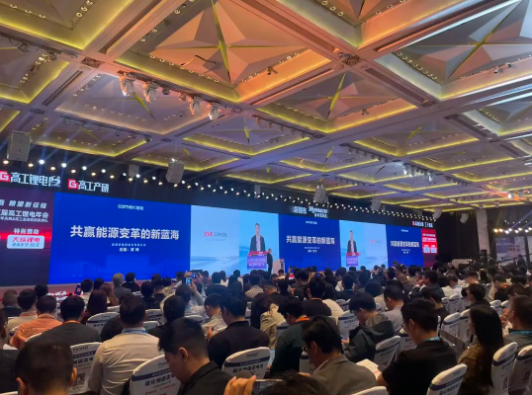
重磅活动丨2025固态电池行业年会暨固态电池金鼎奖颁奖典礼,首届硫化物全固态电池论坛11月广州举办!
起点锂电· 2025-10-13 10:26
Group 1 - The core viewpoint of the article emphasizes the rapid development and commercialization of sulfide all-solid-state batteries, highlighting significant advancements in energy density and production timelines [2][3][4] - The energy density of sulfide all-solid-state batteries is projected to increase from 350 Wh/kg in 2025 to 500 Wh/kg by 2030, with a compound annual growth rate of 7.4%, surpassing the progress of liquid lithium batteries [2] - Key milestones include achieving large-scale production by 2026, a year earlier than initially planned, indicating unexpected technological breakthroughs [3] Group 2 - The competition between Chinese and Japanese companies in the sulfide battery sector is intensifying, with China expected to file three times more patents than Japan in 2024, although Japan still holds 40% of global foundational patents [4] - Domestic policies are driving advancements, with a target set for 2027 for vehicle integration, and many companies are ahead of schedule, such as the 60Ah cell expected to roll out in 2025 [5] Group 3 - The core value of technological commercialization includes the reconstruction of supply chain security, reducing reliance on Japanese and Korean raw materials, and aiming to lower the cost of electrolytes to $100/kg [6] - The high safety features of sulfide batteries make them suitable for specialized applications in aviation and military sectors, addressing range anxiety in electric vehicles with a projected 400 Wh/kg version by 2028 [6] Group 4 - The Chinese government has committed over 2 billion yuan to solid-state battery research as part of its 2025 New Energy Vehicle Industry Development Plan, while the EU has prioritized sulfide technology in its Battery 2030+ initiative [8] - The period from 2025 to 2030 is identified as a critical window for sulfide batteries transitioning from laboratory to mass production, with an expected global market size of $20 billion by 2030 and a compound annual growth rate exceeding 45% [9] Group 5 - The event titled "2025 Starting Point Solid-State Battery Industry Annual Conference and Solid-State Battery Golden Ding Award Ceremony" will take place on November 8, 2025, in Guangzhou, featuring discussions on key technological advancements and industry standards [11][12] - The agenda includes various specialized sessions focusing on sulfide solid-state battery technology, manufacturing processes, and innovations in electrolyte materials [12][13]



总投资近30亿,两大固态电池项目来了!
鑫椤锂电· 2025-08-18 07:06
Group 1 - The core viewpoint of the article highlights the recent developments in solid-state battery projects in China, specifically the initiation of two significant projects in Zhejiang and Jiangxi provinces [1][2]. Group 2 - Zhejiang Angao Te Battery Technology Co., Ltd. has commenced the construction of its solid-state battery headquarters and R&D production base, with a total investment of 2.12 billion yuan, planned to be built in three phases over five years, targeting an annual production capacity of 3.5 GWh [2]. - The first phase of the project is located in Tonglu Economic Development Zone, covering an area of 18.06 acres, with an investment of 280 million yuan, and aims to establish the first domestic dry-pressing solid-state battery production line in collaboration with Tsinghua University and Beihang University, expected to be operational by the end of May 2026 [2]. - In Jiangxi, the signing ceremony for the Shengquan solid-state battery production project took place, with a total investment of 850 million yuan, leasing approximately 50,000 square meters of standard factory space, primarily focusing on consumer solid-state batteries, and projected to generate annual revenue of about 1.5 billion yuan upon completion [2].
第三批参会企业名单!2025(第三届)中国固态电池技术发展与市场展望高峰论坛
鑫椤锂电· 2025-06-19 07:20
Core Viewpoint - The article discusses the upcoming 2025 China Solid-State Battery Technology Development and Market Outlook Summit, highlighting the importance of solid-state battery technology in the energy sector and its potential applications in various industries [1]. Forum Topics - The summit will cover various topics including the engineering challenges of all-solid-state batteries, the current status and prospects of silicon-based anodes, and the application of lithium-rich manganese-based cathode materials in solid-state batteries [2][3]. - Other discussions will include advancements in new materials for solid-state batteries, industry trends related to sulfide solid electrolytes, and the industrial application of solid-state batteries [3][4]. Participants - A diverse range of companies and institutions will participate, including research institutes, universities, and technology firms, indicating a collaborative effort in advancing solid-state battery technology [5][6][7]. - Notable participants include the Chinese Academy of Sciences, Ningde Times New Energy Technology Co., Ltd., and various universities and research organizations [5][6][7]. Market Outlook - The summit will also address the investment prospects in the solid-state battery market and the current status and future outlook of terminal applications for solid-state batteries [4][5]. - This reflects a growing interest in the commercialization and scalability of solid-state battery technologies within the energy market [4].
肖成伟:车用动力电池技术发展趋势
Zhong Guo Qi Che Bao Wang· 2025-06-10 03:48
Core Insights - The core component of the automotive industry's electrification transformation is the power battery, which is a highly competitive segment within the industry [4] - In 2024, global sales of new energy vehicles are projected to reach 17 million units, with China accounting for approximately 70% of the market share, maintaining its position as the world's largest market for ten consecutive years [5] - China is expected to produce around 0.5 TWh of power batteries in 2024, representing 60% to 70% of the global market share, significantly contributing to the electrification of both the Chinese and global automotive markets [5] Battery Technology Development - The development path of automotive power batteries is primarily based on lithium-ion technology, evolving from liquid lithium iron phosphate and liquid ternary lithium to solid-liquid hybrid batteries, with a future focus on all-solid-state battery systems [6] - Current energy density levels for lithium iron phosphate batteries can reach 190 Wh/kg, with volume energy density standards achieving up to 400 Wh/L [6] - Solid-state batteries are being researched globally, with various electrolyte types including oxides, sulfides, chlorides, and polymers being explored [7] Safety and Performance - Solid-state batteries offer significant improvements in safety performance, with thermal runaway temperatures reaching around 300°C, compared to 180°C for ternary liquid batteries and 220°C for lithium iron phosphate batteries [8] - The industry has seen successful trials of solid-liquid hybrid batteries, such as NIO's 360 Wh/kg battery, which can provide a driving range of 1,000 kilometers [8] Future Directions - Solid-liquid hybrid batteries are expected to exist for a considerable time as a transitional phase, with future research focusing on material systems, including high nickel and lithium-rich manganese-based cathodes, and silicon-carbon anodes [9] - The cost of solid-state batteries remains high, estimated to be 5 to 10 times that of current liquid batteries, but is expected to decrease as production scales up [9] - The development of sodium-ion batteries is also underway, with plans to enhance their energy density to 200 Wh/kg and explore solid-state options [10] Standards and Definitions - The definition of all-solid-state batteries is based on standards set by the China Automotive Engineering Society, which includes specific criteria for weight loss during testing [10] - Many companies have achieved the technical indicators necessary for all-solid-state battery development, which is crucial for advancing this technology [10]

近期固态电池信息汇总
数说新能源· 2025-05-13 03:37
Core Viewpoint - The Ministry of Industry and Information Technology will prioritize solid-state batteries alongside smart manufacturing and industrial internet by 2025 [1] Group 1: Solid-State Battery Characteristics and Goals - Solid-state batteries are characterized by non-flammability, strong thermal stability, and high energy density, making them a key development direction for future batteries [2] - Current performance targets for solid-state batteries include an energy density of 400 Wh/kg and a cycle life of over 1000 times, with plans for small-scale vehicle deployment by 2027 and mass production by 2030 [2] - The positive electrode is currently dominated by high-nickel ternary materials, with a future shift towards higher specific energy lithium manganese-based materials; the negative electrode will transition from silicon-carbon to lithium metal in the medium term [2] Group 2: Upcoming Conferences and Events - Multiple conferences related to solid-state batteries are scheduled, including: 1. The 17th CIBF in Shenzhen from May 15 to 17, featuring discussions on advanced battery technologies [3] 2. Guoxuan High-Tech's 2025 Global Technology Conference on May 16-17, where a new high-safety solid-state battery with an energy density of 300 Wh/kg will be unveiled [3] 3. The second AEPT Solid-State Battery Industry Summit on May 22 [9] 4. The China International Solid-State Battery Technology Conference on June 19 [9] 5. The Solid-State Battery Conference and Silicon-Based Negative Electrode Innovation Conference on July 3 [9] 6. The 2025 Electrolyte Innovation Development Forum and Solid-State Battery Seminar on July 9 [9] Group 3: Industry Developments and Company Plans - Major automotive companies have set ambitious plans for solid-state battery production: - Toyota aims for small-scale production of solid-state batteries by 2025 [9] - Nissan plans to establish and operate a pilot production facility for solid-state batteries by 2025 [9] - SAIC Group's next-generation solid-state battery will be applied in the new MG4 by the end of this year, with the first "Guangqi Battery" expected to launch in 2027 [10] - BYD is expected to start mass demonstration applications of solid-state batteries around 2027 [10] - Ford anticipates launching a model equipped with solid-state batteries in 2026 [10] - Changan Automobile plans to validate solid-state battery installation in 2026 [10] Group 4: Solid-State Battery Industry Chain - Key companies in the solid-state battery industry chain include: - Battery manufacturers: Guoxuan High-Tech, CATL, Penghui Energy, and others [11] - Positive electrode suppliers: Xiamen Tungsten New Energy [11] - Silicon-carbon negative electrode leaders: Shanghai Xiba and Yuanli Co. [11] - Dry electrode equipment leaders: Naconor and Mannesmann [11] - Solid-state electrolyte suppliers: BETTER and others [11] - The industry chain is characterized by a variety of specialized companies focusing on different components and technologies essential for solid-state battery production [11]