
国家治理现代化

Search documents
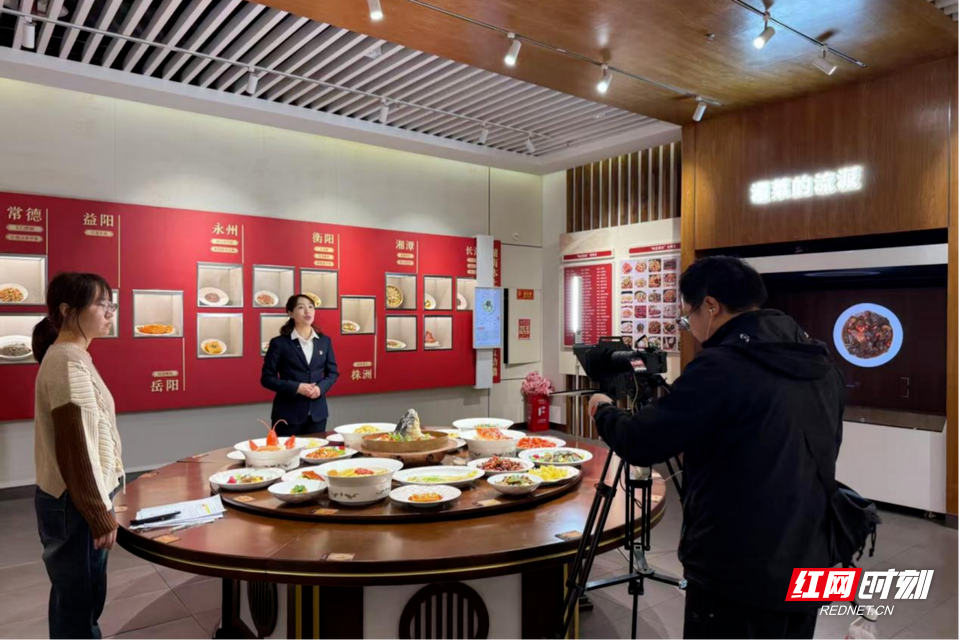
一堂有“湘味”的食品安全思政微课在长沙商贸旅游职院录制
Xin Lang Cai Jing· 2026-02-07 04:17
Core Viewpoint - The article discusses the innovative approach taken by Changsha Business and Tourism Vocational Technical College in integrating political education with local food culture through a dual-teacher micro-course focused on food safety and governance [3]. Group 1: Course Content and Structure - The micro-course titled "New Food Trends in Hunan Cuisine: Safeguarding Food Safety with Collaborative Governance" was recorded in a culturally rich setting, emphasizing the connection between food safety governance and national governance modernization [3]. - The course features a dialogue format between Professor Wu Chunhong from the Marxism College and Professor Jiang Yan from the Hunan Cuisine College, utilizing real-life examples to illustrate collaborative governance among government, industry, enterprises, and society [3]. - Key elements discussed include legal guarantees, intelligent regulation, cultural cultivation, and public participation, aiming to transform institutional advantages into governance effectiveness [3]. Group 2: Educational Innovation and Impact - The dual-teacher dialogue and on-site recording format aim to enhance the emotional impact and ideological penetration of political education, creating high-quality digital teaching resources with distinct local characteristics [3]. - This initiative represents a significant step in the construction of the "Hunan Flavor Political Education" course brand, integrating the latest theoretical achievements of the Party into professional contexts [3]. - The micro-course video will be used for blended teaching in political education and will also be disseminated to the public, promoting the concept of "safety on the plate" to a wider audience [3].

优化央地财政关系 推进国家治理现代化
Jin Rong Shi Bao· 2026-01-12 03:30
Group 1 - The core viewpoint emphasizes the importance of optimizing the central-local fiscal relationship as a foundation for modern national governance, aiming to enhance the effectiveness of both central and local governments in economic development [1][2] - The strategic goals set by the 20th Central Committee meetings focus on establishing a clear division of responsibilities and financial coordination between central and local governments, which is crucial for alleviating local fiscal difficulties and promoting high-quality economic development [1][2][3] Group 2 - The article outlines the historical evolution of the central-local fiscal relationship in China, highlighting its transition through various systems such as unified collection and distribution, the package system, and the tax-sharing system, which have collectively supported effective governance and economic stability [2] - It identifies four key directions for reforming the central-local fiscal relationship: clarifying the structure of rights and responsibilities, establishing a rule-based fiscal system, achieving regional balance, and enhancing governance efficiency [3] Group 3 - The article discusses the negative impacts of an imbalanced central-local fiscal relationship, which can weaken macroeconomic policy effectiveness, lead to fiscal risks, and hinder comprehensive national governance across various sectors [4] - It highlights three challenges in the current fiscal relationship: unclear division of financial powers and responsibilities, the need for improved incentive and constraint mechanisms, and difficulties in defining delegated authority and responsibilities [5][6] Group 4 - The article suggests focusing on three key areas to optimize the central-local fiscal relationship: adjusting the rights and responsibilities allocation system, improving the transfer payment mechanism, and strengthening government debt management [7][8][9] - It emphasizes the importance of enhancing local tax systems, clarifying expenditure responsibilities, and establishing a robust transfer payment system to ensure effective fiscal policy implementation at the local level [7][8]
大湾区智汇政策圆桌会在深圳举行 共探国家治理现代化湾区路径
Zheng Quan Shi Bao Wang· 2025-12-23 13:09
Core Insights - The forum focused on the collaborative development of technology policies in the Guangdong-Hong Kong-Macao Greater Bay Area, aiming to enhance regional innovation and address coordination challenges [1][2][5] Group 1: Forum Objectives and Themes - The forum aimed to activate innovation vitality through technology policy collaboration, aligning with national strategies for high-quality development in the Greater Bay Area [1] - Emphasis was placed on the unique institutional advantages and complete industrial innovation ecosystem of the Greater Bay Area, which is seen as a key area for exploring modern governance [2] Group 2: Research Findings and Recommendations - A research report was released, identifying four optimization paths for enhancing policy collaboration: establishing an authoritative governance system, improving the flow of collaborative elements, optimizing the innovation ecosystem, and strengthening demonstration platforms [3] - The report utilized IPO and ICA analysis frameworks to assess the current issues in technology policy collaboration within the region [3] Group 3: Collaborative Discussions - Discussions were held on intergovernmental collaboration, government-enterprise relationships, and government-society relationships, with various experts providing insights on enhancing policy coordination and collaborative mechanisms [4] - Recommendations included transitioning talent policies from competition to collaboration and integrating fragmented approaches into cohesive strategies [4] Group 4: Future Directions - The forum reinforced the consensus on technology policy collaboration in the Greater Bay Area, aiming to shift from "single-point breakthroughs" to "systematic collaboration" [5] - The event is positioned as a significant platform for dialogue among government, industry, academia, and research sectors in the region [5]
从“单点突破”到“系统协同” 粤港澳大湾区如何以政策创新激活国家治理现代化?
Jing Ji Guan Cha Bao· 2025-12-21 10:50
Core Viewpoint - The conference emphasized the need for policy innovation to activate national governance modernization in the Guangdong-Hong Kong-Macao Greater Bay Area, shifting from isolated breakthroughs to systematic collaboration [1] Group 1: Policy Coordination and Governance - The conference highlighted the unique institutional advantages of the three regions but noted challenges such as administrative barriers, lack of collaborative mechanisms, and local interest competition that hinder overall innovation effectiveness [2] - Experts suggested accelerating breakthroughs in policy coordination and mechanism alignment among the three regions to leverage their strengths and achieve a systemic effect greater than the sum of individual contributions [2] - The report proposed four optimization paths for enhancing policy coordination: building an authoritative collaborative governance system, improving the flow of elements, optimizing the collaborative innovation ecosystem, and strengthening key platform demonstrations [6] Group 2: Government-Enterprise Relationship - Discussions focused on evolving the government-enterprise relationship from traditional service and management to strategic symbiosis, emphasizing the need for a policy system that covers the entire "industry-university-research-application-finance" chain [3] - The importance of collaboration between financial institutions and government to foster innovation and support enterprise development was underscored, with calls for a more open, efficient, and risk-controlled financial innovation ecosystem [3] Group 3: Social Participation in Innovation - The role of social organizations, research institutions, and public participation in innovation governance was emphasized, with examples provided on how to build new government-society relationships through strategic positioning and resource allocation [4] - The integration of smart technology into health and wellness policies was suggested as a means to enhance cross-border health services in the Greater Bay Area [5] Group 4: Theoretical and Practical Frameworks - The Greater Bay Area is viewed as a "testing ground" for modern regional governance, with recommendations to transform institutional differences into collaborative innovation advantages [6] - A research report was released that evaluated the collaborative effectiveness of technology innovation policies in the Greater Bay Area, identifying key areas for improvement and proposing a framework for further development [6]
以高效能科技治理促进高质量发展 ——第八届公共治理创新与知识产权发展前沿论坛在京举行
Ren Min Wang· 2025-12-10 08:35
Group 1 - The forum emphasized that efficient technology governance is crucial for developing new productive forces, advancing national governance modernization, and achieving the goals of the 14th Five-Year Plan [1][2] - The China Academy of Sciences' Public Policy and Management School aims to become a source of new governance theories, a hub for interdisciplinary talent incubation, and a platform for global technology governance dialogue [1] - The current stage of technology governance in China focuses on high-level self-reliance and strengthening the national innovation system to stimulate the vitality of various innovation entities [2] Group 2 - The forum featured discussions on topics such as the mission of public management disciplines in building an independent knowledge system, the 14th Five-Year Plan's science and education policies, and the social risks and emergency management in the era of artificial intelligence [3] - Experts highlighted the need for a deep integration of technological innovation and industrial innovation to accelerate the construction of a modern industrial system [2] - The establishment of a modern financial system that supports technology innovation through various financing methods, including equity financing and venture capital, was also discussed [2]
体态 状态 心态(人民论坛)
Ren Min Ri Bao· 2025-11-23 22:20
Group 1: Core Perspectives - The recent National Games showcased the improvement in the physical condition, mental state, and overall attitude of Chinese athletes, reflecting the broader theme of modernization in China [1][2][3] - The event highlighted the importance of sports and health in enhancing the well-being of the population, supported by scientific training, nutrition, and technological advancements [1][2] - The athletes' performances symbolize the spirit of perseverance and the pursuit of excellence, with examples of individual breakthroughs serving as motivation for broader societal progress [2][3] Group 2: Health and Sports Integration - The integration of sports and health is emphasized as essential for national well-being, with a robust healthcare system ensuring medical support for the population [1] - The National Games served as a platform for showcasing regional collaboration and the intersection of sports, culture, technology, and industry, reflecting modern governance in China [3] Group 3: Mental Attitude and Cultural Reflection - The shift in mindset among athletes, focusing on self-improvement rather than just winning, illustrates a deeper cultural confidence and resilience within Chinese society [3] - The event's organization demonstrated a commitment to high standards and cultural richness, enhancing China's international image and showcasing regional characteristics [3]
深刻把握健全公共法律服务体系的丰富内涵和重点任务(深入学习贯彻习近平新时代中国特色社会主义思想·习近平法治思想学习贯彻众论)
Ren Min Ri Bao· 2025-11-09 22:20
Core Points - Public legal services are essential for safeguarding and improving people's livelihoods, serving as a foundational, service-oriented, and protective work in the comprehensive rule of law [1][6] - The construction of a sound public legal service system is crucial for modernizing national governance and meeting the growing legal service needs of the populace [2][7] - The emphasis on public legal services reflects the government's commitment to ensuring social fairness and justice, as well as enhancing citizens' legal awareness and access to legal resources [4][9] Group 1: Importance of Public Legal Services - Public legal services aim to protect citizens' basic rights, maintain legal rights, and ensure social fairness and justice [2][3] - A well-established public legal service system is the cornerstone of modern national governance, providing inclusive and professional legal support to society [2][7] - The development of public legal services is a response to the increasing demand for diverse and personalized legal services from the public [6][12] Group 2: Government's Role and Policy Framework - The government plays a vital role in optimizing public legal services as part of its public service functions, ensuring equal access to legal resources [5][10] - Recent policy documents emphasize the need for a modern public legal service system that is accessible to all citizens, particularly in underdeveloped areas [12][13] - The integration of various legal service resources is essential for enhancing the efficiency and effectiveness of public legal services [14][15] Group 3: Enhancing Accessibility and Equity - Improving the accessibility and equity of public legal services is crucial for achieving social justice and fairness [13][16] - Strategies include optimizing resource allocation, extending services to rural areas, and enhancing the capabilities of local legal service providers [13][15] - The establishment of a comprehensive public legal service network is necessary to ensure that legal services are available anytime and anywhere [14][16] Group 4: Community and Grassroots Engagement - Engaging communities and grassroots organizations is vital for the effective delivery of public legal services [15][16] - Initiatives such as training local legal advocates and enhancing community legal education can significantly improve public access to legal resources [15][16] - The focus on grassroots governance and legal service integration is essential for fostering a law-abiding society and resolving conflicts at the community level [15][16]
“十四五”规划的重要意义及启示
Zhong Yang Ji Wei Guo Jia Jian Wei Wang Zhan· 2025-10-17 12:44
Group 1 - The core viewpoint emphasizes the importance of the "Five-Year Plan" as a governance tool that reflects China's unique political advantages and strategic vision for modernization [1][2][3] - The "14th Five-Year Plan" serves as a roadmap for building a modern socialist country, marking the transition towards the second centenary goal [2][3] - The plan integrates new development concepts and focuses on high-quality development, ensuring alignment with the Party's governance philosophy [2][4] Group 2 - The "14th Five-Year Plan" outlines strategic directions such as "three new and one high," providing a comprehensive framework for economic and social development [4] - It emphasizes the importance of balancing development and security, establishing safety indicators to safeguard national interests [5] - The plan aims to promote common prosperity through substantial improvements in public welfare and income distribution [5][6] Group 3 - Significant achievements during the "14th Five-Year Plan" period include a notable increase in economic strength, with a projected growth of over 35 trillion yuan [6] - Major breakthroughs in technological innovation have been realized, including advancements in nuclear power and space exploration [6] - The plan has led to improvements in living standards, with a focus on education, healthcare, and social security systems [6] Group 4 - The interaction between planning and institutional advantages has enabled efficient completion of major strategic tasks, ensuring policy continuity and stability [7] - The "14th Five-Year Plan" incorporates a scientific top-level design that balances immediate needs with long-term goals [8] - The plan emphasizes a people-centered approach, integrating public feedback into its development and implementation [8] Group 5 - The execution of the "14th Five-Year Plan" showcases the country's strategic execution capabilities through systematic mechanisms and effective resource mobilization [9] - The plan demonstrates flexibility in responding to environmental changes, with mechanisms for mid-term evaluations and adjustments [9][10] - It highlights the importance of maintaining strategic focus while allowing for dynamic optimization in response to new challenges [10] Group 6 - The methodology embedded in the "14th Five-Year Plan" emphasizes forward-thinking, comprehensive planning, and strategic layout to ensure continuity and stability in national development [10][11] - The plan advocates for a scientific development approach that integrates systemic thinking and practical measures [11][12] - It aims to enhance the adaptability and precision of planning, focusing on high-quality development indicators [12][13]
2025年7月政治局会议解读:如何理解政治局会议的“平淡”?
Tebon Securities· 2025-07-31 10:00
Group 1: Macroeconomic Policy Insights - The July Politburo meeting maintained the overall policy tone of 2025, focusing on five key areas, including a clear long-term goal and a short-term policy stance of "taking the initiative and adapting to circumstances" [3] - The macroeconomic environment is facing short, medium, and long-term challenges, with short-term risks stemming from international trade disputes and tariff negotiations [3] - The meeting emphasized the need for fiscal and monetary policies to support economic growth while also addressing structural transformation and green development goals [3] Group 2: Policy Implementation and Focus Areas - Key policy areas include stimulating consumption, enhancing new productivity, combating "involution," improving foreign trade and investment, and enhancing people's livelihoods [4] - The meeting highlighted the importance of a dual expansion of fiscal and monetary policies, with actual GDP growth reaching 5.3% in the first half of the year, indicating effective policy implementation [4] - The focus on improving living standards and employment is crucial, especially for vulnerable groups such as college graduates and migrant workers [5] Group 3: Market Reactions and Future Outlook - The capital market was identified as a "highlight," with an emphasis on enhancing its attractiveness and inclusivity, which may lead to increased foreign capital inflow [6] - The real estate sector was noted as an "unexpected" area, with a shift from an "incremental" to a "stock" market phase, indicating a change in policy focus [6] - The report suggests a balanced investment strategy, favoring both financial and resource sectors while also considering growth opportunities in emerging technologies [6]
安徽省能源局局长汪振宇解读“获得电力”新政
Zhong Guo Dian Li Bao· 2025-06-12 06:11
Core Viewpoint - The document outlines the joint issuance of the "Opinions on Deepening and Enhancing the 'Electricity Access' Service Level" by the National Development and Reform Commission and the National Energy Administration, aiming to create a modern electricity business environment that aligns with new economic and social development requirements [3][4]. Summary by Sections Overall Requirements - The "Opinions" emphasize the need for a modern electricity service system that supports high-quality economic development, with a framework summarized as "1+5+1," which includes overall requirements, five key tasks, and supporting measures [3][4]. Key Tasks - The document identifies five major tasks with 14 specific reform measures aimed at enhancing the electricity service level, focusing on user-centered public service, high-quality electricity supply, and equitable access to electricity [4][5]. Strategic Importance - The "Opinions" highlight three strategic roles: 1. Reshaping public service models through streamlined processes and data sharing [4]. 2. Supporting high-quality development by ensuring reliable electricity supply for high-end industries and promoting green energy consumption [5]. 3. Establishing a fair and inclusive electricity service network to enhance the quality of life for residents [5]. New Developments - The "Opinions" introduce a new framework for long-term development in electricity services, focusing on five key areas: convenience in electricity access, high-quality supply, green energy usage, inclusive services, and collaborative governance [7][8]. Implementation and Execution - The document emphasizes the importance of legal compliance, clear objectives, and task accountability to ensure effective implementation of the proposed reforms [10][12]. Regional Focus - Anhui Province has been actively developing the "Beautiful Electricity Service" brand, achieving a power supply reliability rate of 99.982% by the end of 2024, positioning itself as a leader in supporting economic and social development [11][12].