
基本医保省级统筹

Search documents
21健讯|湖南推动基本医保省级统筹;向日葵遭证监会立案
2 1 Shi Ji Jing Ji Bao Dao· 2026-01-16 04:26
Policy Developments - Hunan Province has issued an implementation plan to promote provincial-level coordination of basic medical insurance, aiming to enhance the level of medical security and the fund's risk resistance by 2029 [2] Drug and Device Approvals - Zai Lab has received approval for clinical trials of injectable ZGGS18 and ZG005 for use in advanced solid tumors, although this will not significantly impact the company's recent performance [4] - Jianfeng Group has voluntarily withdrawn its clinical trial application for "C2235 and C2235 tablets," with plans to resubmit after further research [5] Capital Markets - WuXi AppTec has made a conditional cash acquisition offer of HKD 4.00 per share for all shares of Dongyao Pharmaceutical, representing a premium of approximately 114.67% over the average closing price for the last 30 trading days [7] - Yinuo Micro Pharmaceuticals has submitted a listing application to the Hong Kong Stock Exchange, with Citigroup and CICC as joint sponsors [8] Industry Events - Over 11,000 designated medical institutions are equipped to purchase 105 new drugs added to the medical insurance catalog for 2025, with 6,537 being medical institutions and 4,592 retail pharmacies [10][11] - France has launched a roadmap to address national obesity issues, setting four key objectives to curb obesity growth and improve health outcomes [12] Public Opinion Alerts - Sunflower has been investigated by the China Securities Regulatory Commission for misleading statements in its restructuring plan, leading to a 20% drop in its stock price [14]

推进基本医保省级统筹有了“时间表”
Xin Lang Cai Jing· 2026-01-13 19:50
Core Viewpoint - Hunan Province is implementing a comprehensive reform of its basic medical insurance system to enhance public health coverage and ensure equitable access to medical services for its residents [1] Group 1: Policy Implementation - The new plan establishes a unified policy for employee medical insurance contributions, including a standardized contribution base and rate across the province [2] - It aims to standardize reimbursement thresholds and payment ratios for inpatient and outpatient services, while also optimizing outpatient coverage [2] - The plan includes a unified approach to maternity insurance and cross-regional medical treatment policies, with a reduction in reimbursement ratios for non-emergency cross-provincial treatments [2] Group 2: Fund Management - The reform will enhance the risk management of medical insurance funds by eliminating the city-level risk reserve system and establishing a provincial adjustment fund [3] - The provincial adjustment fund will initially be capped at 5% of the current budget revenue, with plans for gradual expansion as management improves [3] - A risk assessment and early warning mechanism for fund operations will be established to ensure long-term sustainability [4] Group 3: Payment Mechanisms - The plan will standardize the management of medical insurance drug lists, medical services, and consumables, including the personal payment ratios for certain drugs and services [5] - It will implement a multi-faceted payment system primarily based on disease categories, incorporating costs for cross-regional medical treatment into the payment reform [5] - The timeline for implementation includes full realization of city-level coordination by the end of 2026, with provincial coordination for employee insurance starting in 2027 and for resident insurance by the end of 2028 [5]
推进基本医保省级统筹
Ren Min Ri Bao· 2025-12-26 04:43
Core Viewpoint - The State Council's recent meeting marks a significant step towards the provincial-level coordination of basic medical insurance in China, transitioning from a "local scattered" system to a "provincial unified" approach [1] Group 1: Provincial Coordination Benefits - Provincial coordination aims to break regional barriers and restructure the underlying logic of medical insurance governance, enhancing the system's protective capabilities [1] - This reform is not merely a technical adjustment but a robust safeguard for the equitable right to medical care [1] - Currently, 20 provinces have initiated provincial-level coordination, with some provinces already experimenting with this model [1] Group 2: Current Challenges in Medical Insurance - The existing city-level coordination leads to significant disparities in the operation of medical insurance funds within the same province, influenced by varying fiscal support and funding levels [2] - This "honeycomb" policy structure results in different insurance payment standards and reimbursement ratios across cities, undermining the essence of mutual assistance in the medical insurance system [2] - The increasing demand for cross-regional medical services has highlighted these policy differences, leading to a growing public demand for improved coordination [2] Group 3: Reform Initiatives and Standardization - Several provinces are responding to public expectations by raising the coordination level and standardizing policies to ensure equitable benefits for all insured individuals [2] - For instance, Shanxi aims to achieve "six unifications" in its resident medical insurance by 2025, while Hunan has proposed unified standards for hospitalization and outpatient services [2] - This "one-size-fits-all" approach is intended to eliminate disparities in insurance coverage across different regions [2] Group 4: Future Considerations and Challenges - The implementation of provincial coordination will require balancing unified management with local engagement, addressing new challenges such as the pressure on high-level medical institutions and the potential neglect of grassroots healthcare [3] - The focus will be on improving the efficiency of fund usage and providing fair, accessible, and convenient medical services to the insured [3] - The integration of a tiered diagnosis and treatment system, along with enhancing the capacity of primary healthcare services, is essential for meeting public medical needs [3]
推进基本医保省级统筹(无影灯)
Ren Min Ri Bao· 2025-12-25 22:20
Core Viewpoint - The State Council's decision to promote provincial-level coordination of basic medical insurance marks a significant shift in China's healthcare system from "local decentralization" to "provincial management" [1] Group 1: Provincial Coordination Benefits - Provincial coordination aims to break regional barriers and restructure the underlying logic of medical insurance governance, enhancing the insurance system's capacity for protection [1] - This initiative is a crucial step in improving the universal medical insurance system, ensuring equitable access to healthcare services [1] Group 2: Current Status and Challenges - Currently, 20 provinces have begun to implement provincial-level coordination, while most provinces still operate under city-level coordination, leading to significant disparities in the operation of medical insurance funds within the same province [1][2] - The differences in fund operation have resulted in a "honeycomb" policy structure, where insurance payment standards and reimbursement ratios vary across cities, undermining the essence of mutual assistance in the medical insurance system [2] Group 3: Public Demand and Policy Response - There is a growing public demand for improved coordination levels due to the increasing need for cross-regional medical services, which has highlighted the negative experiences caused by policy discrepancies [2] - Several provinces are responding to public expectations by standardizing policies to ensure equitable benefits for all insured individuals, regardless of their location [2] Group 4: Implementation and Future Considerations - The State Council emphasizes the need for tailored strategies in different regions while striving for improved fund efficiency and equitable medical services [3] - The transition to provincial coordination raises new questions about balancing provincial management with local engagement, the distribution of healthcare resources, and the potential impact on healthcare facilities [3] - To meet public healthcare needs, there is a call for coordinated development of a tiered diagnosis and treatment system, enhancing primary healthcare capabilities, and refining medical insurance payment mechanisms [3]
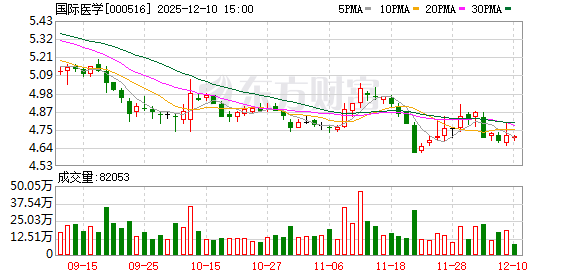
国际医学:公司积极调整业务结构,增强服务附加值
Zheng Quan Ri Bao· 2025-12-10 08:17
Core Viewpoint - The company emphasizes the importance of provincial-level coordination in basic medical insurance as a significant step towards improving the national healthcare system, enhancing the efficiency of fund utilization, and meeting diverse medical needs of the public [2] Group 1: Company Developments - The company has developed multiple specialized departments including neurology, cardiology, gastroenterology, thoracic medicine, oncology, hematology, orthopedics, and has undertaken complex medical projects with high technical content [2] - The proportion of out-of-town patients at the company's medical institutions has increased from less than 10% at the start of operations to 42% by the third quarter of 2025 [2] - The company is establishing a comprehensive medical service network based in Xi'an, covering Shaanxi and radiating to the central and western regions of China [2] Group 2: Industry Trends - The company is actively adjusting its business structure to enhance service value, expanding into aesthetic medicine, rehabilitation, women's and children's health, health management, traditional Chinese medicine, assisted reproduction, mental health, special services, elderly care, and proton therapy [2] - This strategic expansion aims to meet the growing and diverse health needs of the public [2]


新世纪期货交易提示(2025-11-28)-20251128
Xin Shi Ji Qi Huo· 2025-11-28 05:31
1. Report Industry Investment Ratings - Iron Ore: Volatile [2] - Coking Coal and Coke: Volatile and Weakening [2] - Rolled Steel and Rebar: Volatile [2] - Glass: Volatile [2] - Shanghai Composite 50 Index Futures/Options: Volatile [3] - CSI 300 Index Futures/Options: Volatile [3] - CSI 500 Index Futures/Options: Rebounding [3] - CSI 1000 Index Futures/Options: Rebounding [3] - 2 - Year Treasury Bonds: Volatile [3] - 5 - Year Treasury Bonds: Volatile [3] - 10 - Year Treasury Bonds: Upward [3] - Gold: Volatile and Bullish [4] - Silver: Volatile and Bullish [4] - Logs: Bottom - Hunting [4] - Pulp: Volatile and Weakening [7] - Offset Paper: Volatile and Weakening [7] - Soybean Oil: Range - bound [6] - Palm Oil: Range - bound [6] - Rapeseed Oil: Range - bound [6] - Soybean Meal: Volatile [6] - Rapeseed Meal: Volatile [6] - Soybean No. 2: Volatile [6] - Soybean No. 1: Volatile [6] - Live Pigs: Volatile and Bullish [8] - Rubber: Volatile [10] - PX: Volatile [10] - PTA: Volatile [10] - MEG: Widely Volatile [10] - PR: Wait - and - See [10] - PF: Wait - and - See [10] 2. Core Views of the Report - The overall market shows a complex situation with different trends in various industries. Some industries are facing supply - demand imbalances, while others are affected by policy, geopolitical, and seasonal factors. The market is generally in a state of volatility, and short - term and long - term influencing factors need to be comprehensively considered for investment decisions [2][3][4] 3. Summary by Relevant Catalogs Black Industry - **Iron Ore**: Global iron ore shipments decreased by 238.0 tons to 3278.4 tons, while 47 - port foreign ore arrivals increased by 569.6 tons to 2939.5 tons. Daily hot metal production decreased by 1.6 tons to 234.68 tons. The demand core lies in the real estate sector, with new construction starts at 2005 levels and weak domestic demand. Port iron ore inventories rose slightly to an 8 - month high. The supply - demand surplus pattern is hard to reverse, and although steel mill profits are squeezed, short - term self - initiated production cuts are unlikely, so iron ore prices will mainly fluctuate at high levels [2] - **Coking Coal and Coke**: Affected by Mongolia's import target and the heating - season supply guarantee meeting, the coking coal and coke futures prices dropped significantly. Although the fourth round of price increases by coking enterprises has been implemented, profit repair is limited, and there are obvious differences in sentiment regarding the fifth round. Pit - mouth coking coal prices are high, and coking plants are under cost pressure and have low production intentions. Supply concerns in the coking coal industry are intensifying, and the supply - demand situation may become loose again, with prices adjusting weakly in the short term [2] - **Rolled Steel and Rebar**: Downstream demand is sluggish, and winter storage replenishment has not started. The core lies in steel demand, with real estate new construction at 2005 levels and weak domestic demand. Steel prices will stop falling depending on the implementation of a more than 5% production cut in Q4 2025 and the intensity of anti - "involution" policies. Currently, steel prices will remain at the bottom and fluctuate, and attention should be paid to the impact of December's macro - policy expectations on winter storage [2] - **Glass**: News of cold repairs in Hubei continued to ferment, which will reduce delivery pressure. Real - estate completion is declining, dragging down demand, and enterprise inventories are increasing. To solve the industry - wide surplus problem, the daily melting volume needs to drop to about 15.4 tons by the end of the year. Attention should be paid to whether macro - factors and production - line cold repairs can bring a turning point for prices to stop falling and stabilize [2][3] Financial - **Stock Index Futures/Options**: The previous trading day saw the CSI 300 index down 0.05%, the SSE 50 index up 0.02%, the CSI 500 index down 0.20%, and the CSI 1000 index up 0.12%. Some sectors had capital inflows or outflows. The State Council held a meeting to discuss relevant work, and the NDRC introduced infrastructure REITs expansion and addressed the development of the embodied - intelligence industry. The market is in short - term adjustment but remains optimistic in the medium term, with the high - tech industry growing [3] - **Treasury Bonds**: The yield of 10 - year treasury bonds was flat, and the central bank conducted 3564 billion yuan of 7 - day reverse repurchase operations, with a net investment of 564 billion yuan. Treasury bond spot rates were consolidating, and the market showed a slight rebound [3] Precious Metals - **Gold and Silver**: In the context of high - interest rates and globalization reconstruction, the pricing mechanism of gold is shifting from being centered on real interest rates to central - bank gold purchases. Gold's de - fiat - currency attribute is prominent, and its sensitivity to US Treasury real interest rates has decreased. Geopolitical risks and Chinese physical - gold demand support prices. The logic driving the current gold - price increase remains unchanged, and the Fed's interest - rate policy and risk - aversion sentiment may be short - term disturbances. Silver shows a similar trend to gold [4] Light Industry - **Logs**: Last week, the average daily port shipment of logs decreased by 0.12 cubic meters to 6.44 cubic meters, and the national average daily outbound volume was stable above 6 cubic meters. In October, the volume of logs shipped from New Zealand to China increased by 2%, while China's coniferous - log imports decreased by 4.67% month - on - month and 7.14% year - on - year. This week's expected arrival volume increased by 48%. Port inventories increased by 8 cubic meters to 303 cubic meters, with high inventory pressure. Spot prices were stable, but the cost support weakened, and log prices are expected to continue to decline [4][7] - **Pulp**: The previous trading day's spot prices were stable. The latest outer - market prices of coniferous pulp decreased by 20 dollars to 680 dollars/ton, and those of broad - leaved pulp increased by 20 dollars to 540 dollars/ton. The cost support for pulp prices weakened. The papermaking industry's profit level was low, and paper mills had high inventory pressure and low acceptance of high - priced pulp. Pulp prices are expected to fluctuate weakly [7] - **Offset Paper**: The previous trading day's spot prices increased slightly in some cases. Supply was stable, and production decreased slightly compared to last week. Publishing tenders were ongoing, but market expectations were cautious. Paper prices were at low profit levels, and the enthusiasm for high - price stockpiling was low. Prices are expected to fluctuate weakly [7] Oils and Fats - **Oils**: US soybean crushing reached a record high, but the US biodiesel policy is uncertain. In October, Malaysian palm oil production and inventory were higher than expected, and from November 1 - 20, production increased by 3.24% month - on - month. However, floods in Southeast Asia may affect palm - oil harvesting and transportation. Malaysian palm - oil exports from November 1 - 25 decreased by 16.4% - 18.8% month - on - month. In China, a large amount of soybeans are arriving, oil - mill operating rates are high, and oil inventories are rising, while demand is weak. Oil prices are expected to continue to move in a range, and attention should be paid to weather in the Brazilian soybean - producing areas and Malaysian palm - oil production and sales [6] - **Meals**: US soybean production, exports, and ending stocks have all been adjusted downward, with a structurally tight supply, but the global soybean supply remains relatively loose. The China - US trade agreement may promote US soybean exports to China, but US soybean prices lack export advantages. Brazilian soybean planting progress has improved, and Argentina is experiencing drought. Domestic oil - mill operating rates are high, and soybean - meal supply is abundant. Although demand from the breeding industry supports feed consumption, feed enterprises are cautious in purchasing. Soybean - meal prices are expected to fluctuate in the short term, and attention should be paid to South American soybean weather and China - US trade progress [6] Agricultural Products - **Live Pigs**: The average trading weight of live pigs varies in different regions, with some areas seeing a decline due to farmers reducing losses or early slaughter, and others seeing an increase due to bullish expectations or passive pressure on inventory. The average settlement price of live pigs by key slaughtering enterprises is 12.34 yuan/kg, down 2.58% from the previous period. Terminal pork demand has recovered, but as the supply of suitable - weight pigs increases, the settlement price may face downward pressure. Slaughtering - enterprise operating rates are slowly rising, and live - pig prices are expected to fluctuate with a bullish bias [8] Soft Commodities - **Rubber**: In Yunnan, raw - material prices are stable, and factory price increases drive up raw - material prices. In Hainan, continuous rain, typhoons, and temperature drops affect rubber tapping, resulting in lower - than - expected glue production. In Thailand, rain has increased, and raw - material prices have risen, while in Vietnam, raw - material supply has gradually recovered. Total inventory is low. The capacity utilization rates of China's semi - steel and full - steel tire sample enterprises decreased, but as maintenance enterprises resume production, capacity will be gradually released. Automobile production and sales in October increased. Natural - rubber inventory is gradually increasing, and prices are expected to fluctuate widely [10] - **PX, PTA, MEG, PR, PF**: PX prices fluctuate due to geopolitical uncertainties and Thanksgiving - holiday - affected trading. PTA's cost side is unstable, and although short - term supply - demand is improving, the industry will weaken seasonally. MEG has long - term inventory - accumulation pressure, and short - term prices will fluctuate. PR and PF lack clear direction, and the market is expected to move sideways [10]
宏观日报:地产下游小幅回暖-20251128
Hua Tai Qi Huo· 2025-11-28 03:14
Report Summary 1) Report Industry Investment Rating No information provided. 2) Core Viewpoints - The downstream real estate sector shows a slight recovery, while the service industry's domestic flight frequency experiences a minor decline [1][3]. - Upstream nickel and egg prices rise, while international crude oil and liquefied natural gas prices fluctuate downward. Mid - stream PX, urea, and PTA prices fall, power plant coal consumption is at a low level, and asphalt construction is in the off - season [3]. 3) Summary by Related Catalogs A. Mid - view Event Overview - **Production Industry**: At the National Development and Reform Commission's November press conference on November 27, the commission responded to market hot - spot issues such as humanoid robots and the expansion of infrastructure REITs project issuance. It aims to prevent high - repetition humanoid robot products from flooding the market and promote the healthy and standardized development of the embodied intelligence industry [1]. - **Service Industry**: Li Qiang chaired an executive meeting of the State Council to deploy the promotion of provincial - level overall planning of basic medical insurance. This is an important measure to improve the universal medical insurance system [1]. B. Industry Data - **Upstream**: - **Non - ferrous Metals**: Nickel prices rise slightly, with the spot price on November 27 at 119,366.7 yuan/ton, a 1.98% year - on - year increase [3][38]. - **Agriculture**: Egg prices recover, with the spot price on November 27 at 6.4 yuan/kg, a 2.74% year - on - year increase [3][38]. - **Energy**: International crude oil and liquefied natural gas prices fluctuate downward. On November 27, the spot price of WTI crude oil is 58.7 dollars/barrel, a 1.33% year - on - year decrease; the spot price of Brent crude oil is 62.5 dollars/barrel, a 1.53% year - on - year decrease; and the spot price of liquefied natural gas is 4,084 yuan/ton, a 2.34% year - on - year decrease [3][38]. - **Mid - stream**: - **Chemical Industry**: PX, urea, and PTA prices fall. On November 27, the spot price of PTA is 4,628.3 yuan/ton, a 0.61% year - on - year decrease; the spot price of polyethylene is 6,980 yuan/ton, a 0.26% year - on - year decrease [3][38]. - **Energy**: Power plant coal consumption is at a low level [3]. - **Infrastructure**: Asphalt construction is in the off - season [3]. - **Downstream**: - **Real Estate**: The sales of commercial housing in first - tier cities rise slightly [3]. - **Service**: The number of domestic flights decreases slightly [3].
国务院常务会议部署推进基本医疗保险省级统筹工作
Xin Hua She· 2025-11-28 00:18
Core Points - The State Council, led by Premier Li Qiang, held a meeting to discuss the promotion of high-quality development and the implementation of various policies, including basic medical insurance and reading promotion [1][2] Group 1: High-Quality Development - The comprehensive inspection for promoting high-quality development aims to implement the important directives from General Secretary Xi Jinping and the decisions of the Central Committee, ensuring effective economic and social development across regions and departments [1] - The meeting emphasized the need to utilize the results of the comprehensive inspection to address identified issues and improve policies and work processes [1] Group 2: Basic Medical Insurance - The promotion of provincial-level coordination in basic medical insurance is seen as a crucial step in improving the universal medical insurance system, enhancing the insurance mutual assistance mechanism, and increasing the insurance system's capacity [1] - The meeting called for tailored strategies for different regions to improve fund management models and enhance fund utilization efficiency [1] Group 3: Reading Promotion - The meeting highlighted the importance of providing legal support for universal reading, encouraging the supply of quality content, and developing reading services for various demographics [2] - It aims to enhance the moral and cultural literacy of the population, contributing to the modernization of China [2] Group 4: Accounting Profession Regulation - The meeting discussed the draft amendment to the Certified Public Accountant Law, aiming to strengthen legal constraints and enhance industry regulation and financial supervision [2] - The focus is on promoting integrity and legal compliance within the accounting profession to protect investor rights and improve corporate governance [2]
事关亿万参保人!国常会重磅部署;DeepSeek推出新模型|南财早新闻
2 1 Shi Ji Jing Ji Bao Dao· 2025-11-27 23:18
Company Movements - Wahaha Group has completed a core personnel change, with Zong Fuli officially stepping down as legal representative, chairman, and general manager, succeeded by Xu Simin [8] - DeepSeek launched a new mathematical reasoning model, DeepSeekMath-V2, which utilizes a self-verifying training framework and continuously optimizes performance through high-difficulty samples [8] - After 12 years of listing, Joy City Property officially delisted from the Hong Kong Stock Exchange on November 27, due to its privatization plan [8] - Jinfutech announced that its existing business and Blue Origin Technology's business belong to different industries, presenting certain industry integration risks [8] - Toyota reported a 2.1% year-on-year increase in global sales for October, reaching 922,700 units, with a significant 26.4% increase in U.S. sales, while sales in China declined by 6.6% to 160,900 units [8] - Avita Technology (Chongqing) Co., Ltd. submitted a listing application to the Hong Kong Stock Exchange, with joint sponsors being CITIC Securities and CICC. The prospectus shows that Avita's revenue for the first half of this year was 12.208 billion yuan, a year-on-year increase of 98.52%, with vehicle sales revenue of 11.49 billion yuan [8] Investment News - On November 27, the A-share market experienced a pullback, with the Shanghai Composite Index closing up 0.29% at 3,875.26 points, while the Shenzhen Component Index and the ChiNext Index fell by 0.25% and 0.44%, respectively, with a market turnover of 1.72 trillion yuan [7] - Vanke's stock and bonds saw further declines, with "21 Vanke 02" closing down over 57%, "21 Vanke 06" down over 46%, and "22 Vanke 02" down over 42%, leading to temporary suspensions of six Vanke bonds due to significant declines. H-shares of Vanke fell nearly 8%, hitting a historical low, while Vanke A shares dropped over 7%, marking an 11-year low [7] - JPMorgan has upgraded its investment rating for the Chinese stock market to "overweight," suggesting a greater likelihood of substantial gains next year due to multiple supporting factors, including the implementation of AI applications, consumer stimulus measures, and governance reforms [7] - The Asset Management Association of China reported that by the end of October, the scale of private equity funds reached 22.05 trillion yuan, an increase of 1.31 trillion yuan from the end of September, setting a historical high. In October, 1,389 new private equity funds were registered, with a new registered scale of 67.01 billion yuan [7]

推进基本医疗保险省级统筹工作
Zhong Guo Zheng Quan Bao· 2025-11-27 20:21
Group 1 - The State Council meeting emphasized the importance of high-quality development and the need for comprehensive supervision to address economic and social development issues [1] - The meeting highlighted the significance of provincial-level coordination in basic medical insurance as a crucial step towards improving the universal medical insurance system [1] - The meeting called for tailored strategies for provincial-level coordination, enhancing fund management efficiency, and improving grassroots medical service capabilities [1] Group 2 - The meeting discussed the need for legal support for nationwide reading initiatives to enhance knowledge and cultural literacy among the population [2] - It was proposed to strengthen industry regulation and oversight in the accounting profession through the amendment of the Certified Public Accountant Law [2] - The meeting aimed to promote the healthy development of the accounting profession to protect investor rights and improve corporate governance [2]