客户导向

Search documents
TriMas (TRS) - 2025 Q4 - Earnings Call Transcript
2026-02-26 16:00
Financial Data and Key Metrics Changes - Total company adjusted earnings per share for 2025 was $2.09, towards the upper end of the guidance range of $2.02 to $2.12, reflecting a year-over-year increase of 27% [13][15] - Total company net sales for the fourth quarter were $256 million, a 12.5% increase year-over-year, with full year net sales just over $1 billion, up 12.7% [14][15] - Fourth quarter segment operating profit increased more than 21% to $33 million, with margins expanding by 90 basis points [14] Business Line Data and Key Metrics Changes - In the packaging segment, fourth quarter sales were up 5% year-over-year, with organic sales up 2.4%, while operating profit was down about 5% year-over-year [20][21] - The specialty product segment saw nearly 14% year-over-year sales growth in Q4, although total segment sales were down 1.4% due to the Arrow Engine divestiture [22][23] - Aerospace, now reported as discontinued operations, experienced a 29% year-over-year sales increase in Q4, with operating profit growing more than 50% [24] Market Data and Key Metrics Changes - The company expects continued momentum in 2026, with sales growth of 3%-6% and margin improvement to 14%-15% in the packaging segment [21][30] - The life sciences market is anticipated to contribute positively to growth, alongside industrial markets benefiting from regulatory changes [56] Company Strategy and Development Direction - The company is focused on completing the divestiture of TriMas Aerospace, which is expected to close in mid to late March, allowing for a more focused operational structure [8][9] - A strategic investment committee has been established to evaluate acquisition opportunities aligned with the company's long-term vision [10] - The company aims to enhance operational excellence and customer engagement through a structured global operational excellence program [6][11] Management's Comments on Operating Environment and Future Outlook - Management expressed confidence in the company's transformation and the potential for improved financial results in 2026, driven by cost-saving initiatives and operational improvements [29][30] - The company anticipates that the first quarter of 2026 will be the lowest for margins and earnings per share, with expectations for improvement throughout the year [31] Other Important Information - The company generated free cash flow of $43 million in Q4 and $87 million for the full year, more than double the prior year [16][17] - Following the divestiture announcement, the company repurchased over 3 million shares for approximately $100 million [17] Q&A Session Summary Question: Margin improvement cadence beyond Q1 - Management indicated that Q2 and Q3 are expected to be the highest sales quarters, with margin improvements anticipated as cost savings ramp up [40][41] Question: Margin improvement in packaging - Management noted that margin improvement in packaging will be driven by both cost efficiencies and a return to normal product sales, with operational improvements expected [42][46] Question: Share repurchase authorization and acquisition pipeline - Management stated that clarity on share repurchase and potential acquisitions will be provided after the aerospace transaction closes, with a focus on life sciences and higher value-added areas [47][49]

总部合并部门,区域总大换防,保利发展烧起新年第一把火!
Xin Lang Cai Jing· 2026-01-15 14:14
Core Viewpoint - The recent organizational restructuring by Poly Developments is a strategic response to market changes, focusing on enhancing management efficiency and adapting to new development models [2][32]. Group 1: Organizational Restructuring - Poly Developments has announced a significant adjustment to its headquarters structure, establishing ten functional departments, including the Board Office, Comprehensive Management Center, Strategic Investment Center, Financial Center, Real Estate Operations Center, Audit and Risk Management Center, Human Resources Center, Party Work Office, Discipline Inspection Office, and Party Inspection Office [2][32]. - The most notable change is the merger of the "Operations Management Center" and "Product Management Center" into the "Real Estate Operations Center," supporting the company's strategic shift towards a "real estate ecosystem platform" [5][35]. - The restructuring aims to address three main needs: responding to market changes, improving management quality, and adapting to new development models [2][32]. Group 2: Strategic Shifts - The restructuring reflects three major strategic shifts: from a traditional supply-driven approach to a customer-oriented approach, emphasizing the dual exploration of real estate's "use value + financial value" [9][41]. - The integration of the product development center into the Real Estate Operations Center places product value pursuit at the strategic core, focusing on systematic innovation based on user needs [10][40]. - This transformation signifies a shift from a production capacity-centered model to a customer value-driven model, placing "creating value for customers" at the decision-making center [11][41]. Group 3: Agile Operations - The organizational changes move from a strong control model to an agile operational model, breaking down departmental barriers and establishing multi-disciplinary collaborative business units focused on product standards and supply chain development [13][43]. - Resources are increasingly directed towards frontline operations, allowing regional companies greater decision-making power and enhancing the operational capabilities of project teams [14][44]. - The restructuring is not merely a departmental adjustment but a strategic transformation aimed at reshaping core organizational capabilities in response to industry developments [15][45]. Group 4: Personnel Changes - The personnel adjustments include promotions, transfers, and rotations, with a focus on performance-driven talent elevation [16][46]. - Key promotions highlight the importance of performance, with several executives recognized for their significant contributions to sales and market stability [54][54]. - The personnel rotation aims to create agile operational units at the regional level, ensuring seamless collaboration across strategic, product, and marketing functions [56][56]. Group 5: Market Position - In 2025, Poly Developments reported a signed area of 12.35 million square meters and a sales amount of 253.03 billion yuan, maintaining its leading position in the industry [57][57]. - The ongoing adjustments reflect a response to the evolving real estate market, emphasizing the need for operational efficiency and resilience as key competitive advantages [58][58].



IBM前CEO郭士纳去世,他曾深刻影响任正非
Di Yi Cai Jing Zi Xun· 2025-12-29 06:42
Core Insights - Lou Gerstner, former CEO of IBM, passed away at the age of 83, having transformed the company from near bankruptcy to a thriving IT services provider during his tenure from 1993 to 2002, with stock prices increasing by approximately 800% and market capitalization rising from $29 billion to over $100 billion [2][3]. Group 1: Leadership and Transformation - Gerstner took over IBM at a time when the company was facing unprecedented crises, including a total loss of $16.8 billion over three years and a record loss of $8.1 billion in 1993 alone [2][3]. - He implemented five priority tasks within his first 90 days, focusing on freezing cash flow, ensuring profitability in 1994, gaining customer trust, streamlining operations, and developing a mid-term business strategy [3][4]. - Gerstner emphasized a customer-centric approach, stating that IBM had lost sight of understanding customer needs and delivering value, which led to the "embrace change" initiative [3][4]. Group 2: Strategic Decisions and Impact - Under Gerstner's leadership, IBM achieved its first profit in the 1990s by the end of 1994, amounting to $3 billion, and made a significant acquisition of Lotus Software for $3.5 billion in 1995, marking a pivotal shift towards services [4]. - His influence extended beyond IBM, impacting other companies such as Huawei, whose founder Ren Zhengfei sought to learn from IBM's management practices, recognizing the value of the lessons learned from IBM's experiences [5][6]. - Gerstner's legacy includes not only financial improvements but also a fundamental change in IBM's operational DNA, transitioning the company from a hardware manufacturer to an IT services leader [6].


成功企业家的10个秘密:你差的不是运气,而是这套方法论!
Sou Hu Cai Jing· 2025-10-02 16:16
Group 1 - Successful entrepreneurs have clear goals and visions, which serve as a guiding light for their journey [3][4] - Time management is equated to wealth management, emphasizing the importance of prioritizing tasks effectively [6][7] - Flexibility is crucial in business, as rigid companies often fail to adapt to changes in the market [7][8] Group 2 - Continuous learning is essential for entrepreneurs, who should engage in reading and seeking mentorship [10][12] - Entrepreneurs must take calculated risks rather than blind ones, ensuring they have contingency plans [12][13] - Resilience and persistence are key traits, as many successful entrepreneurs have faced numerous rejections before achieving success [15] Group 3 - Building a strong team is vital, as collaboration enhances the potential for long-term success [17] - Financial literacy is critical for business survival, with a focus on cash flow management and financial planning [17][18] - A customer-centric approach is necessary for sustainable business, highlighting the importance of user feedback [19] Group 4 - Maintaining personal balance is important for entrepreneurs, as burnout can hinder project success [21][22] - The essence of successful entrepreneurship lies in adopting a set of long-term habits and principles [24]

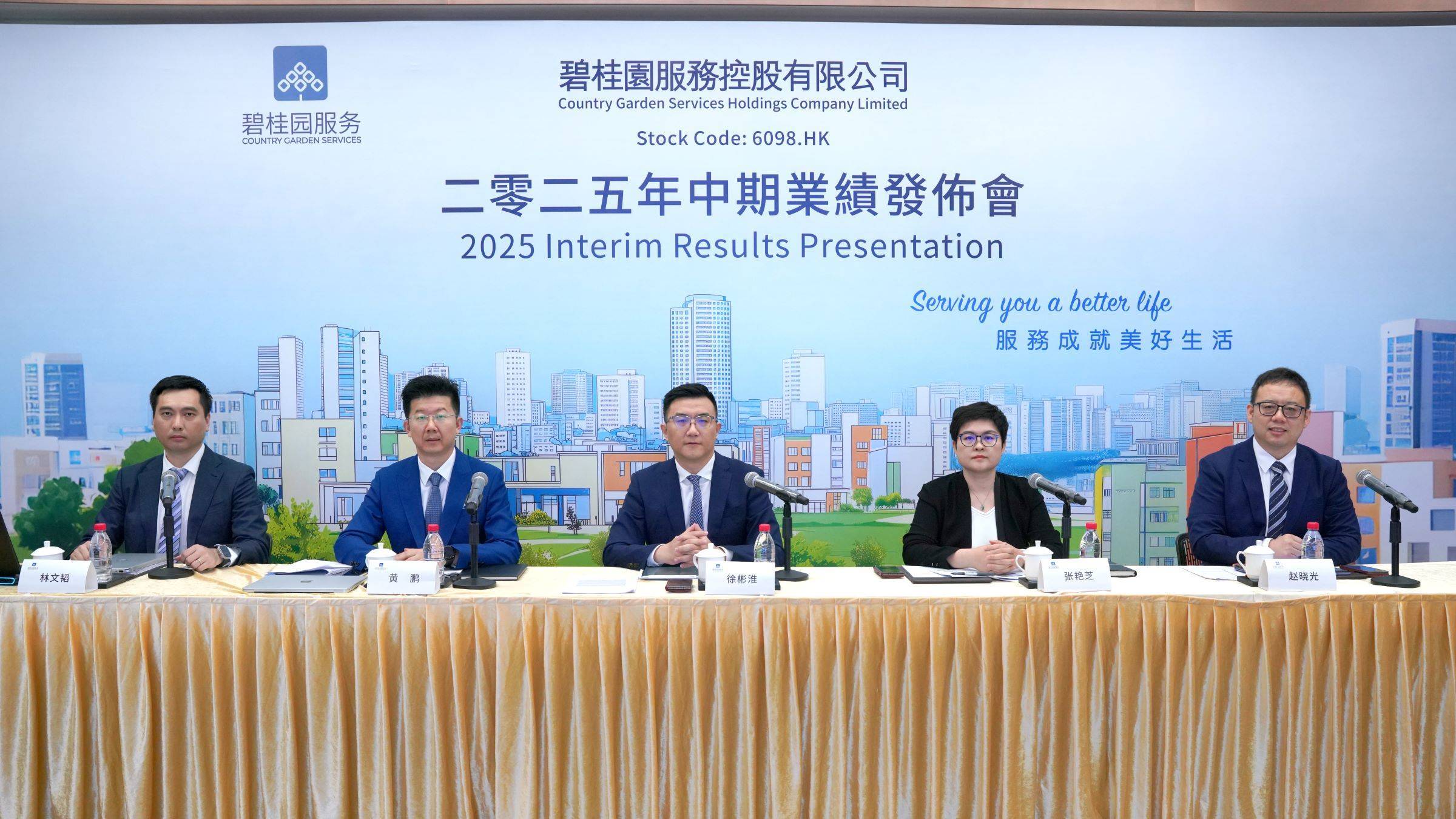
碧桂园服务上半年营收增10.2%至231.9亿,管理层称物业行业预计会更卷
Sou Hu Cai Jing· 2025-08-27 17:06
Core Insights - The company reported a revenue of 23.19 billion yuan for the first half of 2025, representing a year-on-year growth of 10.2%, while the net profit attributable to shareholders decreased by 14.8% to approximately 1.57 billion yuan [2] - The property management service revenue was 13.61 billion yuan, up 6.7%, community value-added services revenue was 2.1 billion yuan, up 5.3%, and the "three supplies and one industry" service revenue surged by 51.6% to 5.07 billion yuan [2] Business Expansion - In the first half of 2025, the company signed a total area of 64.77 million square meters for third-party expansion, marking a significant year-on-year increase of 66% [3] - The residential and commercial sectors contributed approximately 71.4% to the new annualized revenue from signed contracts, with the company successfully implementing a model for expanding into old residential areas across 11 cities including Beijing, Shanghai, and Wuhan [3] - As of June 30, the total number of managed property projects reached 8,108, with a total managed area of 1.06 billion square meters, of which projects in first- and second-tier cities accounted for about 40.2% [3] Market Challenges and Strategies - The property market is experiencing a decline in incremental growth, with increasing turnover rates for residential properties and intensified competition within the industry [3] - The management indicated that the industry is entering a painful period of reform, expecting more competitive conditions in the future [3] - The company plans to return to a customer-oriented approach over the next three to five years, aiming for reasonable profit margins and emphasizing that pricing power should belong to customers [3] Operational Adjustments - The company aims to objectively adjust its gross profit to reasonable levels in line with customer needs, with a core strategy focusing on "operational systems + data-driven decision-making + mechanism reform" to address the declining gross profit trend [3] - The company has also highlighted its new energy business, with its self-operated brand "Smart Charging" having deployed around 600,000 charging sockets in over 5,000 communities nationwide, serving more than 2 million active users monthly [3][4] Market Transformation - The proportion of revenue from related parties has significantly decreased from 20.3% in 2018 to 1.1% in the first half of 2025, indicating a successful transition from a traditional real estate-dependent model to an independent market-oriented operation [4]