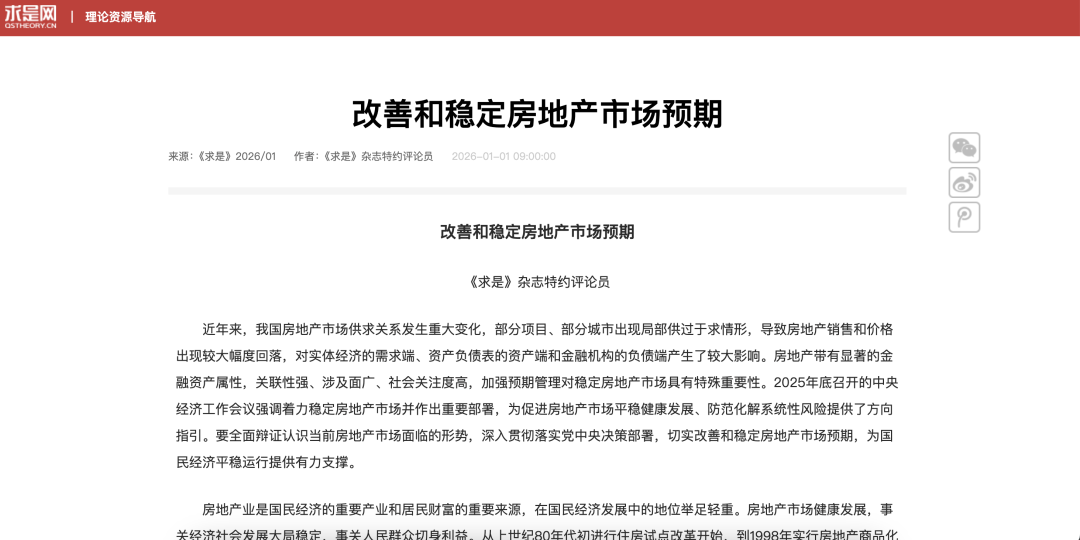
房地产金融属性

Search documents
上海启动-二手房收储-解读
2026-02-05 02:21
Summary of Conference Call Records Industry Overview - The records focus on the real estate industry in Shanghai, specifically the newly initiated "second-hand housing storage" policy aimed at addressing liquidity issues and promoting market improvement through old-for-new exchanges [1][3][10]. Key Points and Arguments Policy Implementation - The Shanghai government has launched a program to store old residential complexes, with an expected investment of 5 to 10 trillion RMB in the second half of the year to stimulate the market [1][3]. - The program is led by district governments, with funding sources including 5%-10% from housing companies, 20% from the State-owned Assets Supervision and Administration Commission (SASAC), and 70% from bank loans at interest rates between 1.3% and 2.3% [1][4]. Market Conditions - Approximately 20,000 units in Shanghai meet the criteria for storage, with significant proportions in Pudong (31%), Jing'an (11%), and Xuhui (8.5%) [1][6]. - The second-hand housing market in Shanghai has seen prices drop by about 30% from their peak, with storage prices typically 5%-10% lower than current market transaction prices, equating to 60%-70% of peak prices [1][8]. Financial Aspects - Rental yields are projected to be around 2.2%-2.5%, with rental prices set to be 10%-15% lower than market rates post-storage [1][4][10]. - The national budget for storage in 2025 is set at 750 billion RMB, but actual usage has been less than 300 billion RMB due to local financial constraints [3][19]. Future Implications - Other cities like Beijing and Shenzhen are likely to adopt similar policies to stabilize their real estate markets, as local governments recognize the potential to alter supply-demand dynamics and boost economic activity [9][10]. - The overall storage plan for the next few years is estimated to be between 5 to 10 trillion RMB, which will not directly translate to cash distribution but will involve financing through bonds and loans [20][25]. Additional Important Insights - The policy aims to improve liquidity and reduce inventory, particularly for unsold old residential units, thereby enhancing new home sales [10]. - Challenges include residents' perceptions of the benefits of the policy and practical issues such as rental yields not covering costs [7][10]. - The pricing strategy for storage involves using assessed values rather than aggressive discounting, ensuring fairness and transparency in transactions [18]. Market Dynamics - The structure of the second-hand housing market shows that properties priced below 3 million RMB account for 70% of transactions, with a notable decline in average prices across different price segments [14][16]. - The differentiation in the core area of Shanghai indicates that even discounted sales can yield reasonable returns due to the scarcity of lower-priced units [13][16]. Conclusion - The Shanghai government's initiative to store second-hand housing is a strategic move to stabilize the real estate market amidst declining prices and liquidity challenges. The expected financial backing and potential for other cities to follow suit highlight the broader implications for the real estate sector in China.
1-12月统计局房地产数据点评:销售投资持续筑底,开年政策暖风频吹
NORTHEAST SECURITIES· 2026-01-20 15:25
Investment Rating - The report rates the real estate industry as "Outperforming the Market" [5] Core Insights - In 2025, the total sales area of commercial housing reached 880 million square meters, with a year-on-year decrease of 8.7%, and the total sales amount was 8.4 trillion yuan, down 12.6% year-on-year [1] - Real estate investment for the year fell by 17.2%, with new construction and completion down 20.4% and 18.1% respectively [2] - The report emphasizes the need for strong policy support in 2026 to stabilize market expectations, highlighting the financial attributes of real estate [4] Summary by Sections Sales Data - In December 2025, the sales area of commercial housing was 94 million square meters, with a year-on-year decline of 15.6%, and the sales amount was 880 billion yuan, down 23.6% year-on-year [1] - The cumulative sales area for the year was 880 million square meters, with a year-on-year decrease of 8.7%, and the sales amount was 8.4 trillion yuan, down 12.6% [1] Supply Data - Real estate development investment for 2025 was 8.3 trillion yuan, down 17.2% year-on-year, with residential investment down 16.3% [2] - The area of new construction was 590 million square meters, down 20.4% year-on-year, while the area under construction was 6.6 billion square meters, down 10.0% [2] Funding Data - Total funds available for real estate in 2025 were 9.3 trillion yuan, down 13.4% year-on-year, with domestic loans at 1.4 trillion yuan, down 7.3% [2] - Self-raised funds amounted to 3.3 trillion yuan, down 12.2%, and personal mortgage loans were 1.3 trillion yuan, down 17.8% [2] Price Data - In December 2025, the price of second-hand homes in 70 major cities fell by 0.7% month-on-month, with a year-on-year decline of 6.1% [3] - New home prices in December decreased by 0.4% month-on-month and 3.0% year-on-year [3] Policy Insights - The report highlights the importance of a strong policy response to support the real estate market, suggesting that more robust measures are expected in 2026 [4] - The article in "Qiushi" emphasizes the financial nature of real estate and the need for decisive policy actions to stabilize market expectations [4] Investment Recommendations - The report suggests focusing on three areas within the real estate sector: commercial real estate (e.g., New Town Holdings, China Resources Mixc), second-hand brokerage (e.g., I Love My Home, Beike), and property services (e.g., Greentown Service) [4]
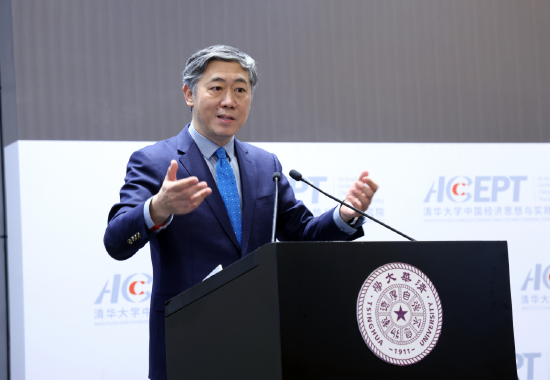
李稻葵:房地产不光有金融属性,还有民生属性
Xin Lang Cai Jing· 2026-01-13 07:08
Core Viewpoint - The 50th Tsinghua University China and World Economy Forum emphasizes the need for a housing loan interest subsidy policy to reverse residents' home buying expectations and stabilize housing prices in the short term [1][3]. Group 1: Economic Recommendations - The report suggests implementing a housing loan interest subsidy to stimulate the housing market, leveraging a small financial input to unlock a significantly larger market potential [1][3]. - The maximum potential for the "old-for-new" policy is estimated at 10 trillion, primarily involving durable consumer goods like refrigerators and cars [1][3]. Group 2: Real Estate Market Insights - The total value of the real estate market is approximately 500 trillion, with 70% (280 trillion) owned by residents, highlighting its importance beyond just financial attributes to a matter of livelihood [1][4]. - The issue of negative equity among young homeowners is framed as a significant social concern, affecting consumer confidence and behavior [1][4].

2026W01房地产周报:明确金融属性,政策一次给足-20260105
NORTHEAST SECURITIES· 2026-01-05 08:44
Investment Rating - The report maintains an "Outperform" rating for the real estate industry [8] Core Insights - The report emphasizes the financial attributes of real estate, highlighting its significant impact on the macro economy and the necessity for strong policy support from the central government [16][18] - It suggests that policies should be implemented in a decisive manner to stabilize market expectations, avoiding gradual measures that have proven ineffective [17] - The report anticipates a shift towards a new model of "affordable housing + quality housing + services," with an acceleration in the acquisition of existing properties to alleviate inventory pressure [18] Summary by Sections 1. Market Trends - The real estate market is expected to stabilize with policies that support both demand and supply, particularly in major cities where restrictions may be eased [16][18] - The report notes a significant decline in new and second-hand housing transaction volumes, with year-on-year decreases of 22.39% and 28.04% respectively [72] 2. Stock Market and Credit Bonds - The A-share real estate sector underperformed the market, with a weekly decline of 0.69%, trailing the broader market by 0.10 percentage points [21][22] - The issuance of real estate credit bonds totaled 1.514 billion yuan, with a net financing amount of -2.527 billion yuan [21] 3. REITs Market - The REITs index experienced a decline of 0.36%, with the property REITs index down 0.39% and the operating rights REITs index down 0.33% [41][54] - The total transaction volume for REITs was 0.551 billion yuan, reflecting a significant decrease of 59.30% compared to the previous period [56] 4. Land Market - The report indicates a decrease in land supply across major cities, with a 66.43% drop in supply and a 132.09% increase in transaction area, alongside a rise in premium rates [5] 5. Policy Outlook - The report outlines expectations for more robust housing policies in 2026, including the removal of restrictive measures and a focus on meeting diverse housing needs [18][19]



地产及物管行业周报:《求是》明确房地产金融属性,强调经济重要地位及居民最大资产,建议政策要一次性给足-20260104
Shenwan Hongyuan Securities· 2026-01-04 06:06
Investment Rating - The report maintains a "Positive" rating for the real estate and property management sectors, highlighting optimism for the recovery of core cities and the potential for value reassessment in shopping centers [2][30]. Core Insights - The report emphasizes the importance of the real estate sector as a significant contributor to the national economy and household wealth, advocating for robust policy measures to stabilize market expectations [30]. - It identifies two major opportunities: the rise of favorable policies for "good housing" and the strong performance of quality commercial enterprises during a monetary easing cycle, which could lead to a revaluation of consumer-oriented commercial real estate assets [2][30]. Industry Data Summary New Housing Transactions - In the week of December 27 to January 2, new housing transactions in 34 key cities totaled 4.067 million square meters, reflecting a week-on-week increase of 10.8% [2][3]. - Year-on-year, December transactions in these cities decreased by 26%, with first and second-tier cities down 25.4% and third and fourth-tier cities down 30.6% [2][6]. Second-Hand Housing Transactions - In the same week, second-hand housing transactions in 13 cities totaled 1.1 million square meters, a decrease of 10.4% from the previous week [11]. - Cumulatively, December transactions were down 26.8% year-on-year, with a notable decline in third and fourth-tier cities [11][7]. Inventory and Market Dynamics - The report notes a decrease in available housing inventory, with a total of 89.401 million square meters available in 15 cities, down 1.4% week-on-week [23]. - The average months of inventory turnover for the last three months is reported at 21.8 months, indicating a slight improvement in market absorption [23]. Policy and News Tracking Macro Policies - Recent policy changes include a reduction in the value-added tax rate for personal housing sales, aimed at stimulating market activity [30][31]. - The report highlights the need for policies that align with market expectations to avoid creating a tug-of-war between market forces and regulatory measures [30]. Company Developments - Notable company activities include the establishment of a Pre-REITs fund by China Resources Land, aimed at investing in quality commercial real estate projects [36][38]. - CIFI Holdings has completed its debt restructuring, marking a significant milestone in its financial recovery efforts [36].



2026,房地产要下猛药了!
Sou Hu Cai Jing· 2026-01-03 16:40
Core Viewpoint - The article emphasizes the need for a significant and decisive policy shift in the real estate sector, moving away from incremental measures to a more robust approach to stabilize the market [1][15][21]. Group 1: Policy Shift - The article highlights a call for a comprehensive and immediate policy response to the real estate market, indicating that previous "drip-feed" strategies have been ineffective [1][14][16]. - It suggests that the government should eliminate restrictive measures in one go, rather than making gradual adjustments that fail to engage the market [18][19]. Group 2: Economic Importance of Real Estate - The commentary underscores the financial attributes of real estate, asserting that it is a significant financial asset with broad societal implications [6]. - It notes that real estate is a crucial component of national economic stability and a primary source of wealth for households, with real estate accounting for 59.1%-77.2% of household wealth compared to only 20% in financial assets [7][12]. Group 3: Impact of Housing Prices - The article states that a 1% decline in housing prices results in a wealth loss of approximately 3 trillion yuan, with a 10% drop leading to an average household wealth reduction of 500,000 yuan [8]. - It points out that in major cities like Beijing, Shanghai, and Shenzhen, housing prices have decreased by nearly 40%, resulting in significant financial losses for households [9]. Group 4: Future Expectations - The article anticipates a more aggressive policy approach in 2026, with expectations of reduced tax burdens and lower mortgage rates to stimulate the housing market [22][23]. - It mentions that the Loan Prime Rate (LPR) has already seen a reduction, and further cuts are expected, potentially lowering mortgage rates significantly [24][25][26].