投资端改革

Search documents
证监会召开重要座谈会,吴清出席
第一财经· 2026-03-19 13:30
Core Viewpoint - The China Securities Regulatory Commission (CSRC) held a meeting to discuss the development goals and tasks for the capital market during the 14th Five-Year Plan period, emphasizing the importance of deepening investment reforms and enhancing market stability [1] Group 1: Meeting Insights - The meeting included representatives from various investment institutions such as social security funds, insurance asset management, public funds, private funds, and bank wealth management [1] - Participants acknowledged the significant progress made in building a stable market mechanism, promoting long-term capital inflow, and enhancing investor returns under the leadership of the central government [1] - Specific suggestions were made on further deepening investment reforms, improving institutional inclusiveness and adaptability, and enhancing the inherent stability of the capital market [1] Group 2: Educational Initiatives - The meeting also addressed the CSRC's efforts to establish and practice a correct view of performance through educational initiatives [1]


业绩暴增,投资者焦虑喊话:券商股为啥不涨?
经济观察报· 2026-02-05 10:54
Core Viewpoint - Despite the positive earnings forecasts from 28 brokerage firms, investor anxiety persists as stock prices continue to decline even with increasing profits [1][2]. Group 1: Earnings Performance - As of February 4, 2026, 29 brokerage firms have reported significant earnings growth, with CITIC Securities achieving a net profit exceeding 30 billion yuan, setting a new industry record [2][6]. - The overall performance of the brokerage sector has been lackluster, with the CSI Securities Index showing a year-to-date decline of 1.83%, underperforming the Shanghai Composite Index, which rose by 3.36% [2][11]. - Notably, the net profit of Guolian Minsheng surged by 406%, highlighting the disparity in performance among different firms [2][7]. Group 2: Market Dynamics - On February 2, 2026, while the A-share market experienced a pullback, brokerage stocks also dipped, but on February 3, they continued to decline despite a market rebound [3][4]. - The CSI Securities Index saw a collective rise on February 4, with all 49 constituent stocks closing in the green, indicating a potential recovery in sentiment [4][5]. Group 3: Future Outlook - Analysts predict that the brokerage sector will experience a significant earnings growth of approximately 46% in 2025, driven by improved market conditions and policy benefits [8][9]. - The brokerage industry's profitability is expected to be bolstered by three main factors: improved market conditions, optimized business structures, and ongoing policy support [9][12]. - Current valuations of brokerage stocks are considered low, with a price-to-book ratio of 1.36, suggesting potential for recovery as the sector enters a new growth cycle [11][12].







2026年怎么干?各保险公司工作会议透露这些信息
Mei Ri Jing Ji Xin Wen· 2026-02-05 06:57
Group 1: Core Insights - The insurance companies are focusing on enhancing risk management and optimizing internal processes for the year 2026, with life insurance companies showing similar priorities while property insurance companies have distinct plans [1] - The life insurance sector is entering a new development phase, with a focus on improving investment capabilities due to changing economic conditions and demographic trends, such as an aging population and increasing demand for diverse risk coverage [2][3] - The shift in regulatory policies and accounting standards is prompting life insurance companies to transition from growth-focused strategies to those emphasizing value, risk, and capital efficiency [2] Group 2: Life Insurance Focus - Companies are prioritizing investment capability enhancement as a common goal, recognizing its importance for operational management and asset-liability coordination [3] - The ongoing low-interest-rate environment is pressuring companies to improve investment returns, while the transition to floating yield products is necessitating more stable and flexible asset returns [3] Group 3: Property Insurance Differentiation - Property insurance companies are adopting varied strategies based on their strengths, with a focus on niche markets and addressing industry transformation challenges [4] - Specific examples include Guoyuan Agricultural Insurance focusing on "Agricultural Insurance+" reforms and Zhongcheng Insurance aiming to become a benchmark in new energy vehicle insurance [4][5] - The property insurance sector is expected to see a premium growth rate of 5% to 6% from 2025 to 2030, with changing drivers of growth [7]
吴晓求:建议从资产、投资、制度端构建资本市场成长的核心支点
Sou Hu Cai Jing· 2026-01-15 20:33
Group 1 - The core task during the "14th Five-Year Plan" period is to reconstruct the ecological chain of China's capital market, focusing on reforms from the asset side, investment side, and institutional side to build the core support for market growth [2] - The goal of asset side reform is to adjust the structure of listed companies, promoting high-tech and innovative enterprises as the main entities in the market, ensuring that assets meet investors' risk-return expectations [2] - The core objective of funding side reform is to expand market liquidity, encouraging large funds to enter the market, as the previous market was dominated by individual investors, limiting the entry of long-term funds due to regulatory constraints and risk considerations [2] Group 2 - Institutional side reform aims to ensure market confidence, expectations, and bottom lines, with a primary goal of enhancing market transparency through accurate disclosure of statutory information by issuers [2] - A shift from administrative penalties to a legal system focused on criminal penalties and civil compensation is necessary to improve the regulatory framework [2] - The healthy development of the capital market relies on a sound legal system, a strong spirit of contract, and sufficient market transparency, which are essential for attracting capital [3]

吴晓求:未来资本市场应做好资产端、投资端和制度端改革
Sou Hu Cai Jing· 2026-01-15 10:16
Group 1 - The core viewpoint is that China's capital market has undergone fundamental changes, with restored market confidence and stable expectations. Future reforms should focus on asset, investment, and institutional aspects to meet diverse financing needs of enterprises and wealth management needs of residents [2][3] - On the asset side, there is a need to adjust the structure of listed companies to make high-tech and innovative enterprises the mainstay. The capital market fundamentally relies on the operational achievements of rising companies for value appreciation, providing risk-return sources for investors [2] - On the investment side, expanding market liquidity is crucial, particularly by introducing "big funds." The current investor composition is dominated by small investors, and there are significant restrictions on institutional long-term funds such as commercial insurance, social security funds, and corporate annuities entering the market [2] Group 2 - On the institutional side, the core of reform is to ensure market confidence and expectations, prioritizing market transparency. Strengthening regulatory deterrence and accountability mechanisms is essential, with severe penalties for behaviors such as information fraud, market manipulation, and insider trading [3]

资本市场改革“三端”发力构建生态链
Zhong Guo Zheng Quan Bao· 2026-01-11 20:49
Core Viewpoint - The 30th China Capital Market Forum emphasized the need for a collaborative approach to enhance the capital market ecosystem, focusing on financing, investment, and regulatory reforms to support high-quality development during the 14th Five-Year Plan period [1] Financing Side - Experts highlighted the importance of enhancing services for technology innovation enterprises, suggesting adjustments to the structure of listed companies to prioritize high-tech and innovative firms [1] - Recommendations include enriching the financial product supply system to better accommodate new industries and technologies, fostering a positive cycle among technology, industry, and finance [1] - The goal is to ensure that the capital market meets investors' risk-return expectations by gradually introducing high-growth tech companies [1] Investment Side - The investment side reform aims to create a stable environment for long-term capital, encouraging large funds to enter the market [2] - The focus is on improving the institutional framework for long-term investments, ensuring that various funds are attracted to the market and can thrive [2] - Historically, the market has been dominated by individual investors, but there is a push to bring in institutional investors like insurance funds and pension funds to enhance market liquidity [2] Regulatory Side - The regulatory environment is deemed crucial for the healthy operation of the capital market, with a focus on enhancing the effectiveness of regulatory enforcement through legal and market-oriented methods [3] - Experts advocate for a comprehensive regulatory system that adapts to rapid market changes, ensuring transparency and accountability among market participants [3] - The core of regulatory reform is to build investor confidence by ensuring market transparency and accurate disclosure of information by issuers [3] Additional Recommendations - Suggestions include establishing a robust securities and futures regulatory system to combat financial fraud and enhance investor protection [4] - There is a call for addressing barriers to long-term capital entering the market, including reforms in public funds and promoting a cycle of fundraising and investment in private equity and venture capital [3][4]
中国人民大学国家金融研究院院长吴晓求:下一步资本市场应做好资产端、投资端、制度端三重改革
Qi Huo Ri Bao Wang· 2026-01-11 16:48
Core Viewpoint - The Chinese capital market has undergone fundamental changes over the past year, particularly since September 24, 2024, with a gradual recovery in market confidence and stabilization of expectations. The next steps involve reforms in three areas: asset side, investment side, and institutional side [1]. Group 1: Asset Side Reform - The goal of asset side reform is to adjust the structure of listed companies, promoting a shift towards high-tech and innovative enterprises to enhance the risk-return capability of the market and optimize the asset structure [1]. Group 2: Investment Side Reform - Investment side reform aims to relax institutional constraints on long-term funds such as insurance, social security, and pension funds entering the market, thereby expanding market liquidity. The revision of rules is intended to guide more long-term institutional funds to enter the market in an orderly and large-scale manner, maintaining a healthy liquidity state [1]. Group 3: Institutional Side Reform - Institutional reform is highlighted as the most critical task, with the core objective being to ensure market transparency, which is deemed the lifeline of the capital market. Various measures will be taken to ensure that issuers disclose information truthfully. The fundamental goal of the reform is to eliminate risks associated with fraudulent listings, financial fraud, false disclosures, and insider trading. Severe penalties will be imposed on all "risk creators" and those who assist them, transitioning from administrative penalties to criminal and civil liabilities. Additionally, intermediary institutions will face equivalent severe penalties [1]. Group 4: Foundations of Capital Market Development - The development of the capital market is supported by three key foundations: a sound legal system, a high degree of contractual spirit, and market transparency. A sound legal system stabilizes market expectations and promotes capital flow, while the contractual spirit is essential for maintaining financial order. Transparency is considered the lifeline of the capital market, with regulatory functions focusing on transparency oversight to ensure all participants, especially listed companies and intermediary institutions, disclose information truthfully [2].
中国人民大学国家金融研究院院长吴晓求:下一步资本市场改革着力点是“三端”
Zheng Quan Ri Bao Wang· 2026-01-11 09:06
Core Viewpoint - The Chinese capital market has undergone fundamental changes since September 24, 2024, with gradually restored market confidence and stable expectations, necessitating reforms focused on the asset side, investment side, and institutional side to meet diverse financing needs of enterprises and wealth management needs of residents [1][2]. Asset Side Reform - The goal of asset side reform is to adjust the structure of listed companies in China, allowing technology-driven enterprises to become the mainstay, as they can provide risk-return rates that meet investor demands [1]. Investment Side Reform - Investment side reform aims to attract large funds by relaxing rules for their entry into the market, specifically targeting long-term funds such as insurance capital, social security funds, pensions, and annuities. This reform is crucial for expanding market liquidity and ensuring it remains relatively sufficient [1]. Institutional Side Reform - Institutional side reform focuses on ensuring market confidence, expectations, and bottom lines, with the core goal of enhancing market transparency. This includes measures to ensure issuers disclose information truthfully and to eliminate risks associated with fraudulent listings, financial fraud, false disclosures, and insider trading. Severe penalties will be imposed on those who create such risks, transitioning from administrative to criminal and civil penalties [2]. Foundations of Capital Market Development - The development of the capital market relies on three key foundations: a sound legal system, a strong spirit of contract, and transparency. A sound legal system stabilizes market expectations and promotes capital flow, while the spirit of contract maintains financial order through stability and predictability in the macro environment. Transparency is deemed the lifeline of the capital market, with regulatory functions centered on ensuring all participants, especially listed companies and intermediaries, disclose information truthfully [3].
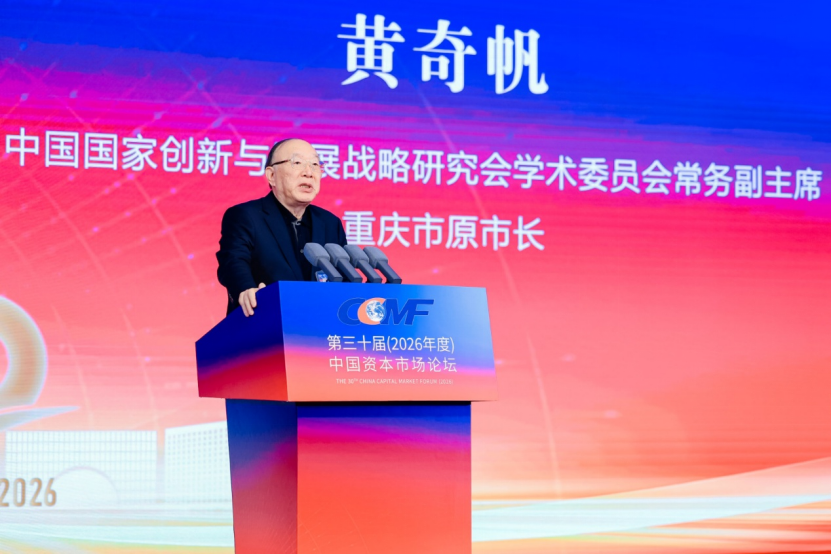
建言资本市场发展!黄奇帆、高培勇、吴晓求、丁志杰最新发声
Xin Lang Cai Jing· 2026-01-10 12:17
Group 1 - The forum highlighted the importance of improving the direct financing ratio in China's capital market, suggesting a dual approach of developing both the stock market and equity investment funds [1][3] - Huang Qifan proposed the establishment of an equity guidance fund involving banks, social security, insurance, and foreign exchange funds, potentially creating a fund size of 40 to 50 trillion yuan to support corporate equity supplementation [3][4] - The discussion emphasized the need for a robust expectation management mechanism as a key aspect of enhancing the governance system of the capital market [4][6] Group 2 - Gao Peiyong stressed that managing expectations will be crucial for macroeconomic governance and the capital market's governance system, linking it to stabilizing market confidence [6][4] - Wu Xiaoqiu pointed out the necessity for reforms in the asset, investment, and institutional aspects of the capital market to meet diverse financing needs and enhance wealth management [8][10] - Ding Zhijie noted that a significant portion of long-term capital remains trapped in the banking system, and transforming household savings into patient capital could optimize the financial structure and increase direct financing [10][11]
从优化上市公司结构、提升市场流动性和透明度等深化资本市场改革
Sou Hu Cai Jing· 2025-12-08 05:50
Group 1 - The core viewpoint is that the A-share market has entered an upward trend due to a series of measures, and there is a need to accurately grasp the three goals of China's capital market reform to promote high-quality development [1][4] Group 2 - The first goal is to ensure that investors feel secure in their investments [4] - The second goal is to establish the capital market as a platform for social wealth management [4] - The third goal is to build China's capital market into an important new international financial center [4] Group 3 - Reforms should be deepened from the asset side, investment side, and institutional side [4] - The core of asset-side reform is to adjust the structure of listed companies, promoting high-tech and innovative enterprises as the main body of listed companies [4] - The core of investment-side reform is to enhance market liquidity, particularly by encouraging long-term large capital to enter the market, significantly increasing the flow and stock of funds [4] - The core of institutional reform is to ensure market transparency and fairness, transitioning from administrative penalties for illegal activities to criminal and civil penalties without limits, making violations costly [4]