
指数权重调整

Search documents
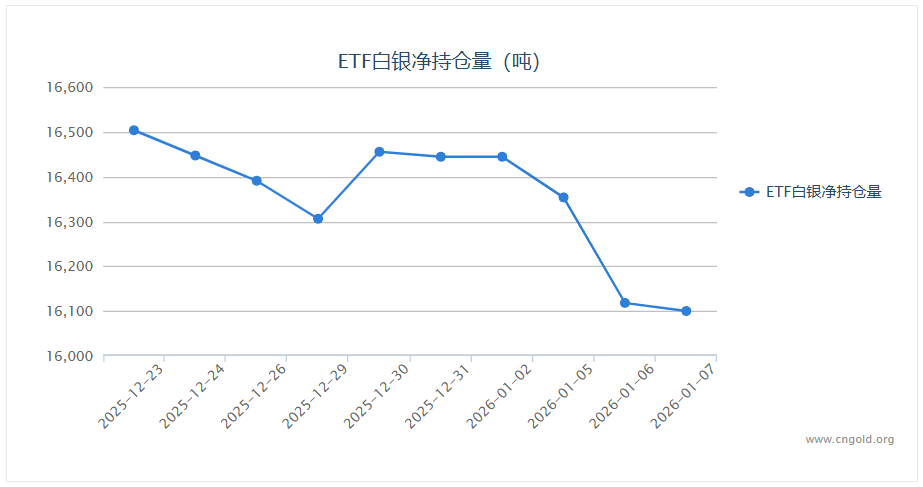
【白银etf持仓量】1月7日白银ETF较上一交易日减少18.33吨
Jin Tou Wang· 2026-01-08 08:37
Group 1 - The iShares Silver Trust, the world's largest silver ETF, reported a holding of 16,099.83 tons of silver as of January 7, a decrease of 18.33 tons from the previous trading day [1] - On January 7, the spot silver price closed at $78.17 per ounce, down 3.74%, with an intraday high of $82.73 and a low of $76.32 [1] Group 2 - Bloomberg Commodity Index (BCOM) will undergo a one-week annual rebalancing from January 9 to 15, 2026, which will trigger over $14 billion in precious metal sell-offs [3] - The weight of silver in the index will be significantly reduced from 9.6% to 3.94%, forcing funds and ETFs tracking the index to sell large amounts of silver positions [3] - Deutsche Bank and TD Securities estimate that between $7.1 billion and $7.7 billion in silver sell-offs will occur in the next two weeks, equivalent to 13% of the total open interest in the COMEX silver market [3]

指数权重调整,金银或许引发“大地震”
Sou Hu Cai Jing· 2026-01-08 08:12
Group 1 - Bloomberg Commodity Index (BOCM) will undergo rebalancing from January 9 to January 15, with adjustments in commodity weightings [1] - The index includes six major categories: energy, industrial metals, precious metals, grains, livestock, and soft commodities, with a maximum single commodity weight of 15% [1] - Gold's weight will decrease from 20.4% to 14.9%, while silver's weight will drop from 9.6% to 3.94%, leading to significant sell-offs in both metals [1] Group 2 - An estimated $7.7 billion in sell orders for silver and $6 to $7 billion for gold are expected due to the rebalancing, based on the current and target weights [1] - The sell-off is attributed to the need for tracking funds to adjust their positions in response to the index changes, potentially leading to market panic [1] - The impact on gold and silver prices may result in significant adjustments in the coming weeks, with the effects expected to dissipate after the new weights are implemented on January 15 [1] Group 3 - Current gold prices are influenced by risk events, with a recent upward trend characterized by a lack of strong momentum, indicating a balance between bullish and bearish forces [2] - The key resistance level for gold is identified at $4,480, with potential downward movement expected if this level is breached [4] - The market is currently in a high-level consolidation phase, with traders cautious about entering positions ahead of the index weight adjustments [4] Group 4 - The strategy suggested is to follow the downward trend, using $4,480 as a stop-loss level, with targets set for $4,430 and potentially $4,410 to $4,406 [5] - A significant correction is deemed necessary to pave the way for a bull market in 2026, emphasizing the cyclical nature of market trends [5]

华泰证券:指数权重调整,白银被动配售压力或强于黄金
Xin Lang Cai Jing· 2026-01-08 07:30
Core Viewpoint - Huatai Securities indicates that silver is experiencing stronger passive selling pressure compared to gold due to the impact of rebalancing [1] Group 1: Market Dynamics - The silver futures market has significantly lower capacity and liquidity than gold, leading to a higher proportion of passive adjustment scale relative to total open contracts [1] - During the rebalancing window, silver may face more concentrated technical selling pressure, while gold is expected to exhibit a more moderate technical correction [1]

彭博大宗商品指数年度再平衡启动 白银权重将大降至3.94%
Xin Lang Cai Jing· 2026-01-08 07:22
Group 1 - The Bloomberg Commodity Index (BCOM) will undergo an annual rebalancing adjustment from January 9 to January 15, 2026, impacting the global commodity market significantly [1] - The weight of silver in the index will be reduced from 9.6% to 3.94%, leading to forced sell-offs of substantial silver positions by funds and ETFs tracking the index [1] - Deutsche Bank and TD Securities estimate that between $7.1 billion and $7.7 billion worth of silver will be sold in the next two weeks, which is approximately 13% of the total open interest in the COMEX silver market [1]
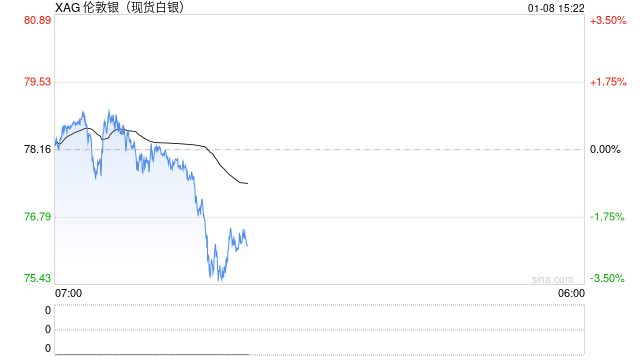
国际银价,大跌!
中国能源报· 2026-01-08 06:36
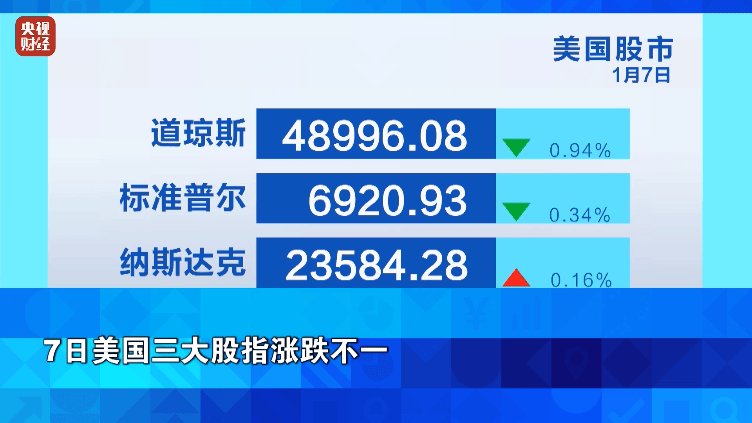
Group 1 - The core viewpoint of the article highlights a significant pullback in the precious metals market, particularly in international silver prices, which fell by 4.23% [1][11][13] - On March 7, the S&P 500 and Dow Jones indices reached intraday historical highs but later showed a clear reduction in market momentum, leading to a mixed performance among the three major U.S. stock indices [5][6] - The banking sector experienced a collective pullback, with major banks like JPMorgan, Bank of America, and Wells Fargo each declining by over 2%, which notably impacted the overall market [5][6] Group 2 - In Europe, the three major stock indices also displayed mixed results, with the FTSE 100 down by 0.74%, while the DAX index increased by 0.92% [8] - The European Union's preliminary data indicated that the Eurozone inflation rate for December 2025 was 2.0%, slightly lower than the previous month's 2.1% [8] - The recent decline in international silver and gold prices is attributed to the upcoming annual weight rebalancing of the Bloomberg Commodity Index, which is expected to lead to significant adjustments in the weights of gold and silver, prompting technical sell-offs by funds tracking the index [13]

国际银价,大跌超4%
Sou Hu Cai Jing· 2026-01-08 03:31
Group 1 - The precious metals market experienced a significant pullback, with international silver prices dropping by 4.23% [1][7][9] - The S&P 500 and Dow Jones indices reached intraday historical highs but showed weakened momentum as trading progressed, leading to a mixed performance among the three major U.S. indices [3] - The banking sector faced a collective pullback, with major banks like JPMorgan Chase, Bank of America, and Wells Fargo each declining over 2%, negatively impacting the overall market [3] Group 2 - In Europe, the three major indices showed mixed results, with the FTSE 100 down by 0.74%, the CAC40 down by 0.04%, and the DAX up by 0.92% [5] - The preliminary data from the EU statistics office indicated that the Eurozone inflation rate for December 2025 is projected to be 2.0%, slightly lower than the 2.1% recorded in November [5] - The recent decline in international silver and gold prices is attributed to the upcoming annual weight rebalancing of the Bloomberg Commodity Index, which is expected to lead to significant adjustments in the weights of gold and silver, prompting technical sell-offs by funds tracking the index [9]
贵金属突然跳水
Di Yi Cai Jing Zi Xun· 2026-01-08 00:17
Group 1 - The core viewpoint of the article highlights a significant sell-off in the precious metals market, particularly gold, following a peak at $4500, driven by profit-taking and an upcoming rebalancing of the Bloomberg Commodity Index, which is expected to trigger over $10 billion in long liquidation in gold and silver futures [2][3]. - The Bloomberg Commodity Index, a widely used benchmark in the commodity investment field, is undergoing an annual weight adjustment from January 8 to 14, with substantial funds involved. The weight of silver futures in the index is being reduced from 9% to just below 4% by 2026, while gold's weight is also significantly decreased [3]. - Citigroup estimates that the sell-off in gold and silver will amount to around $7 billion each, with gold's assets under management (AUM) at $33.8 billion and a target of $27 billion, while silver's AUM is $12.9 billion with a target of $6 billion [3]. Group 2 - Morgan Stanley notes that January is a month of intense competition between bullish and bearish factors for gold investors, as historical data shows an 80% probability of price increases during the last ten trading days of the previous year and the first twenty trading days of the new year [4]. - Despite the traditional seasonal strength of gold, the large-scale technical sell-off due to index weight adjustments may counteract this upward momentum, with Morgan Stanley warning that the sell-off pressure this year is more significant than last year [4]. - Following a record annual increase in gold and silver prices, investors are taking profit, as evidenced by the reduction in net long positions in COMEX gold and silver futures [5]. Group 3 - The outlook for gold remains positive, as it has surpassed U.S. Treasury bonds to become the largest reserve asset globally, with central bank gold holdings nearing $4 trillion, exceeding the $3.9 trillion in U.S. Treasury bonds [6]. - The increase in gold's appeal as a safe-haven asset is driven by geopolitical tensions and concerns over fiscal sustainability, with a cumulative price increase of nearly 70% expected for the year [6]. - Market expectations for further easing of monetary policy by the Federal Reserve provide additional support for gold prices, as lower interest rates reduce the opportunity cost of holding non-yielding assets like gold and silver [6]. Group 4 - Recent geopolitical developments, including U.S. military actions in Venezuela and renewed interest in Greenland, have heightened geopolitical tensions, which are likely to influence market sentiment and gold demand [7]. - Economic indicators show a slowdown in U.S. economic momentum, with expectations of approximately two interest rate cuts by the Federal Reserve this year, further supporting the case for rising gold prices [7]. - Analysts predict that gold prices could reach $5000 per ounce by the end of the first quarter, driven by central bank gold purchases, expanding fiscal deficits, declining U.S. interest rates, and ongoing geopolitical risks [7].

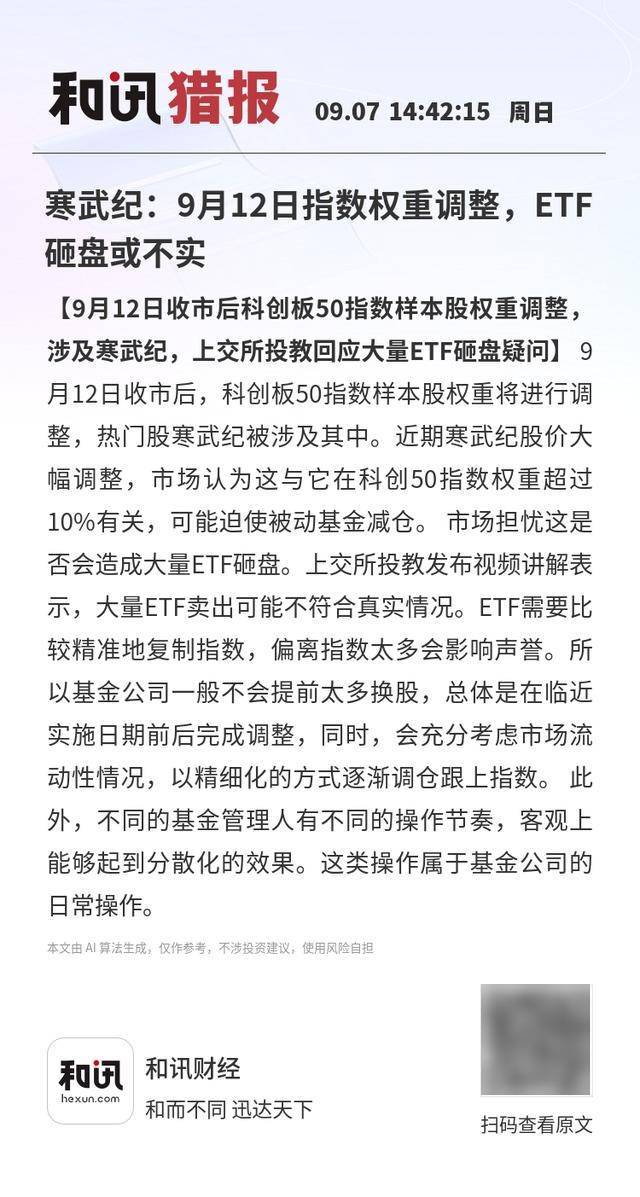
寒武纪:9月12日指数权重调整,ETF砸盘或不实
Sou Hu Cai Jing· 2025-09-07 07:15
Core Viewpoint - The adjustment of the weight of the stocks in the Sci-Tech Innovation Board 50 Index, particularly involving the popular stock Cambricon, has raised concerns about potential forced selling by passive funds due to its weight exceeding 10% in the index [1]. Group 1 - The Sci-Tech Innovation Board 50 Index will undergo a weight adjustment after the market closes on September 12, with Cambricon being a key stock affected [1]. - Recent significant price adjustments in Cambricon's stock have led to market speculation that this is linked to its index weight, which may compel passive funds to reduce their holdings [1]. - Concerns have been expressed regarding the possibility of large-scale ETF sell-offs, but the Shanghai Stock Exchange's investor education video clarified that such sell-offs may not accurately reflect the situation [1]. Group 2 - The Shanghai Stock Exchange emphasized that ETFs need to closely replicate the index, and significant deviations could harm their reputation, leading fund companies to avoid premature stock changes [1]. - Adjustments are typically made around the implementation date while considering market liquidity, allowing for a gradual and refined rebalancing to align with the index [1]. - Different fund managers may have varying operational rhythms, which can inherently provide a diversification effect in the market [1].

上证180行业分层等权重指数上涨0.12%,前十大权重包含中国电信等
Jin Rong Jie· 2025-06-03 09:04
Group 1 - The Shanghai Stock Exchange 180 Industry Layered Equal Weight Index (180 Layered, 000093) rose by 0.12% to 10,993.14 points, with a trading volume of 134.33 billion yuan [1] - Over the past month, the 180 Layered Index increased by 0.93%, while it decreased by 0.57% over the last three months and has fallen by 2.62% year-to-date [1] - The 180 Layered Index and the Equal Weight Index share the same sample as the 180 Index, with the former using an equal weight method for industry distribution, providing different risk-return characteristics for investors [1] Group 2 - The top ten holdings of the 180 Layered Equal Weight Index include Zhangjiang Hi-Tech (4.17%), Poly Developments (3.91%), China Telecom (2.83%), China Mobile (2.58%), China Unicom (2.38%), China Satcom (2.15%), Dongpeng Beverage (1.25%), Baillie Gifford (1.17%), China Petroleum (1.17%), and China National Offshore Oil Corporation (1.12%) [1] - The index is fully composed of stocks listed on the Shanghai Stock Exchange, with the largest sector allocations being Communication Services (9.94%), Consumer Staples (9.62%), Healthcare (9.62%), Financials (9.53%), and Materials (9.28%) [2] - The index samples are adjusted biannually, with changes implemented on the next trading day after the second Friday of June and December, typically not exceeding 10% of the sample [2]
