彭博大宗商品指数(BCOM)

Search documents
【广发宏观陈礼清】如何看商品指数年度再平衡及今年白银定价
郭磊宏观茶座· 2026-01-09 13:45
Group 1 - The Bloomberg Commodity Index (BCOM) underwent a rebalancing from January 9 to January 15, resulting in a significant reduction of gold and silver weights, with gold decreasing from 20.5% to 14.9% and silver from 9.7% to 3.94% [1][6][30] - Historical data suggests that rebalancing typically has limited impact on futures and spot prices, primarily affecting open interest and trading volume [8][30] - The 2026 rebalancing is unique due to the unprecedented reduction in silver weight by 5.8%, alongside a notable increase in silver's volatility and liquidity concerns [8][30][33] Group 2 - Since 2022, silver and gold mining stocks have been viewed as "gold-like" assets, with financial attributes driving their pricing. However, a shift occurred in 2025, where silver's spot market experienced short-term tightness, leading to a narrative-driven market [12][13] - Industrial demand for silver is projected to account for nearly 60% of total demand by 2024, significantly up from 45% in 2015, driven by solar energy and other industrial applications [17][18] - The narrative around silver pricing is expected to evolve, with supply-demand dynamics becoming more critical in determining price fluctuations, particularly as new industrial demands emerge [19][27] Group 3 - The analysis of past silver pricing trends indicates that significant price movements were often linked to broader economic narratives, such as geopolitical events and monetary policy changes [21][22] - Current conditions suggest that the "shortage" narrative for silver is easing but has not fully reversed, with indicators like swap rates and leasing rates showing signs of stabilization [24][27] - The upcoming year is anticipated to see silver prices influenced by both the rebalancing effects and the evolving dynamics of the physical market, particularly in light of U.S. trade policies [27][28]


重要商品指数再平衡开启,两大投行预言“白银两周内调整”,高盛“关键还是伦敦”
3 6 Ke· 2026-01-09 02:19
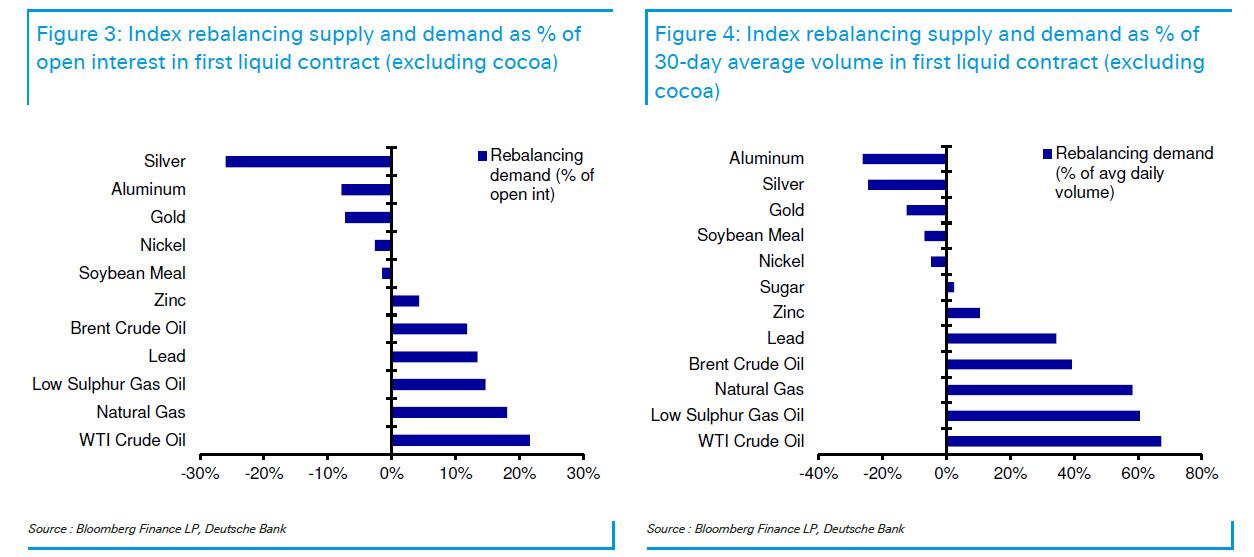
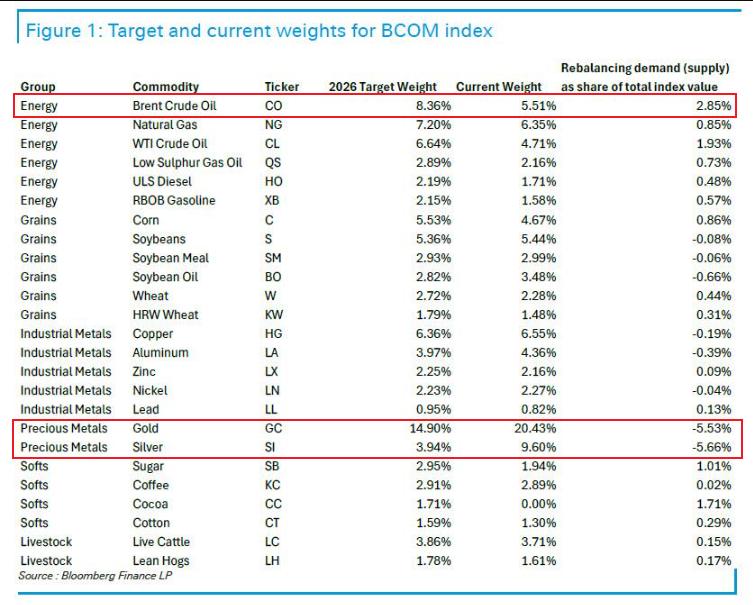
Core Viewpoint - The Bloomberg Commodity Index (BCOM) will undergo annual rebalancing, significantly reducing the weight of gold from 20.4% to 14.9% and silver from 9.6% to 3.94%, leading to substantial selling pressure on silver [1][2]. Group 1: Rebalancing Details - The rebalancing period will start after market close on January 8 and continue until January 14, with execution from January 9 to 15 [1]. - The BCOM index weights are calculated based on two-thirds trading volume and one-third global production, with a maximum weight limit of 15% for any single commodity to maintain diversification [1]. Group 2: Market Impact - Deutsche Bank and TD Securities estimate that $7.7 billion in silver sell orders will flood the market over the next two weeks, equating to 13% of the total open interest in the COMEX silver market, potentially causing significant price corrections [2][3]. - Silver is expected to experience the highest selling pressure during the rebalancing, followed by aluminum and gold, while WTI crude oil, natural gas, and low-sulfur diesel will see increased buying demand [4][5]. Group 3: Analyst Perspectives - Deutsche Bank analyst Michael Hsueh noted that the rebalancing is unfavorable for precious metals but beneficial for crude oil [3][4]. - TD Securities analyst Daniel Ghali highlighted that the trading volume of the largest silver ETF has reached extreme levels, indicating speculative fervor among retail investors, which may lead to a significant revaluation of silver prices [9]. - Goldman Sachs analyst Lina Thomas emphasized that liquidity in the London market is crucial for determining silver price trends, predicting continued extreme price volatility as long as inventory tightness persists [10][11].
重要商品指数再平衡今日开启,两大投行预言“白银两周内调整”,高盛“关键还是伦敦”
华尔街见闻· 2026-01-08 12:18
Core Viewpoint - The upcoming annual rebalancing of the Bloomberg Commodity Index (BCOM) will significantly reduce the weight of gold from 20.4% to 14.9% and silver from 9.6% to 3.94%, leading to substantial selling pressure on silver [1][2]. Group 1: Rebalancing Impact - Deutsche Bank and TD Securities estimate that $7.7 billion worth of silver will flood the market in the next two weeks, equating to 13% of the total open interest in the COMEX silver market, which may trigger a significant price correction [2][10]. - The rebalancing process is expected to unfold over several days, not just one, indicating a prolonged period of selling pressure on precious metals, particularly silver [5]. Group 2: Market Reactions - Analysts from Deutsche Bank suggest that the rebalancing will negatively impact precious metals while benefiting crude oil [3][5]. - TD Securities highlights that the trading volume of the largest silver ETF has reached extreme levels, typically seen only at market peaks, indicating speculative fervor among retail investors [3][10]. Group 3: Supply and Demand Dynamics - Goldman Sachs emphasizes that liquidity in the London market is crucial for determining silver price trends, with tight inventory conditions likely to lead to extreme price volatility [4][12]. - The current tightness in the London market is exacerbated by speculative activities surrounding U.S. trade policies, which have led to a significant outflow of silver from London inventories [12][13]. Group 4: Price Sensitivity - Deutsche Bank estimates that a sale of 2.4 million ounces of gold could lead to a price drop of 2.5%-3.0%, depending on the sensitivity model used [7]. - In tight market conditions, the sensitivity of silver prices to net demand has increased significantly, with a typical weekly demand of 1,000 tons pushing prices up by about 2%, now heightened to 7% [13].
白银提前大跳水?一文了解将发生什么
Feng Huang Wang· 2026-01-08 10:01
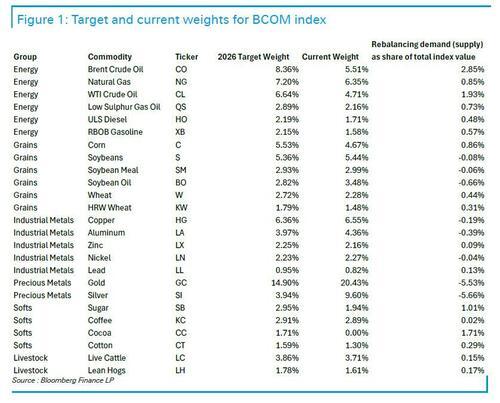
Core Viewpoint - The upcoming rebalancing of the Bloomberg Commodity Index (BCOM) is expected to negatively impact precious metals like gold and silver, while benefiting crude oil and other energy commodities [2][4]. Group 1: Market Predictions - Daniel Ghali from TD Securities predicted a potential 13% sell-off of open contracts in the COMEX silver market, leading to a significant drop in silver prices and ongoing liquidity issues [1]. - Hsueh from Deutsche Bank indicated that the rebalancing could result in a downward adjustment of gold's weight from 20.4% to 14.9%, and silver's weight from 9.6% to 3.94% [2][3]. Group 2: Rebalancing Details - The BCOM rebalancing will occur from January 9 to January 15, 2024, and will not be completed in a single day [5]. - The largest supply impact from the rebalancing is expected to come from silver, aluminum, and gold, while the largest demand impact will be seen in WTI crude oil, natural gas, and low-sulfur diesel [5]. Group 3: Historical Context - Historical data shows that significant weight changes in the BCOM have generally correlated with price movements of the respective commodities, with the exception of gold in the previous year [8]. - The estimated impact of a 2.4 million ounces gold sell-off could lead to a price decrease of 2.5% to 3.0%, depending on the analysis method used [7].
彭博大宗商品指数年度再平衡启动 白银权重将大降至3.94%
Xin Lang Cai Jing· 2026-01-08 07:22
Group 1 - The Bloomberg Commodity Index (BCOM) will undergo an annual rebalancing adjustment from January 9 to January 15, 2026, impacting the global commodity market significantly [1] - The weight of silver in the index will be reduced from 9.6% to 3.94%, leading to forced sell-offs of substantial silver positions by funds and ETFs tracking the index [1] - Deutsche Bank and TD Securities estimate that between $7.1 billion and $7.7 billion worth of silver will be sold in the next two weeks, which is approximately 13% of the total open interest in the COMEX silver market [1]
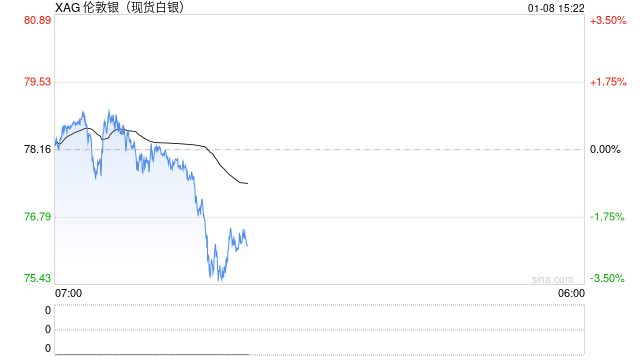
重要商品指数再平衡周五开启,两大投行预言“白银两周内调整”,高盛“关键还是伦敦”
Hua Er Jie Jian Wen· 2026-01-08 00:26
Core Viewpoint - The Bloomberg Commodity Index (BCOM) is set to undergo annual rebalancing, leading to significant selling pressure on silver, with an estimated $7.7 billion in silver sell orders expected to enter the market over the next two weeks, equating to 13% of the total open interest in the COMEX silver market [1][6][7]. Group 1: Rebalancing Impact - The rebalancing will reduce the weight of gold from 20.4% to 14.9%, with silver also facing a weight reduction [1][2]. - Deutsche Bank's analysis indicates that silver will experience the largest selling pressure during the rebalancing period, followed by aluminum and gold [2]. - The rebalancing period is scheduled from January 9 to January 15 [1]. Group 2: Market Dynamics - TD Securities highlights that the trading volume of the largest silver ETF has reached extreme levels, typically seen only at market peaks, indicating speculative fervor among retail investors [1][6]. - The report suggests that the recent surge in silver prices is not reflective of demand or supply fundamentals, but rather a speculative bubble that may lead to significant price corrections [6]. Group 3: Supply and Demand Factors - Goldman Sachs presents a contrasting view, emphasizing that liquidity in the London market is crucial for determining silver price movements. They predict that extreme price volatility will persist as long as the tight inventory situation in London remains unresolved [1][8]. - The tight inventory in London has led to increased borrowing costs for physical silver, indicating a supply squeeze [9][11]. Group 4: Future Price Projections - Goldman Sachs notes that lower inventory levels have created conditions for price squeezes, with sensitivity to demand changes significantly heightened during tight supply situations [11]. - If liquidity in London improves, there could be a notable downside risk for silver prices, especially if silver currently held in the U.S. returns to London, alleviating the tightness [12].