
教育科技人才融合

Search documents
丰台区:全面跃升“三化五区”焕新丰台
Xin Lang Cai Jing· 2026-01-26 22:09
Group 1 - Fengtai District aims to promote urban renewal, industrial revitalization, functional enhancement, and governance innovation to achieve significant contributions to the city [1] - The district plans to build an integrated innovation zone, enhance the functionality of the South Central Axis area, and accelerate the construction of the first phase of the museum cluster [1][3] - Fengtai District will implement innovative cooperation models among central and local governments, universities, and enterprises to advance the Beijing-Xiong'an talent and innovation corridor [3] Group 2 - The district will focus on the "Green City Nine Methods" to promote garden city construction and expand the "Happy Learning Park" educational ecosystem [2][4] - By 2025, Fengtai District aims to complete major event service tasks and continuously optimize regional functional quality, demonstrating resilience and vitality in development [2] - The district will enhance the development capacity of the Lize Financial Business District and promote the construction of key projects such as the urban terminal [3] Group 3 - Fengtai District will deepen the integration of education, technology, and talent, and build platforms like "Scholars Returning Home" and "International Talent Port" [3] - The district will promote the "two healths" initiative and create a vibrant private economy zone by optimizing the business environment and implementing direct benefits from policies [4] - Fengtai District will explore urban renewal models and enhance rural revitalization through financial, technological, and legal mechanisms [4]
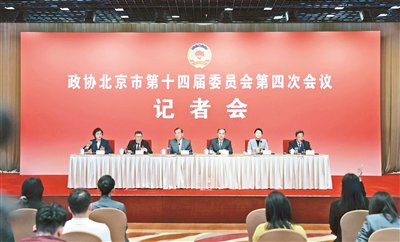
5位委员聚焦“十五五”建言献策
Bei Jing Qing Nian Bao· 2026-01-26 01:55
Core Viewpoint - The Beijing Municipal Political Consultative Conference is focusing on the implementation of the "14th Five-Year Plan," emphasizing contributions to urban development, education, technology, and cultural integration [2][11]. Group 1: Urban Development and Environmental Initiatives - The "14th Five-Year Plan" aims to advance the construction of a beautiful Beijing, promoting a green, low-carbon, and livable environment, exemplified by the new garden corridor over one kilometer long near the Guomao area [2][11]. - A task force has been established to study international best practices and domestic case studies, resulting in 25 key recommendations that have led to tangible benefits for residents, such as the development of greenways along major roads [3][12]. Group 2: Technology and Talent Integration - Beijing is positioned as a core engine for national technological advancement, facing challenges in integrating education, technology, and talent. The focus is on deepening the collaboration among these three areas [4][13]. - Recommendations include forming innovation alliances between universities, research institutions, and leading enterprises, along with establishing shared platforms for research resources and reforming talent evaluation systems [4][13]. Group 3: Urban Renewal Strategies - Urban renewal in Beijing is not merely about physical space updates but involves comprehensive strategies that align with national objectives, addressing various building types and public infrastructure [5][15]. - The approach emphasizes principles such as sustainable development, ecological priority, cultural heritage, and public welfare, while managing population and ecological limits [6][15]. Group 4: Sports and Cultural Integration - The "14th Five-Year Plan" highlights the importance of integrating cultural, sports, and tourism sectors, leveraging Beijing's status as a dual Olympic city to enhance its global appeal [7][16]. - There is a push for developing a robust sports event ecosystem, supported by policies that encourage cross-sector collaboration and the creation of new cultural and sporting IPs [7][16]. Group 5: Agricultural and Rural Development - Agricultural development is crucial for achieving modern socialist goals, with a focus on enhancing rural living conditions and promoting resilience against disasters [8][17]. - Strategies include developing smart agriculture, promoting health-oriented agricultural practices, and creating diverse consumption scenarios that blend rural charm with urban experiences [8][17].

锚定“十五五”主要目标,河南准备这样干
Zheng Zhou Ri Bao· 2025-12-01 00:46
Core Viewpoint - The "15th Five-Year Plan" for Henan aims to achieve significant progress in economic and social development, targeting a per capita GDP close to that of moderately developed countries by 2035, while synchronously realizing socialist modernization with the nation [2][3]. Group 1: Economic Development Goals - The main goals for Henan's development during the "15th Five-Year Plan" period include "two major advancements and four significant outcomes," emphasizing both qualitative improvements and reasonable quantitative growth [3]. - The plan focuses on high-quality development, aiming to strengthen agriculture, manufacturing, science and education, digital intelligence, transportation, and cultural tourism [3][4]. Group 2: Industrial and Technological Advancements - Henan will accelerate the construction of a modern industrial system centered on advanced manufacturing, optimizing traditional industries and fostering emerging sectors [6][7]. - The province aims to enhance the integration of education, technology, and talent development to support industrial growth, focusing on a multi-chain approach that combines education, innovation, talent, and industry [7]. Group 3: Agricultural Modernization - The plan sets a goal for agricultural modernization by 2035, aiming to establish a robust agricultural province and achieve significant rural revitalization [10]. - Key initiatives include improving grain production through technology and management, developing a modern rural industrial system, and enhancing agricultural technology and equipment support [11]. Group 4: Urbanization and Regional Development - The plan outlines a new urbanization strategy, focusing on strengthening Zhengzhou as a national center city and enhancing the development of surrounding cities [12]. - It emphasizes regional cooperation and integration with neighboring provinces to promote high-quality regional development [12][9]. Group 5: Health and Social Welfare - The plan aims to improve public health and welfare, targeting an average life expectancy of around 80 years, with a focus on enhancing healthcare services and preventive measures [14]. - Initiatives include improving healthcare infrastructure, promoting mental health services, and ensuring balanced population development [14]. Group 6: Governance and Efficiency - The plan emphasizes enhancing governance efficiency to support high-quality development, focusing on community engagement and risk management [15]. - Key measures include strengthening grassroots governance, improving public safety, and fostering a collaborative governance model [15].
以科技创新引领新质生产力发展 ——全国政协专题协商会发言摘编
Ren Min Ri Bao· 2025-05-14 22:17
Group 1: Core Insights on New Quality Productive Forces - The development of new quality productive forces is being driven by technological innovation, showcasing significant high-quality development outcomes across various regions [1][2] - Key trends include the acceleration of traditional industry upgrades through technological empowerment, strong growth in emerging and future industries, and enhanced innovation capabilities among enterprises [1] - Challenges such as insufficient originality and a mismatch between talent training structures and industry needs have been identified, necessitating targeted recommendations [1] Group 2: Recommendations for Enhancing Technological Innovation - A call for the development of major application scenarios to support new quality productive forces, particularly in artificial intelligence and low-altitude economy sectors [1] - Emphasis on strengthening the role of enterprises in major technological tasks and increasing their involvement in project leadership and evaluation processes [1] - The establishment of a talent cultivation system that aligns with the needs of cutting-edge technology development and national strategic requirements [2] Group 3: Advancements in Artificial Intelligence and Open Source Innovation - Recommendations to accelerate the integration of artificial intelligence in scientific research, focusing on key fields such as chemistry, high-energy physics, and biotechnology [3] - The promotion of open-source innovation through support for native Chinese open-source projects and the establishment of sustainable funding mechanisms for open-source communities [4][5] Group 4: Enhancing National Strategic Technological Forces - The importance of leveraging national strategic technological forces to foster deep integration of technological and industrial innovation, enhancing economic and national competitiveness [6][7] - Suggestions to build a robust research team capable of bridging the gap between academic research and practical application, thereby facilitating the transformation of technological achievements into industrial applications [6][7] Group 5: Safety and Innovation in New Quality Productive Forces - The need for a dual focus on innovation and safety, particularly in critical sectors such as finance and healthcare, to ensure the secure application of AI technologies [8] - Recommendations for establishing minimum safety investment standards for key units and enhancing financial support mechanisms for technological innovation [8] Group 6: Strengthening Basic Research and Talent Development - A call for improved organization and collaboration in basic research to meet national strategic needs, emphasizing the role of various stakeholders including government, universities, and enterprises [9][10] - The establishment of a coordinated mechanism for education and technology talent development, ensuring alignment with the evolving demands of new quality productive forces [20][21] Group 7: Promoting Low-altitude Economy and Cross-industry Integration - The low-altitude economy is recognized as a vibrant sector with significant potential, necessitating reforms in airspace management and infrastructure development [11] - Encouragement for cross-industry integration, particularly between the automotive and information sectors, to enhance the digitalization and safety of vehicles [18][19] Group 8: Financial Innovations Supporting Technological Development - Recommendations for commercial banks to innovate financial products and services tailored to technology enterprises, enhancing their digital capabilities and risk management [16][17] - The establishment of collaborative platforms among government, universities, and investment institutions to support technology financing and risk compensation [17]