数据资源

Search documents
数智时代如何促进高水平区域联动
Xin Lang Cai Jing· 2026-02-23 21:43
Core Viewpoint - Regional coordinated development is an inherent requirement of Chinese-style modernization, emphasizing the importance of promoting regional linkage development through advanced technologies like artificial intelligence and digital innovation [1]. Group 1: Theoretical Foundations and Requirements - The dialectical relationship between "first nature" (natural resources) and "second nature" (human-modified economic environments) provides a theoretical basis for regional linkage development [2]. - Objective constraints from the first nature, such as geography and climate, and issues like administrative fragmentation in the second nature hinder optimal resource allocation and high-level regional linkage [2]. Group 2: Challenges and Opportunities in the Digital Age - The integration of new information technologies into regional governance and economic operations breaks geographical constraints, enabling collaboration that transcends first nature limitations [3]. - Traditional challenges such as resource misallocation and ecological governance remain prominent, while issues like the digital divide and unclear data ownership increasingly complicate regional linkage efforts [3]. Group 3: Logic of Promoting High-Level Regional Linkage - In the digital age, promoting high-level regional linkage requires leveraging digital technologies to optimize resource allocation and enhance overall regional collaboration [4]. - The arrival of digital technologies offers opportunities to overcome geographical and institutional barriers, allowing for a more efficient allocation of resources and production capabilities [4]. Group 4: Importance of Digital Collaboration - High-level regional linkage signifies a systemic leap from unbalanced to coordinated development, with past strategies focusing on reducing regional disparities [5][6]. - The transition from physical connectivity to intelligent integration is marked by initiatives like the "East Data West Calculation" project, which enhances domestic data and industrial cycles [6]. Group 5: Strategies for Enhancing Regional Linkage - Strengthening digital infrastructure and ensuring cross-regional digital connectivity is essential for promoting regional linkage development [7]. - Key strategies include building a unified data-sharing platform, enhancing public service integration, and optimizing industrial collaboration within urban clusters [8][9].
数据资源优势持续巩固 夯实数字经济发展底座
Huan Qiu Wang· 2025-06-30 00:41
Core Insights - Data is recognized as a new type of production factor and a strategic resource essential for economic growth and national competitiveness in the digital economy era [1][2] Group 1: Data as a Driver of Innovation - Data resources are crucial for driving technological innovation and seizing development opportunities, particularly in AI and quantum technology [2] - High-quality data sets are accelerating advancements in AI and large model technologies, facilitating the implementation of smart cities and autonomous driving [2] - Data resources enable cross-domain technology integration, enhancing efficiency in fields like pharmaceutical research through data sharing [2] Group 2: Optimization of Production Factors - Data resources enhance the configuration of traditional production factors, leading to improved efficiency and productivity [3] - The integration of data with labor, capital, and technology transforms traditional work models into more interactive and efficient systems [3] - Data facilitates targeted aggregation and optimization of traditional factors, allowing for better resource utilization in a complex market environment [3] Group 3: Accelerating Industrial Transformation - Data resources are driving changes in industrial organization, promoting digital upgrades across supply chains [4] - The application of data is helping industries extend into higher value chains, creating new business models and market opportunities [4] - The collaborative effects of data are fostering the emergence of high-value new business formats and driving industries towards knowledge and technology-intensive upgrades [4] Group 4: Data Resource Scale and Growth - In 2024, national data production reached 41.06 ZB, a 25% increase year-on-year, with smart devices contributing significantly to this growth [5] - Strategic emerging industries are becoming key engines for data growth, with sectors like low-altitude economy and robotics seeing over 30% year-on-year data production increases [6] - The optimization of data storage structures is being driven by the explosive growth of data and diverse new business needs, with structured data storage increasing by 36% [7] Group 5: Intelligent Computing Power - Intelligent computing power now accounts for 32% of total computing resources, indicating a shift from general to specialized computing capabilities [8] - The rapid development of intelligent computing is providing a foundational support for digital transformation across various industries [8] Group 6: Policy Recommendations - There is a need to optimize top-level design and establish a legal framework for data resource development to ensure healthy market growth [9] - Promoting standardization and forming a comprehensive data governance framework is essential for efficient data circulation and utilization [9] - Strengthening data security measures and creating a trustworthy data ecosystem is critical for fostering a secure data environment [9]
百度VS小米,科技圈的“神仙打架”要开始啦!
Sou Hu Cai Jing· 2025-06-06 04:17
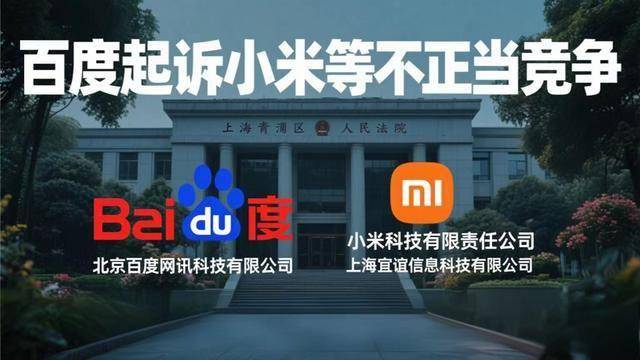
Core Viewpoint - Baidu has filed a lawsuit against Xiaomi and Shanghai Yiyi for unfair competition, with the court hearing scheduled for June 13 in Shanghai [1][4]. Company Overview - Baidu is a leading search engine company in China, known for its services in search, maps, and artificial intelligence [3]. - Xiaomi initially gained market share through high-cost performance smartphones and has since expanded into smart home and automotive sectors, becoming a top player in the tech industry [3]. Legal Dispute Details - The specific details of the lawsuit have not been disclosed, but speculation suggests it may involve issues in the application distribution sector, where Xiaomi's app store has restricted installations of certain third-party applications, including those from Baidu [3]. - There are also suggestions that the conflict may arise from competition in artificial intelligence and data resources, which are critical competitive advantages in the digital age [3]. Industry Implications - The lawsuit highlights the intense competition within the tech industry, where companies often face friction and disputes while vying for market share and profits [4]. - The expectation is that the outcome of this legal battle could influence the internet user experience and the overall dynamics of the tech industry [4].



全国数据资源摸底:六省份数据产量占近六成,这三个行业最多|言叶知新
Di Yi Cai Jing· 2025-05-08 11:40
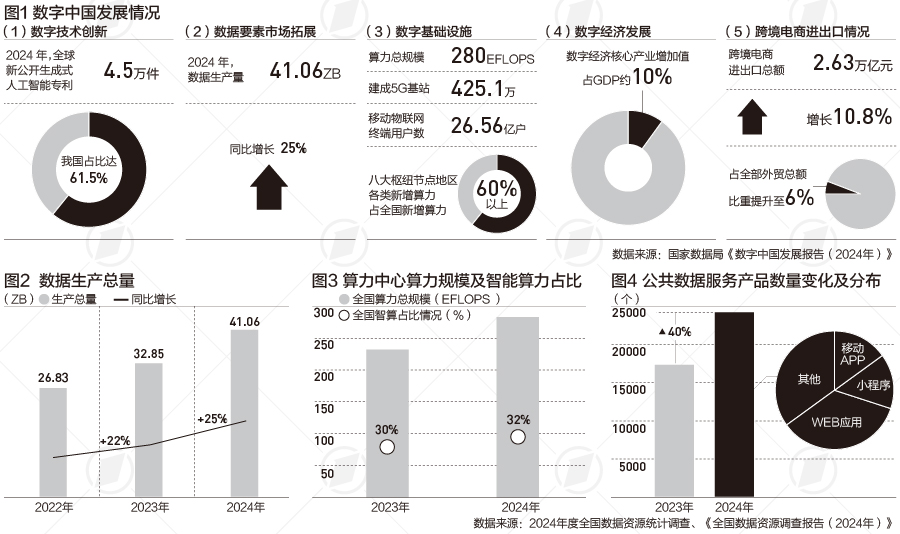
Core Insights - The report indicates that the data production volume in China reached 41.06 ZB in 2024, marking a 25% year-on-year increase, with expectations to exceed 50 ZB by 2025 [2][8] - The development of artificial intelligence (AI) is significantly driving the demand for data resources, with data used for AI development, training, and inference increasing by 40.95% [3][4] - The eastern region of China is leading in data resource development, with six provinces accounting for nearly 60% of the national data production [8][9] Data Production and Growth - In 2024, the total computing power in China reached 280 EFLOPS, with intelligent computing power accounting for 90 EFLOPS, representing 32% of the total [3][6] - The growth in data production is primarily driven by smart applications, particularly in smart homes and connected vehicles, which saw data growth rates of 51.43% and 29.28%, respectively [3][4] - The number of enterprises utilizing large models increased by over 37%, with the proportion rising to approximately 10% [3] Industry Trends - The manufacturing, finance, and transportation logistics sectors are the top three in terms of data production volume, with finance, mining, and transportation logistics leading in average data production per enterprise [9] - The report highlights that data resource development is concentrated in eastern provinces, with Jiangsu and Guangdong's digital investment being 1.71 times the national average [9] - The demand for high-quality data sets is surging, with the number of high-quality data sets increasing by 27.4% [4][6] Future Outlook - The report anticipates continued growth in data production, with data resource circulation entering an accelerated phase [9] - The integration of AI computing and the rapid enhancement of AI server performance are expected to optimize the structure of data resources [9] - Emerging industries such as autonomous driving and low-altitude economy are projected to maintain high growth rates in data resource scale [9]
美年健康数据资源增长71.3%,预计数据可反哺保险产品研发
2 1 Shi Ji Jing Ji Bao Dao· 2025-04-18 10:58
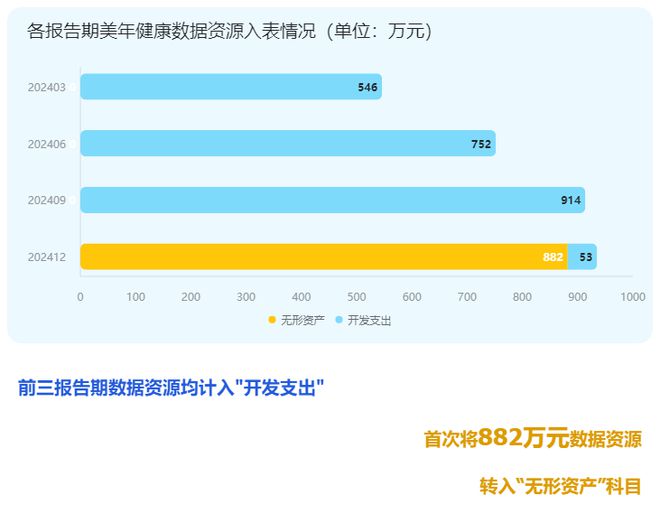
Core Insights - The core viewpoint of the article highlights the significant growth in data resources reported by Meinian Health in its 2024 annual report, with a notable increase of 71.3% compared to the first quarter's disclosure [1] Group 1: Data Resources - Meinian Health disclosed data resources amounting to 9.352 million yuan in 2024, up from 5.46 million yuan in the first quarter [1] - The company has accumulated over 100 million imaging data points and more than 200 million structured health data points, establishing the largest personal health examination data center in China [1] - The accounting treatment of data resources in 2024 shows a transitional characteristic, with 882,000 yuan transferred to "intangible assets" and 53,000 yuan remaining in "development expenses" [1] Group 2: Research and Development - Key R&D projects include the Bianque SAAS health examination management platform and the Xingyu business development platform, with the latter expected to provide data value for insurance product development [1] - The company has seen a structural adjustment in R&D investment and personnel, with R&D expenditures decreasing from 1.38 million yuan in 2021 to 980,000 yuan in 2023, before rising to 1.1 million yuan in 2024, a 12.2% increase year-on-year [9] - Despite the increase in R&D investment in 2024, the number of R&D personnel decreased from 375 in 2023 to 270 in 2024, indicating a potential shift in strategy [9]