26兆瓦级海上风电机组

Search documents
逾山越海 逐风而行(新时代画卷)
Ren Min Ri Bao· 2026-01-28 22:12
Core Insights - China has achieved significant advancements in wind power technology, including the development of a 26 MW offshore wind turbine, the highest elevation wind project at 5,370 meters, and the furthest offshore wind project at a distance of 85.5 kilometers [1][2] Group 1: Technological Achievements - The 26 MW offshore wind turbine has a hub height equivalent to over 50 stories and a swept area larger than 10.5 standard football fields [1] - The highest elevation wind project, located in Tibet, utilizes a single blade hoisting technology for the first time above 5,000 meters [1] - The Jiangsu Dafeng 800 MW offshore wind project marks a breakthrough in deep-sea wind power development, with its farthest point located 85.5 kilometers offshore [1] Group 2: Industry Growth and Projections - By 2025, the wind power generation capacity in China is expected to exceed 1 trillion kilowatt-hours, accounting for 10.8% of the national industrial power generation [1] - The installed wind power capacity in China is projected to reach 640 million kilowatts by the end of 2025, representing over 16% of the total power generation capacity [1] - The wind power industry has transitioned from "catching up" to "leading" in global terms, with approximately half of the world's wind power capacity now located in China [1] Group 3: Economic Impact - China's wind power equipment exports account for 70% of the global market, with products reaching over 60 countries and regions [2] - The annual output value of China's wind power industry is approximately 1.2 trillion yuan, supporting over 2 million direct and indirect jobs [2] - The "14th Five-Year Plan" aims to accelerate the construction of integrated renewable energy bases, with an expected addition of over 200 million kilowatts of wind and solar power capacity by 2026 [2]


金社平:推动高质量、可持续的发展
Ren Min Ri Bao· 2026-01-16 03:02
Core Viewpoint - The emphasis on "high-quality and sustainable development" is a guiding principle for China's economic and social development during the 14th Five-Year Plan period, especially as the country faces increasing external challenges and domestic supply-demand imbalances [1]. Group 1: High-Quality Development - Promoting high-quality and sustainable development requires a comprehensive implementation of the new development philosophy, focusing on qualitative improvements and reasonable quantitative growth [2]. - Innovation is highlighted as the primary driving force for development, with significant advancements in technology such as humanoid robots and AI applications driving economic growth [3]. - The green development aspect is crucial, with China leading in renewable energy systems and aiming for a transition to a low-carbon economy to ensure sustainable development [4]. Group 2: Economic Potential and Domestic Demand - China's economy is likened to a vast ocean, with significant resilience and potential to address various risks and challenges, particularly through domestic demand [5]. - The domestic consumption market shows substantial potential, with the share of household consumption in GDP being significantly lower than the global average, indicating room for growth [7]. - The shift from goods consumption to a balanced focus on both goods and service consumption is noted, with a projected growth in the emotional economy market [9][10]. Group 3: Correct Performance View and Local Adaptation - Establishing a correct performance view is essential for achieving high-quality development, emphasizing practical and sustainable growth rather than superficial metrics [14]. - Local adaptation in economic work is necessary, ensuring that strategies are tailored to specific regional strengths while contributing to national goals [18]. - The importance of balancing immediate results with long-term achievements is stressed, advocating for persistent efforts in economic development [19].
推动高质量、可持续的发展
Ren Min Ri Bao· 2026-01-15 22:16
Group 1 - The core principle for economic and social development during the "14th Five-Year Plan" period is to adhere to high-quality development, emphasizing sustainable growth amidst changing external environments and domestic supply-demand imbalances [1][4] - President Xi Jinping highlighted the importance of innovation, coordination, green development, openness, and sharing as essential elements for measuring and promoting development [1][2] - The current economic landscape in China requires a shift towards quality transformation, efficiency transformation, and power transformation to balance quality enhancement with overall growth [1][2] Group 2 - The innovation-driven approach is crucial for high-quality development, with significant advancements in artificial intelligence and robotics leading to a rapid growth rate of over 50% in the embodied intelligence industry [2] - Data shows that the manufacturing value added of smart unmanned aerial vehicles increased by 49.3%, and industrial robot production rose by 20.6% in 2025, indicating a strong link between innovation and economic growth [2] Group 3 - China has established the world's largest renewable energy system, contributing to significant green development, with 1 out of every 3 kilowatt-hours of electricity being green energy [3] - The country is also the largest contributor to global afforestation, with approximately 25% of new greening area, highlighting its commitment to sustainable practices [3] Group 4 - Domestic consumption potential is a key area for economic growth, with the central economic work conference emphasizing the need to address the imbalance between strong supply and weak demand [4][5] - In 2025, new energy vehicles accounted for over 50% of total new car sales for the first time, indicating a shift in consumer preferences towards sustainable options [6] Group 5 - China's consumer market remains underdeveloped compared to global standards, with household consumption accounting for only about 40% of GDP, significantly lower than the global average of 56% [8] - The focus on expanding service consumption is crucial, as the market is transitioning from goods-centric to a balanced approach between goods and services [10][11] Group 6 - The potential for economic growth in China is multifaceted, with projections indicating that the scale of intelligent computing power will double by 2026 [12] - Investment needs for achieving carbon neutrality are expected to exceed 2% of GDP, creating substantial investment opportunities [12] Group 7 - International institutions have raised their economic growth forecasts for China, reflecting global confidence in the country's economic prospects [13] - The CEO of Estée Lauder emphasized that the future of growth still lies in China, reinforcing the country's strategic importance in the global market [14] Group 8 - The foundation for China's economic resilience and potential remains strong, with a focus on transforming the market from "super large" to "super strong" [15] - The correct performance evaluation and development perspective are essential for achieving sustainable growth, as highlighted by President Xi Jinping [16][20]
四川探路新型工业化:应对转型挑战 培育创新动能
Xin Lang Cai Jing· 2026-01-13 13:36
Core Insights - Sichuan is showcasing significant advancements in manufacturing and technology innovation, with notable achievements such as the export of the first "Sichuan-made" shield machine and the successful launch of the first eVTOL aircraft [1] - The provincial industrial and information technology conference outlined a clear development blueprint for Sichuan's new industrialization, emphasizing the importance of technological and industrial innovation for high-quality economic growth [1] Group 1: Traditional Industry Transformation - Sichuan is focusing on the digital and green transformation of traditional industries, with a significant example being the chemical company that has achieved over 90% data sharing and a 20% increase in equipment efficiency through smart technology [3] - The province has over 70% of its industrial output from traditional industries, and is actively promoting intelligent upgrades and digital transformations to enhance competitiveness [3][4] Group 2: Investment and Economic Growth - From January to November 2025, Sichuan's secondary industry investment grew by 7.7%, with industrial investment specifically increasing by 8.0%, indicating a robust investment climate in high-tech and equipment manufacturing sectors [6] - The provincial government aims to enhance investment in key projects and optimize the investment structure to support sustainable economic growth, particularly in technology and advanced manufacturing [6][7] Group 3: New Industry Development - Sichuan is witnessing rapid growth in emerging industries such as battery technology, new materials, and low-altitude economy, with significant potential for breakthroughs in fields like brain-machine interfaces and biomanufacturing [8][9] - The province plans to strengthen its position in the information and communication industry by developing advanced products and creating specialized industrial parks [9]

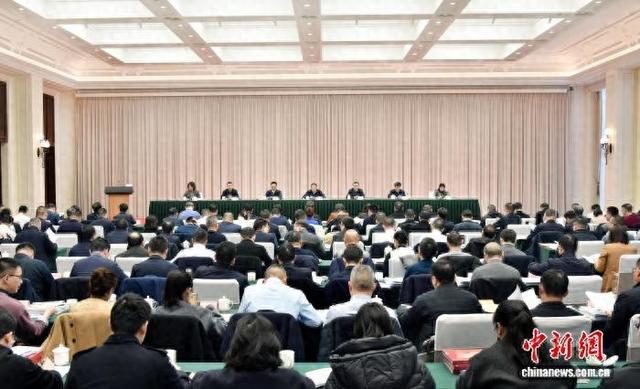
骄傲!“德阳造” 三项重器亮相国博……
Xin Lang Cai Jing· 2026-01-04 11:30
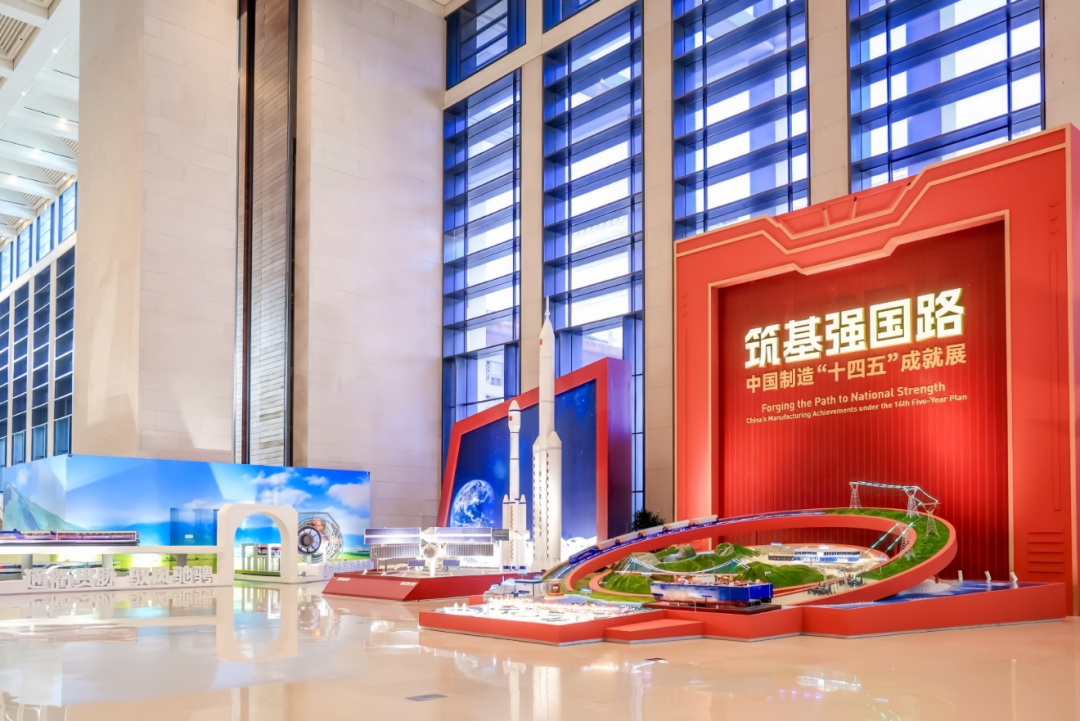
Core Viewpoint - The exhibition "Building a Strong Country Road - Achievements of Chinese Manufacturing during the 14th Five-Year Plan" showcases three key products from Deyang, highlighting the advancements in Chinese manufacturing and the capabilities of Deyang equipment [1][10]. Group 1: Exhibition Overview - The exhibition lasts for five months and focuses on "intelligent, green, and integrated" manufacturing, divided into six major sections: high-end manufacturing, industrial foundation, intelligent manufacturing, green manufacturing, integrated development, and better life [3][10]. - The selected exhibits include models of the "F-class 50 MW heavy-duty gas turbine high-temperature blade," "26 MW offshore wind turbine," and "water electrolysis hydrogen production electrolyzer," all developed by Deyang's state-owned enterprises under the Dongfang Electric Group [3][10]. Group 2: Product Highlights - The high-temperature blade developed by Dongfang Turbine has overcome significant technical challenges, achieving complete domestic production and filling the gap in China's F-class 50 MW heavy-duty gas turbine market. It has won the first prize in the 2024 Sichuan Province Science and Technology Progress Award and has been recognized as one of the "Top Ten National Key Equipment" by central enterprises [4][11]. - The offshore wind turbine developed by Dongfang Wind Power has set new global records for single-unit capacity and rotor diameter, achieving full domestic production of the electric control system. It has an annual power generation capacity of up to 100 million kilowatt-hours and has been included in the list of major technological equipment in the national energy sector [6][13]. - The electrolyzer developed by Dongfang Boiler has a maximum hydrogen production capacity of 250 standard cubic meters per hour, with a unit DC energy consumption of 4.2 kilowatt-hours per standard cubic meter and a hydrogen production pressure of 3 MPa. It features advanced domestic performance and can effectively couple with fluctuating renewable energy sources, enabling seasonal and spatial energy storage [8][15].
回望2025 多个“大国重器”取得新突破 “中国力量”闪耀寰宇
Yang Shi Wang· 2026-01-01 11:20
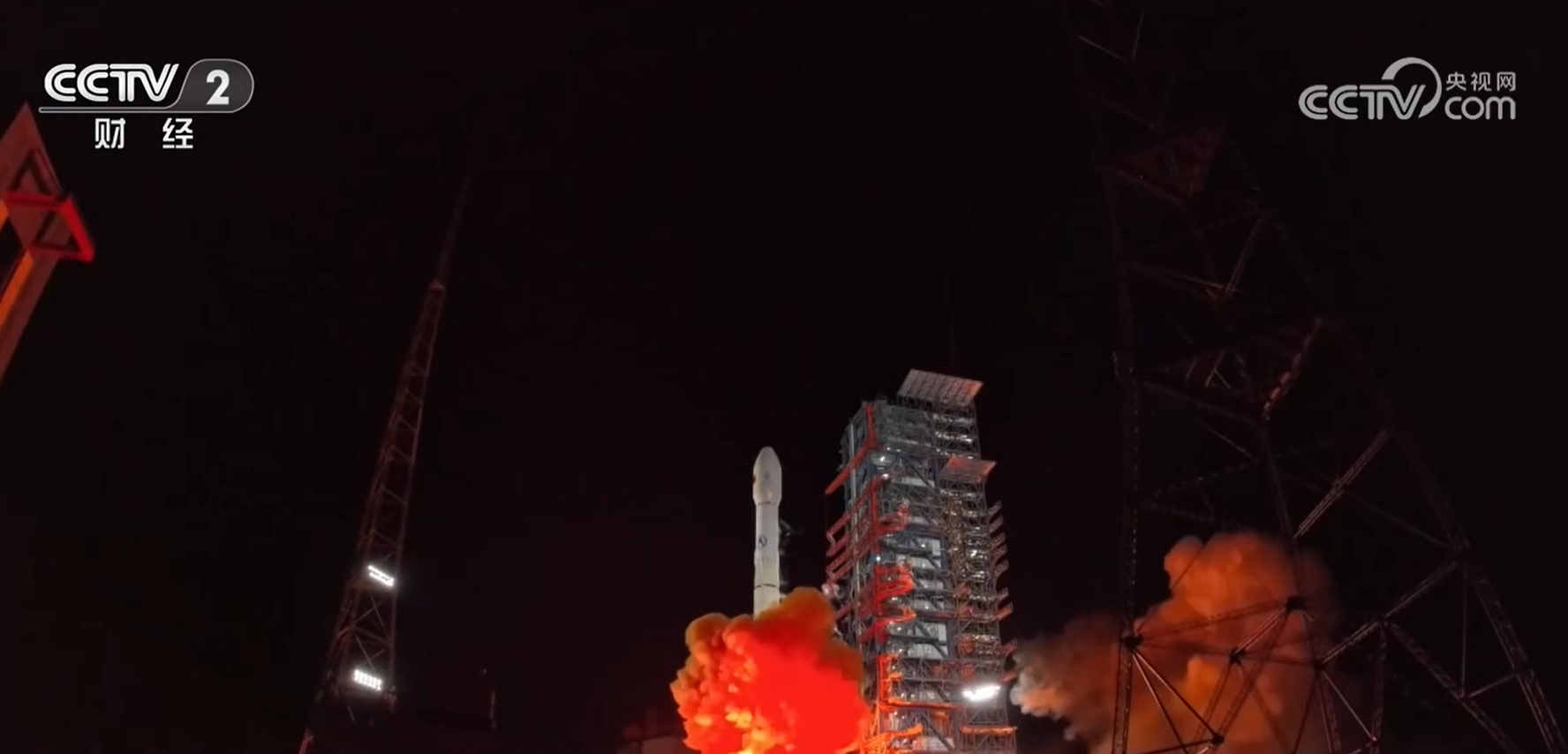
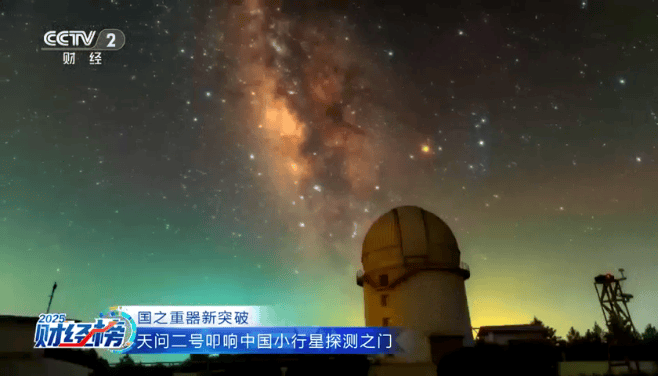
Group 1 - China's space exploration has achieved significant milestones with the successful launch of the Tianwen-2 asteroid probe, which aims to conduct dual-target exploration of asteroid 2016HO3 and comet 311P [3] - The Long March 3B rocket successfully launched the Tianwen-2 probe, marking a breakthrough in China's planetary exploration capabilities [3] - The successful launch of the Lijian-1 rocket, which deployed nine satellites in a single mission, signifies the scaling up of international business in China's commercial space sector [5] Group 2 - China's manned submersible technology continues to advance, with the Jiaolong submersible completing its first dive in the Arctic region, showcasing a new collaborative underwater operation model [7] - Two ultra-large dredging vessels, Tongjun and Jun Guang, have been launched, featuring the largest dredging capacity in Asia and world-leading loading efficiency [9] Group 3 - The world's largest 26 MW offshore wind turbine has successfully connected to the grid in Shandong, capable of generating up to 100 million kWh annually under optimal conditions [12] - The first unit of the "Hualong One" nuclear power plant in Fujian has successfully connected to the grid, with an expected annual output of 20 billion kWh [14] Group 4 - China's largest diameter shield tunneling machine has been completed and is set for export, featuring advanced intelligent technologies and a diameter of 15.7 meters [15] - The AG600 amphibious aircraft has entered mass production, becoming the world's largest civil amphibious aircraft, enhancing China's aerial rescue capabilities [16] Group 5 - The CR450 high-speed train has set a new record with a speed of 453 km/h, marking a significant advancement in China's high-speed rail technology [17] - The Jiangmen neutrino experiment facility has commenced operations, achieving a major milestone in measuring solar neutrino oscillation parameters with improved precision [18] - The AIMS telescope has successfully measured solar magnetic fields, providing new capabilities for solar observation [19]
上天入地、钻山探海,2025年我国多个“大国重器”迎高光时刻!
Sou Hu Cai Jing· 2025-12-31 16:12
Group 1: Agricultural Innovation - In 2025, Yunnan Academy of Agricultural Sciences will launch over a thousand new "Chinese-style" rose cut flower varieties, aiming to embed "Chinese core" into fresh flowers [1] Group 2: Aerospace Advancements - China's aerospace sector is experiencing "technological breakthroughs" and "scale explosion," highlighted by the successful launch of the Tianwen-2 probe and the "one rocket, nine satellites" mission, marking a significant step in international business [3] Group 3: Deep-Sea Technology - In 2025, China's manned submersible application level will continue to improve, with the "Jiaolong" submersible completing its first dive in the Arctic and two large dredging vessels launched, setting records in dredging depth and capacity [5] Group 4: Energy Technology - A 26 MW offshore wind turbine developed in China successfully connected to the grid, capable of generating 100 million kWh annually, and the "Hualong One" nuclear power unit in Fujian has also successfully connected to the grid, with an expected annual output of 20 billion kWh [7] Group 5: Manufacturing Strength - China's self-developed large-diameter shield tunneling machine and the AG600 amphibious aircraft have entered mass production, while the CR450 high-speed train prototype has set a new speed record of 453 km/h, showcasing advancements in manufacturing capabilities [9] Group 6: Scientific Research - The Jiangmen neutrino experiment has successfully completed the infusion of 20,000 tons of liquid scintillator, becoming the first large-scale neutrino facility, and the AIMS telescope has been accepted for operation, enhancing solar magnetic field observation [11]
奋勇争先,决战决胜“十四五”|新型能源体系加快建设
Ren Min Ri Bao· 2025-12-28 06:09
Core Insights - The construction of new energy systems is crucial for achieving carbon peak and carbon neutrality goals, emphasizing the importance of self-sufficiency in energy resources [1][2] - The Ningxia Tengger Desert "Shagao Huang" renewable energy base is a significant project, with the first phase of 3 million kilowatts of solar capacity launched in October, showcasing a blend of traditional and new energy sources [1][2] - The Ningxia-Hunan UHV project, spanning over 1,600 kilometers, enhances the transmission of green electricity, with over 360 billion kilowatt-hours delivered annually to Hunan, significantly increasing its power supply [1][2] Energy Supply and Consumption - During the 14th Five-Year Plan period, China's energy supply system is diversifying, with non-fossil energy sources experiencing significant growth, while fossil energy is being utilized more cleanly and efficiently [2][3] - The share of renewable energy generation capacity is expected to rise from 40% to around 60%, indicating a substantial shift towards green energy sources [3] - Non-fossil energy's share in national energy consumption is increasing by 1 percentage point annually, with expectations to exceed the 20% target set for the 14th Five-Year Plan [3] Technological Advancements - The energy sector is witnessing rapid technological innovations, with China leading in nuclear power and new energy storage solutions, including the first domestic 26 MW offshore wind turbine and advanced sodium-ion storage systems [5][6] - The development of smart microgrids and virtual power plants is accelerating, indicating a shift towards more flexible and resilient energy systems [6] Energy Security and Sustainability - China's energy production accounts for over 20% of the global total, with a self-sufficiency rate of over 80% during the 14th Five-Year Plan, ensuring that the majority of energy consumption growth is supported by domestic resources [4][6] - The implementation of energy-saving and carbon-reduction modifications in coal-fired power plants and advancements in carbon capture technologies are enhancing the sustainability of fossil energy [4]
新型能源体系加快建设(奋勇争先,决战决胜“十四五”)
Ren Min Ri Bao· 2025-12-27 22:11
Core Viewpoint - The development of a new energy system is crucial for achieving carbon peak and carbon neutrality goals, emphasizing the importance of both traditional and renewable energy sources [1][2]. Group 1: New Energy Projects - The Ningxia Tengger "Shagao Desert" renewable energy base has commenced construction, with the first batch of 3 million kilowatts of photovoltaic capacity put into operation in October [1]. - The Ningxia-Hunan UHV project, spanning over 1,600 kilometers, can transmit green electricity to Hunan in approximately 0.0054 seconds, enhancing energy consumption channels for Ningxia [1]. - The UHV project is expected to deliver over 36 billion kilowatt-hours of electricity annually to Hunan, increasing power supply by about one-sixth, with renewable energy accounting for over 50% of the total [1]. Group 2: Energy Supply and Consumption - During the 14th Five-Year Plan period, China's energy supply system has diversified, with non-fossil energy sources experiencing significant growth, while fossil energy is being utilized more cleanly and efficiently [2][3]. - The share of renewable energy generation capacity has increased from 40% to approximately 60%, indicating a substantial shift towards green energy [3]. - Non-fossil energy's share in national energy consumption is projected to exceed the 20% target set for the 14th Five-Year Plan, with green electricity accounting for nearly 40% of total electricity consumption [3]. Group 3: Technological Advancements - China has developed the world's largest and fastest-growing renewable energy system, with significant advancements in nuclear power and energy storage technologies [6]. - The third-generation nuclear power project "Guohe No. 1" has been completed and is fully domestically produced, showcasing technological breakthroughs in the energy sector [5]. - The application of innovative energy solutions, such as sodium-ion storage systems and flexible low-frequency transmission projects, is accelerating the energy industry's technological innovation [6].
海上风电加速挺进深远海
Zheng Quan Ri Bao· 2025-12-08 17:11
Core Insights - The floating wind power hydrogen production platform developed by Dongfang Electric has received the Approval in Principle (AIP) from China Classification Society (CCS), marking it as the world's first certified floating wind power hydrogen production platform [1] Group 1: Industry Development - As of September 2025, China's offshore wind power cumulative installed capacity is expected to reach 44.61 million kilowatts, with an additional 3.5 million kilowatts added, maintaining the global leading position for five consecutive years [2] - The development of deep-sea wind power is seen as having significant potential due to more stable wind speeds and higher wind energy density compared to nearshore resources [2] - Recent technological advancements include the integration of the world's largest 26 MW offshore wind turbine and the demonstration of the first 16 MW floating offshore wind power system [2] Group 2: Policy Support - The Ministry of Natural Resources has issued guidelines encouraging the construction of offshore wind power in already developed marine areas, such as oil and gas development zones [3] - The "Wind Energy Beijing Declaration 2.0" aims for an annual increase of no less than 12 million kilowatts in wind power installations during the 14th Five-Year Plan, with offshore wind power accounting for at least 1.5 million kilowatts [3] - Local governments are establishing specialized offshore wind power industrial parks, covering the entire industry chain from turbine manufacturing to supporting equipment [3] Group 3: Corporate Strategies - Companies in the offshore wind power sector are actively positioning themselves to capitalize on the opportunities presented by deep-sea wind power, with investments in various segments such as floating wind equipment and dynamic cables [4] - Longyuan Power has launched an offshore wind power comprehensive detection platform, which has been successfully applied in several offshore projects [4] - Yunda Energy has established offshore wind power assembly bases in Dalian and Wenzhou, focusing on both nearshore and deep-sea projects [4] Group 4: Equipment and Technology - Jiangsu Runbang Heavy Industry is constructing a manufacturing base to expand its business in marine engineering and related equipment [5] - Companies are encouraged to focus on key areas such as 20 MW turbine components and dynamic cables, while also exploring the integration of offshore wind power with hydrogen production and energy storage [6] - The shift towards deep-sea wind power is expected to lower the cost of electricity generation, enhancing competitiveness with traditional energy sources [6]