智能体工厂

Search documents
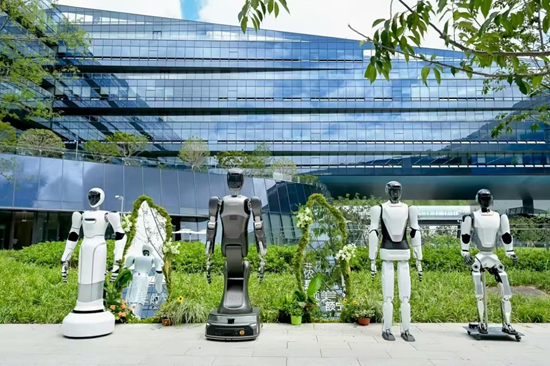
美的集团:2025年3月起公司陆续发布工业用的人形机器人产品
Zheng Quan Ri Bao Zhi Sheng· 2026-02-02 12:39
Core Insights - The company is focusing on humanoid robots with a strategy of "industrial first, commercial follow, family exploration" to realize technology value in controllable scenarios [1] - The company plans to launch industrial humanoid robot products starting from March 2025, with the first product being the six-armed wheeled humanoid robot "MIROU" [1] - The "MEILA" series, aimed at commercial and household scenarios, is in the final testing phase and is expected to enter offline experience stores in 2026 for tasks like product guidance and function demonstration [1] - The company has developed a factory-level intelligent agent (FactoryAgent) that collaborates across 38 core production business scenarios, integrating manufacturing experience, large model technology, and embodied robotics [1] - The intelligent agent factory has been certified by the WRCA as the world's first multi-scenario intelligent agent factory, marking a significant milestone in the industry [1]

美云智数研发中心总经理兼CTO宋云报:打造“统一底座” 推动AI在制造业规模化应用
Zheng Quan Ri Bao· 2026-02-01 16:12
Core Viewpoint - The manufacturing industry is at a critical juncture transitioning from "digitalization" to "intelligence," facing challenges in AI application due to issues like usability, interpretability, and IT governance [2][3]. Group 1: AI Platform Development - Midea Group's subsidiary, Meiyun Zhishu, launched the Meiqing AIGC 3.1 platform, aimed at addressing the difficulties in AI implementation within manufacturing [2][3]. - The success of AI applications relies on establishing a platform that supports the long-term operation of intelligent agents, rather than on specific models or applications [3]. - The Meiqing AIGC platform is designed as a unified base that connects existing enterprise systems like ERP, PLM, and MES, while also providing external computational power and algorithm support [4]. Group 2: Standardization and Scalability - The platform aims to transform intelligent agents from "custom development" to "replicable assets" through standardized development, evaluation, and operation processes [4]. - It includes over 50 intelligent agent templates and 500 enterprise connectors, significantly lowering the development threshold using no-code or low-code technologies [4]. - A standardized evaluation system with over 20 metrics is established to quantify the performance of intelligent agents before deployment [4]. Group 3: Knowledge Management and Decision-Making - The platform treats knowledge as an "engineering capability," emphasizing the entire process from collection to governance, which is crucial for building trust in AI outputs [5]. - The Meiqing AIGC platform boasts a semantic retrieval accuracy rate that exceeds mainstream open-source solutions by over 20% [5]. - It enables business personnel to directly pose questions in natural language, facilitating actionable insights rather than mere data interpretation [5][6]. Group 4: Industry Focus and Future Outlook - Meiyun Zhishu focuses on industrial scenarios rather than generic model development, leveraging Midea Group's extensive manufacturing experience [7]. - By 2025, Midea Group anticipates achieving over 600 million yuan in efficiency gains through AI applications, with cost reductions in certain scenarios reaching up to 90% [7]. - The integration of AI capabilities is viewed as essential for enhancing core competitiveness in the manufacturing sector, with the goal of creating scalable value through the Meiqing AIGC platform [7].

硅谷观察:2026,会是下一个AI元年吗?三大AI核心转变趋势
Sou Hu Cai Jing· 2026-01-13 10:40
Core Insights - The article discusses the transition of AI from being a novelty to becoming a practical tool for businesses, marking 2026 as a pivotal year for AI's operational capabilities [1][3]. Group 1: AI's Evolution and Impact - AI is evolving from a simple tool for tasks like report writing to a comprehensive "digital worker" capable of managing entire workflows, such as supply chain coordination and customer follow-ups [5][7]. - Companies are increasingly using AI to reduce costs and improve efficiency, moving beyond basic applications to more complex, end-to-end solutions [9][12]. Group 2: Shift in AI Development Focus - The focus is shifting from general-purpose AI models to industry-specific AI that understands the nuances of particular fields, such as healthcare and finance, with investments in vertical AI surpassing those in general models [12][15]. - The demand for specialized AI solutions is growing, as businesses require AI that can integrate expert knowledge and comply with industry regulations [15][21]. Group 3: Technological and Market Drivers - The convergence of key technologies—generative reasoning, agent execution, and physical modeling—is enabling AI to transition from digital to physical environments, allowing it to understand and interact with the real world [21][23]. - Market dynamics are changing, with a significant portion of AI funding directed towards solutions that address specific business pain points rather than abstract concepts [24][28]. Group 4: Future Strategies for AI Implementation - Companies are encouraged to focus on creating "intelligent agent factories" that develop AI tailored to specific industry challenges, rather than pursuing larger models [28][30]. - Collaborations with industry leaders to build proprietary knowledge bases are becoming essential for AI companies to enhance their capabilities and provide expert-level insights [33][36]. Group 5: Human-AI Collaboration - The future of AI involves not just replacing human roles but enhancing them, with AI serving as an assistant rather than a replacement [39][41]. - Effective human-AI collaboration can lead to significant efficiency gains, with AI handling repetitive tasks while humans address more complex issues [43][45].
14个智能体覆盖38个业务场景 美的智能工厂向智能体工厂进化
Zhong Guo Chan Ye Jing Ji Xin Xi Wang· 2025-09-11 22:58
Core Insights - The implementation of AI glasses in Midea's Jingzhou washing machine factory has significantly improved first inspection efficiency, reducing the time from 15 minutes to 30 seconds [1] - Midea's smart factory integrates various intelligent terminals, including humanoid robots, mechanical arms, and autonomous mobile robots, achieving an average efficiency increase of over 80% in core manufacturing scenarios [1][2] Group 1: Intelligent Systems and Efficiency - Midea has developed a humanoid robot named "Mei Luo," which autonomously executes high-frequency tasks such as quality inspections and maintenance under the coordination of the factory brain [2][4] - The "Yutu" AI inspection robot enhances inspection frequency by 100% compared to manual inspections, utilizing a multimodal model for real-time diagnostics and processing [3] - The KUKA "iico" collaborative robot works in conjunction with the factory brain to adaptively manage different washing machine models, improving production flexibility and efficiency [3] Group 2: Factory Brain and Autonomous Collaboration - The factory brain serves as the central nervous system of the intelligent factory, coordinating 14 intelligent agents across 38 core production scenarios, enhancing decision-making and operational efficiency [4][5] - Midea's intelligent factory represents a shift towards a fully interconnected ecosystem, where each production element is integrated and capable of autonomous decision-making [5][6] Group 3: Future Developments and Strategic Goals - Midea aims to expand the number of covered scenarios and enhance the capabilities of the factory brain and intelligent robots, striving for a self-circulating system [6][7] - The company plans to replicate the intelligent factory model across its global operations, positioning itself favorably in the competitive landscape of manufacturing [7]
美的洗衣机荆州工厂获WRCA首个智能体工厂认证 可彻底实现黑灯工厂自主作业
Zhong Guo Zhi Liang Xin Wen Wang· 2025-09-02 07:39
Core Insights - Midea Group's washing machine factory in Jingzhou has been certified as the world's first "smart factory with multi-scenario coverage" by WRCA, marking a significant milestone in the industry [1][2] - The factory utilizes 14 intelligent agents covering 38 core production scenarios, integrating Midea's manufacturing experience, large model technology, and embodied robotics, achieving over 80% efficiency improvement in various manufacturing tasks [1][2] - The certification highlights China's leadership in breakthrough smart manufacturing technology integration and application, establishing a new benchmark for global manufacturing [2] Technological Advancements - The "Midea Factory Brain" serves as the central nervous system of the smart factory, enabling all production elements to operate cohesively, including robots, mechanical arms, and sensors [2][3] - AI-assisted tools, such as smart glasses, have significantly reduced quality inspection times from 15 minutes to 30 seconds by automating error point reminders and integrating data from various systems [2] Industry Impact - The establishment of the first intelligent agent factory signifies a major shift for Chinese manufacturing from "following" to "defining" global smart manufacturing standards [4] - Midea Group plans to expand the number of scenarios covered by intelligent agents and replicate the smart factory solution across its global facilities, enhancing China's competitive position in the global manufacturing landscape [4]
美的大转型:不只是家电企业的“中国版GE”
远川研究所· 2025-09-01 10:20
Core Viewpoint - Midea has achieved double-digit growth in both revenue and net profit, with profit margins reaching a three-year high, highlighting a significant transformation in its growth strategy towards high-tech industries and diversified operations [2][5]. Group 1: Business Performance - Midea's revenue from its toB segment, which includes industrial technology, smart building technology, and robotics, grew by 20.8% year-on-year, increasing its share in the overall revenue structure [2]. - The company reported a cost savings of 280 million yuan through AIGC in the first half of the year, showcasing the efficiency gains from its technological advancements [11]. Group 2: Technological Advancements - The Jingzhou washing machine factory has been recognized as the world's first intelligent body factory, achieving an average efficiency improvement of over 80% in core production scenarios [9][11]. - Midea's intelligent body factory integrates autonomous decision-making, large model industrial integration, and embodied intelligent robotics, enabling fully automated operations [11]. Group 3: Strategic Diversification - Midea has expanded into high-value sectors such as healthcare and energy, with significant investments and acquisitions, including the control of Resig Medical and becoming the largest shareholder of Wandong Medical [13][14]. - The company has established a complex toB business portfolio that leverages its manufacturing experience in home appliances to enter technology-intensive industries [14][20]. Group 4: Historical Context and Future Outlook - Since 2015, Midea has been pursuing a dual-smart strategy (smart manufacturing + smart home), marking a decade of exploration into high-tech industries [5]. - Midea's transformation mirrors that of General Electric (GE), as it shifts from a traditional home appliance manufacturer to a diversified high-tech company, with its industrial, medical, and energy segments closely resembling GE's post-split structure [24][27].

工厂大脑调度、Agent指挥、机器人协同作业,美的建了全球首个智能体工厂
3 6 Ke· 2025-08-30 16:33
Core Insights - Midea's washing machine factory in Jingzhou has been certified as the world's first multi-scenario intelligent factory by WRCA, showcasing its advanced capabilities in smart manufacturing [1] - The factory utilizes the "Midea Factory Brain," which coordinates 14 intelligent agents across 38 core production scenarios, achieving an average efficiency improvement of over 80% and a 90% increase in production scheduling response speed [1][3] Intelligent Factory Features - The Midea Factory Brain acts as the central nervous system of the intelligent factory, employing a distributed multi-agent architecture that enables autonomous collaboration among agents through Agent-to-Agent (A2A) communication [3] - For example, AI glasses connected to the Factory Brain enhance quality inspection tasks by providing error reminders and automatically comparing physical products with design blueprints, reducing inspection time from 15 minutes to 30 seconds [3][5] Robotics and Automation - Midea's humanoid robots, developed in-house, have transitioned from laboratory testing to practical applications, completing initial debugging in injection molding workshops and integrating with factory business systems [5] - The "Mei Luo" humanoid robot serves as a core execution unit within the factory, capable of autonomously performing high-frequency tasks such as quality inspections and maintenance checks, thereby enhancing operational efficiency [5][7] Future Expansion Plans - Midea plans to expand the coverage of intelligent agents to additional scenarios and replicate the success of the Jingzhou factory across its global manufacturing facilities [9]

美的史上最佳半年报背后:具身智能获突破 打造智能体工厂新范式
Xin Lang Cai Jing· 2025-08-29 15:59
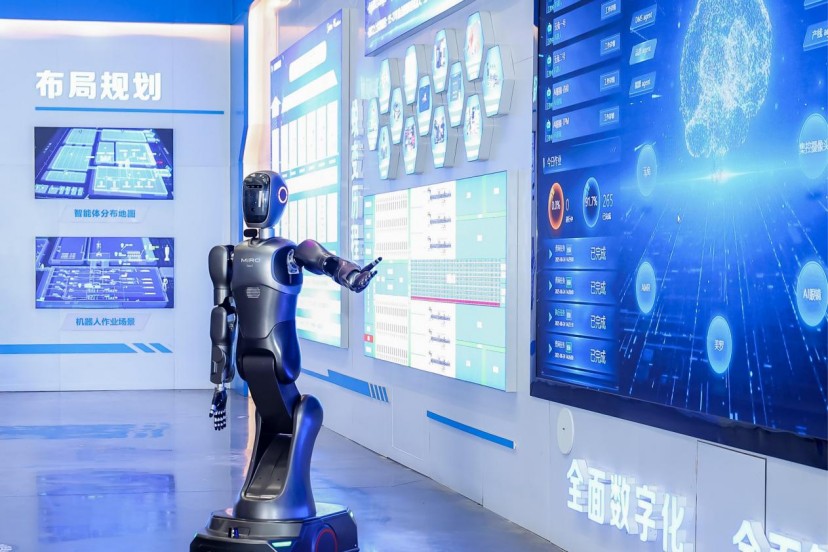
Core Insights - Midea Group has achieved significant advancements in its smart manufacturing capabilities, particularly through the development of the humanoid robot "Mei Luo" and the establishment of the world's first intelligent agent factory in Jingzhou [1][2][4] - The company reported record financial results for the first half of 2025, with total revenue reaching 252.3 billion yuan, a year-on-year increase of 15.7%, and net profit of 26.7 billion yuan, up 26% year-on-year [1][11] - Midea's focus on embodied intelligence and autonomous decision-making in manufacturing processes positions it as a leader in the industry, providing a reusable intelligent factory paradigm for global manufacturing [9][10] Group 1: Intelligent Agent Factory - The Jingzhou factory is recognized as the first to achieve large-scale collaborative operation of multiple intelligent agents, integrating AI and real-time data for quality control and operational efficiency [1][4][8] - The humanoid robot "Mei Luo" is designed for high precision and lightweight tasks, capable of autonomously performing inspections and maintenance, thus enhancing operational efficiency [4][5][7] - Midea's intelligent agent factory represents a shift from traditional smart factories to a fully interconnected ecosystem where every element, including robots and sensors, operates as intelligent agents [4][5][9] Group 2: Technological Advancements - Midea's intelligent agent factory utilizes a multi-agent collaborative architecture that integrates industrial knowledge with large model capabilities, achieving real-time decision-making and execution across various manufacturing processes [9][10] - The factory has implemented 38 core business scenarios, covering areas such as R&D, supply chain, manufacturing, and quality control, demonstrating a comprehensive approach to smart manufacturing [10][11] - Midea plans to invest over 50 billion yuan in the next three years to further develop AI models and embodied intelligence across industrial, commercial, and household applications [11] Group 3: Future Prospects - The intelligent agent factory model is expected to be replicated across other Midea facilities, with the Wuxi washing machine factory set to implement similar solutions [10] - The integration of AI and industrial technologies is anticipated to address challenges such as data silos and cost pressures, enhancing decision-making capabilities and optimizing the entire value chain [10] - Midea's commitment to open collaboration has empowered over 600,000 industrial enterprises, positioning the company as a leader in the transformation of the smart manufacturing industry [10]
工厂大脑调度、Agent指挥、机器人协同作业,美的建了全球首个智能体工
3 6 Ke· 2025-08-29 13:01
Core Insights - Midea's washing machine factory in Jingzhou has been certified as the world's first multi-scenario intelligent factory by WRCA [1] - The factory utilizes the "Midea Factory Brain," which coordinates 14 intelligent agents across 38 core production scenarios, achieving over 80% efficiency improvement and a 90% increase in production scheduling response speed [1][3] Intelligent Factory Overview - The "Midea Factory Brain" acts as the central nervous system of the intelligent factory, employing a distributed multi-agent architecture for autonomous collaboration through Agent-to-Agent (A2A) communication [3] - The intelligent agents are designed for specific tasks, while smart terminals execute actual tasks, enhancing overall operational efficiency [3] Efficiency Improvements - In quality inspection tasks, AI glasses connected to the "Midea Factory Brain" provide error reminders and automate the comparison of physical products with design blueprints, reducing inspection time from 15 minutes to 30 seconds [3][5] - The factory can identify different washing machine models in real-time and automatically update assembly procedures, improving flexibility and accuracy in mixed production lines [3][5] Human-like Robotics - Midea's humanoid robots, developed in-house, have transitioned from laboratory testing to practical applications, completing initial adjustments in injection molding workshops [5] - The "Mei Luo" humanoid robot operates under the unified scheduling of the factory brain, executing high-frequency tasks such as quality inspections and maintenance checks [5][7] Future Expansion Plans - Midea plans to expand the coverage of intelligent agents to additional factories globally, replicating the success of the Jingzhou facility [9]
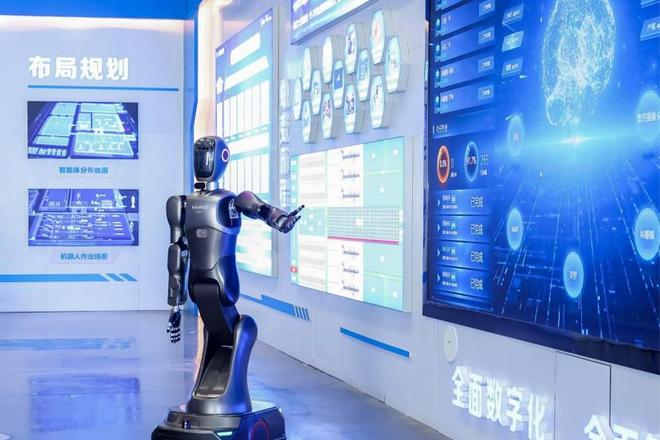
智能体工厂:人与机器人的共处
经济观察报· 2025-08-29 11:27
Core Viewpoint - Midea Group's Jingzhou factory is the world's first "intelligent body" factory, featuring 14 intelligent bodies covering 38 core production scenarios, showcasing significant advancements in automation and efficiency [1][2]. Group 1: Intelligent Body Factory Overview - The Jingzhou factory is recognized as Midea's first fully connected 5G factory, which supports the operation of intelligent bodies and data transmission [9]. - The factory integrates advanced manufacturing experiences and is designed to embrace new technologies like AI from the ground up [9]. - The intelligent body factory operates with a "factory brain" that coordinates various intelligent terminals, enhancing the efficiency of production processes [6][10]. Group 2: Role of Robots and AI - The humanoid robot "Mei Luo" and other intelligent devices like the "Yutu" inspection robot and AI glasses are actively involved in production, significantly reducing the need for human labor [4][5]. - The introduction of robots like Yutu has improved the reliability and efficiency of tasks such as inspection, which were previously performed by humans, achieving an average efficiency increase of over 80% [6][10]. - The AI glasses assist in quality checks, automating the identification of errors and enhancing accuracy in inspections [10][13]. Group 3: Future Developments and Challenges - Midea aims to evolve the intelligent body factory into a self-learning ecosystem, where robots can make autonomous decisions based on inspection results [10]. - The transition to an intelligent body factory involves rethinking traditional job roles and responsibilities, allowing for more flexible task assignments among robots [9][12]. - Midea's leadership acknowledges the challenges of implementing these new technologies and emphasizes the need for continuous testing and adaptation to create a successful intelligent body factory [9][10].