欧洲央行货币政策

Search documents
欧德第二银行前景受欧元区宏观政策与行业动态影响
Xin Lang Cai Jing· 2026-02-15 21:13
Core Viewpoint - The future of ODE Bank's stock is closely tied to the macro monetary policy environment of the Eurozone, with current expectations of stable interest rates until at least the end of 2026 [1] Industry Policy Status - The European Central Bank (ECB) has entered the longest pause in interest rate changes since exiting negative interest rates, with a consensus that key rates will remain at 2% until at least the end of 2026 [1] - A contrasting prediction from Capital Group suggests that accelerated economic growth in Europe may lead the ECB to raise rates one to two times before the end of 2026, indicating potential divergence in policy outlooks that could impact bank stock valuations [1] Industry Sector Situation - European bank stocks experienced significant gains in 2025, driven by a high interest rate environment supporting net interest margins, unexpected economic resilience, and strong capital returns [2] - If these macro conditions persist, they may continue to support the banking sector [2] - The ECB's Executive Board will see a new Vice President, Boris Vujicic, in June 2026, who is perceived as hawkish, making his future policy stance a point of interest [2]
欧洲央行管委:欧元升值对经济影响仍有待观察 当前无需采取行动
智通财经网· 2026-02-13 09:00
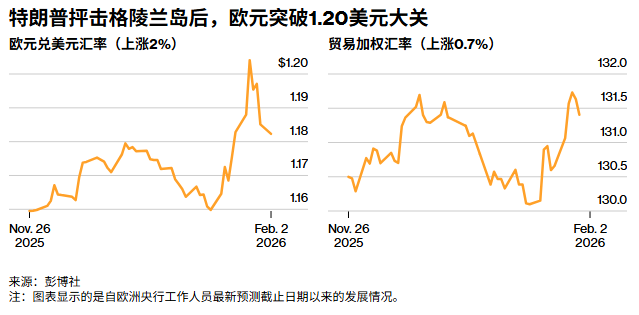
Group 1 - The European Central Bank (ECB) is monitoring the impact of the euro's appreciation starting in 2025, with a projected 14% increase due to global uncertainties and a weakening dollar [1][2] - The ECB's latest forecasts reflect the effects of the euro's appreciation, predicting continued economic growth and inflation stabilizing at the 2% target [1] - ECB officials, including President Lagarde, remain vigilant and ready to respond, although current conditions do not necessitate immediate action [1][2] Group 2 - The low competitiveness of Europe compared to the US and China is a significant issue, and addressing this could improve the economy's tolerance for currency strength [2] - The ECB's current monetary policy is deemed appropriate, with balanced risks to the inflation outlook, and no immediate changes to the deposit rate are expected [2]
欧央行经济学家:关税冲击拖累通胀,降息有望抵消负面影响
Hua Er Jie Jian Wen· 2026-02-10 11:05
Core Insights - The research indicates that the U.S. tariff policy is negatively impacting economic growth and inflation levels in the Eurozone [1][2] - The demand reduction effect caused by tariffs outweighs the inflationary pressure on supply chains, leading to downward pressure on overall price levels [1][2] - The study suggests that the European Central Bank (ECB) could use interest rate cuts to mitigate the negative impacts of tariffs on sensitive industries [1][3] Group 1: Economic Impact of Tariffs - The U.S. maintains a 15% base tariff on EU goods, leading to a significant decline in Eurozone exports to the U.S., which fell by approximately 6.5% year-on-year in the last three months [2] - The research estimates that a 1% decline in Eurozone exports to the U.S. due to tariffs could result in a cumulative 0.1% decrease in the consumer price index after about 18 months [1][2] Group 2: Sensitive Industries - Key industries affected by U.S. tariffs include machinery, automotive, and chemicals, which are also highly sensitive to interest rate changes [3] - Approximately 60% of the industries analyzed are sensitive to interest rate adjustments, accounting for 50% of the Eurozone's total industrial output and nearly half of the total exports to the U.S. [3]
欧央行管委斯图纳拉斯:欧元走势可控,暂无调整政策理由
智通财经网· 2026-02-06 11:27
Core Viewpoint - The European Central Bank (ECB) has decided to maintain the deposit rate at 2.15% for the fifth consecutive time, indicating a stable economic outlook despite recent euro appreciation [1][5]. Group 1: ECB's Monetary Policy - ECB officials, including Yannis Stournaras, emphasize that the current euro exchange rate is stable and does not warrant a change in policy direction [1][5]. - Christine Lagarde reiterated that the economy is in a good state and downplayed the impact of the recent euro appreciation [5]. - The consensus among ECB policymakers is that the current interest rates will remain unchanged following eight previous rate cuts [5]. Group 2: Economic Indicators - The eurozone's GDP expanded by 0.3% in the fourth quarter, outperforming market expectations, supported by increased government spending [6]. - The latest inflation rate in the eurozone dropped to 1.7%, which may strengthen the voices advocating for a more accommodative policy within the ECB [6]. - ECB forecasts suggest inflation will return to the 2% target by 2028, although current inflation trends may lead to ongoing debates about policy direction [6]. Group 3: Risks and Outlook - Potential risks include unpredictable U.S. trade policies and factors such as weak economic expansion and wage growth, which could lead to inflation falling below expectations [6]. - Analysts expect a slight increase in growth rates for 2026 due to better-than-expected economic performance at the end of last year [9]. - Stournaras described the current economic situation as a "stable equilibrium," indicating a successful soft landing for the eurozone economy [9].

欧洲央行2月再度维持利率不变
Sou Hu Cai Jing· 2026-02-06 04:39
Core Viewpoint - The European Central Bank (ECB) has decided to maintain key interest rates unchanged, signaling a cautious approach to monetary policy despite recent inflation data indicating a decline below target levels [1][2]. Group 1: Interest Rate Decisions - On February 5, the ECB kept the eurozone's three key interest rates steady at 2.00% for the deposit facility rate, 2.15% for the main refinancing rate, and 2.40% for the marginal lending rate, marking the fifth consecutive month of maintaining this stance since July of the previous year [1]. - ECB President Christine Lagarde emphasized the importance of a data-driven approach to policy decisions, indicating that the ECB aims to retain flexibility in future monetary policy [1][4]. Group 2: Inflation Data - The eurozone's inflation rate fell to 1.7% in January, down from 2.0% in December and 2.1% in November, marking the lowest level since September 2024 and breaching the 2% policy threshold [2]. - Core inflation, excluding volatile items like energy and food, decreased to 2.2%, the lowest since October 2021, while service sector inflation slowed to 3.2% [2]. - Lagarde downplayed concerns over excessive deflation, attributing the decline in inflation primarily to base effects and reaffirming that the overall inflation data does not alter the ECB's medium-term inflation expectations [2]. Group 3: Currency and Economic Outlook - Lagarde praised Bulgaria's progress towards joining the eurozone, highlighting it as a testament to the enduring benefits of the single currency and European integration [3]. - The ECB acknowledged ongoing uncertainties related to global trade policies and geopolitical tensions but maintained that medium-term inflation is expected to stabilize around the 2% target [2]. - The ECB is closely monitoring the recent depreciation of the US dollar, which has implications for the eurozone economy, but Lagarde noted that there have not been significant fluctuations in exchange rates recently [4].
欧洲债市:欧洲政府债券小幅上涨 欧元区通胀放缓
Xin Lang Cai Jing· 2026-02-04 16:59
Core Viewpoint - European government bonds experienced a slight increase as the decline in Eurozone inflation led the market to anticipate a potentially dovish tone from the European Central Bank (ECB) during its policy announcement [1][4]. Market Summary - The 2-year German government bond yield fell by 3 basis points to 2.10%, down from a peak of 2.15% last week, which was the highest since late December [2][5]. - Analysts expect the ECB to maintain the borrowing cost at 2% for the fifth consecutive meeting, closely monitoring whether the strengthening Euro and slowing inflation will spark discussions about rate cuts this year [2][5]. - The UK long-term bond yields rose, with the 30-year yield increasing by 3 basis points to 5.32%, the highest since November, while short-term yields remained stable [2][5]. - The 10-year German government bond yield decreased by 3 basis points to 2.86%, and German government bond futures rose by 25 points to 127.94 [3][7]. - The 10-year Italian government bond yield fell by 2 basis points to 3.48%, with the spread between Italian and German bonds remaining stable at 61 basis points [3][7]. - The 10-year French government bond yield also decreased by 2 basis points to 3.48%, while the 10-year UK government bond yield increased by 2 basis points to 4.54% [3][7].
欧元区CPI降至1.7% 核心通胀创近5年来最低! 欧洲央行“按兵不动”预期强化
Zhi Tong Cai Jing· 2026-02-04 13:51
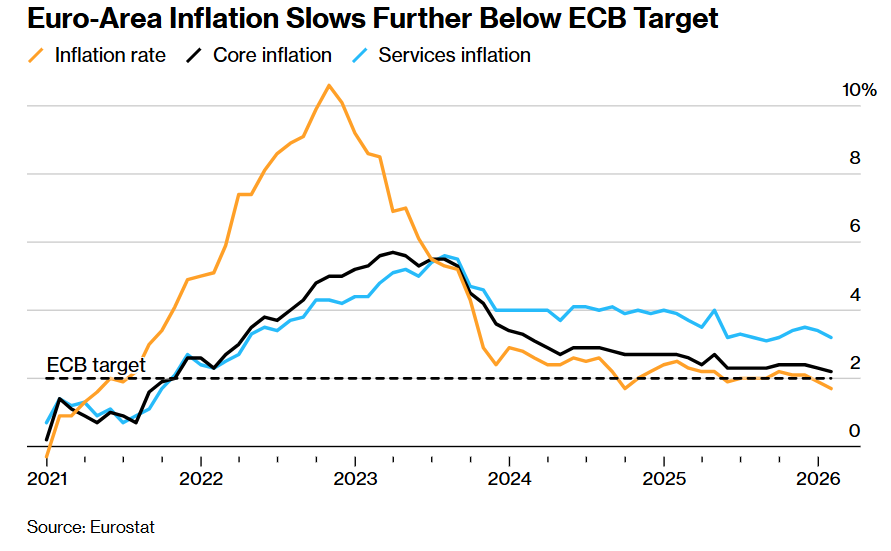
Group 1 - Eurozone inflation has further declined, with the consumer price index (CPI) rising only 1.7% year-on-year in January, down from 1.9% the previous month, marking the lowest level since September 2024 [1][4] - The core inflation rate, excluding volatile food and energy prices, unexpectedly dropped to 2.2%, the lowest since October 2021, while the service sector inflation rate slowed to 3.2% [1][4] - Economists widely expect the European Central Bank (ECB) to maintain borrowing costs at 2% for the fifth consecutive time during the upcoming monetary policy meeting [1][4] Group 2 - In the Eurozone, inflation rates vary among member countries, with Germany's inflation at approximately 2.1%, slightly above expectations, while France recorded an unexpected low of 0.4%, the lowest in five years [5] - The decline in inflation in France is attributed to a significant drop in manufactured goods prices, particularly in clothing and footwear, driven by seasonal discounts and increased domestic sales due to export challenges [8] - Economists predict that the ECB will likely keep interest rates unchanged throughout 2026, with a small probability of rate cuts unless inflation remains persistently below target and service/wage growth slows significantly [9]
?欧元区CPI降至1.7% 核心通胀创近5年来最低! 欧洲央行“按兵不动”预期强化
Zhi Tong Cai Jing· 2026-02-04 13:04
Core Viewpoint - Eurozone inflation has dropped to 1.7%, below the European Central Bank's (ECB) target of 2%, leading to expectations that interest rates will remain unchanged at 2% for the fifth consecutive time [1][2]. Group 1: Inflation Data - The Eurozone Consumer Price Index (CPI) rose by only 1.7% year-on-year in January, down from 1.9% in the previous month, marking the lowest level since September 2024 [1]. - The core inflation rate, excluding volatile food and energy prices, unexpectedly fell to 2.2%, the lowest since October 2021 [1]. - Service sector inflation has also slowed to 3.2%, indicating a broader decline in price pressures across the Eurozone [1]. Group 2: Economic Outlook - Market expectations suggest that both this year's and next year's CPI will remain below the ECB's target, positioning policymakers favorably, although concerns about prolonged low inflation persist [2]. - The Eurozone's economic growth in Q4 2025 was slightly above expectations at 0.3%, but ongoing uncertainties, such as potential tariffs from the U.S., pose risks to growth [3]. - In the Eurozone's 21 member states, inflation rates vary significantly, with Germany at approximately 2.1% and France unexpectedly at a five-year low of 0.4% [2]. Group 3: ECB Policy Expectations - The prevailing expectation among economists is that the ECB will maintain interest rates at 2% throughout 2026, with a small probability of rate cuts unless inflation remains persistently below target [4]. - Recent surveys indicate that nearly 75% of Eurozone economists believe rates will stay unchanged until the end of 2026 [4].
欧元区CPI降至1.7% 核心通胀创近5年来最低! 欧洲央行“按兵不动”预期强化
智通财经网· 2026-02-04 12:35
Group 1 - Eurozone inflation has dropped further below the European Central Bank's (ECB) target of 2%, with the Consumer Price Index (CPI) rising only 1.7% year-on-year in January, down from 1.9% the previous month, marking the lowest level since September 2024 [1][4] - The core inflation rate, excluding volatile food and energy prices, unexpectedly fell to 2.2%, the lowest since October 2021, while the service sector inflation rate decreased to 3.2% [1][4] - Economists widely expect the ECB to maintain borrowing costs at 2% for the fifth consecutive time during the upcoming monetary policy meeting, despite some concerns about persistent low inflation potentially leading to economic weakness in the Eurozone [4][9] Group 2 - Among the 21 Eurozone member countries, inflation rates vary, with Germany's inflation at approximately 2.1%, slightly above expectations, while France recorded an unexpected low of 0.4%, the lowest in five years [5] - The decline in inflation in France is attributed to significant drops in manufactured goods prices, particularly in clothing and footwear, driven by seasonal discounts and increased domestic sales due to export pressures [8] - The prevailing economic uncertainty, highlighted by external factors such as tariff threats, has led ECB policymakers to advocate for a flexible stance on interest rates [8] Group 3 - The mainstream expectation among economists is that the ECB will likely maintain the interest rate at 2% throughout 2026, with a small probability of rate cuts unless inflation remains persistently below target and there is a notable cooling in service and wage inflation [9]
欧元区1月通胀率回落至1.7%
Xin Lang Cai Jing· 2026-02-04 10:35
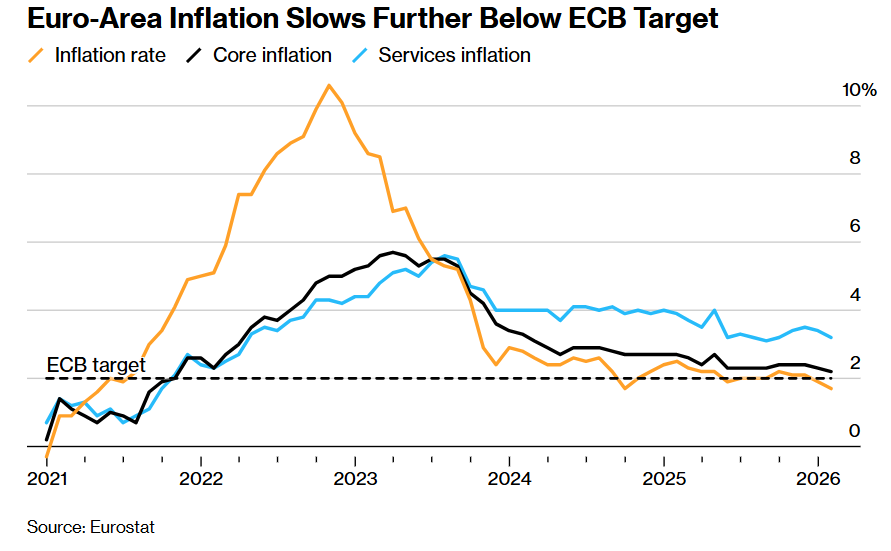
Core Insights - The Eurozone's inflation rate for January has decreased to 1.7%, aligning with economists' expectations of a drop from 2% in December [3][7] - Core inflation, excluding volatile items like energy and food, is reported at 2.2%, slightly down from 2.3% in December [3][7] - The latest data indicates that the core inflation metric has fallen below the European Central Bank's (ECB) target threshold of 2%, suggesting that the ECB is unlikely to implement rate cuts in the foreseeable future [3][7] Monetary Policy Outlook - The ECB is set to hold a monetary policy meeting, with market expectations indicating that the benchmark interest rate will remain unchanged at 2% [5][7] - Economists predict that the benchmark rate will stay stable in the coming months, although several factors could influence the ECB's policy stance, including geopolitical tensions, significant euro appreciation, and inflation data exceeding expectations [3][7][8] - Lorenzo Codogno, founder and chief economist of Codogno Macro Consulting, notes that while the ECB is currently in a "good state," global uncertainties and economic vulnerabilities may lead officials to reconsider their optimistic outlook [4][8]