
汽车智能化出海

Search documents
协同合作,加快汽车智能化“出海”——记第七届全球智能驾驶大会
Zhong Guo Qi Che Bao Wang· 2025-12-10 02:55
Core Viewpoint - During the "14th Five-Year Plan" period, China's automobile exports have increased from less than 2 million to nearly 6 million, transitioning from single vehicle exports to collaborative industry chain exports, achieving significant growth in both quantity and quality [2] Group 1: Development of Intelligent Vehicles - The automotive industry has entered the era of intelligent connected vehicles, with a consensus on the strategic transformation towards smart vehicles globally [3] - In the first seven months of this year, the penetration rate of L2+ intelligent driving in new passenger cars in China reached 62.6%, with 4G/5G installation rates at 60.5% and 22.2% respectively [3] - The shift from "single vehicle export" to "system export" includes not only intelligent vehicles but also the supply chain and digital services, indicating vast potential for growth [3][4] Group 2: Competitive Advantages - Chinese automobiles have higher hardware configurations, more complete software ecosystems, and richer intelligent functions compared to overseas markets, leading to better user experiences [4] - The penetration rate of L2+ auxiliary driving technology in China has reached 20%, with many advanced driving technologies expected to be widely applied next year, showcasing a technological lead [4] - The rapid innovation and industrialization of China's intelligent driving industry have created significant cost and scale advantages over overseas supply chains [4][5] Group 3: Challenges in Global Expansion - The intelligent vehicle export faces challenges such as regulatory differences, localization service inadequacies, and data security compliance requirements [6][7] - There is a need for deep market adaptation rather than simple technology transfer to build trust and understanding among diverse cultural backgrounds [7] - Trade barriers and geopolitical tensions, particularly between the US and Europe, pose additional challenges to the global expansion of China's intelligent vehicles [7] Group 4: Collaborative Strategies for Success - Industry players are encouraged to shift from competition to cooperation, focusing on service and solution exports rather than just product sales [8] - Establishing localized manufacturing through joint ventures, technology licensing, and enhancing collaboration with multinational companies are essential strategies [8] - Building a supportive global industrial environment requires regulatory dialogue, data compliance mechanisms, and the establishment of ecological clusters overseas [8]


汽车视点丨“代差”优势显现 中国汽车智能科技企业出海跑出“加速度”
Xin Hua Cai Jing· 2025-12-07 15:04
Core Viewpoint - Since 2025, Chinese automotive intelligent technology companies have accelerated their overseas expansion, focusing on areas such as Robotaxi, intelligent assisted driving, and smart cockpits, creating a diverse overseas landscape of "technology output + scenario implementation + ecosystem co-construction" [1][2] Group 1: Market Expansion - Chinese Robotaxi companies like Baidu, WeRide, Pony.ai, and Didi have obtained full autonomous commercial operation licenses in several Middle Eastern countries this year [2] - Companies believe that the Middle East, with its relatively relaxed regulations and various funding supports, has become the preferred market for Robotaxi commercialization, while Europe promotes technology implementation through strict compliance and partnerships with traditional automakers [2] - Pony.ai has 1,000 Robotaxi vehicles in mass production in China and has begun operations in markets such as South Korea, Singapore, the UAE, Qatar, and Luxembourg [2] Group 2: Competitive Advantages - Chinese automotive intelligent solutions have formed three major "generation advantages" compared to overseas markets: - Product advantage: Over 85% of new cars in China are equipped with central screens, while this figure is below 50% in Europe [4] - Technology advantage: The penetration rate of L2 level assisted driving in China exceeds 65%, with L3 and L4 technologies set for large-scale application [4] - Industry chain advantage: Rapid transformation from technological innovation to large-scale production, with costs for high-quality lidar dropping from 200,000 yuan in 2017 to under 1,000 yuan today [4] Group 3: Market Potential - The Robotaxi market is projected to reach $4.4 billion by 2025 and exceed $18 billion by 2034, with a compound annual growth rate of over 50% [5] - The overseas Robotaxi market is still in its infancy, requiring significant investment to establish pilot projects before broader replication [5][6] Group 4: Challenges in Globalization - Chinese automotive intelligent technology faces specific challenges when entering global markets, including: - Technical adaptation issues due to differing road environments and user habits [7] - Regulatory barriers regarding data flow, which is crucial for the iterative development of intelligent driving systems [7] - The need to build new ecosystems for critical services like mapping and cloud services in overseas markets [7] Group 5: Strategic Recommendations - To address these challenges, companies should avoid solitary efforts and actively establish win-win relationships with overseas partners [8] - Deepening cooperation with multinational companies and leveraging their global networks can facilitate overseas expansion [8] - Establishing nearshore R&D centers in target markets can help utilize local resources and achieve collaboration between offshore and nearshore development [8]
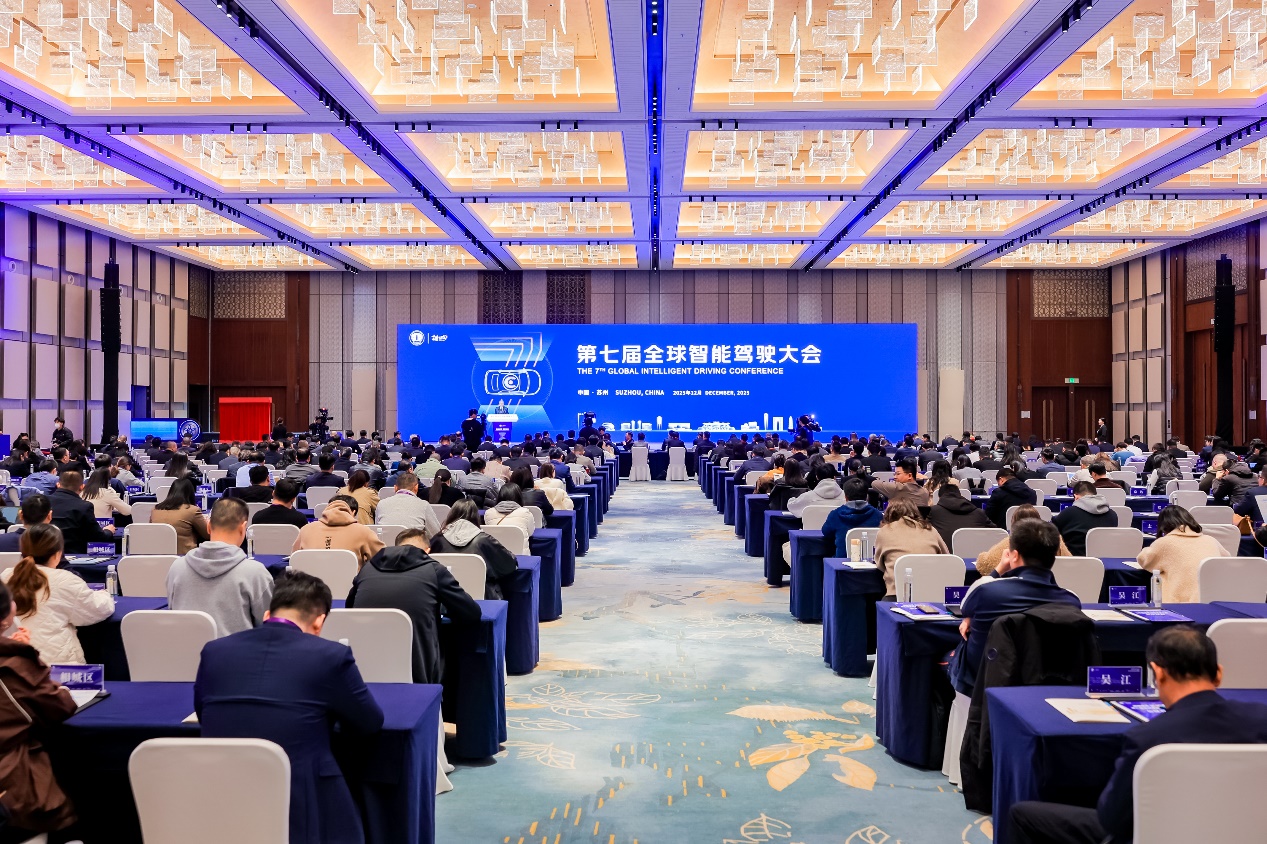
把握代差机遇,共建汽车智能化出海新生态——第七届全球智能驾驶大会召开
Zhong Guo Qi Che Bao Wang· 2025-12-03 00:45
Core Insights - During the "14th Five-Year Plan" period, China's automobile exports increased from less than 2 million to nearly 6 million, achieving a leap in both quantity and quality through collaborative industry chain development [1] - The global smart driving conference highlighted new opportunities and challenges for China's automotive intelligence development, emphasizing the need for a robust export strategy [3] Group 1: Opportunities in Smart Automotive Export - The transition to smart connected vehicles is a global consensus, with significant advancements in China's smart connected vehicle industry, evidenced by a 62.6% penetration rate of L2 passenger cars and a 60.5% 4G/5G installation rate [4] - China's automotive intelligence export is shifting from "single entity export" to a "system export," encompassing smart vehicles, supply chains, and digital services [4][5] - Chinese automotive hardware and software are superior, leading to better user experiences, with L2+ driving assistance penetration reaching 20% [5] Group 2: Challenges in Smart Automotive Export - The export of smart vehicles faces challenges such as complex regulations, consumer awareness of innovative technologies, and limited brand influence [7] - Key deficiencies in China's smart connected vehicle development include unrecognized product safety, suboptimal business models, and a lack of influential enterprises [7][8] - The automotive industry must address localization issues, data security compliance, and cultural adaptation to succeed in international markets [8][9] Group 3: Collaborative Strategies for Export - Industry collaboration is essential for exploring innovative paths for vehicle and supply chain exports, transitioning from competition to cooperation [10] - Establishing a global unified platform for hardware and algorithms, along with enhancing international talent decision-making, is crucial for building a supportive global environment [10] - The launch of the "Smart Connected Vehicle Special Export Action Initiative" aims to create an open and collaborative service ecosystem for high-quality exports [12]
专家谈中国智能车出海:“千载难逢的机会”
第一财经· 2025-12-02 04:58
Core Insights - The article emphasizes that the time difference and generational gap in the automotive intelligence sector between China and overseas markets present a unique opportunity for Chinese automotive companies to expand internationally [3][4]. - The shift from product-based exports to a comprehensive industry chain going global is highlighted as a significant trend, driven by increasing competition in the domestic market [3][4]. Industry Trends - At the 2025 Munich Auto Show, various Chinese automotive intelligence companies showcased their capabilities, indicating a full-chain approach to global expansion [4]. - China's penetration rates in smart cockpits and advanced driver-assistance systems (ADAS) are leading globally, with over 80% and 65% respectively, compared to around 50% in Europe [4]. Market Opportunities - The global autonomous driving market is projected to reach $4.4 billion by 2025 and grow to over $18 billion by 2034, with a compound annual growth rate exceeding 50% [5]. - Chinese companies are accelerating their global strategies, focusing on regions like the Middle East, Southeast Asia, and Europe [5]. Challenges and Strategies - Despite favorable market conditions, the complexities of international expansion in automotive intelligence, including service integration and regulatory challenges, are significant [7]. - Collaboration with local partners is recommended as a strategy to navigate uncertainties and enhance market entry success [7][8]. Local Adaptation - Companies must adapt their products and operations to local market conditions, emphasizing the importance of understanding regional differences in regulations and consumer behavior [8].

专家谈中国智能车出海:“千载难逢的机会”
Di Yi Cai Jing· 2025-12-02 02:52
Core Insights - The article emphasizes the significant opportunity for Chinese automotive companies to expand internationally in the field of smart vehicles, driven by the technological advancements and competitive advantages in the domestic market [1][2][3] Industry Overview - Chinese automotive intelligence has surpassed global standards, with smart cockpit penetration exceeding 80% compared to 50% in Europe, and advanced driver assistance systems (ADAS) penetration over 65%, outperforming Europe and Japan [2] - The cost of key technologies, such as LiDAR, has dramatically decreased from 200,000 yuan in 2017 to the current price in the thousands, indicating a trend towards affordability and scalability in the industry [2] Market Trends - The global market for autonomous driving services is projected to reach $4.4 billion by 2025 and grow to over $18 billion by 2034, with a compound annual growth rate exceeding 50%, highlighting a substantial growth opportunity [2] - 2025 is recognized as a pivotal year for the globalization of Chinese autonomous driving, with companies like RoboTaxi and Momenta actively expanding their international presence [3] Strategic Recommendations - To navigate the complexities of international expansion, collaboration with local partners is essential, as the challenges of smart vehicle deployment include regulatory, cultural, and operational differences [4][5] - Companies are advised to avoid internal competition and focus on building partnerships that enhance their market entry strategies, ensuring they do not disrupt local ecosystems [5]

中国智能化汽车的三次出海
Tai Mei Ti A P P· 2025-05-30 10:04
Core Insights - The article highlights the emerging trend of Chinese automotive companies expanding their smart vehicle capabilities internationally, alongside their electric vehicle advancements [1][12] - It identifies three waves of globalization in the Chinese automotive sector: the export of smart driving technology, the establishment of manufacturing plants abroad, and the globalization of automotive cloud services [13] Group 1: Smart Driving Technology Export - The first wave involves the export of autonomous driving technology and smart driving products, with companies like Xpeng and NIO leading the charge [2] - Baidu's "Luobo Kuaipao" has deployed 1,000 autonomous vehicles in Dubai, indicating a significant step in scaling up overseas operations [3] - Xiaoma Zhixing's Robotaxi service revenue share increased from 4.8% to 12.1% year-on-year, showcasing the growing demand for smart driving solutions [3][4] Group 2: Manufacturing Expansion - The second wave sees Chinese automotive manufacturers establishing factories abroad, with BYD's factory in Thailand being a notable example, featuring an investment of over 69.8 million RMB and a production capacity of 150,000 vehicles annually [6] - BYD's market share in Thailand has reached 30%, with a gross margin of 28.87% in overseas markets, significantly higher than in domestic markets [6][7] - The establishment of factories in strategic locations allows Chinese companies to avoid trade barriers and leverage regional trade agreements, enhancing their competitive edge [7][8] Group 3: Cloud Services Globalization - The third wave focuses on the globalization of automotive cloud services, essential for processing the vast amounts of data generated by autonomous vehicles [9][10] - Huawei Cloud and Alibaba Cloud are expanding their services globally, providing critical infrastructure for data processing and algorithm updates for smart vehicles [11] - Huawei Cloud has established a presence in 33 geographical regions, supporting over 140 operators and 500 financial clients, indicating its significant role in the automotive cloud service landscape [11]
