
智能辅助驾驶方案

Search documents
汽车视点丨“代差”优势显现 中国汽车智能科技企业出海跑出“加速度”
Xin Hua Cai Jing· 2025-12-07 15:04
Core Viewpoint - Since 2025, Chinese automotive intelligent technology companies have accelerated their overseas expansion, focusing on areas such as Robotaxi, intelligent assisted driving, and smart cockpits, creating a diverse overseas landscape of "technology output + scenario implementation + ecosystem co-construction" [1][2] Group 1: Market Expansion - Chinese Robotaxi companies like Baidu, WeRide, Pony.ai, and Didi have obtained full autonomous commercial operation licenses in several Middle Eastern countries this year [2] - Companies believe that the Middle East, with its relatively relaxed regulations and various funding supports, has become the preferred market for Robotaxi commercialization, while Europe promotes technology implementation through strict compliance and partnerships with traditional automakers [2] - Pony.ai has 1,000 Robotaxi vehicles in mass production in China and has begun operations in markets such as South Korea, Singapore, the UAE, Qatar, and Luxembourg [2] Group 2: Competitive Advantages - Chinese automotive intelligent solutions have formed three major "generation advantages" compared to overseas markets: - Product advantage: Over 85% of new cars in China are equipped with central screens, while this figure is below 50% in Europe [4] - Technology advantage: The penetration rate of L2 level assisted driving in China exceeds 65%, with L3 and L4 technologies set for large-scale application [4] - Industry chain advantage: Rapid transformation from technological innovation to large-scale production, with costs for high-quality lidar dropping from 200,000 yuan in 2017 to under 1,000 yuan today [4] Group 3: Market Potential - The Robotaxi market is projected to reach $4.4 billion by 2025 and exceed $18 billion by 2034, with a compound annual growth rate of over 50% [5] - The overseas Robotaxi market is still in its infancy, requiring significant investment to establish pilot projects before broader replication [5][6] Group 4: Challenges in Globalization - Chinese automotive intelligent technology faces specific challenges when entering global markets, including: - Technical adaptation issues due to differing road environments and user habits [7] - Regulatory barriers regarding data flow, which is crucial for the iterative development of intelligent driving systems [7] - The need to build new ecosystems for critical services like mapping and cloud services in overseas markets [7] Group 5: Strategic Recommendations - To address these challenges, companies should avoid solitary efforts and actively establish win-win relationships with overseas partners [8] - Deepening cooperation with multinational companies and leveraging their global networks can facilitate overseas expansion [8] - Establishing nearshore R&D centers in target markets can help utilize local resources and achieve collaboration between offshore and nearshore development [8]
上海证券:政策、出口、智能化协同共振 机器人重塑行业增长逻辑
Zhi Tong Cai Jing· 2025-12-05 07:45
Core Insights - The intelligent driving market in China is projected to approach 450 billion yuan by 2025, indicating significant growth potential [1] - The price of intelligent assisted driving solutions has been decreasing since 2025, creating new opportunities for domestic alternatives [1] - The domestic auto parts industry is expected to accelerate its replacement of imports by 2025, aligning more closely with global standards [1] Industry Trends - Cumulative sales of new energy vehicles from January to October 2025 reached 12.91 million units, representing a year-on-year increase of 32.42%, with a penetration rate of 46.70% [1] - New energy vehicle exports grew by 87.57%, outpacing domestic demand growth of 25.71% [1] - The market share of domestic brands in passenger vehicles increased from 38.43% in 2022 to 69.48% in the first ten months of 2025 [1] Export Dynamics - Short-term fluctuations in automobile exports do not alter the long-term trend of international expansion [1] - The slowdown in cumulative export growth in the first ten months of 2025 is attributed to increased export baselines, trade barriers, and global market instability [1] - Domestic automakers are employing various strategies to navigate and mitigate the impact of barriers on international expansion [1]

汽车行业2026年投资策略:政策、出口、智能化协同共振,机器人重塑行业增长逻辑
Shanghai Securities· 2025-12-04 12:42
Core Insights - The report maintains a bullish outlook on the automotive industry, emphasizing the synergy between policies, exports, and smart technology, which is reshaping the market landscape [1][2]. Group 1: Industry Growth Logic - The automotive industry is projected to see a total sales volume of over 34 million units in 2025, with a year-on-year growth rate of approximately 8% [8]. - In the first ten months of 2025, cumulative sales reached 27.65 million units, reflecting a year-on-year increase of 12.29% [8][7]. - The penetration rate of new energy vehicles (NEVs) reached 46.70% in the same period, with cumulative sales of 12.91 million units, up 32.42% year-on-year [21][4]. - The export growth rate for NEVs was significantly higher at 87.57%, compared to domestic demand growth of 25.71% [21][4]. Group 2: Export Dynamics - In the first ten months of 2025, China's automotive exports reached 5.58 million units, marking a year-on-year increase of 15.05%, with exports accounting for 20.19% of total sales [11][10]. - The top ten exporting companies included Chery and BYD, with Chery exporting 1.063 million units, a 12.9% increase, and BYD's exports surging by 140% to 789,000 units [11][10]. Group 3: Domestic Demand - Domestic sales in the first ten months of 2025 totaled 22.06 million units, reflecting an 11.61% year-on-year increase [15][14]. - The "trade-in" policy has been enhanced to stimulate domestic demand, expanding the scope of vehicle scrappage and increasing subsidy standards [15][14]. Group 4: Self-owned Brands - The market share of domestic brands in passenger vehicles rose to 69.48% in the first ten months of 2025, up from 38.43% in 2022, with a growth rate of 21.31% [19][18]. - The overall growth rate for passenger vehicles was 12.80%, indicating a strong performance from domestic brands [19][18]. Group 5: Smart Technology and Parts - The smart driving market in China is expected to approach 450 billion yuan by 2025, with the penetration rate of L2-level assisted driving exceeding 50% [33][31]. - The report highlights the acceleration of domestic parts replacement, driven by supportive national policies and expanding market scales, particularly in the NEV sector [38][34]. - The synergy between smart connected vehicles and humanoid robots is noted, with both industries sharing over 50% of supply chain resources, which could significantly reduce production costs for robots [41][39]. Group 6: Investment Recommendations - Recommended companies in the complete vehicle sector include BAIC Blue Valley, GAC Group, and Great Wall Motors [47]. - In the parts sector, companies such as Bertley, Yinlun, and Longsheng Technology are highlighted as potential investment opportunities [47]. - For small-cap stocks, Baihehua is suggested as a promising investment [47].




吉利推进智驾整合,极氪团队正被划转至新合资公司
Xin Lang Cai Jing· 2025-11-21 13:19
Core Insights - The Geely Group's intelligent driving team has made progress in integrating its resources into a newly established joint venture, including "Qianli Zhijia" and its subsidiary "Qianli Haohan" [1] - The joint venture aims to enhance the advanced, proactive, and economical nature of its intelligent driving solutions, with plans to offer industry-leading assistance driving solutions in the future [1] Group 1 - The Qianli Zhijia company will act as an intelligent driving solution provider, while Qianli Haohan will specifically provide assistance driving services for Geely [1] - The core technologies and research capabilities of the Zeekr assistance driving team, along with the large model capabilities of Qianli Technology, will be utilized in the Qianli Haohan team, which is currently responsible for the H5, H7, and H9 models [1] - The integration process is ongoing, with adjustments to roles and responsibilities expected as the teams further merge [1] Group 2 - Zeekr is negotiating the transfer of certain employees to the joint venture, ensuring that employee rights are protected throughout the integration process [1] - The integration is seen as a key step in consolidating resources to improve the overall effectiveness of the intelligent driving solutions [1]

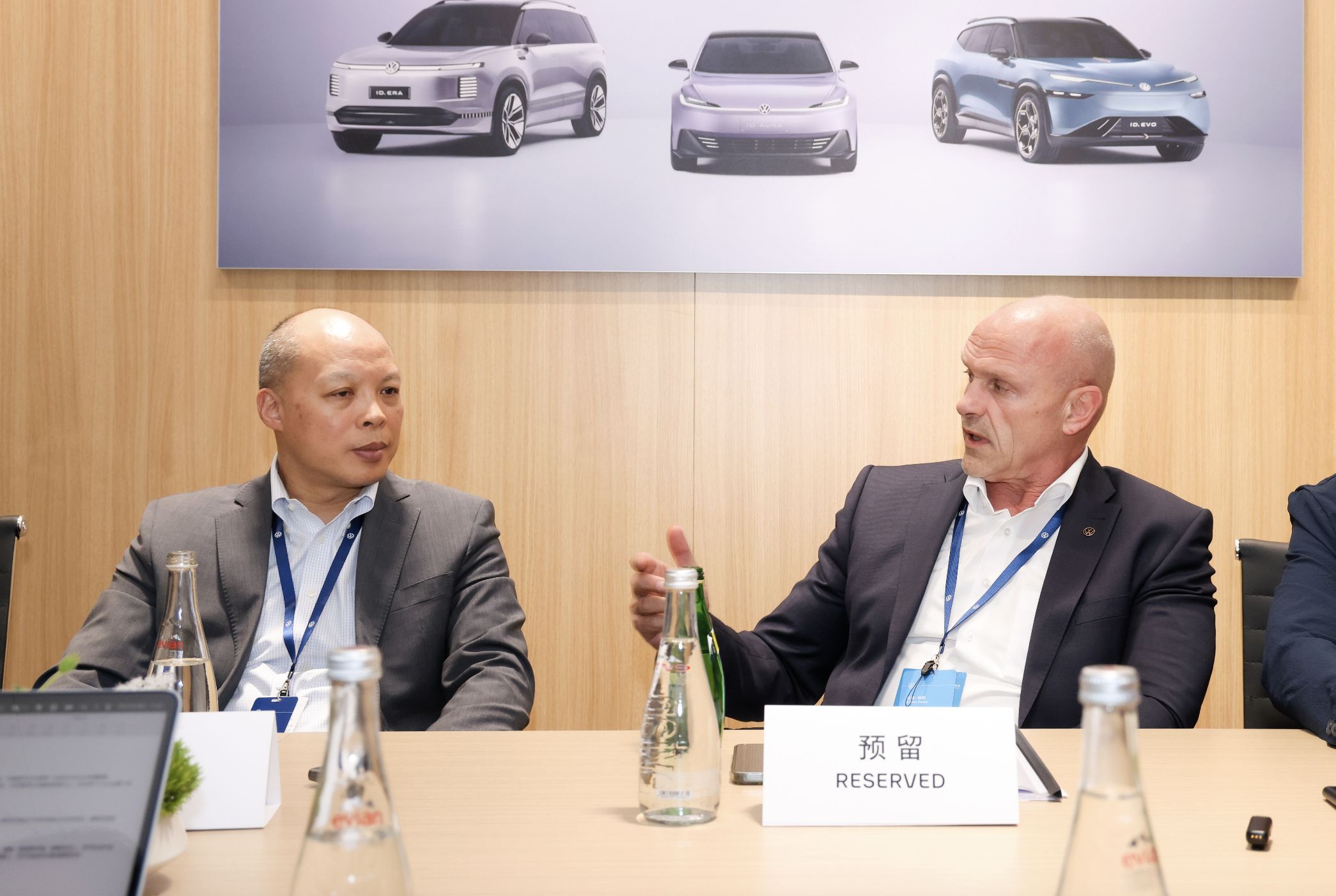
大众中国CTO吴博锐:我们在以“中国速度”工作|36氪专访
3 6 Ke· 2025-04-27 09:58
Core Insights - The joint venture automotive companies in China are undergoing a significant transformation towards smart technology, particularly among German automakers like Volkswagen, which heavily rely on the Chinese market [1][5] Group 1: Volkswagen's Strategy in China - Volkswagen has established an independent technology company, VCTC, in Anhui, transferring all technical authority and responsibilities from its headquarters in Wolfsburg to this new entity [4][12] - VCTC will serve as the sole technical cooperation interface for joint ventures like SAIC Volkswagen and FAW-Volkswagen, allowing for more efficient collaboration tailored to the Chinese market [4][12] - The establishment of VCTC aligns with Volkswagen's overarching strategy of "In China, for China," which aims to shield its operations from global trade uncertainties [5][13] Group 2: Collaborations and Investments - Volkswagen has made significant investments in local companies, including €2.4 billion in Horizon Robotics in 2022 and $700 million in Xpeng Motors in 2023, to enhance its smart driving capabilities [6][7] - The partnership with Horizon Robotics has led to the creation of a joint venture, CARIZON, which focuses on advanced driver-assistance systems (ADAS) [9][14] - The collaboration model with Horizon Robotics emphasizes a co-development approach, breaking away from traditional supplier relationships to foster more transparent and efficient development processes [9][15] Group 3: Technological Development and Market Adaptation - The CEA electronic and electrical architecture developed by Volkswagen is specifically tailored for the Chinese market, allowing for rapid implementation of advanced driving assistance features [11][15] - Volkswagen aims to achieve L2+ and L2++ level driving assistance functionalities quickly, with plans to pave the way for L3 capabilities by the end of 2027 [11][15] - Despite the advancements, the CEA architecture is not currently compatible with high-end brands like Porsche, which follow European design standards [11][17]

Momenta牵手全新AUDI品牌 加快扩展全球“朋友圈”
凤凰网财经· 2025-04-24 13:07
4 月 24 日,奥迪新品牌 AUDI 携手全球领先的智能驾驶公司 Momenta 正式宣布,联合打造 行业首个 " 德系电动豪华标准 + 飞轮大模型 " 智能 辅助驾驶方案 ,共同定义豪华智能辅助驾驶标准,打造豪华智能辅助驾驶新范式。 Momenta加速扩展全球"朋友圈" 随着携手全新品牌 AUDI 共同打造智能辅助驾驶方案, Momenta 的全球"朋友圈"阵容再添一名明星伙伴。目前, 在全球 TOP10 汽车厂 商中,与 Momenta 开展业务合作的已经占到 70% ,真正成为"全球品牌的共同选择", 充分展现出了在全球智驾行业内的强大影响力及 受认可程度。 在 " 锐启新境 "2025 上海国际车展上汽奥迪发布会上, Momenta CEO 曹旭东表示:"奥迪一直秉持 ' 美美与共 ' 的合作理念。在智能化领域, Audi DNA meets China innovation ,我们双方的合作正是 德系豪华驾控和中国 AI 智慧的深度融合 。 " 01 飞轮大模型赋能AUDI Driving DNA Momenta 作为业内首个发布量产飞轮大模型的企业,创新性地将感知与规划整合进一个大模型中,形成一 ...