多巴胺经济

Search documents
烘焙行业洗牌:传统品牌不断关店 行业增长逻辑与竞争格局彻底改写
Xin Lang Cai Jing· 2025-12-15 06:10
Core Insights - The traditional baking brand 85°C is experiencing a significant contraction, highlighted by the closure of its last store in Beijing on October 28, 2023, while simultaneously testing a new donut store concept [1][7] - This situation reflects a broader survival crisis faced by traditional baking brands, indicating a shift from incremental expansion to intense competition in a saturated market [1][7] Company Summary - 85°C's parent company, Meishi-KY, reported a revenue decline of 11.08% in the first half of 2025, amounting to 35.22 billion New Taiwan Dollars (approximately 8.22 billion RMB), with potential losses exceeding 93 million RMB for the year if operational adjustments are not made [2][8] - The brand has initiated a strategic contraction, exiting markets like Jinan and closing stores in major cities such as Beijing, Hangzhou, and Nanjing, with over 400 stores still operational but a clear trend of closures [2][8] - In response to market pressures, 85°C is launching a new "85°C DONUt" concept, featuring a compact store model of around 10 square meters, offering 14 SKUs including 13 types of donuts and 1 sandwich, priced between 6-10.8 RMB [2][8] Industry Summary - The baking industry is witnessing a collective closure trend across various brands and regions, with notable examples including Paris Baguette and other international brands facing similar challenges in the Chinese market [3][9] - Data indicates that the average lifespan of baking stores in China is only 32 months, with 57% of stores closing within two years of opening [3][9] - The market is projected to grow, with estimates suggesting a market size of 611.07 billion RMB in 2024, increasing to 662.15 billion RMB in 2025, but the distribution of growth benefits is heavily skewed [4][10] - Rising costs and product homogenization are critical challenges for traditional brands, leading to reduced profit margins and diminished appeal to younger consumers [4][10] Competitive Landscape - Tea brands are emerging as significant disruptors in the baking market, with strategies that integrate baking and tea offerings, such as Nayuki's Tea and other brands introducing baked goods alongside beverages [5][11] - Convenience stores and supermarkets are also diversifying their offerings with in-house baked products, further fragmenting the market [5][11] - A report predicts that by 2030, the market share of traditional baking stores will decrease from 77% to 71%, indicating a shift towards integrated consumer experiences [5][11]
2025搜狐财经年度论坛圆满落幕,吴晓求、刘纪鹏、阎学通、吴向东等20余位嘉宾共探中国经济韧性
Sou Hu Cai Jing· 2025-11-28 01:59
Group 1 - The 2025 Sohu Finance Annual Forum was successfully held in Beijing, featuring over twenty authoritative guests from academia, business, and investment sectors discussing key topics such as macro policies, industrial upgrades, corporate globalization, capital market reforms, and international dynamics [1] - Wu Xiaoqiu, a professor and former vice president of Renmin University, highlighted that China's economy has transitioned from a "shortage era" to an "excess stage" within just over forty years, emphasizing the need to expand consumption under current conditions [3] - Liu Jipeng, a professor at China University of Political Science and Law, identified three key factors for the sustainable development of A-shares after surpassing 4000 points: major shareholder reductions, low-interest buybacks, and utilizing capital markets for the benefit of investors [5] Group 2 - Teng Tai, an economist, proposed three unconventional measures to achieve the "14th Five-Year Plan" goal of a 6% annual growth rate in retail sales of consumer goods, including issuing a trillion yuan in universal consumption vouchers, reallocating state-owned equity to enhance social security, and creating a wealth effect through capital markets [7] - Yan Xuetong, honorary dean of Tsinghua University's International Relations Institute, stated that the changes in the international situation in 2025 cannot be explained by structural factors but are determined by the actions of major power decision-makers [9] - Sun Liping, a sociologist, noted that China's economy is at a turning point characterized by "overdraft, contraction, and internal competition," requiring comprehensive restoration to return to normal circulation [11] Group 3 - Huang Shaoqing, a professor at Shanghai Jiao Tong University, emphasized the importance of regulating local government economic interventions to combat "involution and efficiency traps" [13] - Zhang Bo, director of the 58 Anjuke Research Institute, indicated that the real estate sector is transitioning from high-leverage expansion to high-quality development, moving away from the "real estate-only" wealth logic [16] - Shi Yongqing, founder and chairman of the Zhongyuan Group, suggested that areas with stagnant population growth should halt land sales to allow existing properties to be absorbed [20] Group 4 - Zhang Ruipeng, vice president of Yili Group, discussed the shift in China's dairy industry from "quantity-driven" to "quality-driven," highlighting the importance of deep processing in industry upgrades [24] - Wu Xiangdong, chairman of Jin Dong Investment Group, stressed that white liquor companies must innovate to achieve breakthroughs during the industry's downturn [27] - Zhen Shaoqiang, president of Penghui Energy Group, noted that the energy storage industry is experiencing a "sweet trouble," with increasing demand but also entering a period of adjustment and intensified competition [41] Group 5 - Liang Yonghui, deputy general manager of Shandong Zhaojin Refining, pointed out that while the long-term bullish trend for gold remains, a price adjustment is expected in the short term due to rapid increases in 2025 [45] - Li Tian, a fund manager at Daqing Investment, highlighted that the rise of new consumer brands is driven by the "she economy," which presents both opportunities and challenges for sustained growth [49] - Mao Dingding, a fund manager at Chuangjin Hexin Fund, indicated that the U.S. biotech sector is approaching a significant investment turning point, with opportunities for both beta and alpha returns [51]

淡水泉投资李天:未来1-2年,新消费最大机会在“她经济”与“多巴胺经济”
Sou Hu Cai Jing· 2025-11-27 03:33
Core Insights - The rise of new consumer brands such as trendy toys, cosmetics, and milk tea is primarily driven by the increase in female consumption, characterized by a tendency to try new products and share experiences [2][5][6] - The investment opportunities in the new consumer sector are expected to focus on companies that can leverage both the "she economy" (female consumption) and the "dopamine economy" (affordable entertainment services) [4][10] Group 1: New Consumer Trends - New consumer brands have seen explosive growth due to female consumers' preference for trying new brands and sharing their experiences, leading to rapid brand adoption [5][6] - However, the loyalty of female consumers is low, which poses challenges for brand sustainability and growth in the long term [6][7] - The performance of traditional male-oriented brands has been relatively weak under current macroeconomic pressures, highlighting the shift towards female-centric consumption [5][6] Group 2: International Expansion - Many new consumer companies are exploring international markets, but the focus is shifting from goods to services due to increased tariffs on products [7][8] - The entertainment sector presents a unique opportunity for Chinese companies to expand internationally, as it has lower barriers to entry compared to other service categories [8][9] - The concept of "affordable happiness" or "dopamine economy" is emerging, where Chinese companies can offer low-cost entertainment options such as short videos and games to global markets [9][10]

情绪消费专题系列之一:户外运动让“多巴胺经济”动起来
Ping An Securities· 2025-10-16 07:50
Investment Rating - The industry investment rating is "Strongly Recommended" with an expectation that the stock price will outperform the market by over 20% within six months [56]. Core Insights - The outdoor sports industry is experiencing a surge driven by the "dopamine economy," where emotional consumption is becoming a significant trend among consumers, particularly the younger generation [2][5]. - Both supply and demand sides are contributing to the growth of outdoor sports consumption, with government policies supporting infrastructure and service improvements, and a growing consumer preference for experiential and emotional value in purchases [5][6][9]. - The market for outdoor sports products is projected to reach approximately 27.44 billion yuan in 2024, indicating a stable growth trajectory [26][21]. Summary by Sections 01 Outdoor Sports: Activating the "Dopamine Economy" - Outdoor sports are increasingly favored by young people as a means to achieve happiness and express individuality, leading to a notable rise in emotional consumption [2][5]. - Government policies are actively promoting outdoor sports as a key area for economic growth, with a target to expand the industry to a total scale exceeding 7 trillion yuan by 2030 [6][7][9]. 02 Demand-Side Dominance: Driving Outdoor Sports Consumption - The outdoor sports market is robust, with a projected retail value of 26.22 billion yuan in 2022, growing by 3.39% year-on-year [26]. - The core motivations for outdoor sports participants include stress relief, physical fitness, and a connection with nature, with cycling, hiking, and climbing being the most popular activities [30][26]. - The younger demographic, particularly Generation Z, is leading the charge in emotional consumption, favoring experiences that provide joy and personal expression [10][18]. 03 Investment Recommendations and Key Focus Stocks - The report suggests focusing on segments related to emotional consumption, as this is expected to be a significant investment theme moving forward [49]. - Recommended companies include Anta Sports, 361 Degrees, and Amer Sports, which are well-positioned to capitalize on the growth in the outdoor sports sector [50][51].
中秋逢国庆 “花式”消费“节节高”
Xin Hua Ri Bao· 2025-10-07 23:30
Group 1: Consumer Trends and Experiences - The "Golden Week" during the Mid-Autumn Festival and National Day has led to a vibrant consumer atmosphere in Jiangsu, with diverse and innovative shopping experiences being offered to citizens and tourists [1] - The "Dopamine Stone Kingdom" in Lianyungang has become a popular attraction, featuring artistically designed colorful stones that provide unique photo opportunities, aligning with the 2025 cultural tourism trends [2][3] - Danyang's eyewear market has seen a surge in visitors, with daily foot traffic exceeding 20,000, highlighting the city's status as a major eyewear hub and the popularity of promotional activities [4] Group 2: Entertainment and Events - The 2025 Hua Chenyu concert in Nanjing adopted an interactive "amusement park mode," integrating music, art, and technology to enhance the audience experience [5][6] - Various scenic spots in Nanjing have organized themed events during the holiday, such as "National Style Garden" and "Cyber Heritage Celebration," creating immersive experiences for visitors [6] - The "I Appreciate Poetry and Admire the Moon" event in Qinhuai has attracted tourists with its poetic activities, enhancing the cultural experience during the Mid-Autumn Festival [17] Group 3: Local Attractions and Activities - Yangzhou has promoted "micro-vacations" with local activities that blend ecological charm and modern vibrancy, allowing residents to enjoy tourism without traveling far [7][8] - In Lianyuan, the "Puqin Garden" has hosted performances of traditional Huai Opera, showcasing local culture and attracting visitors during the holiday [9] - The "Seafood Festival" in Rudong has drawn significant crowds, with over 8,000 visitors daily, and has generated substantial sales in various consumer categories [16]
中国“多巴胺产品”席卷全球,淡水泉投资解码服务业出海逻辑
Xin Lang Ji Jin· 2025-07-22 01:57
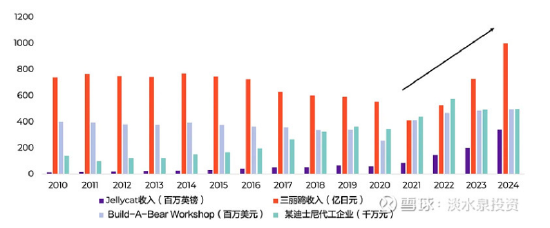
Group 1 - The core viewpoint is that China's service industry is experiencing a new trend of overseas expansion, with short dramas, mobile games, and trendy toys becoming significant carriers of new consumption forms, showing strong growth despite increasing tariff frictions this year [1][2]. Group 2 - New consumption overseas is experiencing a counter-trend explosion, with Sensor Tower data indicating that by Q1 2025, Chinese short drama platforms ReelShort and DramaBox will see revenue growth of 31% and 29% respectively, ranking first and second globally in short drama app revenue [2]. - In the gaming sector, 33 Chinese companies made it to the global top 100 mobile game publishers by June 2025, collectively accounting for 33% of the total revenue of the top 100 [2]. Group 3 - The underlying logic of the "dopamine economy" is that short dramas, games, and trendy toys effectively tap into user psychology, creating instant gratification and sustained anticipation, activating the brain's dopamine reward system [3]. - Data from 2020 to 2024 shows a surge in sales of healing toys in Europe, the US, and Japan, reflecting the rigid demand for emotional consumption [3]. Group 4 - The deepening of mobile internet has accelerated this trend, with over 1 billion internet users in China creating fragmented scenarios that promote the prosperity of UGC (User Generated Content) and PUGC (Professional User Generated Content) ecosystems [4]. - The market for mini-program games is expected to experience explosive growth from 2022 to 2024, providing fertile ground for "short and quick" content [4]. Group 5 - The industrialized production mechanism of short dramas involves neuroscience applications, with episodes typically lasting 5-15 minutes and featuring plot twists every 1-2 minutes to trigger dopamine release cycles [5]. - Data-driven production methods, such as A/B testing for content optimization, allow for rapid identification of user preferences through "small-scale trial and error" [5]. Group 6 - Innovations in business models, such as vertical screen formats and advertising monetization, lower user barriers and expand audiences, enabling efficient monetization through traffic and advertising [6]. - The development of short dramas over the past three years represents a reshaping of the content industry landscape and marks the beginning of an unstoppable journey overseas [6]. Group 7 - Chinese companies have a dual advantage in overseas expansion, benefiting from a vast talent pool of over 1 million art exam candidates and 400,000 design graduates annually, forming the world's largest creative talent reservoir [8]. - The business model leverages a complete supply chain, cost efficiency, global self-operated models, and IP creation, forming a tripartite new business model that provides inclusive products and services [8]. Group 8 - The transition from manufacturing to creation is evident as Chinese companies reconstruct global content industry rules through "dopamine products," moving from "Made in China" to "Created in China" with emotional consumer goods [9].
排队IPO的潮玩公司:左侧是深海,右侧是烈火
Sou Hu Cai Jing· 2025-05-29 14:29
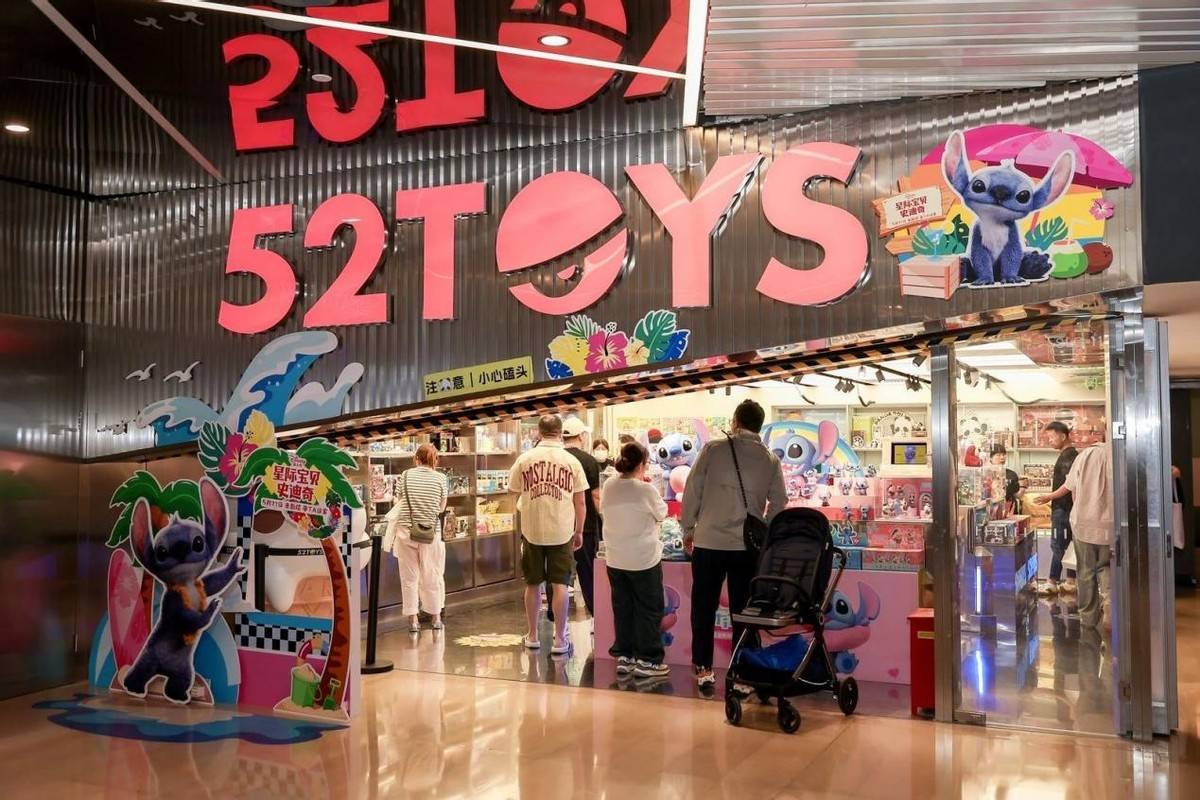
Core Viewpoint - The rise of the潮玩 (trendy toy) industry in China is marked by both opportunities and challenges, as companies like 52TOYS seek to establish themselves amidst heavy competition and reliance on licensed IPs [2][4][21]. Group 1: Industry Overview - The潮玩 industry has seen explosive growth, with over 50,000 related companies currently operating in China, and an estimated 3,100 new registrations expected by 2025 [4][14]. - The global IP derivative market is projected to exceed 1.72 trillion yuan by 2029, indicating significant potential for growth in this sector [4]. - The industry is characterized by a pyramid structure, where top players like LEGO and泡泡玛特 dominate profits, while mid-tier players struggle with homogenization and reliance on licensed IPs [5][22]. Group 2: Company-Specific Insights - 52TOYS has submitted its IPO application, positioning itself as the fifth潮玩 company to do so, but it reported a loss of 122 million yuan for the year, highlighting its dependency on licensed IPs like "Crayon Shin-chan" [2][4]. - The company’s revenue is projected to grow by 30% to 630 million yuan in 2024, yet it still faces a significant loss, which has widened by 70% year-on-year [4][5]. - A strategic investment of 144 million yuan from Wanda Film is seen as a critical move to help 52TOYS bridge the gap between IP development and derivative product monetization [2][12]. Group 3: Consumer Trends and Market Dynamics - The潮玩 market is shifting towards emotional consumption, with younger consumers (ages 18-25) contributing 33% of IP-related spending, indicating a change in purchasing motivations [8][14]. -泡泡玛特 has successfully transformed its products into emotional commodities, leveraging design psychology to create a strong emotional connection with consumers [8][12]. - The trend of "dopamine economy" is emerging, where products are not just toys but also serve as social currency and emotional support for consumers [8][12]. Group 4: Future Directions and Challenges - The潮玩 industry is at a crossroads, needing to evolve from relying on existing IPs to creating original content and ecosystems to remain competitive [18][22]. - Companies are increasingly focusing on localized strategies and partnerships to enhance their global presence, as seen with泡泡玛特's expansion into international markets [19][22]. - The ultimate battleground for潮玩 companies will be in cultural innovation, where success will depend on evolving from "Made in China" to "Brand from China" [19][23].