
消费驱动经济增长

Search documents
21社论丨多措并举,推动“能消费、敢消费、愿消费”
21世纪经济报道· 2026-03-05 00:10
Group 1 - The core viewpoint of the article emphasizes the importance of consumption as a key driver of economic growth, with a target for China's retail sales of consumer goods to exceed 50 trillion yuan by 2025, contributing 52% to economic growth [1] - The government plans to enhance consumer capacity through fiscal subsidies and policies aimed at increasing the coverage and effectiveness of consumer incentives, benefiting a broader population [1][2] - A sustainable increase in income is essential for boosting consumer confidence, with initiatives focused on promoting high-quality employment and income growth for residents [2] Group 2 - The article highlights the need for consumers to feel secure in their spending, which will be supported by legislative measures aimed at strengthening social safety nets, including laws on social assistance and healthcare [2] - Increased fiscal investment in public services such as education, healthcare, and elderly care is crucial for reducing consumer anxiety and encouraging spending [2] - The article discusses the importance of providing diverse and high-quality consumer choices to enhance consumer satisfaction, with ongoing upgrades in product and service offerings [3] Group 3 - The creation of an internationalized consumption environment and promotional activities are expected to enhance the attractiveness of the domestic market, contributing to a positive cycle of domestic consumption and international engagement [3] - The article concludes that the strategies to enable, encourage, and enhance consumer spending are vital for transitioning China's economy from investment-driven to consumption-driven growth, ultimately benefiting all citizens [3][4]

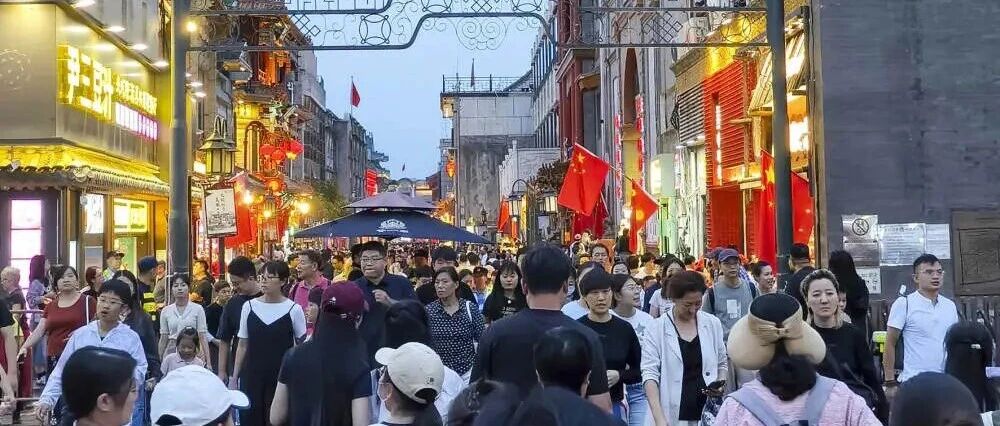
刘世锦重磅建议:中产要倍增到8-9亿人!关键靠这两大“硬招”
新浪财经· 2026-01-15 09:32
Core Viewpoint - The article emphasizes the need for China to transition from an investment and export-driven growth model to one focused on innovation and consumption during the 14th Five-Year Plan period, highlighting structural changes in the economy [6][45]. Consumption Structure - China is not yet a consumption powerhouse, with consumption accounting for 20 percentage points less of GDP compared to the global average [8][11]. - To become a consumption-driven economy, China must correct this structural deviation and enhance both domestic and international consumption [11]. - The focus on consumption is shifting from investment-driven growth to consumer-driven growth, particularly in sectors like education, healthcare, and cultural services [11]. Industrial Structure - The manufacturing sector's share of GDP may decline, but this does not indicate a lack of transformation; rather, it reflects a shift towards high-tech, knowledge-intensive service industries [12]. - The development of related productive services is crucial for supporting innovation and enhancing human capital [12][14]. - The government must foster a fair competitive environment to address the complexities of industrial transformation and reduce excess capacity in heavy industries [14]. Foreign Trade - Despite a challenging international environment, China's exports have remained strong, indicating improved technological and industrial competitiveness [17]. - A significant trade deficit suggests a reduction in domestic consumption, which is unsustainable in the long term [17][20]. - The strategy should shift towards balancing imports and exports, with an emphasis on using the RMB for international transactions [20]. Financial Structure - As industries evolve, the importance of capital markets is increasing, with a projected annual increase of at least 30 trillion yuan in social net assets if GDP grows at 4%-5% [23]. - The capital market should support the growth of large, innovative enterprises and increase the proportion of institutional investors to address the challenges of an aging society [24]. Urban-Rural Structure - Urbanization will slow as the population approaches 70%, leading to more internal migration within urban areas rather than from rural to urban [26][30]. - Addressing disparities in public services between urban and rural populations is essential for achieving balanced urban-rural development [31][32]. Income Distribution - To avoid the middle-income trap, China should aim to reduce the Gini coefficient to around 0.4, doubling the middle-income population from 400 million to 800-900 million [33][36]. - Policies should focus on increasing labor compensation's share of GDP and improving social security for low- and middle-income groups [36][38]. Macroeconomic Policy - While macroeconomic policies can provide short-term stability, they cannot replace the need for structural reforms to drive long-term growth [39][41]. - The reliance on macroeconomic policies may increase as the economy transitions to a lower growth phase, necessitating a clear understanding of the limits of such policies [41][45].

消费驱动增长成效显著,仍需优化结构释放内需潜力
2 1 Shi Ji Jing Ji Bao Dao· 2025-10-21 22:11
Core Viewpoint - During the "14th Five-Year Plan" period, consumption has become a crucial driver of China's economic growth, contributing over 50% to GDP growth, with expectations for final consumption expenditure to account for approximately 55% of GDP in 2024 [1][2] Consumption Contribution to Economic Growth - Final consumption expenditure's contribution to GDP growth has stabilized between 55% and 60%, significantly surpassing investment and net exports, establishing it as the primary driving force of the economy [2] - In 2024, the total retail sales of consumer goods are projected to reach 48.8 trillion yuan, reflecting a 3.5% increase from the previous year, with service retail sales growing at a remarkable rate of 6.2% [2] - The shift from "material consumption" to "service consumption" indicates a profound transformation in consumption structure, with service consumption becoming a key marker of consumption upgrading [2] Changes in Consumption Structure - Service consumption has seen a notable increase, with significant growth in expenditures on education, healthcare, culture, and tourism [3] - Health and safety expenditures are rising, with per capita healthcare spending increasing by 1.3% in 2024 [3] - The emergence of intelligent and green consumption is evident, with new energy vehicle production increasing by 38.7% in 2024 [3] - There is a growing awareness of long-term value in consumption, with per capita service consumption expenditure reaching 46.1% of total consumption in 2024 [3] Consumer Behavior and Expectations - Consumers are increasingly seeking higher quality of life and personal development, shifting from short-term satisfaction to long-term value [4] - There is a heightened demand for transparency, fairness, and safety in transactions, with consumers expecting better protection of their rights [4][5] Policy Recommendations for Future Consumption Growth - The government should focus on solidifying employment and income foundations, enhancing social security systems, and optimizing the business environment to stabilize expectations and boost consumer confidence [6][7] - Policies should aim to break down structural barriers, enhance consumer rights protection, and improve regulatory efficiency to facilitate consumption [8][9] - Emphasis on expanding service consumption and optimizing supply-demand coordination is essential for future growth [9][10] Overall Economic Outlook - The consumption market in China has significant potential for growth, but structural challenges remain, such as high savings rates and the need to enhance consumer motivation [6][10] - The transition from high savings to high consumption is crucial for creating a virtuous cycle that supports long-term economic stability [10]

“驱动力”马力足
Shan Xi Ri Bao· 2025-08-02 00:48
Core Insights - Shaanxi's retail sales of consumer goods reached 577.98 billion yuan in the first half of the year, with a year-on-year growth of 6.9%, surpassing the national average by 1.9 percentage points, ranking fifth in the country [1] - The strong consumer market is largely driven by the continuous implementation of "two new" policies, including the expansion of the old-for-new appliance program and the launch of new subsidies for digital products [2] - The combination of old-for-new policies and e-commerce promotions has significantly boosted online consumption, with retail sales through public networks increasing by 23.6%, the highest level in nearly four years [2] Policy and Market Dynamics - The strong policy support has effectively stimulated consumer willingness and enthusiasm, with new scenarios and business formats emerging to further energize the market [3] - Traditional culture and modern technology are being integrated, enhancing consumer experiences and increasing secondary spending, as seen in tourist attractions like the Big Wild Goose Pagoda [3] - Consumption is becoming a key driver of economic growth and a catalyst for improving quality of life, with Shaanxi continuously innovating promotional activities to unlock consumer potential [3]

为什么说中国经济的真正瓶颈,并非“消费不足”?
Hu Xiu· 2025-07-01 14:13
Group 1 - The concept of "consumption-driven" economic growth does not exist in the long term, as economic growth fundamentally relies on investment [2][3][5] - The relationship between consumption and investment is not a zero-sum game; rather, they complement each other in the long run [8][9] - China's consumption rate is often perceived as low, but data suggests it may actually exceed that of the United States when considering different consumption structures and price levels [13][15][16] Group 2 - The current measures to stimulate consumption need further research to assess their effectiveness, as the average final consumption rate in China has fluctuated around 54% over the past decade [24][26] - Infrastructure investment is proposed as a primary driver for economic growth, creating a virtuous cycle of income and consumption [30][31] - The government is encouraged to initiate large-scale infrastructure projects similar to the previous 4 trillion yuan stimulus plan to address economic challenges [36][37]