消费IP

Search documents
人文经济激活消费新动能丨重庆美食如何闻名世界
Sou Hu Cai Jing· 2026-02-12 13:25
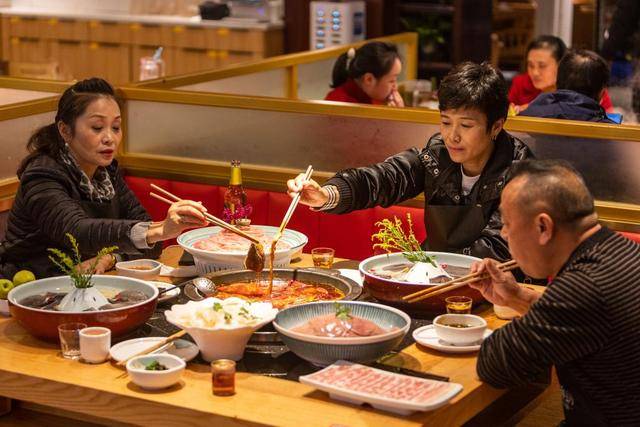
Core Insights - The article highlights the cultural significance and international expansion of Chongqing hotpot, emphasizing its unique flavors and culinary heritage [3][4][7] Industry Overview - Chongqing hotpot has deep historical roots, originating from local laborers who used inexpensive ingredients to create flavorful dishes, which have evolved into a global culinary phenomenon [3][4] - The hotpot industry in Chongqing is experiencing significant growth, with nearly 40,000 restaurants projected by the end of 2024 and an industry output value exceeding 340 billion yuan [4][7] Company Strategies - Companies like Chongqing Chaotianmen Catering Group have successfully adapted their offerings for international markets by maintaining authentic flavors while incorporating local preferences, resulting in over 1,000 global locations [4][6] - The "Li Zi Ba Liang Shan Chicken" brand has leveraged social media and e-commerce to enhance its visibility and sales, showcasing the importance of innovation in traditional food businesses [6] Policy Support - The Chongqing government is actively promoting local cuisine through policies aimed at enhancing the hotpot and noodle industries, with initiatives like "Chongqing Noodle Going Global" contributing to an annual output value of 56 billion yuan [7] - Upcoming regulations, such as the "Chongqing Hotpot Industry Development Promotion Ordinance," aim to support the industry's high-quality development by focusing on craftsmanship, standardization, and cultural promotion [7]

人文经济激活消费新动能丨从“舌尖记忆”到“消费IP”——重庆美食如何闻名世界
Xin Hua Wang· 2026-02-12 10:24
Core Viewpoint - Chongqing cuisine is evolving from local "taste memories" to a globally recognized "consumption IP," contributing to the city's transformation into an international consumption hub [7] Group 1: Cultural and Historical Significance - Chongqing's culinary roots are deeply embedded in local culture and history, with traditional dishes like hot pot originating from the practices of laborers over a century ago [3] - The experience of dining in Chongqing is enhanced by cultural performances and unique dish presentations, showcasing the region's heritage [3] Group 2: Global Expansion and Market Strategy - The Chongqing hot pot brand, represented by companies like Chao Tian Men, has expanded internationally, with over 1,000 global locations and a strategy of "original flavor + local adaptation" [4] - The total number of hot pot restaurants in Chongqing is projected to reach nearly 40,000 by the end of 2024, with the entire industry chain's output value exceeding 340 billion yuan [4] Group 3: Innovation and Modernization - Companies are focusing on innovation to remain competitive, with examples like Li Zi Ba Liang Shan Ji, which has successfully utilized social media and e-commerce to enhance brand visibility and sales [6] - The Chongqing government is actively supporting the culinary industry through policies aimed at promoting local specialties like "Chongqing noodles," which have generated an annual output value exceeding 56 billion yuan [6] Group 4: Economic Impact - The projected revenue for Chongqing's catering industry is expected to reach 247.034 billion yuan by 2025, reflecting a year-on-year growth of 4.6% [6]
18位消费创始人和投资人这样观测潮水的方向丨2026前瞻
3 6 Ke· 2026-02-11 03:37
Group 1: Core Insights - The consumer sector is experiencing a revival in 2025, with significant activity in the IPO space, particularly in the consumer IP domain, highlighted by companies like TOPTOY and 52TOYS [1][2] - The market is witnessing a structural shift from material consumption to cultural consumption, with a focus on emotional value and original IP creation [3][4] - AI is becoming a pivotal element in reshaping consumer experiences, with companies like Luobo Intelligent achieving rapid sales through innovative AI products [1][17] Group 2: Consumer IP - 2025 is marked as a breakthrough year for consumer IP, with Bubble Mart's market value surpassing 400 billion, inspiring other toy companies [3] - The trend is shifting towards original design as the core driver of growth in the toy industry, moving away from reliance on licensing and imitation [5][6] - Emotional demand is driving the need for personalized and diverse product offerings, particularly in the male consumer market [6] Group 3: Offline Channels - The offline retail landscape is undergoing significant transformation, with traditional supermarkets like Yonghui adopting "fat reduction" strategies and new players like Hema and Meituan entering the market [9][10] - The competition in offline retail is evolving from a focus on individual product strength to comprehensive operational capabilities, emphasizing long-term strategies [11][13] - Community-based retail is expected to become a core battleground in the new retail landscape, with a focus on private labels and direct sourcing [13][15] Group 4: Consumer + AI - 2025 is recognized as the "year of AI in consumption," with a convergence of technology maturity, user acceptance, and commercial imagination pointing towards a potential explosion in AI-driven products [17] - AI products are expected to diversify in 2026, focusing on creating natural and emotionally connected experiences for consumers [18][19] - The gaming sector is anticipated to see significant growth, with AI playing a crucial role in the development of immersive experiences [21] Group 5: Consumer Brands - The competition among consumer brands is shifting towards depth in consumer engagement rather than breadth of reach, with a focus on tangible product innovation [22] - New retail channels, such as instant retail and community supermarkets, are emerging as key growth areas, necessitating brands to adapt their product offerings accordingly [23][24] - The high-end market is evolving, with consumers seeking richer emotional and cultural values from products, pushing brands to innovate in their offerings [25][26][27]


18位消费创始人和投资人这样观测潮水的方向丨2026前瞻
36氪· 2026-02-10 09:40
Core Viewpoint - The consumption sector is expected to rebound in 2025 after a period of stagnation, with significant activity in the consumer IP, offline retail, and AI integration sectors [5][9]. Group 1: Consumer IP - The consumer IP sector is highlighted as a focal point, with companies like Pop Mart achieving a market value of 400 billion, igniting interest in the industry [5][11]. - The shift towards self-owned IP is emphasized, with companies like Miniso planning to split its TOP TOY brand for independent listing, indicating a trend towards brand ownership and innovation [5][11]. - The market is moving towards original design as a core driver, with a paradigm shift from reliance on licensing and channels to creating unique IP that resonates emotionally with consumers [13][14]. Group 2: Offline Retail - The offline retail landscape is undergoing significant transformation, with traditional supermarkets like Yonghui implementing "fat reform" to adapt to changing consumer needs [6][18]. - The competition is evolving from product-centric to full-chain operational capabilities, with a focus on building trust and efficiency in supply chains [21][22]. - Community-based retail models are emerging as key players, with companies like Mingming Hen Mang achieving a market value nearing 100 billion, indicating a shift towards localized and efficient retail solutions [6][19]. Group 3: Consumption + AI - 2025 is identified as the "year of AI in consumption," with a convergence of technology maturity, user acceptance, and commercial imagination pointing towards a potential explosion in AI-driven consumer products [28][29]. - The focus is on creating emotionally engaging experiences through AI, with various product forms expected to emerge, including AI companions and immersive gaming experiences [28][30]. - The integration of AI into consumer products is anticipated to redefine user interactions, emphasizing the importance of understanding specific scenarios to enhance the value of technology [28][31]. Group 4: Consumer Brands - The competition among consumer brands is shifting towards depth in consumer engagement rather than breadth, with a focus on hard innovation and visible quality improvements [33]. - Brands are expected to adapt to channel-specific demands, moving away from a one-size-fits-all approach to tailored offerings that resonate with distinct consumer segments [34]. - The trend of Chinese dining brands expanding overseas is gaining momentum, with an emphasis on local integration and community responsibility as critical factors for success in foreign markets [35].

18位消费创始人和投资人这样观测潮水的方向|2026前瞻
36氪未来消费· 2026-02-10 05:49
Group 1: Consumer IP - In 2025, the consumer IP sector saw significant growth, with Pop Mart achieving a market value of 400 billion, igniting interest in the industry [2][9] - The focus on "self-owned IP" is becoming a key strategy for companies, with TOP TOY planning to split and list its brand [9][10] - The market is shifting from material consumption to cultural consumption, emphasizing the importance of emotional value in consumer products [10][12] Group 2: Offline Channels - The offline retail landscape is undergoing a transformation, with traditional supermarkets like Yonghui implementing "fat reform" to adapt to market changes [3][16] - New retail formats, such as community discount stores and near-field retail, are emerging as key growth areas, challenging traditional models [16][20] - The competition in offline retail is expected to evolve from product-centric to a focus on comprehensive operational capabilities [19][21] Group 3: Consumer + AI - 2025 is recognized as the "year of AI in consumption," with a convergence of technology maturity, user acceptance, and commercial imagination [25] - The product forms of "AI + consumption" are expected to diversify, focusing on creating emotionally engaging experiences [26][27] - AI is anticipated to play a crucial role in the development of new consumer products, particularly in the children's market [28][29] Group 4: Consumer Brands - The competition among consumer brands is shifting towards depth in consumer engagement rather than breadth of market coverage [31] - Brands are increasingly required to innovate in product development and adapt to the fragmented channel landscape [31][32] - The trend of Chinese dining brands expanding overseas is gaining momentum, with a focus on integrating into local markets [33]


北京东城:“文化+”点燃消费新引擎
Sou Hu Cai Jing· 2025-09-22 21:50
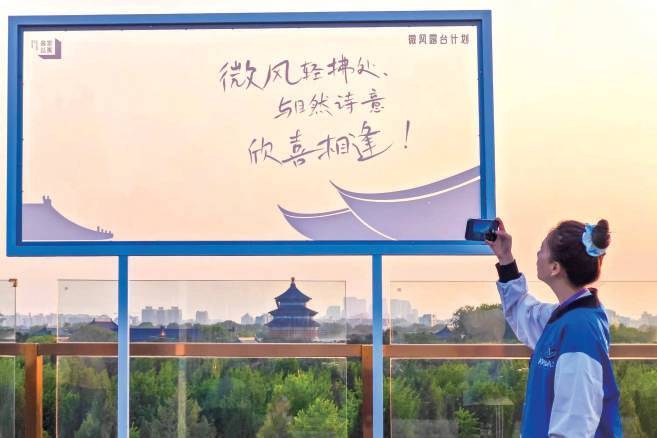
Core Points - The article emphasizes the integration of culture and tourism in Beijing's Dongcheng District, highlighting the development of the cultural heritage along the central axis of Beijing and the promotion of high-quality economic growth through cultural initiatives [1][2][18]. Group 1: Cultural Heritage and Tourism Development - The central axis of Beijing has been recognized as a UNESCO World Heritage site, marking a new phase in its protection and utilization, with 12 out of 15 heritage elements located in Dongcheng District [2]. - Dongcheng District is actively transforming the central axis from a "cultural axis" and "urban axis" to a "vibrant axis," creating cultural brands and promoting various cultural exploration routes [2][3]. - The district is leveraging its rich historical and cultural resources to enhance inbound tourism, with significant growth in visitor numbers and spending [4][5]. Group 2: Policy and Mechanism Innovation - Dongcheng District has established a collaborative development mechanism to support the integration of culture, commerce, and tourism, backed by various policy initiatives [5]. - The district has implemented the "Cultural + Industry Fund" to facilitate financial support for cultural and tourism projects, ensuring a sustainable development ecosystem [5]. Group 3: New Consumption Experiences - The "Breeze Terrace" initiative has introduced over 300 unique outdoor spaces for cultural consumption, enhancing the visitor experience through diverse activities [7]. - The integration of technology in cultural experiences, such as VR and AI, is creating innovative consumption scenarios and expanding cultural outreach [13]. - Dongcheng District is focusing on creating a vibrant night economy, exemplified by the "Guijie Night Festival," which has successfully attracted significant foot traffic and enhanced local dining experiences [17]. Group 4: Event and Activity Integration - The district is organizing various cultural events, such as outdoor theater performances and themed markets, to foster community engagement and promote cultural consumption [15][16]. - The establishment of a four-tier consumption promotion system is facilitating the development of unique cultural and tourism IPs, enhancing the overall economic growth of the district [18].