
生物柴油混合比例

Search documents
Mhy20260115油脂晚评:印尼B50计划取消,市场仍在消化
Xin Lang Cai Jing· 2026-01-15 09:32
Market Focus - Indonesia has canceled its plan to increase the mandatory biodiesel blend ratio to 50% this year, maintaining the current mix of 40% palm oil-based fuel and 60% diesel [1] - Indonesia will raise the export levy on crude palm oil (CPO) from 10% to 12.5% starting March 1, with a similar increase of 2.5 percentage points for refined products [1] - Malaysia has lowered the reference price for crude palm oil for February, resulting in an export tax reduction to 9%, with the reference price set at 3,846.84 ringgit per ton, down from 3,946.17 ringgit in January [1] Soybean Processing Data - The National Oilseed Processors Association (NOPA) is expected to report a soybean crush of 224.809 million bushels for December, reflecting a month-over-month increase of 4.1% and a year-over-year increase of 8.8%, marking the second-highest monthly crush in history [2] - December's soybean oil inventory is projected to reach 1.686 billion pounds, an increase of 11.4% month-over-month and 36.4% year-over-year [2] Palm Oil Export Data - Malaysia's palm oil exports from January 1-15 amounted to 727,440 tons, an increase of 18.64% compared to 613,172 tons in the same period last month [2] Market Sentiment - The cancellation of Indonesia's B50 plan represents a significant adjustment in demand-side expectations, establishing a neutral to bearish market tone [4] - Despite strong short-term export performance and policy negotiations among exporting countries, it is challenging to reverse the weakening sentiment caused by long-term changes in consumption growth trends [4]

印尼取消今年推进B50,盘面承压震荡
Hua Tai Qi Huo· 2026-01-15 05:20
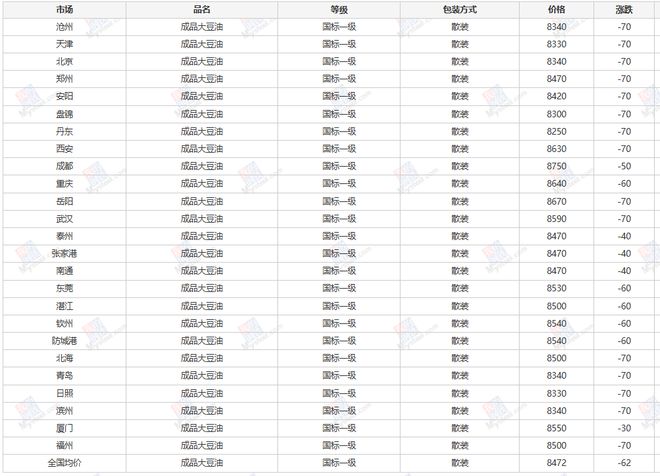
1. Report Industry Investment Rating - The investment rating for the industry is "Neutral" [3] 2. Core Viewpoints of the Report - The cancellation of the plan to increase the mandatory biodiesel blending ratio to 50% in Indonesia this year and the decision to maintain the current B40 plan are negative factors for palm oil demand, causing the market to trade under pressure and fluctuate [1][2] 3. Summary by Relevant Catalogs Futures Market - The closing price of the palm oil 2605 contract was 8,748.00 yuan/ton, a decrease of 30 yuan or -0.34% [1] - The closing price of the soybean oil 2605 contract was 8,000.00 yuan/ton, an increase of 14.00 yuan or +0.18% [1] - The closing price of the rapeseed oil 2605 contract was 8,949.00 yuan/ton, a decrease of 68.00 yuan or -0.75% [1] Spot Market - The spot price of palm oil in Guangdong was 8,730.00 yuan/ton, a decrease of 30.00 yuan or -0.34%, with a spot basis of P05 + -18.00, unchanged from the previous day [1] - The spot price of first - grade soybean oil in Tianjin was 8,400.00 yuan/ton, unchanged from the previous day, with a spot basis of Y05 + 400.00, a decrease of 14.00 yuan [1] - The spot price of fourth - grade rapeseed oil in Jiangsu was 9,750.00 yuan/ton, a decrease of 20.00 yuan or -0.20%, with a spot basis of OI05 + 801.00, an increase of 48.00 yuan [1] Market News - Indonesia has cancelled the plan to increase the mandatory biodiesel blending ratio to 50% this year and will maintain the current 40% palm - based fuel and 60% diesel blending ratio [2] - Indonesia will increase the export tax (levy) on crude palm oil (CPO) from 10% to 12.5% starting March 1st, and the export tax on refined products will also be increased by 2.5 percentage points [2] - The CNF quotation of international palm oil has risen this week, increasing the import cost of palm oil in China. On January 13, 2026, the CNF quotations for February and March shipments of 24 - degree palm oil were 1,063 US dollars/ton and 1,086 US dollars/ton, up 15 - 28 US dollars/ton from the same period last week [2] - The Malaysian Palm Oil Board expects palm oil production in 2026 to be between 19.5 million and 19.8 million tons, compared to 20.28 million tons in 2025, and the palm oil inventory in 2026 is expected to be 2 million tons, compared to 3.05 million tons in 2025 [2]
油脂油料:申万期货品种策略日报-20260115
Shen Yin Wan Guo Qi Huo· 2026-01-15 02:29
1. Report Industry Investment Rating - No information provided 2. Core Viewpoints of the Report - Indonesia has canceled the plan to increase the mandatory biodiesel blending ratio to 50% this year and will maintain the current 40% palm oil - based fuel and 60% diesel blending ratio, which has raised concerns about palm oil demand prospects. Short - term, the fundamentals of oils and fats have not changed significantly, and they are expected to fluctuate mainly [3]. - The US Department of Agriculture has raised the forecast of US soybean production for the 2025/26 season and lowered the forecast of soybean exports. The domestic high inventory of soybean meal and the expected high yield of South American soybeans will continue to put pressure on prices [3]. 3. Summary by Relevant Catalogs Domestic Futures Market - **Prices and Changes**: The previous day's closing prices of domestic futures for soybean oil, palm oil, and other varieties are as follows: soybean oil 8000, palm oil 8748, etc. The price changes are 14 for soybean oil, - 30 for palm oil, etc., with corresponding percentage changes of 0.18% for soybean oil, - 0.34% for palm oil, etc. [2]. - **Spreads and Ratios**: The current spreads and ratios of domestic futures, such as Y9 - 1, P9 - 1, etc., have different values compared to the previous values, with significant changes in some spreads and ratios [2]. International Futures Market - **Prices and Changes**: The previous day's closing prices of international futures for BMD palm oil, CBOT soybeans, etc. are 3969 for BMD palm oil, 1042.50 for CBOT soybeans, etc. The price changes are - 1.0 for BMD palm oil, 3.5 for CBOT soybeans, etc., with corresponding percentage changes of - 0.03% for BMD palm oil, 0.34% for CBOT soybeans, etc. [2]. Domestic Spot Market - **Prices and Changes**: The current spot prices of domestic products such as Tianjin first - grade soybean oil, Guangzhou first - grade soybean oil, etc. are 8520 for Tianjin first - grade soybean oil, 8570 for Guangzhou first - grade soybean oil, etc. The percentage changes are 0.12% for Tianjin first - grade soybean oil, 0.23% for Guangzhou first - grade soybean oil, etc. [2]. - **Basis and Spreads**: The current spot basis and spreads of domestic products have different values compared to the previous values, such as the spot basis of 520 for Tianjin first - grade soybean oil, and the spread between Guangzhou first - grade soybean oil and 24° palm oil remaining at - 150 [2]. Import and Crushing Profits - The current import and crushing profits of near - month Malaysian palm oil, near - month US Gulf soybeans, etc. are - 251 for near - month Malaysian palm oil, - 146 for near - month US Gulf soybeans, etc., showing different trends compared to the previous values [2]. Warehouse Receipts - The current warehouse receipts of soybean oil, palm oil, etc. are 29,147 for soybean oil, 1,248 for palm oil, etc. Some varieties remain unchanged compared to the previous values, while the warehouse receipts of rapeseed oil have decreased from 2,622 to 2,222 [2].
棕榈油:宏观助推,警惕情绪回落,豆油:跟随油脂板块上涨,品种间偏弱
Guo Tai Jun An Qi Huo· 2025-07-22 01:57
Report Overview - Report Date: July 22, 2025 [1] - Report Title: Palm Oil: Boosted by Macro Factors, Beware of Sentiment Decline; Soybean Oil: Rising with the Oil and Fat Sector, Weaker Among Varieties [2] - Analyst: Li Junyu [2] Investment Rating - Not provided Core View - Palm oil production growth is expected to slow due to sustainability issues and aging oil palm trees in Indonesia and Malaysia, with global supply projected to grow at an annual rate of 0.8%. Meanwhile, soybean production in countries such as India, Russia, Ukraine, and Canada is expected to increase by 2034, and global soybean production is projected to grow at an annual rate of 1%. [4][5][8] Summary by Section Fundamental Tracking - **Futures Prices**: Palm oil主力 closed at 8,910 yuan/ton during the day session with a -0.60% change and 8,924 yuan/ton at night with a 0.16% change; soybean oil主力 closed at 8,092 yuan/ton during the day session with a -0.83% change and 8,054 yuan/ton at night with a -0.47% change; other futures also had corresponding price and change details [3] - **Trading Volume and Open Interest**: Palm oil主力 had a trading volume of 708,709 lots with an increase of 5026, and an open interest of 509,869 lots with a decrease of 47,186; soybean oil主力 had a trading volume of 321,474 lots with a decrease of 19,705, and an open interest of 535,817 lots with a decrease of 22,367; other futures also had corresponding trading volume and open - interest changes [3] - **Spot Prices**: The spot price of 24 - degree palm oil in Guangdong was 8,970 yuan/ton with no change; the spot price of first - grade soybean oil in Guangdong was 8,300 yuan/ton with no change; other spot prices also had corresponding details [3] - **Basis**: The basis of palm oil in Guangdong was 60 yuan/ton; the basis of soybean oil in Guangdong was 208 yuan/ton; other basis details were also provided [3] - **Price Spreads**: The spread between rapeseed oil and palm oil futures主力 was 653 yuan/ton; the spread between soybean oil and palm oil futures主力 was - 818 yuan/ton; other spread details were also provided [3] Macro and Industry News - **Palm Oil Production Outlook**: Global palm oil production growth is expected to slow due to sustainability issues and aging oil palm trees in Indonesia and Malaysia, which account for nearly one - third of global vegetable oil production and over 80% of global palm oil production. Global palm oil supply is projected to grow at an annual rate of 0.8% [4][5] - **Malaysian Palm Oil Data**: From July 1 - 20, 2025, Malaysian palm oil yield per unit area increased by 7.03% month - on - month, oil extraction rate decreased by 0.16% month - on - month, and production increased by 6.19% month - on - month according to SPPOMA. The export volume from July 1 - 20 was 740,394 tons, a 7.31% decrease compared to the same period last month according to AmSpec. United Plantations reported a 13.8% and 20.5% year - on - year increase in palm oil and palm kernel production in Q2, respectively, and a 5.6% increase in palm oil average price and a 46.5% increase in palm kernel sales price [5][6] - **India's Palm Oil Situation**: India has become the largest importer of Malaysian oil palm seeds, with significant demand growth. In 2024, India imported 303 million tons of palm oil from Malaysia, accounting for 17.9% of Malaysia's total palm oil exports [6] - **Indonesia's B50 Policy**: Indonesia's plan to increase the palm - oil - based biodiesel blending ratio to 50% next year faces challenges due to uncertainties in raw material supply, production capacity, infrastructure gaps, and potential environmental and legal issues [7] - **Soybean Production Outlook**: By 2034, soybean production in countries such as India, Russia, Ukraine, and Canada is expected to increase. Brazil, the largest soybean producer, is projected to see a 0.8% annual growth in soybean production, slightly higher than the 0.5% of the US. Argentina and Paraguay's soybean production is expected to reach 56 million tons and 13 million tons respectively by 2034, and global soybean production is projected to grow at an annual rate of 1% [8] - **USDA Crop Growth Report**: As of the week ending July 20, 2025, the good - to - excellent rate of US soybeans was 68%, lower than the market expectation of 71%. The flowering rate was 62%, and the pod - setting rate was 26% [8] Trend Intensity - Palm oil trend intensity is 0, and soybean oil trend intensity is 0, with the range of trend intensity being integers from - 2 to 2 [9]