监管态度

Search documents
市场释放积极信号 美团午后拉升涨超13%
Sou Hu Cai Jing· 2026-03-26 02:17
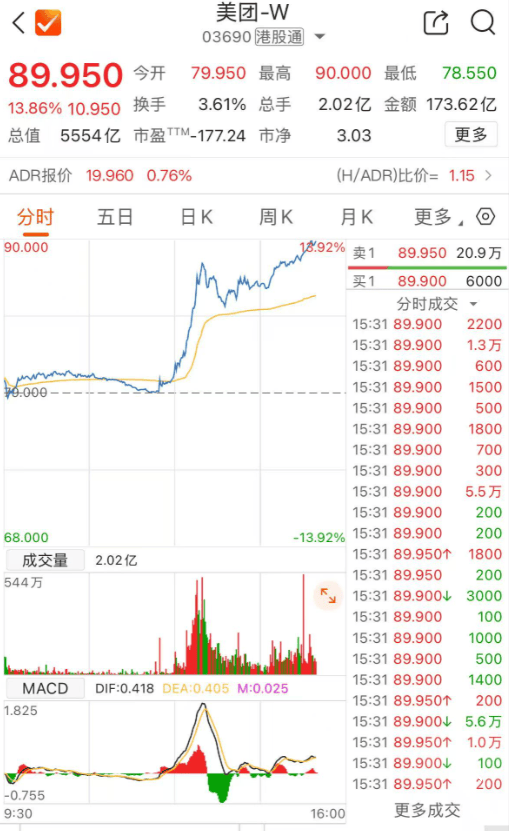
Group 1 - Meituan-W's stock price surged by 13.86%, reaching HKD 89.95 per share as of 15:31 on March 25 [1] Group 2 - The article titled "The Takeaway War Should End" emphasizes the need for takeaway prices to return to a reasonable range, allowing the restaurant industry to escape the cycle of subsidies and chaotic competition [2] - It suggests that competition should shift from price wars to service quality, indicating that price wars are unsustainable and that there are no winners in excessive competition [2] - Industry insiders interpret the article as a reflection of regulatory attitudes towards the takeaway market [2]


战争不是卖出的理由!大部分地缘冲突只是在指数上涨过程中挖了个坑
雪球· 2026-03-05 13:01
Group 1 - The article discusses the impact of geopolitical conflicts, specifically the recent Middle East tensions, on global markets, noting that even gold has not been spared from declines [3][10]. - It argues that most geopolitical conflicts do not serve as valid reasons for selling stocks, as they often only create temporary market dips rather than long-term downturns [5][26]. - Historical data shows that markets typically recover from declines caused by geopolitical events within 30 days, with most indices regaining lost ground within 20 days [15][25]. Group 2 - The article highlights that the current market reaction is more pronounced due to extreme market differentiation and leverage, which has intensified volatility [31][32]. - It emphasizes that the dynamics of geopolitical conflicts are unpredictable, making it challenging for investors to time their buy and sell decisions effectively [22][34]. - The analysis of the current situation in Iran suggests that while there is a desire to increase oil prices, the actual ability to do so is limited due to economic constraints and the potential for significant backlash [28][42].
存款搬家、监管态度与市场叙事--大摩邢自强解读A股三大焦点
Hua Er Jie Jian Wen· 2025-09-02 01:01
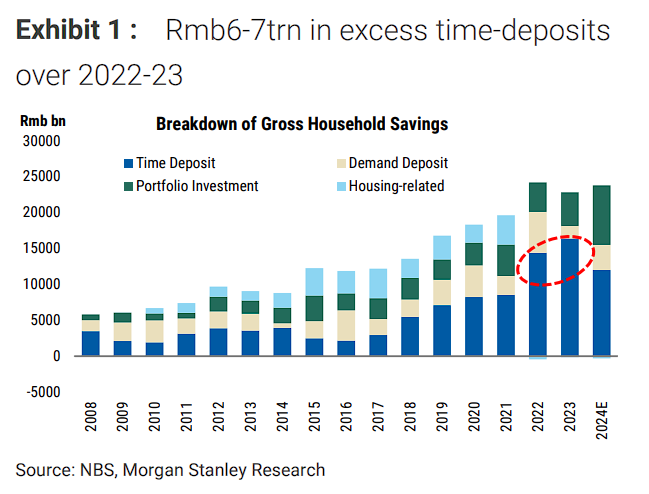
Group 1: Core Issues in A-Share Market - The A-share market is currently focused on three main issues: the potential and limitations of household deposits moving to the stock market, the regulatory stance on rising stock prices, and investor expectations regarding economic policy catalysts [1][2][6] - Morgan Stanley estimates that there is a potential of 6-7 trillion RMB in excess term deposits available for reallocation, but significant inflows into the stock market depend on sustained market momentum and improvements in fundamentals [1][2][5] Group 2: Deposit Migration - The potential for household deposits to shift to the stock market is primarily driven by excess allocation during 2022-2023, influenced by increased household savings during lockdowns, adjustments in the real estate market, and a weak job market leading to lower risk appetite [2][5] - Financial institutions, particularly insurance companies, contributed approximately 600 billion RMB to stock market liquidity in the first half of the year, supported by central bank relending tools and more flexible investment performance assessments [5] Group 3: Regulatory Attitude - The regulatory body has shown a balanced attitude towards recent capital market performance, signaling support for healthy development while preventing excessive speculation [6][7] - The use of precise regulatory tools, such as the "national team" and window guidance, aims to intervene at appropriate times to curb excessive risk-taking, with recent market indicators showing signs of overheating [6][7] Group 4: Market Narrative - Despite challenges in the macroeconomic fundamentals, investor concerns about export prospects have eased, shifting focus towards potential policy catalysts and sustainable measures to boost domestic demand [7] - Anticipation is building for the upcoming "14th Five-Year Plan" and the Central Economic Work Conference, which are expected to provide clearer guidance on reform priorities, particularly in areas like local incentive mechanisms and tax reforms [7]