石油国有化

Search documents
委内瑞拉石油业大开放,美国又允许中国买油,提了一个附加条件?
Sou Hu Cai Jing· 2026-01-24 05:55
Group 1 - The core point of the article is that Venezuela's oil industry is undergoing a significant transformation due to a new law allowing private companies to participate in oil extraction and production, marking a departure from decades of state control [1][3][4] - The new legislation, announced by the Venezuelan parliament on January 22, 2025, signifies a dramatic shift in the country's oil policy, which has been dominated by nationalization since the Chávez era [1][3] - The U.S. Treasury Secretary has publicly stated that while Venezuelan oil will enter the global market, a significant portion will be sold directly to the U.S., indicating a long-term control over Venezuela's oil resources [5][7] Group 2 - The new law includes provisions that significantly reduce royalties from 33% to 15% and allow for independent arbitration, creating favorable conditions for U.S. oil giants like ExxonMobil and Chevron to return to Venezuela [9] - The article highlights a recent spike in Venezuelan oil prices, which surged by 30% from $31 to $45 per barrel, suggesting that the U.S. is attempting to leverage this price increase to exert pressure on China [5][11] - Venezuela's oil exports to China, which were part of a debt repayment agreement, have drastically decreased, with imports dropping from 149.83 million tons in 2024 to 34.17 million tons in the first eleven months of 2025, indicating a diminishing reliance on Venezuelan oil [11][13] Group 3 - The article argues that the U.S. misinterprets China's assistance to Venezuela as an exploitative relationship, while in reality, it is a crucial support mechanism for Venezuela's economy under Western sanctions [13][15] - China's diversified energy import network, including significant oil supplies from Russia and other countries, has strengthened its energy security, making it less vulnerable to disruptions from Venezuela [15][16] - The U.S. strategy of using minor price fluctuations to pressure China is likely to fail, as the core strength lies in a diversified supply chain and established cooperative relationships rather than control over a single oil field [16][18]

开发委内瑞拉石油,特朗普要投上亿美元!为什么石油巨头不愿意?
Sou Hu Cai Jing· 2026-01-12 04:15
Core Viewpoint - The reluctance of U.S. oil companies to invest in Venezuela's oil resources, despite political support from Trump, stems from historical experiences of asset confiscation and ongoing political risks [1][3]. Group 1: Historical Context - U.S. oil companies have faced significant losses in Venezuela due to two instances of asset confiscation by the Venezuelan government, first in 1976 and again during Chavez's presidency [3][5]. - The first nationalization in 1976 was driven by rising oil prices and aimed to retain profits within Venezuela, but it ultimately failed after ten years due to a combination of external factors, including the oil dollar system's restoration and the U.S. shale oil revolution [3][5]. - The second nationalization occurred when Chavez took power, leading to another round of asset confiscation that left U.S. investments unrecovered [5]. Group 2: Current Risks and Concerns - U.S. oil companies remain cautious about re-entering Venezuela due to fears of political instability and the potential for another leftist government to seize assets [5]. - The absence of U.S. military presence in Venezuela raises concerns about the security of investments if political conditions change [5]. - Venezuela's heavy oil resources are primarily sold to China, creating uncertainty for U.S. companies regarding market access if China withdraws its purchases [5]. Group 3: Investment Challenges - Restoring Venezuela's oil production to 4 million barrels per day would require over $100 billion in investment and a timeline of at least 20 years, posing significant financial and operational risks [5]. - The aging oil infrastructure in Venezuela necessitates extensive upgrades, including new drilling sites and supporting facilities, further complicating investment decisions [5]. - A potential solution for U.S. companies could involve collaborating with China to share investment risks and benefits in developing Venezuela's oil resources [5].
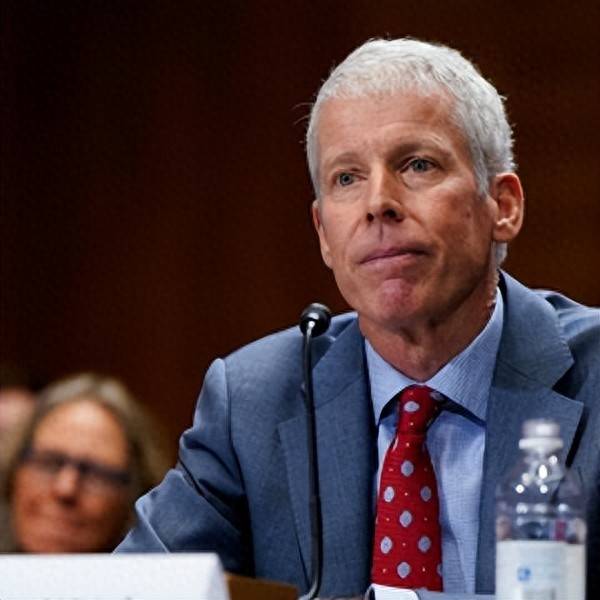
美委百年恩怨,为什么雪佛龙一直能“捞油”?
Sou Hu Cai Jing· 2026-01-09 07:07
Core Viewpoint - Chevron has become the last major oil exporter in Venezuela following U.S. sanctions and military actions against the Maduro government, leading to a significant shift in the geopolitical landscape surrounding Venezuelan oil resources [2][3]. Group 1: Chevron's Position in Venezuela - Chevron's CEO Mike Wirth has been actively lobbying U.S. officials to extend the company's operations in Venezuela, highlighting the company's long-standing presence and its strategic importance in the region [1][24]. - As of 2022, Chevron was the only major U.S. oil company still operating in Venezuela, contributing to approximately 25% of the country's oil production, which is around 1 million barrels per day [19][17]. - The company has been granted specific licenses by the U.S. Treasury to continue its operations, focusing on existing projects rather than initiating new ones [17][19]. Group 2: Historical Context of Venezuelan Oil - Venezuela's oil industry has a complex history, beginning in the early 20th century when foreign companies, including Chevron, established a foothold in the country, leading to a significant increase in oil production [6][8]. - By 1928, Venezuela became the world's largest oil exporter, with oil accounting for 91% of its export income by 1935 [8][9]. - The nationalization of the oil industry in 1976 led to the establishment of the state-owned company PDVSA, which initially thrived but later faced management issues and political instability [9][10][11]. Group 3: Current Geopolitical Dynamics - The recent U.S. military actions in Venezuela have been framed as efforts to control the country's oil resources, with expectations that Chevron could be the primary beneficiary if the U.S. gains control [3][29]. - The U.S. has a strategic interest in Venezuelan heavy crude oil, which complements its existing refining capabilities, despite having significant domestic oil reserves [25][28]. - Analysts express skepticism about the feasibility of U.S. companies, including Chevron, investing heavily in Venezuela due to the country's unstable political climate and the need for substantial capital to revitalize its oil production [32][33]. Group 4: Future Prospects - Chevron's future in Venezuela remains uncertain, with potential for increased operations if U.S. sanctions are lifted or modified, but significant risks persist due to the country's historical mismanagement of its oil sector [31][34]. - The U.S. government is reportedly considering discussions with major oil companies about investing in Venezuela's oil industry, indicating a potential shift in policy that could benefit Chevron [34].

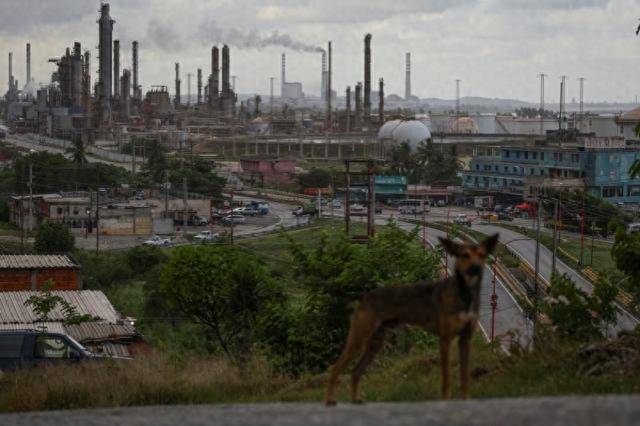
特朗普出现重大误判,美国石油企业不想去委内瑞拉?
Sou Hu Cai Jing· 2026-01-08 13:39
Group 1 - The core issue is that U.S. companies are not inclined to invest in Venezuela despite Trump's announcement of potential oil deals [1][3] - Trump claimed that the interim Venezuelan government would provide 30 to 50 million barrels of oil to the U.S., but this has not been officially confirmed by Venezuela [1][3] - U.S. oil companies are hesitant to enter the Venezuelan market due to the unstable domestic situation and the unclear political landscape [3][5] Group 2 - Historically, Venezuela has expelled foreign capital, particularly targeting Western oil companies, aiming for nationalization of its oil industry [5][7] - The policies initiated by former President Chavez aimed to force foreign companies out and reclaim control over oil resources, leading to significant nationalization efforts [5][7] - The current political climate under Maduro, along with a history of anti-American policies, makes U.S. companies wary of investing in Venezuela [7] Group 3 - Venezuela possesses the largest oil reserves in the world, surpassing the combined reserves of Iraq, Russia, and the U.S., but its oil infrastructure is aging and requires substantial investment [7] - U.S. oil companies would need to invest hundreds of billions of dollars to upgrade and repair aging facilities, with a long payback period and current oil prices below $60 per barrel, complicating the investment decision [7] - There is a growing divide between the Trump administration and U.S. oil companies regarding investment in Venezuela, with some companies explicitly stating their reluctance to invest again [7]
美国绑架委内瑞拉总统,背后的石油博弈
Sou Hu Cai Jing· 2026-01-07 07:45
Group 1 - The core of the U.S. military action against Venezuela is a massive capital extraction operation, primarily targeting the country's oil resources, rather than a genuine pursuit of democracy or anti-drug efforts [1][18] - The U.S. aims to secure access to Venezuela's heavy crude oil, which is essential for its refining infrastructure and industrial needs, as it differs significantly from the light crude oil predominantly produced in the U.S. [3][5] - The proximity of Venezuela to the U.S. (approximately 1000 kilometers) makes it a more cost-effective and efficient source of heavy oil compared to imports from the Middle East [5][7] Group 2 - The U.S. refining capacity in the Gulf of Mexico was originally designed for heavy crude oil, but it currently produces mostly light crude, necessitating a search for stable and affordable heavy oil sources [5] - The political context includes the upcoming 2026 midterm elections in the U.S., where lower oil prices could help alleviate domestic economic pressures and garner support from working-class voters [7] - Venezuela's historical context reveals that it was once a prosperous nation with the largest oil reserves in the world, but has since faced severe economic decline due to mismanagement and over-reliance on oil revenues [9][12] Group 3 - The "resource curse" has led to Venezuela's economic troubles, as the focus on oil has stifled the development of other industries, resulting in a fragile economy vulnerable to external shocks [11][12] - The economic situation in Venezuela has deteriorated significantly, with hyperinflation and extreme poverty affecting the population, leading to a humanitarian crisis [14][16] - The U.S. intervention is framed as a business opportunity rather than a humanitarian effort, highlighting the exploitative nature of the relationship between the two countries [18]
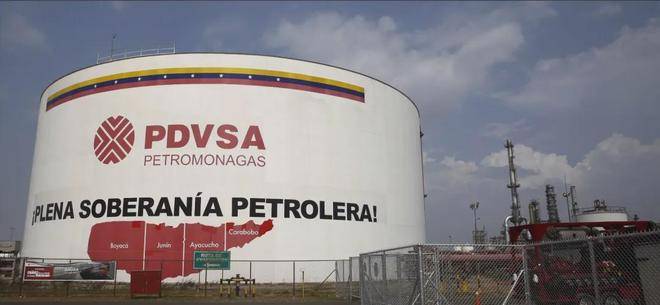
美国对委内瑞拉发动军事打击背后
Qi Huo Ri Bao Wang· 2026-01-06 01:36
Core Viewpoint - The recent forced control of Venezuelan President Maduro by the U.S. has significant implications for the global oil market, given Venezuela's status as the country with the largest oil reserves in the world [1]. Group 1: Historical Context of Venezuela's Oil Industry - Venezuela implemented one of the most liberal oil policies in Latin America under Gomez in the early 20th century, welcoming foreign oil companies [1]. - The establishment of OPEC in 1960 by Venezuela, Iran, Iraq, Kuwait, and Saudi Arabia aimed to counter Western oil companies and protect national oil revenues [1]. - The oil nationalization process began in 1975, leading to substantial government revenue and economic growth rates of 10% to 20% [1][2]. - From 1976 to 1993, 66% of oil export revenues belonged to the government, but this dropped to 33% from 1993 to 2002 due to privatization efforts [2]. Group 2: Recent Developments and Economic Impact - Since 1998, under Chavez, the Venezuelan government regained control over the oil industry, but production has declined from approximately 3 million barrels per day to less than 1 million barrels per day by 2025 [2][3]. - Venezuela faces high inflation and low growth, with the oil industry shrinking due to lack of capital, technology, and U.S. sanctions [3]. - As of 2025, Venezuelan oil production is expected to be around 930,000 barrels per day, primarily heavy sour crude, with exports between 600,000 to 800,000 barrels per day [3]. Group 3: U.S. Involvement and Future Projections - The U.S. has shown interest in intervening in Venezuela's oil industry, especially after the forced control of Maduro, with Trump announcing strong intervention plans [4][5]. - Venezuela has proven oil reserves of approximately 300 billion barrels, accounting for about 17% of global reserves, making it a significant player for U.S. refineries [4]. - The potential for U.S. companies to enter Venezuela's oil production could lead to a recovery in production levels, but this is expected to take time, with significant progress not anticipated until 2028 [6]. Group 4: Economic Strategies and Implications - The U.S. government is facing a debt of approximately $38 trillion, with interest payments around $1 trillion, leading to a budget deficit of about 6% [6][7]. - The "333" plan proposed by the U.S. Treasury aims to reduce the budget deficit to 3% of GDP by 2028, which includes increasing oil production as a strategy to combat inflation [7].
委内瑞拉,一个世纪的资源争夺与宿命
Feng Huang Wang Cai Jing· 2026-01-04 07:02
Core Viewpoint - The military intervention by the U.S. in Venezuela is a culmination of over a century of conflict over oil resources, highlighting the strategic importance of Venezuela's vast oil reserves, which are the largest in the world [1][3][19]. Group 1: Oil Wealth and Historical Context - Venezuela has proven oil reserves of approximately 300 billion barrels, accounting for 17% of the global total, surpassing Saudi Arabia and the U.S. [3][5]. - The oil boom in the mid-20th century did not benefit the general population, leading to significant wealth disparity, with profits primarily flowing to international oil companies and a small elite [5]. - The "Bolivarian Revolution" initiated by Hugo Chávez in 1999 aimed to nationalize the oil industry, reclaiming resource sovereignty through reforms such as the Hydrocarbons Law of 2001, which mandated majority ownership by the state oil company PDVSA in joint ventures [5][7]. Group 2: U.S. Response and Geopolitical Tensions - U.S. interests were threatened by Venezuela's nationalization efforts, leading to sanctions and support for opposition movements, including a failed coup in 2002 [9][11]. - Following Chávez's death in 2013, Nicolás Maduro continued the nationalization policies, but U.S. relations deteriorated, especially after the 2018 elections, which the U.S. did not recognize [11][13]. - In 2025, the U.S. escalated its approach from economic sanctions to military threats, including a $50 million bounty on Maduro, reflecting the strategic importance of Venezuelan oil to U.S. interests [13][18]. Group 3: Impact on Global Oil Market - The military intervention is expected to disrupt Venezuela's oil exports, which have already plummeted from a peak of 3.5 million barrels per day to around 1 million barrels per day, representing only 0.8% of global production [13][19]. - Despite the geopolitical tensions, the global oil market is currently characterized by oversupply, with the International Energy Agency projecting a supply increase of 3 million barrels per day in 2025, which may mitigate the impact of Venezuela's supply disruption [20][22]. - The U.S. military control over Venezuelan oil resources could weaken OPEC+'s influence in the global oil market, potentially altering production coordination among oil-producing nations [22]. Group 4: Broader Economic Implications - The geopolitical turmoil is likely to create volatility in oil prices, with potential short-term spikes due to supply concerns, while long-term price pressures may remain limited due to existing supply surpluses [19][20]. - The military actions may also affect precious metals and shipping markets, with increased risk aversion likely driving up gold prices, which have already seen significant gains in 2025 [23][24]. - The situation may lead to increased logistics costs for energy and commodities due to military blockades, impacting supply chains and market dynamics [24].
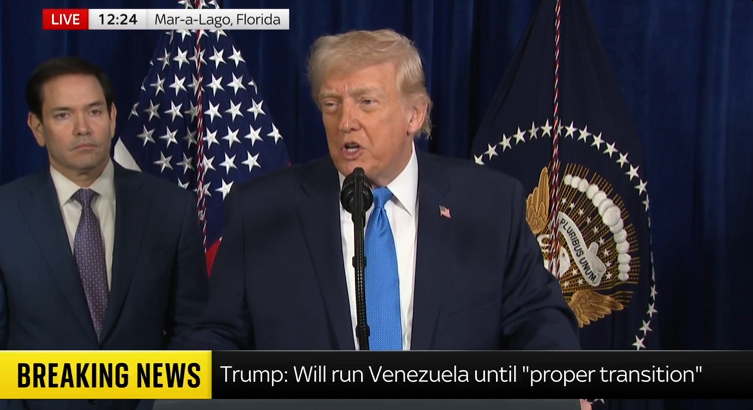
把政府定性“恐怖组织”,对油轮实施全面封锁,委内瑞拉投诉美国“海盗行径”
Huan Qiu Shi Bao· 2025-12-17 23:04
Core Viewpoint - The U.S. government, led by President Trump, has declared the Venezuelan government a "foreign terrorist organization" and ordered a comprehensive blockade on sanctioned oil tankers entering or leaving Venezuela, raising concerns about international law violations and potential military actions [1][3][4]. Group 1: U.S. Actions and Statements - President Trump stated that Venezuela is surrounded by the largest fleet in South American history, threatening unprecedented impacts until Venezuela returns assets allegedly "stolen" from the U.S. [3] - The U.S. has deployed multiple naval vessels in the Caribbean under the pretext of anti-drug operations, with plans to intercept Venezuelan oil tankers [3][4]. - The declaration of Venezuela as a "foreign terrorist organization" provides a pretext for potential military action and facilitates sanctions against vessels carrying Venezuelan oil [4]. Group 2: Venezuelan Government's Response - The Venezuelan government condemned the U.S. blockade as a "completely irrational" act aimed at stealing national wealth [4]. - Venezuelan officials have filed a complaint with the United Nations Security Council, labeling the U.S. actions as acts of piracy and violations of international law [1][6]. Group 3: International Reactions - The Cuban government expressed strong support for Venezuela, condemning U.S. actions as aggressive and a violation of international law [5]. - Venezuela's representative to the UN urged the Security Council to denounce the U.S. for its seizure of oil tankers and the alleged kidnapping of crew members [6].