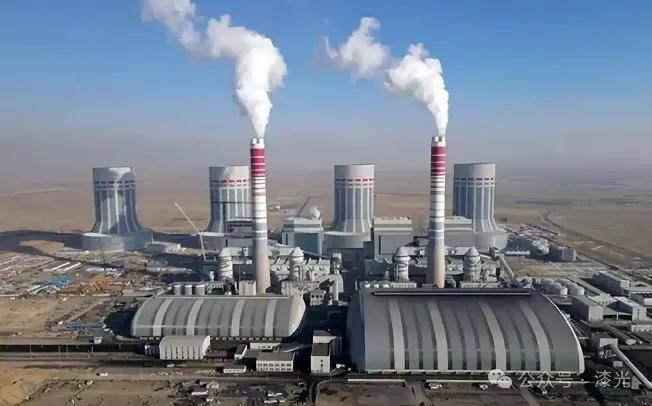
石油霸权

Search documents
别被误导!地球上的石油储量够人类⽤三千年,能源战全是利益博弈
Sou Hu Cai Jing· 2026-02-19 21:33
Core Viewpoint - The G7's recent acknowledgment of nuclear power as a green energy source has sparked significant reactions, particularly from Germany, which has previously abandoned nuclear energy, leading to energy supply challenges [1][3][5]. Group 1: Germany's Energy Crisis - Germany's energy crisis began in 2011 after the Fukushima disaster, leading to the shutdown of nuclear power plants and a reliance on natural gas from the Nord Stream pipelines [3][5]. - The outbreak of the Russia-Ukraine war disrupted energy supplies, exacerbating Germany's economic struggles and highlighting the consequences of its decision to phase out nuclear energy [5][7]. Group 2: Global Energy Landscape - The current global proven oil reserves stand at 17,546 billion barrels, natural gas at 206 trillion cubic meters, and coal at 1,740 billion tons, with coal accounting for 58% of the total energy reserves [9][18]. - The competition for clean energy, particularly natural gas, is intensifying as countries seek to secure energy control amid geopolitical tensions [18][24]. Group 3: Nuclear Energy Potential - The Earth has proven uranium reserves of 5 million tons, which can yield energy equivalent to over 140 trillion tons of standard coal, indicating the vast potential of nuclear energy [28]. - The G7's shift in stance towards nuclear energy reflects its importance in the current energy landscape, especially as fossil fuels still dominate global energy consumption [26][28]. Group 4: Regional Energy Strategies - The U.S. remains the leading energy power, excelling in both nuclear energy and shale oil production, while countries like India are strategically purchasing cheaper Russian oil to benefit economically [32][34]. - Taiwan's energy strategy, which relies on renewable sources, faces challenges due to limited space for solar installations and mismatched energy supply and demand, leading to potential energy crises [30][32].

美国终于不装了!委内瑞拉只是幌子,强按伊朗输血,布惊天能源局
Sou Hu Cai Jing· 2026-02-11 13:37
Core Viewpoint - The article discusses the complex geopolitical maneuvers involving the U.S., Venezuela, and Iran, aiming to establish a new "oil empire" through strategic energy cooperation and manipulation of oil resources [1]. Group 1: Venezuela's Oil Industry - Venezuela is the country with the largest oil reserves globally, yet its oil industry is in a dire state, with production levels significantly below historical peaks [6]. - The country’s oil extraction equipment is outdated, with many pipelines over 50 years old, leading to a daily oil production of less than 900,000 barrels, far below the peak of 3.7 million barrels [6]. - The heavy, high-sulfur oil produced in Venezuela is difficult and costly to extract, likened to "asphalt" or "honey" in terms of viscosity, which complicates the extraction process [9]. Group 2: U.S. Strategic Interests - The U.S. has effectively controlled Venezuela's oil resources and is preparing for large-scale oil extraction, using political maneuvers to clear obstacles [5]. - The U.S. aims to mix Iranian light crude oil with Venezuelan heavy crude to improve flow and reduce extraction costs, potentially cutting the recovery investment from $145 billion to $70 billion [12]. - The U.S. possesses advanced oil extraction technology and seeks to establish a low-cost, high-yield oil empire by integrating the oil industries of Venezuela and Iran [14]. Group 3: Iran's Position - Iran's oil is characterized as light and low-sulfur, making it easier to extract compared to Venezuela's heavy oil [8]. - The U.S. is imposing strict conditions on Iran, aiming to limit its military capabilities and ensure that Iran becomes dependent on U.S. channels for oil sales, effectively turning it into a compliant state [16][18]. - Iran faces significant economic pressure, leading to a critical decision point: whether to yield to U.S. demands for short-term relief or to resist and endure ongoing sanctions [22]. Group 4: Global Oil Prices and Economic Implications - The U.S. strategy involves maintaining high oil prices to facilitate future investments in Venezuelan oil extraction, making the initial costs appear profitable [26]. - If Iran compromises and supplies light oil to Venezuela, extraction costs will decrease, allowing the U.S. to lower oil prices, which could help alleviate domestic inflation [28]. - The negotiations between the U.S. and Iran in 2026 are framed as a struggle for oil dominance, with significant implications for global inflation and economic stability [28].
能源陷阱被识破,美梦一夜破碎,中方直接掀桌,特朗普不得不低头
Sou Hu Cai Jing· 2026-02-02 13:42
Group 1 - The article discusses the failed strategy of the U.S. to control Venezuelan oil and sell it at high prices to China, which resulted in China refusing to purchase the oil [1][6][10] - The U.S. initially believed it could dictate prices for Venezuelan oil, expecting China to comply due to its dependency on oil imports [4][23] - China's response to the U.S. high pricing was to halt purchases of Venezuelan oil, demonstrating its ability to resist U.S. pressure [8][20][29] Group 2 - The relationship between China and Venezuela is based on a "oil-for-loan" agreement, where China provided $60 billion in loans secured by oil, typically at lower prices than market rates [12][14] - The U.S. aimed to profit from the situation by selling Venezuelan oil at inflated prices, which would undermine China's existing agreements with the Venezuelan government [16][18] - The article highlights that China's diversification of oil sources and decreasing reliance on Venezuelan oil diminishes the U.S.'s leverage in this situation [25][27][29] Group 3 - The article suggests that the U.S. is in a precarious position, as its ability to pressure China is diminishing, especially in the context of changing energy dynamics [22][29] - The ongoing shift towards renewable energy in China is reducing its oil dependency, evidenced by a decline in oil imports for the first time in 20 years [27][29] - The article concludes that the U.S. attempts to use oil as a weapon against China backfired, illustrating the ineffectiveness of its strategies in the face of China's growing energy independence [33]
明抢5000万桶石油后,特朗普发现卖不出去,这垃圾油只有中国会买
Sou Hu Cai Jing· 2026-01-15 04:43
Core Viewpoint - The article discusses the challenges faced by the Trump administration in attempting to seize and control Venezuelan oil, highlighting the difficulties in selling the low-quality heavy crude oil and the legal and logistical issues involved in this aggressive strategy [1][3][4]. Group 1: Seizure and Control of Venezuelan Oil - Trump initially planned to sell 50 million barrels of Venezuelan oil to China but faced the issue of no oil companies willing to invest in Venezuela's oil market [1] - The U.S. military and Coast Guard have seized five vessels carrying Venezuelan oil and sought court orders to further target dozens of oil tankers linked to Venezuela [1][3] - An emergency declaration was made, asserting that Venezuelan oil revenues in U.S. Treasury accounts are sovereign assets protected from seizure, allowing the U.S. government to control these funds [3] Group 2: Quality and Processing Challenges - Venezuelan oil is classified as "heavy crude," which poses significant challenges in extraction and processing due to its high density, viscosity, and impurity content [4] - The processing of heavy crude oil requires expensive equipment and high energy consumption, making it less attractive for most countries compared to lighter crude oil [4][5] - Only countries with advanced refining technology, like the U.S. and China, can economically process heavy crude oil, while most smaller nations lack the necessary facilities [4] Group 3: Market and Legal Implications - The U.S. faces a dilemma as the seized Venezuelan oil cannot find buyers due to its low quality and the complexities involved in its processing and transportation [5] - China, previously a major buyer of Venezuelan oil, is now unable to engage in transactions due to U.S. sanctions, complicating the sale of the seized oil [5] - The international community questions the legality and morality of the U.S. actions regarding Venezuelan oil, indicating a significant shift in the perception of Trump's oil strategy [5]
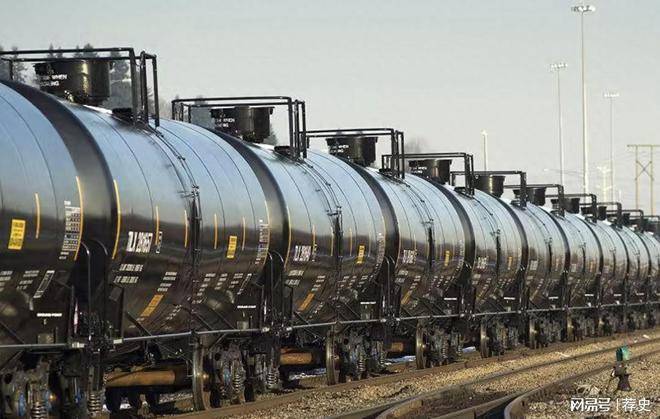
扣押中国船又抢中国石油,特朗普掀桌:5000万桶原油只能姓美
Sou Hu Cai Jing· 2026-01-11 04:44
Core Viewpoint - The article discusses the aggressive stance of the United States towards Venezuela's oil trade, highlighting the imposition of unilateral demands and the underlying motives of U.S. actions in the region [1][3][5]. Group 1: U.S. Actions and Demands - The U.S. has arrested Venezuelan President Maduro and appointed Secretary of State Rubio as the governor of Venezuela, demanding that Venezuelan oil be prioritized for U.S. interests [1]. - The U.S. requires Venezuela to sever economic ties with China, Russia, Iran, and Cuba, and to expel spies from these countries [1]. - The U.S. claims that its refineries can only process heavy crude oil, which is why it seeks to partner with Venezuela, despite previously relying on Canada for heavy crude imports [3]. Group 2: International Reactions and Implications - Countries like Cuba and Mexico have condemned the U.S. actions as blatant violations of international law, indicating a growing global opposition to U.S. imperialism [3]. - The U.S. has previously seized a Chinese oil tanker, further escalating tensions and drawing protests from China, which has vowed to defend its rights [5]. - The article suggests that the U.S. is attempting to undermine China's energy interests by demanding that Venezuela redirect oil orders from China to the U.S. [5]. Group 3: Future Outlook - The article posits that the U.S. will face consequences for its aggressive actions, as the international community's opposition to such behavior is likely to intensify [5][7]. - It emphasizes that the notion of U.S. oil hegemony is challenged by principles of sovereignty and multilateral justice, suggesting that the U.S. ambitions may ultimately fail [7].


美国“将无限期控制委内瑞拉石油销售”!俄确认美军登船,已与油轮失联,俄方谴责并要求美方不得阻碍油轮上俄罗斯人回家
Mei Ri Jing Ji Xin Wen· 2026-01-07 16:45
Group 1 - The Russian Ministry of Transport condemned the U.S. for seizing oil tankers, asserting that no country has the right to use force against vessels under another nation's jurisdiction [1] - The Russian Foreign Ministry demanded that the U.S. respect the rights of Russian citizens aboard the seized oil tanker and allow them to return home [1] - The U.S. military announced the seizure of a Russian-flagged oil tanker, "Marinera," claiming it violated U.S. sanctions [8][10] Group 2 - U.S. Energy Secretary stated that the U.S. plans to maintain significant control over Venezuela's oil industry, including indefinite oversight of its foreign sales [3] - Trump indicated that Venezuela would supply between 30 million to 50 million barrels of oil to the U.S., which could represent up to two months' worth of production [3] - U.S. refining stocks saw gains, with Valero Energy up 3.54%, Phillips 66 up 1.84%, and Marathon Oil up 0.98% [3] Group 3 - Oil tanker stocks experienced significant increases, with Teekay Tankers rising by 8.33%, Frontline by 7.82%, and Nordic American Tankers by 6.96% [5][6] - The U.S. military's actions against the oil tanker "Marinera" have led to heightened interest and activity in the oil and shipping sectors [10]
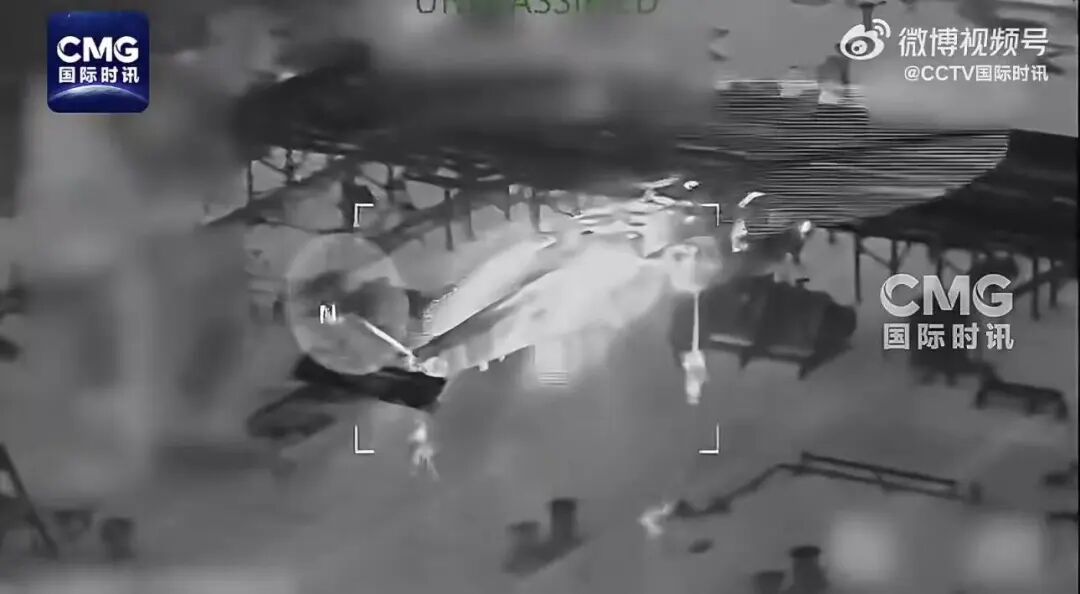
追问委内瑞拉剧变:石油背后,美国有何图谋?
Zhong Guo Dian Li Bao· 2026-01-07 01:59
Group 1 - The military action by the US against Venezuela did not significantly impact the global oil market, with Brent crude oil prices only slightly dropping to $60.80 per barrel after the attack [1][2] - Venezuela's oil production is currently below 1 million barrels per day, accounting for only 1% of global production, due to long-term sanctions and a lack of operational capacity [2][3] - The International Energy Agency (IEA) predicts a surplus of 3.85 million barrels per day in global oil supply by 2026, which is a major factor keeping oil prices stable despite geopolitical tensions [3][4] Group 2 - Investors are skeptical about the potential recovery of Venezuela's oil production capacity, as the industry has been severely damaged by years of US sanctions [4][5] - The US's strategic interest in Venezuela's heavy crude oil aligns with its refining capabilities, suggesting a deeper economic motivation behind the military action [10][11] - The US aims to reinforce its "Western Hemisphere First" strategy and maintain dollar hegemony by controlling Venezuelan oil resources, which could stabilize its energy sector and economic position [11][12] Group 3 - Challenges to US plans include the lack of detailed investment strategies and the high political and security risks associated with operating in Venezuela [12][13] - The global shift towards energy transition and the long-term decline in oil demand pose fundamental obstacles to US ambitions in Venezuela [13][14] - The current geopolitical actions highlight the difficulties of maintaining a unipolar system through military means in an increasingly interconnected world [13][14]
美国如何赶走法国,霸占沙特石油?现代石油巨头,都是如何起家?
Sou Hu Cai Jing· 2025-12-08 08:08
Core Viewpoint - The article argues that the true motivation behind U.S. military actions is oil, which plays a crucial role in shaping global order and political dynamics, rather than merely the defense of the dollar [1]. Group 1: Historical Context - The U.S. oil companies initially lacked sufficient funds to develop Saudi oil resources, leading them to form alliances with financially stronger companies [3]. - The expectation of rising global energy demand drove U.S. companies to seek more oil resources, prompting the formation of alliances to control Middle Eastern oil production [4]. - The construction of a significant oil pipeline across the Arabian Peninsula was a major initiative to secure U.S. interests in the region, despite being primarily managed by private companies [4]. Group 2: Strategic Alliances and Negotiations - The alliance of four U.S. companies controlling Saudi oil faced potential challenges from U.S. antitrust laws, but the government showed little concern as long as the companies were American [6]. - The "Red Line Agreement" restricted certain U.S. companies from investing in Saudi Arabia without the consent of other stakeholders in the Iraq Petroleum Company [6][8]. - U.S. companies successfully negotiated with British and Dutch stakeholders to gain control over Saudi oil, leveraging long-term contracts and wartime asset seizures as bargaining chips [8][10]. Group 3: Major Transactions and Market Impact - In December 1948, a significant transaction occurred where California Standard Oil and Texaco sold 40% of their shares in Aramco for nearly $500 million, marking a pivotal moment in the global oil market [10]. - This transaction established the dominance of U.S. oil giants in Saudi Arabia, leading to further mergers and the eventual formation of ExxonMobil, which continues to hold a leading position in the global oil industry [10].
当核电成主流,美元还能维持石油霸权吗?
Sou Hu Cai Jing· 2025-11-02 19:11
Group 1 - China's nuclear power capacity in operation and under construction has reached 113 million kilowatts, making it the largest in the world, which is a strategic move to reduce dependence on oil and weaken U.S. dollar dominance [1][3] - A single million-kilowatt nuclear power unit can produce electricity equivalent to 200,000 tons of standard coal annually, indicating significant potential for reducing oil imports if nuclear capacity is doubled [1][3] - The transition to electric vehicles powered by nuclear energy can further diminish oil demand, effectively converting oil needs into electricity needs [1][3] Group 2 - China's nuclear power development is seen as a new energy option that does not rely on U.S. influence, which has prompted the U.S. to impose sanctions on 23 Chinese nuclear-related companies [4][5] - The U.S. is struggling with its own nuclear projects, while China's nuclear supply chain has achieved 100% domestic production, making U.S. sanctions ineffective [4][5] - Saudi Arabia's announcement to end its "petrodollar" agreement with the U.S. and the potential for nuclear energy to reduce oil dependency could challenge the dollar's status [5]