
福建概念

Search documents
盘中必读|今日共56股涨停,沪指震荡收跌0.64%,大消费、影视概念逆势走高
Xin Lang Cai Jing· 2026-02-05 07:37
Market Overview - The A-share market saw all three major indices close lower on February 5, with the Shanghai Composite Index at 4075.92 points, down 0.64% [1] - The Shenzhen Component Index closed at 13952.71 points, down 1.44%, and the ChiNext Index at 3260.28 points, down 1.55% [1] - Overall, more stocks declined than rose, with over 3600 stocks experiencing a drop [1] - The total trading volume in the Shanghai and Shenzhen markets was 2.18 trillion yuan, a decrease of 300 billion yuan compared to the previous trading day [1] Sector Performance - The consumer sector showed resilience, with stocks such as Hangzhou Department Store, Maoye Commercial, Sanjiang Shopping, Hai Xin Food, Anji Food, Three Gorges Tourism, and Lafang Home Care hitting the daily limit [1] - The film and television sector experienced fluctuations, with stocks like Hengdian Film, Jinyi Film, and Zhejiang Culture Industry also reaching the daily limit [1] - The Fujian concept stocks were active, with Kun Cai Technology and Pingtan Development hitting the daily limit [1] - Financial stocks saw unusual gains, with Xiamen Bank and Hualin Securities reaching the daily limit [1] - The real estate sector showed localized activity, with stocks such as Huangting International, Jingtou Development, and Hanjian Heshan hitting the daily limit [1] - In contrast, the electric grid and non-ferrous metal sectors faced significant declines [1]
A股:将要起飞!放量上攻趋势明细,不出意外,周二股市很可能这样走
Sou Hu Cai Jing· 2025-12-09 11:45
Core Viewpoint - The market experienced a collective rise on Monday, with significant trading volume indicating a structural shift rather than a straightforward bullish trend [1][27][52] Group 1: Market Performance - The three major indices closed higher, with the Shanghai Composite Index at 3924.08 points, up 0.54%, and trading volume reaching approximately 2.04 trillion yuan, an increase of about 310 billion yuan from the previous trading day [1] - The market showed a "slow bull" trend, with sectors like CPO, commercial aerospace, and Fujian concepts experiencing significant gains, while traditional defensive sectors like coal and liquor lagged behind [2][26] Group 2: Capital Flow Analysis - During the afternoon session, there was a net inflow of nearly 7 billion yuan, but by the close, the market had shifted to a net outflow of approximately 360 million yuan, indicating a withdrawal of funds [3][4] - The trading pattern exhibited characteristics of "volume expansion followed by capital withdrawal," suggesting a high-level turnover rather than a sustained bullish attack [5][30] Group 3: Strong Sectors Analysis - The CPO sector was highlighted as a leading indicator, with significant gains and a strong trading signal, indicating a continuation of upward momentum [7][8] - Commercial aerospace maintained its strong performance, driven by speculative trading, but lacked solid long-term support from institutional investors [13][15] - The Fujian concept stocks were characterized by short-term trading opportunities rather than long-term investment potential, with a focus on rapid gains and subsequent profit-taking [19][20] Group 4: Weak Sectors Analysis - The coal sector showed weakness, with a lack of significant trading volume despite overall market growth, indicating a shift in investor preference towards growth and technology sectors [20][21] - The liquor sector faced downward pressure due to valuation concerns and moderate growth expectations, leading to a lack of interest from investors [22][23] Group 5: Market Dynamics and Strategy - The recent trading volume, while appearing to indicate new capital entering the market, was primarily concentrated in high-growth sectors, with traditional sectors failing to keep pace [27][32] - The market is expected to experience a phase of consolidation, with potential for a technical pullback and confirmation of previous gaps, rather than a continuation of the bullish trend [40][42] - Investment strategies should focus on selective participation in high-growth sectors while avoiding high-risk speculative plays, particularly in the context of potential market corrections [43][46][49]

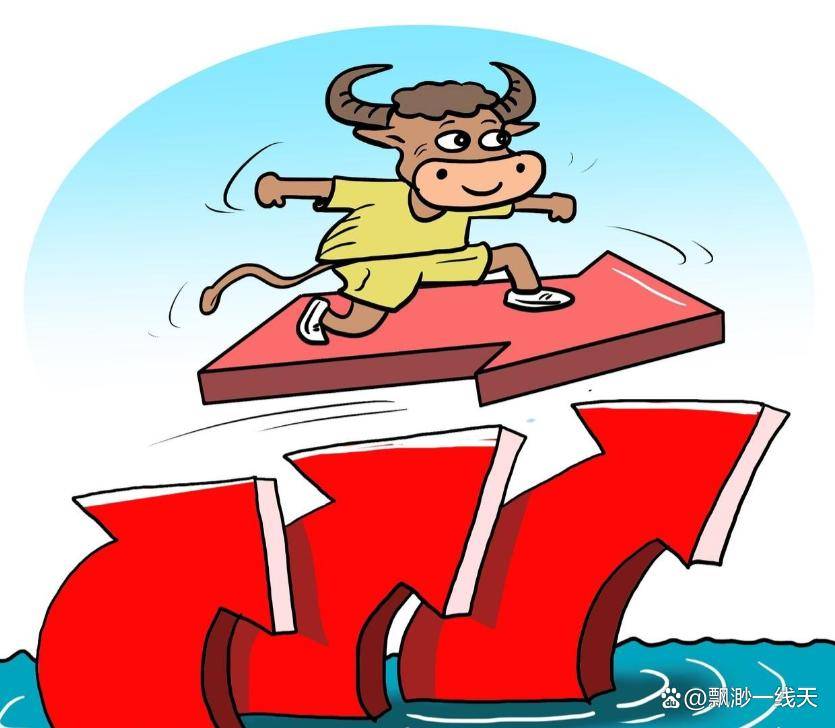
图解牛熊股:福建板块涨幅居前,商业航天概念股表现活跃
Xin Lang Cai Jing· 2025-12-07 15:04
Market Performance - The three major A-share indices rebounded this week, with the Shanghai Composite Index rising by 0.37%, the Shenzhen Component Index increasing by 1.26%, and the ChiNext Index gaining 1.86% [1][3] Sector Performance - The industrial metals, pharmaceutical retail, and insurance sectors showed significant gains this week [1][3] - The Fujian concept stocks led the gains, with Jiarong Technology rising by 67.18% and Zhaobiao Co. increasing by 58.43% [1][3] Policy Developments - Fujian Province has formulated the fifth batch of policy measures to implement the Central Committee's opinions on supporting cross-strait integration development, including 12 measures [1][3] - One notable measure supports Taiwanese compatriots in opening Sha County snack stores, providing a one-time entrepreneurial subsidy of 5,000 yuan [1][3] Commercial Aerospace Sector - The commercial aerospace sector was notably active, with Aerospace Development rising by 52.26% and Shunhao Co. increasing by 48.19% [1][4] - On December 3, the Zhuque-3 remote carrier rocket successfully launched from the Dongfeng Commercial Aerospace Innovation Test Area, completing its flight mission [4] - The official forecast indicates that the number of launches in the commercial aerospace sector is expected to increase by over 50% year-on-year, with multiple reusable rockets set for their first flights this year [4] Capital Flow - Major net inflows of capital were observed in Tianfu Communication, BOE Technology Group, Zijin Mining, Changchuan Technology, Xinyi Technology, CATL, and Northern Rare Earth, each exceeding 1 billion yuan [2][4] - Conversely, significant net outflows were noted in Xiangnong Chip, BlueFocus Communication Group, ZTE, Shanghai Electric, and Dongfang Fortune, each exceeding 2 billion yuan [2][4]
疯狂过山车,消费龙头真反转了?
Ge Long Hui· 2025-11-23 08:22
Core Viewpoint - The recent surge in the stock price of Jiumuwang is primarily driven by speculative trading related to the "Fujian" concept, despite underlying business fundamentals showing signs of weakness [1][3][29] Group 1: Stock Performance and Market Reaction - Jiumuwang's stock experienced a dramatic rise, achieving seven consecutive trading limits, with a doubling of its price within days, followed by a sudden drop on November 21 [1][2] - The stock price increase was catalyzed by the announcement of a strategic partnership with the Chinese Olympic Committee on November 11, which upgraded the company's role to an official sponsor [2][3] - Despite the partnership, the company's previous announcements regarding similar collaborations had little market impact, indicating that the recent price surge was more about market speculation than fundamental improvement [2][3] Group 2: Financial Performance - For the first three quarters of the year, Jiumuwang reported revenue of 2.13 billion yuan, a year-on-year decline of 6.02%, while net profit surged by 129.63% to 310 million yuan [6][10] - The significant increase in net profit was largely attributed to non-recurring gains, which accounted for over 60% of the net profit, raising concerns about the sustainability of this performance [11][12] - The company's core business showed a decline, with revenue from its main brand and sub-brands experiencing various degrees of decrease [10][11] Group 3: Industry Context and Challenges - The men's clothing industry is facing a transformation, with Jiumuwang, a leader in men's pants, struggling to adapt to changing consumer preferences towards younger, more fashionable styles [17][25] - The company has initiated a transformation strategy, investing over 1 billion yuan since 2020 to modernize its product offerings and brand image [17][20] - Despite these efforts, Jiumuwang's sales have not improved significantly, with inventory levels reaching a record high and turnover days exceeding 300, indicating inefficiencies in capital utilization [21][24] Group 4: Competitive Landscape - The men's apparel market is experiencing polarization, with low-cost brands gaining market share while established brands like Jiumuwang face pressure from both high-end and budget competitors [25][27] - Jiumuwang's market position is weakening, with its revenue ranking dropping to 14th among 38 companies in the industry, while competitors like Hailan Home and Semir are significantly outperforming [27][28] - The company's static price-to-earnings ratio has exceeded 50, far above the industry median of 20, raising concerns about the sustainability of its valuation amidst declining fundamentals [28][29]

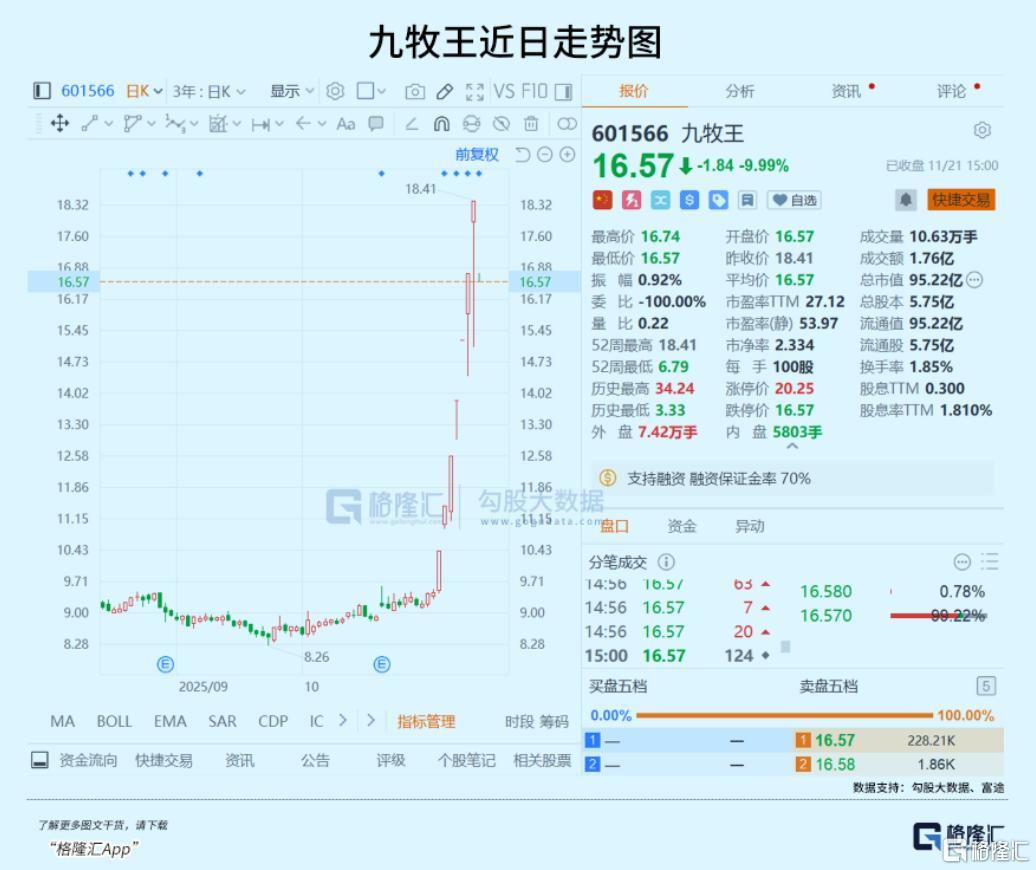
疯狂过山车!消费龙头真反转了?
Ge Long Hui· 2025-11-23 07:31
Group 1 - The recent surge in the stock price of Jiumuwang is primarily attributed to the hype surrounding the "Fujian" concept and a strategic partnership with the Chinese Olympic Committee announced on November 11 [3][4] - Despite a significant increase in net profit by 129.63% to 310 million yuan, the company's revenue for the first three quarters was 2.13 billion yuan, reflecting a decline of 6.02% year-on-year [7][11] - The company's financial performance is heavily influenced by non-recurring gains, which accounted for over 60% of net profit, raising concerns about the sustainability of this growth [12][14] Group 2 - Jiumuwang's investment in financial assets has significantly impacted its performance, with net losses from investment activities totaling 344 million yuan over three years, indicating reliance on non-core business for profit [14][15] - The men's clothing industry is facing challenges, with brands like Jiumuwang struggling to adapt to changing consumer preferences, particularly among younger demographics [21][30] - The company is undergoing a transformation strategy, investing over 1 billion yuan to revamp its product offerings and marketing approach, but faces high inventory levels and slow sales turnover [24][27] Group 3 - Jiumuwang's market position has weakened, ranking 14th among 38 companies in the industry with a revenue of 2.13 billion yuan, while competitors like Hailan Home and Semir have significantly higher revenues [33] - The company's static price-to-earnings ratio has exceeded 50 times, far above the industry median of 20 times, raising concerns about the sustainability of its valuation amidst declining core business performance [34] - The future success of Jiumuwang hinges on its ability to focus on its core business, optimize resource allocation, and enhance operational efficiency to navigate the ongoing transformation [34]
疯狂过山车!消费龙头真反转了?
格隆汇APP· 2025-11-23 07:17
Core Viewpoint - The article discusses the recent stock price fluctuations of Jiumuwang, highlighting the impact of strategic partnerships and market trends, while also emphasizing the underlying challenges in the company's financial performance and the broader men's apparel industry [2][8][51]. Group 1: Stock Performance and Market Reaction - Jiumuwang experienced a significant stock price surge, achieving seven consecutive trading limits and doubling its price within a few days, driven by the announcement of a strategic partnership with the Chinese Olympic Committee [3][8]. - However, the stock faced a sharp decline on November 21, indicating volatility and potential overvaluation [4]. - The stock price increase was largely attributed to the recent "Fujian" concept hype in the market, rather than solely the partnership announcement [10]. Group 2: Financial Performance - Jiumuwang reported a net profit increase of 129.63% in its Q3 earnings report, despite a revenue decline of 6.02% year-on-year, raising concerns about the sustainability of this growth [6][13]. - The company's financial performance was significantly bolstered by non-recurring gains, which accounted for over 60% of its net profit, indicating reliance on investment income rather than core business operations [18][20]. - The company has faced declining revenues across its main and subsidiary brands, with notable drops in sales for its FUN and ZIOZIA brands [17]. Group 3: Industry Context and Challenges - The men's apparel industry is experiencing a shift, with traditional brands like Jiumuwang struggling to adapt to changing consumer preferences, particularly among younger demographics [31][50]. - Jiumuwang's market share in men's pants remains strong, but the company is perceived as outdated, necessitating a strategic transformation to appeal to modern consumers [28][30]. - The overall men's apparel market is facing a bifurcation, with low-cost brands gaining market share while established brands struggle to compete in the mid-range segment [49]. Group 4: Strategic Initiatives and Future Outlook - Jiumuwang has initiated a transformation strategy, investing over 1 billion RMB to revamp its product offerings and marketing approach, including the introduction of a new product line aimed at diverse male consumer needs [32][39]. - The company is also shifting its retail strategy by converting franchise stores to direct-operated ones, which has led to improved gross margins [38]. - Despite these efforts, Jiumuwang's inventory levels have reached record highs, indicating potential inefficiencies in sales and inventory management [41][44]. Group 5: Valuation and Market Position - Jiumuwang's static price-to-earnings ratio has exceeded 50 times, significantly higher than the industry median of 20 times, raising concerns about the sustainability of its valuation amidst declining core business performance [52][53]. - The company must focus on optimizing resource allocation and enhancing operational efficiency to navigate the current market challenges and achieve sustainable growth [54].
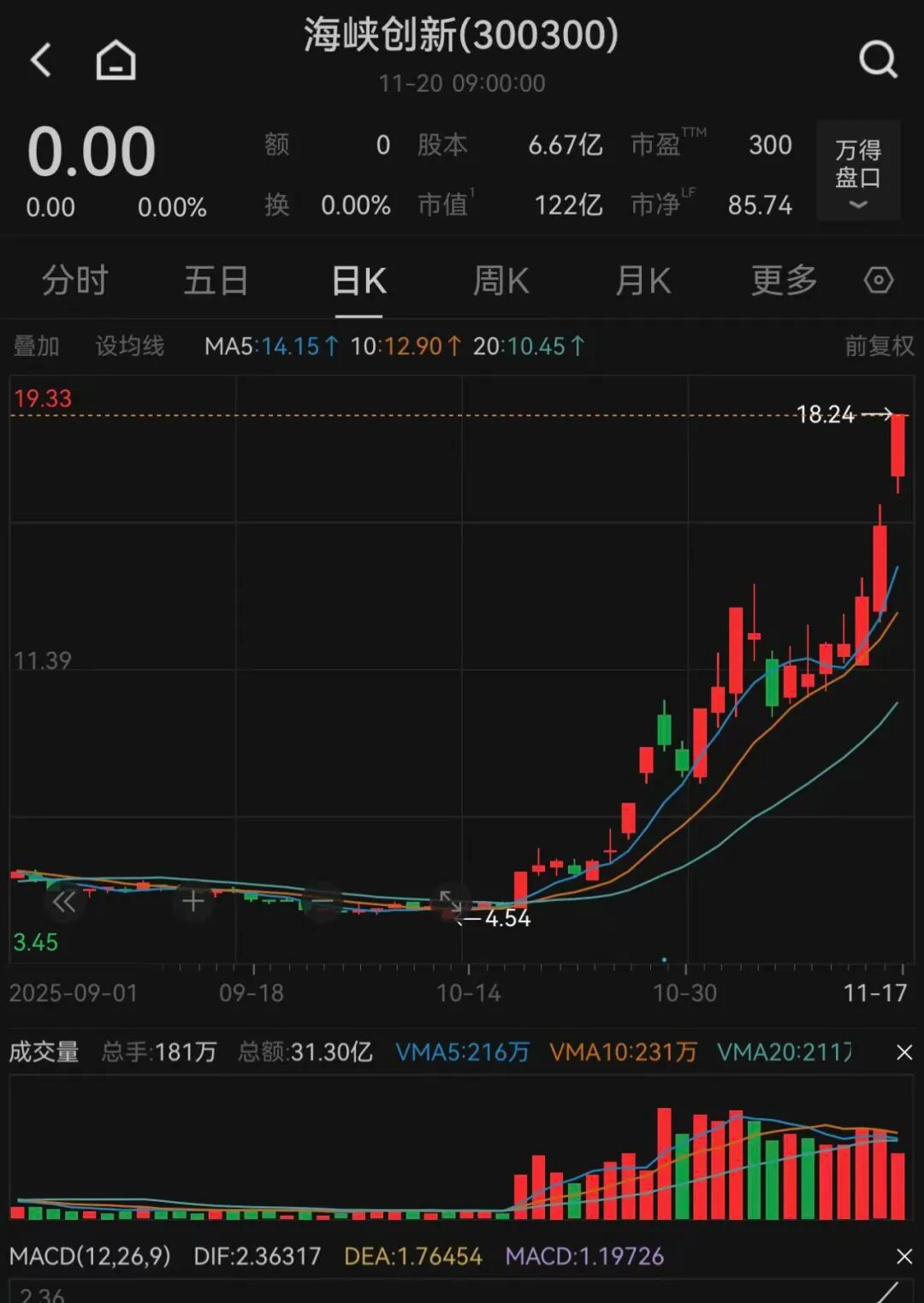
福建概念两只大牛股,同时停牌,同时复牌!
Zhong Guo Zheng Quan Bao· 2025-11-20 23:27
Core Viewpoint - Both Haixia Innovation and Pingtan Development announced the end of stock trading suspension and will resume trading on November 21, confirming that there are no undisclosed significant matters affecting their operations or stock prices [1][5][7]. Group 1: Company Announcements - Haixia Innovation and Pingtan Development both confirmed that their previous disclosures were accurate and that there were no significant undisclosed matters affecting their stock prices [1][5][7]. - The companies conducted internal checks and found no major changes in their operational environments or business fundamentals [5][7]. Group 2: Stock Performance - As of November 20, Haixia Innovation's stock has increased by 533.33% and Pingtan Development's stock has risen by 317.07% year-to-date [3]. - Haixia Innovation's stock price increased by 185.89% from October 27 to November 17, with three instances of abnormal price fluctuations during this period [6]. - Pingtan Development's stock price rose by 255.19% from October 17 to November 17, indicating significant volatility [7]. Group 3: Financial Performance - For the first three quarters of 2025, Haixia Innovation reported revenues of 92.06 million, a year-on-year increase of 4.75%, but a net loss of 17.24 million, showing a reduction in losses [6]. - Pingtan Development reported revenues of 1.03 billion, a year-on-year decrease of 13.04%, with a net profit of 31.23 million, reflecting a 38.39% increase compared to the previous year [9]. Group 4: Business Focus - Haixia Innovation is focusing on developing smart city solutions and expanding into smart healthcare and new energy sectors to drive sustainable growth [6]. - Pingtan Development's main business activities include forestry management, wood product processing and sales, and trade related to the Pingtan Comprehensive Experimental Zone [8].


A股午评:创业板指跌0.8% 福建、AI应用概念集体走强
2 1 Shi Ji Jing Ji Bao Dao· 2025-11-17 04:05
Market Overview - The market experienced fluctuations with the Shenzhen Component Index turning positive before retreating again [1][2] - The half-day trading volume in the Shanghai and Shenzhen markets reached 1.27 trillion, an increase of 32.9 billion compared to the previous trading day [1][2] - Over 2900 stocks in the market declined, indicating a broad market downturn [1][2] Sector Performance - The Fujian sector saw a resurgence, with stocks like Xiamen Construction and Pingtan Development hitting the daily limit [1][2] - The AI application concept gained momentum, with multiple stocks including 360 Technology also reaching the daily limit [1][2] - The lithium mining sector was active, highlighted by Dazhong Mining achieving three consecutive limit-ups [1][2] Stock Movements - Pharmaceutical stocks showed divergence, with Jimin Health and Yaoyigou experiencing declines [1][2] - At market close, the Shanghai Composite Index fell by 0.43%, the Shenzhen Component Index decreased by 0.35%, and the ChiNext Index dropped by 0.8% [1][2]

午评:创业板指半日跌0.8% 福建、AI应用概念集体走强
Xin Lang Cai Jing· 2025-11-17 03:43
Core Viewpoint - The market is experiencing fluctuations with the ChiNext index down by 0.8%, while sectors such as Fujian and AI application concepts are showing strong performance [1] Market Performance - The total trading volume in the Shanghai and Shenzhen markets reached 1.27 trillion, an increase of 32.9 billion compared to the previous trading day [1] - Over 2900 stocks in the market declined, indicating a broad market pullback [1] Sector Highlights - The Fujian sector saw a resurgence, with stocks like Xiamen Construction and Pingtan Development hitting the daily limit [1] - AI application concepts gained momentum, with multiple stocks including 360 Technology reaching the daily limit [1] - The military industry sector continued its strong performance, with Aerospace Development achieving two consecutive limit-ups [1] - Lithium mining concepts were active, with Dazhong Mining achieving three consecutive limit-ups [1] Declining Sectors - The pharmaceutical sector showed divergence, with stocks like Jimin Health and Yaoyigou experiencing declines [1] - Energy metals, military equipment, and AI application sectors were among the top gainers, while precious metals and pharmaceuticals were among the top losers [1] Index Performance - As of the market close, the Shanghai Composite Index fell by 0.43%, the Shenzhen Component Index decreased by 0.35%, and the ChiNext Index dropped by 0.8% [1]