适老化产品

Search documents
作为老龄化程度最深的城市,上海如何回应老年人需求?
Xin Lang Cai Jing· 2026-02-07 07:23
Core Insights - Shanghai has launched a "Silver Store" to cater to the elderly population, which is expected to exceed 37.6% of the city's registered residents by the end of 2024, addressing the needs of an aging society [1][2] Group 1: Silver Store Concept - The "Silver Store" provides a one-stop experience for elderly consumers, offering products such as smart assistive devices, age-friendly home goods, health foods, functional clothing, and entertainment options [2] - The store has shown promising operational results, with an average daily sales of approximately 30,000 yuan, peaking at 50,000 yuan in a single day, and has received widespread recognition from elderly customers and their families [2] Group 2: Development of Elderly-Friendly Consumption Spaces - The "Silver Store" is part of a broader initiative in Shanghai to create elderly-friendly consumption spaces, including rehabilitation assistive product experience centers and themed spaces in various districts [2] - The city has introduced guidelines for the construction of elderly-friendly shopping environments, focusing on aspects such as environmental facilities, product offerings, and operational management [3]
超5万亿元大市场!一大批产品涌入!银发经济,新机遇
Sou Hu Cai Jing· 2026-01-28 13:06
Group 1 - The elderly products market in China is rapidly expanding, with a projected growth from 2.6 trillion yuan in 2014 to 5.4 trillion yuan by 2024, reflecting a compound annual growth rate of 7.3% [1] - Smart elderly products are evolving from mere concepts to everyday items, significantly enhancing the life experiences of seniors through various offerings such as health management devices and emotional companionship robots [1][3] - The demand for elderly products is shifting from basic needs to include social companionship, cultural entertainment, and skill learning, leading to a substantial increase in supply, with 28,700 new elderly products launched in the first four months of 2025, a year-on-year increase of over 255% [1][3] Group 2 - Many products marketed as "elderly-friendly" are not user-friendly, leading to frustration among seniors who find them complicated and difficult to use, resulting in these products often becoming unused [3][5] - There is a mismatch between the design of elderly products and the actual needs of seniors, indicating a need for deeper understanding of their diverse and dynamic lifestyle requirements [5] - The industry is moving towards standardization to eliminate low-quality "pseudo-elderly" products, with a focus on developing products that genuinely meet the needs of the elderly, as highlighted by recent government initiatives [7][9] Group 3 - The acceleration of industry standardization is expected to help concentrate resources on innovative solutions that address real pain points for seniors, ensuring effective supply-demand matching [9][11] - The concept of elderly adaptation is not merely about simplification but about creating products that resonate emotionally and are safe and easy to operate, leading to a more mature elderly ecosystem [11]

视频丨优化养老服务发展环境 民政部等八部门出台多项措施
Yang Shi Xin Wen Ke Hu Duan· 2026-01-13 07:12
Core Viewpoint - The Ministry of Civil Affairs and seven other departments have introduced measures to cultivate the elderly care service industry and promote the silver economy, aiming to enhance the vitality of various elderly care service providers and better meet the diverse needs of the elderly population [2] Group 1: Brand Development - The measures emphasize strengthening brand building for elderly care services, encouraging the establishment of distinctive brand signage and enhancing brand recognition [3] - Provincial civil affairs departments are encouraged to standardize the names and signage of various elderly care service providers to improve brand identification [3] - Support for trademark registration and protection for well-known brands in the elderly care sector is also highlighted [3] Group 2: Market Supply and Demand - The measures propose optimizing the supply of elderly care services and age-friendly products, promoting community-based service integration [4] - Encouragement for the development of specialized medical accompaniment services and mobile bathing services for the elderly is included [4] - The initiative also promotes the development of age-appropriate clothing and food products tailored to the elderly [4] Group 3: Supply-Demand Platform - Support for local governments to establish dedicated elderly care sections within existing platforms to enhance service demonstration and resource linkage is outlined [5] - The measures encourage the use of trade fairs and exhibitions to facilitate connections between manufacturers, service providers, and consumers in the elderly care market [5] - E-commerce platforms and supermarkets are encouraged to create special shopping events and interfaces for elderly consumers [5] Group 4: Technological Empowerment - The measures advocate for technological advancements in elderly care, including the use of big data, AI, and smart home technologies [6] - Support for the development of care robots and other innovative technologies to meet the daily needs of the elderly is emphasized [6] - The initiative encourages collaboration between elderly care institutions and technology developers to enhance user experience with smart products [6] Group 5: Development Environment - The measures call for the creation of a fair competitive environment for elderly care institutions, including the reform of classification and support policies [7] - Restrictions that hinder fair competition in government procurement processes for elderly care services are to be eliminated [7] Group 6: Standards and Certification - The establishment of national standards for elderly products and services is prioritized, along with a certification system to guide procurement practices [8] - The measures aim to protect the rights of the elderly by combating fraudulent practices and ensuring compliance in the elderly care market [8] Group 7: Support and Resources - Local civil affairs departments are tasked with providing regular updates on elderly population statistics and available support policies [9] - The measures encourage the establishment of a nurturing mechanism for elderly care service providers and the optimization of licensing processes [9] - Support for stable operations of elderly care institutions through land supply and financial assistance is also included [9]

1月起一批重要国家标准实施
Xin Lang Cai Jing· 2026-01-01 17:42
Group 1: National Standards Implementation - A set of important national standards will be implemented starting January 2026, focusing on children's furniture safety, aging-friendly products, electric vehicle energy consumption limits, and automotive maintenance and diagnostics [1][2][3] - The mandatory national standard for children's furniture safety specifies requirements for materials, structure, flame resistance, electrical safety, harmful substance limits, and warning labels for products used by children aged 0 to 14 [1] - The aging-friendly product standards include general requirements for fitness equipment and specific requirements for various types of equipment, as well as standards for commodes [1][2] Group 2: Electric Vehicle Standards - The "Electric Vehicle Energy Consumption Limit" is the world's first mandatory standard, setting energy consumption limits based on vehicle weight and usage characteristics, with a requirement that electric vehicles weighing around 2 tons must not exceed 15.1 kWh per 100 km [2] - The implementation of this standard is expected to improve the average range of electric vehicles by approximately 7% without changing battery capacity, enhancing the driving experience [2] Group 3: Automotive Maintenance and Safety - The "Automotive Maintenance, Detection, and Diagnosis Technical Specification" establishes guidelines for maintenance levels, cycles, operational requirements, and quality assurance to ensure vehicle safety [3] - New standards for the disposal of photovoltaic components and information security management systems are also introduced to support the safe development of emerging industries and ensure disaster recovery capabilities [3]
聚焦万亿级消费新风口!增强供需适配,适老化产品市场潜力几何?
Huan Qiu Wang· 2025-12-04 01:57
Core Insights - The elderly products market is projected to grow from 2.6 trillion yuan in 2014 to 5.4 trillion yuan by 2024, with a compound annual growth rate of 7.3%, becoming a significant pillar of the silver economy [1] - The "Implementation Plan" aims to enhance the adaptability of supply and demand in the elderly products sector, with specific goals set for 2027 [1] Market Growth and Trends - The elderly products market is experiencing robust growth, driven by an aging population and increasing demand for elderly care services [1][2] - The market is expected to form three trillion-level consumption fields and ten hundred-billion-level consumption hotspots by 2027 [1] Product Supply and Demand - There is a need to optimize the supply of elderly products to better match the diverse needs of the elderly population [2][3] - Current elderly products cover basic care, health monitoring, and life assistance, but there is a significant lack of high-end smart devices and personalized products [2][3] Barriers to Market Development - Major obstacles include insufficient consumer awareness, supply-demand mismatch, lack of standardization, and cost pressures [3] - Traditional views among the elderly lead to lower acceptance of elderly products, with a preference for reliance on family or traditional care methods [3] Policy and Technological Integration - The "Implementation Plan" emphasizes the need for enhanced research and development of elderly products, including care robots and multifunctional nursing beds [3][4] - The integration of artificial intelligence into elderly care services is highlighted as a key area for innovation [4] Role of Insurance in Elderly Products - The insurance sector plays a crucial role in promoting elderly products through a "product + service" model, establishing long-term trust with clients [5][6] - Insurance companies are integrating various service resources to create a comprehensive service system for the elderly [5][6] Financial Support and Industry Development - The government aims to increase support for quality elderly products through financial policies, including the establishment of special funds and tax incentives [6] - Insurance companies are encouraged to invest strategically in infrastructure for elderly care, enhancing the application scenarios for elderly products [6]
下一个“万亿级”消费市场出现了
Di Yi Cai Jing· 2025-11-28 02:31
Group 1 - The "Implementation Plan" aims to create three trillion-level consumption sectors and ten hundred-billion-level consumption hotspots by 2027, focusing on elderly products, smart connected vehicles, and consumer electronics [1] - The elderly products market is projected to grow from 2.6 trillion yuan in 2014 to 5.4 trillion yuan in 2024, with a compound annual growth rate of 7.3%, highlighting the potential of the silver economy [1][2] - By 2024, the elderly population aged 65 and above in China is expected to reach 220 million, accounting for 15.6% of the total population, indicating a significant consumer base [1] Group 2 - The plan suggests enhancing the research and design of elderly-friendly products, including elderly care robots, multifunctional nursing beds, and health monitoring devices [2] - There is a growing demand for hearing health products, with multinational hearing health device manufacturers increasing investments in the Chinese market [2] - The recent draft of the "National Food Safety Standard for Nutritional Supplements for the Elderly" marks the first national standard specifically for nutritional supplements for individuals aged 60 and above [3]
下一个“万亿级”消费市场出现了
第一财经· 2025-11-28 02:28
Core Viewpoint - The article discusses the implementation plan by six government departments to enhance the adaptability of supply and demand in consumer goods, aiming to foster three trillion-level consumption sectors and ten hundred-billion-level consumption hotspots by 2027, with a focus on elderly products, smart connected vehicles, and consumer electronics [3][4]. Group 1: Elderly Products Market - The elderly products market is projected to grow from 2.6 trillion yuan in 2014 to 5.4 trillion yuan in 2024, with a compound annual growth rate (CAGR) of 7.3%, highlighting its significance in the silver economy [3][4]. - The plan emphasizes the need to optimize the supply of elderly-friendly products, including the development of elderly care robots, multifunctional nursing beds, and health monitoring devices [4][5]. Group 2: Nutritional Products for the Elderly - The market for nutritional products tailored for the elderly is currently disorganized due to the lack of specific standards, with companies like Yili Group noting that some products marketed for the elderly do not meet their physiological needs [5]. - A national standard for elderly nutritional supplements has recently been proposed, marking a significant step towards addressing the needs of individuals aged 60 and above [5]. Group 3: Leisure and Entertainment Needs - There is a substantial market potential in the leisure and entertainment needs of the elderly, with data indicating that affluent elderly individuals in first-tier cities prioritize health, services, and travel, while those in lower-tier cities have a more relaxed lifestyle [5].

老年用品被列入下一个“万亿级”消费市场 促消费新方案给出这些指引
Di Yi Cai Jing· 2025-11-28 01:12
Core Insights - The implementation plan aims to create three trillion-level consumption sectors and ten hundred-billion-level consumption hotspots by 2027, focusing on elderly products, smart connected vehicles, and consumer electronics [1] Group 1: Elderly Products Market - The elderly products market is projected to grow from 2.6 trillion yuan in 2014 to 5.4 trillion yuan by 2024, with a compound annual growth rate of 7.3%, highlighting its significance in the silver economy [1] - By 2024, the elderly population aged 65 and above in China is expected to reach 220 million, accounting for 15.6% of the total population, indicating a growing consumer base with potential spending power [1] Group 2: Product Development and Recommendations - The plan suggests enhancing the research and design of elderly-friendly products, including nursing service robots, multifunctional nursing beds, and health monitoring devices [2] - It recommends launching comfortable, functional, and stylish clothing for the elderly, as well as food products that cater to their chewing, swallowing, and nutritional absorption needs [2] - The plan encourages the establishment of elderly-friendly product promotion directories and the creation of dedicated sections for silver consumption on e-commerce platforms and supermarkets [2] Group 3: Market Opportunities and Challenges - The development of elderly-friendly products is already underway in various industries, particularly in medical devices targeting cardiovascular and neurodegenerative diseases [2] - The market for elderly nutritional supplements is currently fragmented due to a lack of specific standards, with some products inadequately meeting the physiological needs of older adults [2][3] - There is significant market potential in the leisure and entertainment needs of middle-aged and elderly individuals, with varying preferences observed between urban and rural populations [3]
老年用品被列入下一个“万亿级”消费市场,促消费新方案给出这些指引
Di Yi Cai Jing· 2025-11-28 01:08
Core Insights - The article emphasizes the importance of optimizing the supply of age-friendly products in response to China's aging population and the growing consumer potential among elderly individuals [1][2]. Group 1: Market Potential - By 2024, the elderly population aged 65 and above in China is projected to reach 220 million, accounting for 15.6% of the total population, indicating a significant market for age-friendly products [1]. - The market size for elderly products has grown from 2.6 trillion yuan in 2014 to 5.4 trillion yuan in 2024, with a compound annual growth rate of 7.3%, highlighting the importance of the silver economy [1]. Group 2: Product Development - The plan suggests enhancing the research and design of age-friendly products, focusing on essential items such as elderly care robots, multifunctional nursing beds, and health monitoring devices [2]. - There is a need for comfortable, functional, and stylish clothing for the elderly, as well as food products that cater to their chewing, swallowing, and nutritional absorption needs [2]. Group 3: Industry Trends - The development of age-friendly products is already underway in various sectors, including medical devices targeting cardiovascular and neurodegenerative diseases [2]. - The recent draft of the national standard for elderly nutritional supplements marks a significant step in addressing the specific dietary needs of individuals aged 60 and above [3]. Group 4: Leisure and Lifestyle - There is a substantial market opportunity in the leisure and entertainment needs of middle-aged and elderly individuals, with differing preferences observed between urban and rural populations [3].
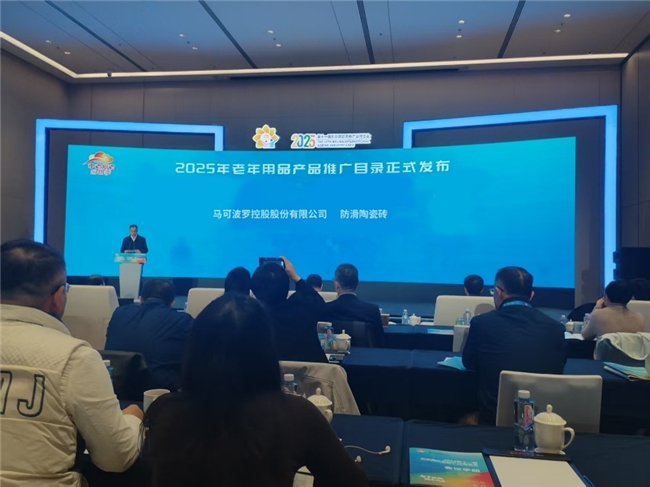
马可波罗:适老创新 赋能美好生活
Sou Hu Wang· 2025-11-26 13:33
Core Insights - The article highlights the innovative approach of Marco Polo Tiles in developing anti-slip ceramic tiles tailored for the elderly, addressing real-life challenges faced by this demographic in the context of an aging population [1][3][4] Industry Overview - The silver economy is becoming a significant driver of economic growth in China, with over 310 million people aged 60 and above by the end of 2024, accounting for 22% of the national population [3] - The number of age-friendly products has surged, with a 255.2% year-on-year increase, reflecting the urgent demand from the elderly for improved living conditions [3] Product Development - Marco Polo Tiles has been recognized for its anti-slip tiles, which have been included in the Ministry of Industry and Information Technology's promotion directory for elderly products [1] - The company emphasizes a shift from "product thinking" to "user thinking," focusing on safety, comfort, and convenience in the design of age-friendly tiles [4][5] Technological Advancements - Marco Polo has a long history of innovation in anti-slip technology, evolving from the first generation of slip-resistant tiles to advanced versions that prioritize safety and comfort [5] - The upgraded R series comfort anti-slip tiles feature a 30%+ improvement in tactile comfort and enhanced slip resistance through proprietary multi-layer nano composite glaze [7] Market Positioning - The company aims to cover all scenarios in elderly living spaces, ensuring safety in areas prone to slipping, such as bathrooms and kitchens, while also promoting a shift in elderly consumer needs from survival to enjoyment and quality [7] - The innovation in age-friendly products not only supports the company's growth but also contributes to creating safer, more comfortable living environments for the elderly [7]