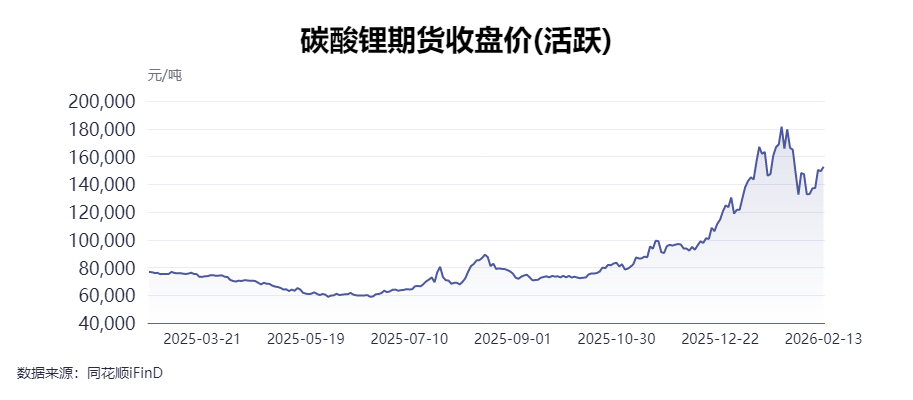
第三次锂价超级周期

Search documents
锂与磷,同日狂飙
高工锂电· 2026-02-25 10:14
Core Viewpoint - The strategic importance of phosphorus in the context of supply chain security has been highlighted, particularly following a U.S. executive order that emphasizes the need for domestic production of phosphorus and glyphosate-related herbicides due to national security concerns [2][11][19]. Group 1: Lithium Market Dynamics - The lithium market is experiencing a "third super cycle," with UBS raising its price forecast for domestic lithium carbonate to approximately 170,000 yuan/ton by 2026, an increase of about 26% [4]. - The market's shift from viewing lithium prices as a rebound to a central price elevation indicates a significant change in financial models, where previously high inventory levels are now seen as low-risk margins [5]. - The trading activity on February 24 suggests a revaluation attempt by new capital, as evidenced by increased trading volume and open interest [7]. Group 2: Phosphorus Market Dynamics - The U.S. executive order explicitly identifies phosphorus as a critical resource, linking its supply to national security due to the presence of only one domestic producer unable to meet annual demand [12][13]. - The classification of phosphorus under the Defense Production Act elevates its importance from a strategic mineral to a priority in budget, procurement, and capacity mobilization [15]. - The market's perception of phosphorus has shifted from being merely a seasonal agricultural commodity to a potential theme of supply chain restructuring, aligning it with lithium in trading narratives [16][17]. Group 3: Interconnections Between Lithium and Phosphorus - The relationship between lithium and phosphorus is supported by two main links: the cost dynamics of lithium iron phosphate (LFP) in energy storage and the involvement of phosphorus in key electrolyte salts like lithium hexafluorophosphate [18]. - The redefinition of phosphorus as an essential chemical in defense and electrochemical industries indicates its growing significance beyond traditional agricultural applications [19]. - The market's inclination to categorize phosphorus alongside rare earths and tungsten as "safe assets" reflects a broader trend of resource security perception [19].


每日核心期货品种分析-20260225
Guan Tong Qi Huo· 2026-02-25 10:00
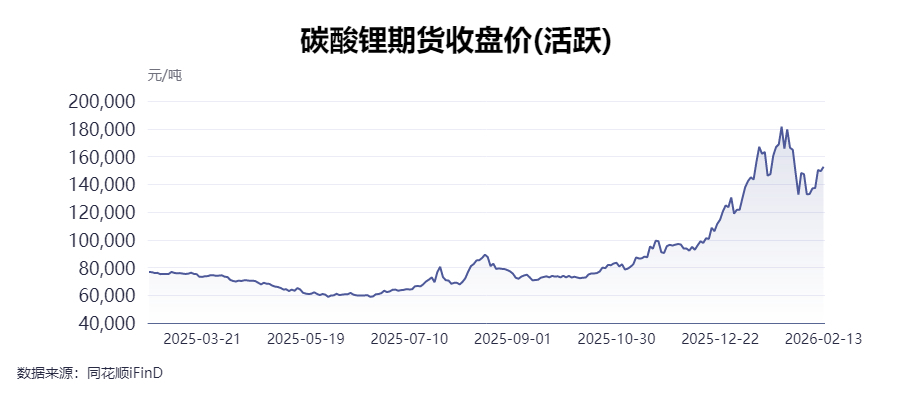
Group 1: Report Summary - The report provides an analysis of various futures commodities on February 25, 2026, including their market performance, fundamental factors, and price trends [4][5] Group 2: Market Performance - Domestic futures contracts showed mixed results. Shanghai tin and platinum rose over 7%, Shanghai silver and palladium rose over 4%, and lithium carbonate rose over 3%. The container shipping index (European line) fell over 4%, and liquefied petroleum gas (LPG) and low-sulfur fuel oil (LU) fell over 1% [4] - Stock index futures generally rose, with the CSI 300 index futures (IF) up 0.91%, the SSE 50 index futures (IH) up 0.61%, the CSI 500 index futures (IC) up 1.73%, and the CSI 1000 index futures (IM) up 1.45%. Treasury bond futures generally fell, with the 2-year Treasury bond futures (TS) down 0.06%, the 5-year Treasury bond futures (TF) down 0.10%, the 10-year Treasury bond futures (T) down 0.13%, and the 30-year Treasury bond futures (TL) down 0.47% [5] Group 3: Commodity Analysis Copper - Shanghai copper opened and closed higher, showing strength. The US has entered the "executable options stage" in the Iran issue. Fundamentally, upstream smelting loads were normal during the holiday, and copper supply will remain stable at a high level. In February, SMM China's electrolytic copper production is expected to decrease by 3.58 tons month-on-month, a decrease of 3.04%, and increase by 8.06% year-on-year. The downstream market has low trading activity, and copper inventories have increased significantly. The copper price is likely to rise due to tight supply and support from the non-ferrous metals sector, but high prices and inventories may limit the upside [7] Lithium Carbonate - Lithium carbonate opened and closed higher, with a slight decline at the end of the session, rising over 3% overall. The average price of battery-grade lithium carbonate was 161,800 yuan/ton, and the average price of industrial-grade lithium carbonate was 158,200 yuan/ton, both up 9,750 yuan/ton from the previous workday. Due to seasonal and holiday production cuts, SMM expects February production to be 81,900 tons, a 16% decrease month-on-month. The downstream battery industry maintains a relatively high production rhythm, and the short-term supply of lithium carbonate is tight. The "export rush" caused by the tariff policy window and positive price forecasts from UBS have stimulated the market. However, after the rapid price increase, there is a risk of high-level corrections [8][10] Crude Oil - OPEC+ members will maintain the plan to suspend the increase in oil production in March. US crude and refined oil inventories decreased significantly, and gasoline and diesel consumption increased. The winter storm in the US may stimulate heating demand, alleviating concerns about oversupply. The Iran-US negotiations are uncertain, and the US may use force if necessary. Iran will resume negotiations in Geneva. India may increase oil purchases from the Middle East and the Americas. The Russia-Ukraine conflict remains unresolved. Crude oil prices are expected to be volatile in the short term, and attention should be paid to the negotiation results [11][13] Asphalt - Before the Spring Festival, the asphalt production rate decreased by 2.8 percentage points to 21.7%, lower than the same period last year. In February 2026, domestic asphalt production is expected to be 1.936 million tons, a decrease of 64,000 tons month-on-month and 135,000 tons year-on-year. During the Spring Festival, downstream industries were mostly shut down, and the shipping volume decreased. The refinery inventory rate is at a low level in recent years. The supply of Venezuelan heavy crude oil to domestic refineries is limited, and the cost may be affected. The asphalt market has weak supply and demand, and the price is expected to fluctuate with the oil price. It is recommended to use reverse arbitrage [14] PP - As of the week of February 20, the PP downstream operating rate decreased by 11.78 percentage points to 30%. On February 25, the PP enterprise operating rate remained at around 81%, and the production ratio of standard-grade drawstring decreased to around 27%. During the Spring Festival, petrochemical inventories increased by 480,000 tons to 940,000 tons, and then decreased by 65,000 tons to 875,000 tons. The cost is affected by the Iran situation and the decrease in US oil inventories. The PP supply and demand pattern has limited improvement, and it is recommended to reduce the L-PP spread [15][16] Plastic - On February 25, the plastic operating rate remained at around 93%. As of the week of February 13, the PE downstream operating rate decreased by 13.93 percentage points to 19.8%. During the Spring Festival, petrochemical inventories increased and then decreased, similar to previous years. The cost is affected by the Iran situation and the decrease in US oil inventories. New production capacity has been put into operation, and the supply and demand pattern has limited improvement. It is recommended to reduce the L-PP spread [17] PVC - The calcium carbide price in the northwest region is stable. Before the Spring Festival, the PVC operating rate increased to 80.09%. During the Spring Festival, downstream industries were mostly shut down. Export orders decreased after the price increase, but the sales pressure is not high. Social inventories increased during the Spring Festival and are still high. The real estate market is still in adjustment, and the demand for PVC is weak in the short term. However, there are expectations for policies and maintenance after the Spring Festival. PVC is expected to fluctuate, and attention should be paid to the downstream resumption of production [18][19] Coking Coal - Coking coal opened and closed higher, rising over 2%. Some steel enterprises in North China have received notices of temporary independent emission reduction during the Two Sessions. The supply of imported coal from Mongolia is gradually recovering, while domestic mines are still on holiday. The iron water output has increased, but the demand for raw materials may weaken. The coking coal price is supported by the shortage of spot and the increase in overseas prices, but there is a risk of negative feedback [20] Urea - Urea opened high and closed low, falling nearly 1%. During the spring plowing season, agricultural demand supports the factory price. The upstream factory production is stable, and there are no large-scale long-term maintenance plans. The inventory has increased due to the holiday, but the agricultural demand will gradually reduce the inventory. The operating rate of compound fertilizer factories has decreased, and the impact of melamine is relatively small. The urea price is expected to be stable and slightly strong in the short term [21][22]
瑞银高调唱多 狂拉超10%!碳酸锂期货创历史最大涨幅
2 1 Shi Ji Jing Ji Bao Dao· 2026-02-24 08:51
Core Viewpoint - The lithium carbonate market experienced a strong opening after the Lunar New Year, with significant price increases in both futures and spot markets, indicating a bullish trend driven by various factors [1][2]. Group 1: Market Performance - On February 24, lithium carbonate futures opened high, reaching a peak of 165,800 yuan/ton, with a closing price of 164,120 yuan/ton, marking a 10.56% increase, the largest single-day gain since listing [1]. - The average price for battery-grade lithium carbonate rose to 152,000 yuan/ton, up 8,250 yuan/ton (5.74%), while industrial-grade lithium carbonate also increased to 148,500 yuan/ton, reflecting a similar rise [1]. - The lithium mining index (884785.WI) surged by 3.77%, with major stocks like Shengxin Lithium Energy and Yongxing Materials seeing gains over 5% [1]. Group 2: Price Predictions and Demand Drivers - UBS raised its lithium price forecast, predicting an average price of 170,000 yuan/ton by 2026 and 200,000 yuan/ton by 2027, citing the growing demand from electric vehicles and energy storage [2]. - Ganfeng Lithium's chairman previously indicated that if demand growth exceeds 30% by 2026, lithium prices could surpass 150,000 yuan/ton, potentially reaching 200,000 yuan/ton [2]. Group 3: Supply Chain Dynamics - A fire at a lithium salt factory in Jiangxi, a key production area, raised concerns about production stability, contributing to expectations of tighter short-term supply [2]. - Seasonal maintenance at lithium salt plants during the Spring Festival further supported the notion of a potential supply squeeze, reinforcing price increases [2]. Group 4: Regulatory and Market Sentiment - The U.S. Supreme Court's decision to eliminate certain tariffs is expected to reduce the overall tariff burden on Chinese energy storage products exported to the U.S. by about 5%, positively impacting profit margins for related companies [3]. - Downstream battery manufacturers maintained high production levels before the holiday, and their ongoing demand for inventory replenishment at relatively low lithium prices provided a solid price floor [3].

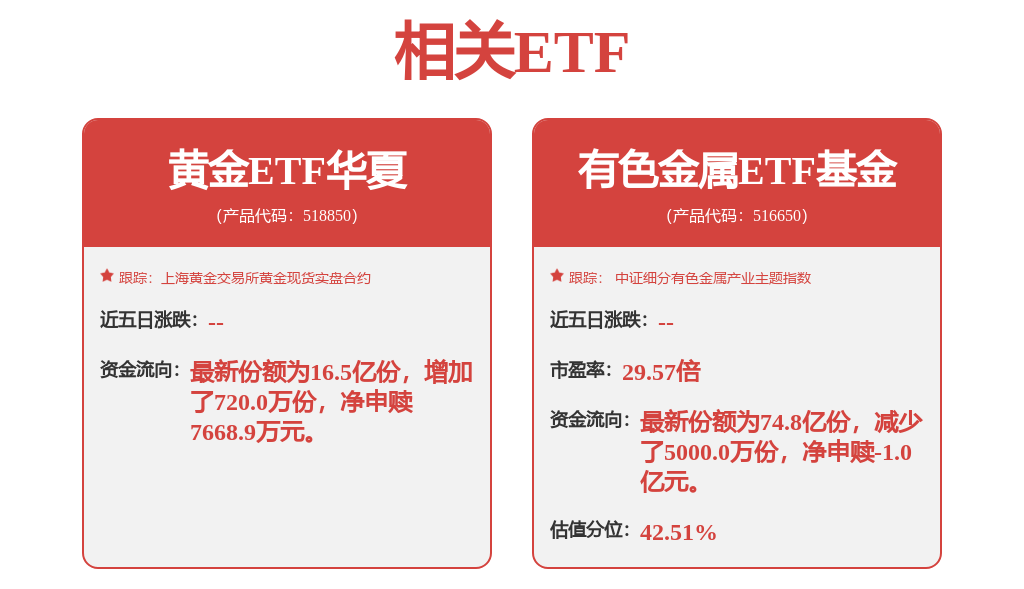
锂业股盘中走强 赣锋锂业涨超8% 瑞银大幅上调国内锂价预测
Zhi Tong Cai Jing· 2026-02-24 01:05
Core Viewpoint - The article highlights a bullish outlook on the lithium industry, particularly in China, driven by increased demand from electric vehicles and energy storage, marking the onset of a third lithium price supercycle [1] Group 1: Market Performance - Lithium stocks have shown strong performance, with Ganfeng Lithium rising by 8.56% to HKD 66.5 and Tianqi Lithium increasing by 3.17% to HKD 45.5 [1] Group 2: Price Forecasts - UBS has significantly raised its price forecasts for spodumene and lithium carbonate, indicating a positive market trend [1] - The firm believes that the demand for lithium will continue to grow due to the gradual realization of the "triple balance" in electric vehicles and a global surge in energy storage needs [1] Group 3: Company Projections - Ganfeng Lithium is expected to achieve a net profit between RMB 1.1 billion and RMB 1.65 billion for the fiscal year 2025, reflecting a recovery in the lithium battery supply chain [1] - The industry is anticipated to maintain high lithium prices until mining permits are obtained for the Jiangxi lithium mine, with profitability expected to rebound by 2026 [1]


外资巨头上调锂价预测,这3家龙头企业被重点提及(名单)
Mei Ri Jing Ji Xin Wen· 2026-02-23 00:50
Group 1 - UBS has significantly raised its price forecasts for lithium spodumene and lithium carbonate, predicting a price of $3,131 per ton for spodumene (up 74%) and $26,000 per ton for lithium carbonate, indicating a strong bullish outlook for the lithium market [3] - The report highlights that the global lithium demand is expected to double to 3.4 million tons by 2030, driven by the electric vehicle (EV) market and battery energy storage systems (BESS) [3][6] - UBS emphasizes that the lithium industry is entering its third major pricing cycle, supported by strong structural demand and delayed supply responses [6] Group 2 - The report identifies three leading Chinese lithium companies: Tianqi Lithium, Ganfeng Lithium, and China Salt Lake, and has raised their performance expectations [10] - Tianqi Lithium is characterized as a "resource-dominant" company, leveraging its control over high-quality lithium resources to maintain profitability [10][11] - Ganfeng Lithium is noted for its "full industry chain synergy," covering lithium extraction, processing, battery manufacturing, and recycling, which positions it well for future growth [10][11] Group 3 - The report indicates that the cost of a single battery has decreased to $55 per kWh, nearly a 50% reduction since 2020, with manufacturing costs continuing to decline at about 10% annually [2] - UBS forecasts that by 2030, Chinese automakers could capture approximately 35% of the global EV market share due to lower battery costs [2] - The demand for energy storage is expected to escalate globally, with projections indicating that by 2035, energy storage will account for 42% of global lithium demand [6]
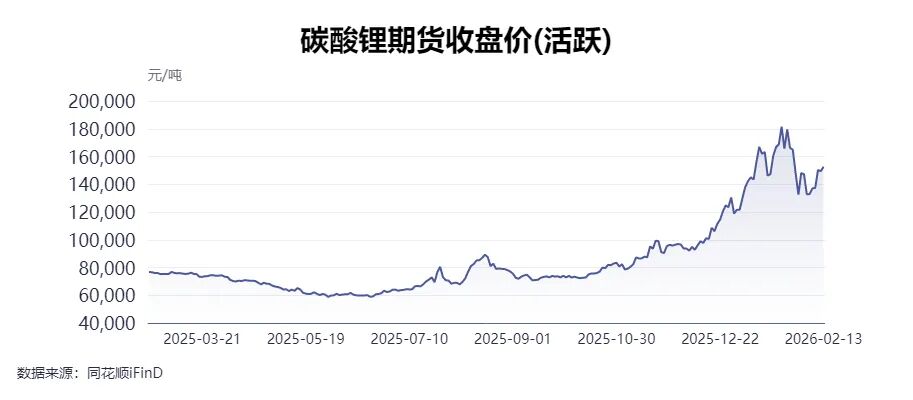
瑞银唱多“中国锂”,上调锂价预测,3家龙头企业被重点提及
Mei Ri Jing Ji Xin Wen· 2026-02-22 13:12
Group 1 - UBS has significantly raised its price forecasts for lithium spodumene to $3,131 per ton (up 74%) and lithium carbonate to $26,000 per ton, indicating a bullish outlook on the lithium market and suggesting that the market has entered a third lithium price supercycle [4][7] - The report highlights that the demand for lithium is expected to double to 3.4 million tons by 2030, driven by the growth in electric vehicles (EVs) and battery energy storage systems (BESS) [4][7] - UBS predicts that by 2035, BESS will account for 42% of global lithium demand, reflecting a shift from a focus on the Chinese market to a global explosion in demand [7][10] Group 2 - The analysis indicates that the electric vehicle industry is approaching a "triple balance," where costs, range, and charging times are converging, with battery costs having decreased nearly 50% since 2020 to $55 per kWh [3][4] - UBS expects that the share of Chinese automakers in the global EV market could rise to around 35% by 2030, aided by lower battery costs [3][4] - The report emphasizes three leading Chinese lithium companies: Tianqi Lithium, Ganfeng Lithium, and China Salt Lake, with each representing different market strategies and strengths [11][12] Group 3 - Industry insiders express that UBS's assessment of market supply release capabilities is conservative, with expectations of a significant reduction in high-cost production due to low lithium prices in 2024-2025 [8][10] - The report suggests that the supply growth forecast for lithium has been downgraded from 20% to 10% by 2026, which is significantly lower than the anticipated demand growth [8][10] - The complexity of mining operations and the historical tendency for actual supply to fall short of projections are noted as factors influencing supply estimates [9][10]

瑞银唱多“中国锂”,上调锂价预测,业内称其对储能需求预估偏高
Mei Ri Jing Ji Xin Wen· 2026-02-22 12:57
Group 1 - UBS has a positive outlook on "China Lithium," significantly raising price forecasts for lithium spodumene and lithium carbonate, indicating the market has entered a third lithium price supercycle [1][3] - The report highlights that the demand for lithium will continue to grow due to the gradual realization of the "triple balance" in electric vehicles and the global explosion in energy storage demand [1][2] - UBS predicts that global lithium demand will double to 3.4 million tons by 2030, with energy storage expected to account for 42% of global lithium demand by 2035 [3][7] Group 2 - UBS has raised expectations for three Chinese lithium companies: Tianqi Lithium, Ganfeng Lithium, and China Salt Lake, aligning with a cyclical investment strategy [10] - Tianqi Lithium is characterized as a "resource-dominant" company, leveraging its control over high-quality lithium resources to maintain profitability [10][11] - Ganfeng Lithium is noted for its "full industry chain synergy," covering lithium extraction, processing, battery manufacturing, and recycling [10] - China Salt Lake is recognized for its "cost advantage," focusing on lithium extraction from salt lakes and maintaining low production costs through resource utilization and technological innovation [11]
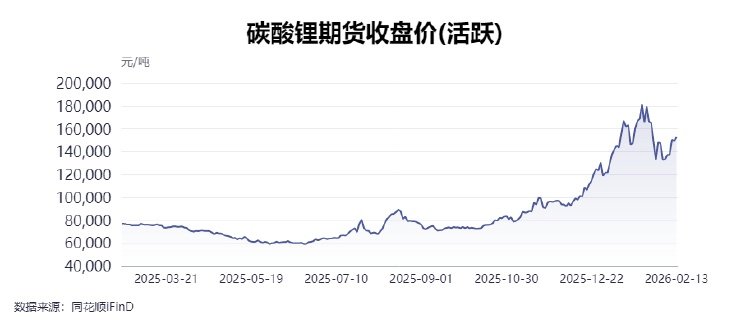
瑞银唱多“中国锂”,上调锂价预测
Mei Ri Jing Ji Xin Wen· 2026-02-22 11:10
Group 1: Market Outlook - UBS has significantly raised its price forecasts for lithium spodumene and lithium carbonate, predicting a price of $3,131 per ton for spodumene (up 74%) and $26,000 per ton for lithium carbonate, which is approximately 185,000 RMB per ton [3] - The report indicates that the global lithium demand is expected to double to 3.4 million tons by 2030, marking the beginning of the third lithium price supercycle [3][6] - UBS believes that the electric vehicle (EV) industry is approaching a "triple balance," where costs, range, and charging times are converging, thus driving demand for lithium [2][6] Group 2: Demand Drivers - The demand for lithium is being driven by the explosive growth in energy storage systems (BESS) and electric vehicles, with UBS projecting that by 2035, energy storage will account for 42% of global lithium demand [6] - The cost of battery production has decreased significantly, with the total cost per kilowatt-hour dropping to $55, nearly a 50% reduction since 2020, and an annual decline of about 10% expected to continue [2][6] Group 3: Company-Specific Insights - UBS has raised expectations for three major Chinese lithium companies: Tianqi Lithium, Ganfeng Lithium, and China Salt Lake, aligning with a cyclical investment strategy [10] - Tianqi Lithium is characterized as a "resource-dominant" company, leveraging its control over high-quality lithium resources to maintain profitability [11] - Ganfeng Lithium is noted for its "full industry chain synergy," covering lithium extraction, processing, battery manufacturing, and recycling [11] - China Salt Lake is recognized for its "cost advantage," focusing on lithium extraction from salt lakes and maintaining low production costs through innovative technology [12]
瑞银唱多“中国锂” 上调锂价预测 业内称其对供给释放判断偏保守、储能需求预估偏高
Mei Ri Jing Ji Xin Wen· 2026-02-22 11:10
Group 1 - UBS has a positive outlook on "China Lithium," significantly raising price forecasts for lithium spodumene and lithium carbonate, indicating the market has entered a third lithium price supercycle [1][3] - The report highlights that the demand for lithium will continue to grow due to the gradual realization of the "triple balance" in electric vehicles and the global explosion in energy storage demand [2][6] - UBS predicts that global lithium demand will double to 3.4 million tons by 2030, with energy storage expected to account for 42% of global lithium demand by 2035 [3][6] Group 2 - UBS has raised expectations for three Chinese lithium companies: Tianqi Lithium, Ganfeng Lithium, and China Salt Lake, aligning with a cyclical investment strategy [10] - Tianqi Lithium is characterized as a "resource-dominant" company, leveraging its control over high-quality lithium resources to maintain profitability [10][11] - Ganfeng Lithium is noted for its "full industry chain synergy," covering lithium extraction, processing, battery manufacturing, and recycling, which enhances its market position [10][11]