精细化运作

Search documents
热门板块进入高波区间 场外产品跟踪指数“受阻”
Zhong Guo Zheng Quan Bao· 2026-02-04 20:29
Core Insights - The A-share commercial aerospace and non-ferrous metals sectors have entered a phase of wide fluctuations, with related index funds experiencing significant tracking errors and volatility [1][3] - Fund managers have taken measures to suspend large subscriptions over 1 million yuan for certain thematic index funds due to the challenges posed by rapid market movements [4][7] Fund Performance and Flows - In January, the Southern CSI Shenwan Non-ferrous Metals ETF saw net inflows exceeding 18 billion yuan, with several other thematic ETFs attracting over 10 billion yuan each [2] - By the end of January, multiple thematic ETFs, including the Southern CSI Non-ferrous Metals ETF and the Guotai CSI Semiconductor Materials and Equipment ETF, surpassed 20 billion yuan in scale [2] Market Volatility and Management Challenges - The recent volatility in popular sectors has led to significant fluctuations in fund net values, with some satellite-themed index funds rising over 8% on January 23, only to drop over 7% by January 26 [3] - Tracking errors for certain index funds have increased, with some exceeding 1% in January, compared to less than 0.5% in the previous month [3][4] Operational Strategies - Fund managers are advised to implement refined operations and disciplined execution to manage tracking errors effectively, especially during periods of high volatility [5][6] - Strategies include phased investments, algorithmic trading, and prioritizing high liquidity core assets to mitigate impact costs [6] Recommendations for Fund Management - It is suggested to adopt a "core + satellite" sampling replication method to ensure high liquidity and weight in core assets while adjusting cash reserves dynamically based on market conditions [6] - Establishing a multi-dimensional prevention and response mechanism is crucial for managing fund flows and tracking accuracy [6]
500亿“天花板”已破,什么才是公募顶流的新护城河?
Di Yi Cai Jing· 2026-01-28 12:29
Group 1 - The core narrative of the article highlights a significant shift in the public fund industry, moving from a "star-making" era to a focus on performance and rationality, with a decline in the influence of celebrity fund managers [1][7] - The scale of top fund managers has generally decreased, with the industry ceiling now below 500 billion yuan, indicating a transition towards sustainable returns rather than mere fame [2][4] - The number of fund managers managing over 100 billion yuan has decreased to 102, reflecting a reduction in the concentration of top-tier managers [2][4] Group 2 - Performance has become the primary driver of fund scale changes, with many emerging fund managers achieving rapid growth due to superior returns [5][6] - The fund issuance market has shown signs of recovery, with new products performing well, contributing to the rise of several fund managers into the 100 billion yuan club [6][8] - The industry is undergoing a transformation towards a performance-driven model, moving away from the previous scale-oriented approach, with a focus on team empowerment and sustainable returns [7][8]
奶茶店,够了|商业头条No.103
Xin Lang Cai Jing· 2025-12-18 11:10
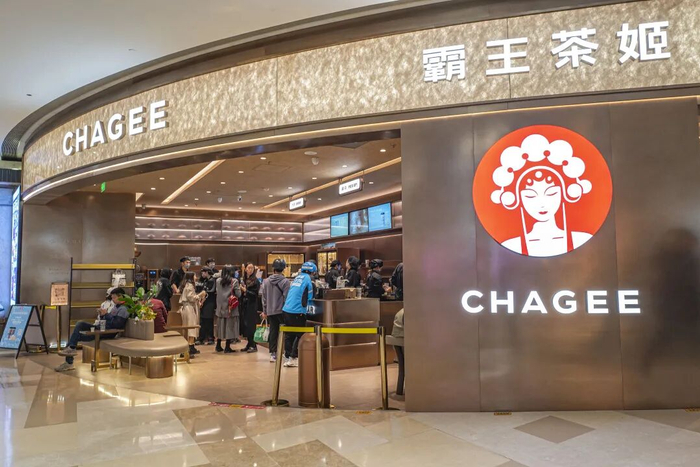
Core Insights - The tea beverage industry in China is experiencing a significant slowdown after a period of rapid expansion, with many brands facing challenges in maintaining profitability and growth [1][3][25]. Group 1: Industry Overview - The tea beverage market has seen a surge in the number of businesses, with over 1.1 million companies expected by 2025, and a total of 131,000 stores for 30 representative brands as of September [6]. - The growth rate of new store openings has drastically decreased, with major brands like Bawang Chaji seeing a drop from 20%-49% to single digits [3][6]. - The overall market size is projected to reach 350 billion yuan by 2024, but the growth rate has slowed from over 20% pre-pandemic to 6.4% [6]. Group 2: Brand Performance - Bawang Chaji's new store openings have significantly declined, with only 228, 318, and 246 new stores in the first three quarters of the year, compared to previous years' openings of 600-800 [3]. - Other brands like Tea Baidao and Heytea are also experiencing reduced growth, with Tea Baidao's store count increasing by only 0.7% year-on-year [6]. - Bawang Chaji reported a 9.4% decline in net revenue and a 22.3% drop in adjusted net profit in Q3 [25]. Group 3: Franchisee Challenges - Franchisees are struggling with declining profit margins, with some reporting net profit rates dropping by over 50% [3][20]. - High rental costs and increased competition are making it difficult for franchisees to maintain profitability, with many unable to find suitable locations for new stores [8][11]. - The introduction of new tax regulations has further increased the financial burden on franchisees, as reported revenues are now based on pre-discount prices [29]. Group 4: Market Dynamics - The saturation of the market has led to a decrease in consumer interest, with many opting for lower-priced alternatives [20]. - Brands are facing innovation fatigue, with a lack of new product offerings leading to consumer disengagement [12][18]. - The competitive landscape has intensified, with many brands launching similar products, making it hard for consumers to differentiate between them [19][20]. Group 5: Strategic Responses - In response to these challenges, brands are focusing on optimizing supply chains and product differentiation to improve profitability [31]. - Bawang Chaji is implementing a new joint venture model to reduce costs for franchisees, aiming to increase their gross margins [32]. - Brands are also looking to expand internationally, with Bawang Chaji and Heytea seeing significant growth in overseas markets [33][37].

波司登(3998.HK):FY25暖冬下韧性增长 FY26强化羽绒服品类竞争优势
Ge Long Hui· 2025-07-02 19:10
Core Viewpoint - For FY25, the company expects revenue and net profit attributable to shareholders to grow by 11.6% and 14.3% year-on-year, respectively, with the down jacket business showing resilience despite a warm winter challenge [1][2] Revenue and Profit Summary - FY25 revenue reached 25.9 billion yuan, an increase of 11.6%, with operating profit at 4.967 billion yuan (+12.9%) and net profit at 3.514 billion yuan (+14.3%) [1] - The company declared a final dividend of 0.22 HKD per share, alongside an interim dividend of 0.06 HKD, resulting in a cash dividend payout ratio of 84% [1] Business Segment Performance - The brand down jacket business accounted for 83.7% of FY25 revenue, generating 21.67 billion yuan (+11.0%), with H1 and H2 revenues of 6.06 billion yuan (+22.7%) and 15.01 billion yuan (+7.0%), respectively [2] - By brand, FY25 revenue for Bosideng, Xuezhongfei, and Bingjie was 18.48 billion yuan (+10.1%), 2.21 billion yuan (+9.2%), and 0.13 billion yuan (-12.9%) [2] - The company’s direct sales and wholesale revenue for down jackets were 15.09 billion yuan (+5.2%) and 5.72 billion yuan (+24.3%), respectively [2] OEM and Other Business Insights - The OEM business grew significantly, with revenue of 3.37 billion yuan (+26.4%), while the high-end women's wear segment faced a decline, generating 0.65 billion yuan (-20.6%) [3] - The company experienced a goodwill impairment of 170 million yuan in the women's wear segment [3] Profitability and Efficiency - The overall gross margin for FY25 was 57.3%, down 2.3 percentage points, primarily due to declines in the gross margins of the brand down jackets and women's wear [3] - The operating profit margin for the down jacket business was 23.0%, an increase of 0.7 percentage points, aided by effective cost control [3] - The company’s operating profit margin for FY25 was 19.2% (+0.2 percentage points), with a net profit margin of 13.6% (+0.3 percentage points) [3] Inventory and Future Outlook - As of FY25, the company’s inventory stood at 3.95 billion yuan (+23.6%), with an inventory turnover period of 118 days (+3 days) [4] - For FY26, the main brand will focus on down jacket categories and enhance competitive advantages, with expectations for steady growth in the OEM business and improvements in the performance of sub-brands [4] - Revenue projections for FY26 to FY28 are 28.53 billion yuan, 31.22 billion yuan, and 34.08 billion yuan, with corresponding net profits of 3.92 billion yuan, 4.34 billion yuan, and 4.80 billion yuan [4]