美元流动性紧张

Search documents
美元流动性紧张局面的成因与展望
Xin Lang Cai Jing· 2025-12-10 05:56
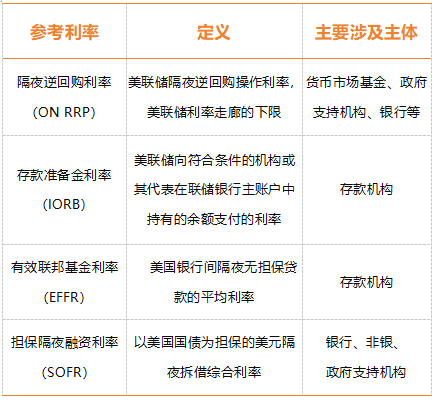
Core Viewpoint - Since 2025, the liquidity in the US money market has shifted from relative abundance to a phase of tightness, influenced by the Federal Reserve's quantitative tightening (QT) policy and US fiscal factors. However, factors causing dollar liquidity tightness are showing signs of improvement moving forward [1][18]. Group 1: Current State of Dollar Liquidity - The US money market liquidity has been tightening since 2025, primarily reflected in increased volatility and marginally higher financing costs in the repurchase (repo) market [2][20]. - The secured overnight financing rate (SOFR) has consistently exceeded the effective federal funds rate (EFFR) since September, indicating liquidity pressure in the repo market [2][21]. - The SOFR-EFFR spread reached 36 basis points (BP) on October 31, the highest since October 1, 2019, and has shown signs of remaining elevated, with an average of 9 BP as of November 21, compared to just 1 BP in August [2][20]. Group 2: Causes of Liquidity Tightness - The ongoing impact of the Federal Reserve's QT since June 2022 has transitioned from a quantitative to a qualitative effect, leading to a significant reduction in liquidity [6][27]. - The US Treasury General Account (TGA) balance has fluctuated significantly, with a notable decrease from $818 billion in February to around $3 billion, contributing to liquidity withdrawal from the market [8][26]. - The usage of the Standing Repo Facility (SRF) has surged, with daily averages of $11.5 billion and $6.5 billion during two periods of heightened market tension in 2025, indicating increased reliance on this tool amid tightening conditions [4][22]. Group 3: Implications and Future Outlook - The tightening of dollar liquidity is expected to impact financial markets, with potential adjustments in asset prices across equities, bonds, and cryptocurrencies due to rising financing costs [12][31]. - The Federal Reserve's recent decision to halt QT and the resumption of normal fiscal spending are expected to alleviate liquidity pressures in the near term [15][33]. - Future measures may include enhancing the effectiveness of the SRF and potentially resuming asset purchases to stabilize liquidity conditions, with indications that the Fed is closely monitoring the evolving liquidity landscape [16][34].

贵金属逐步企稳,或继续构筑震荡平台
Guo Mao Qi Huo· 2025-11-10 07:19
Group 1: Report Summary - Report title: "Precious Metals Weekly Report (AU, AG): Precious metals gradually stabilize and may continue to build a volatile platform" [1] - Report date: November 10, 2025 - Core view: In the short term, precious metal prices are expected to remain range - bound, but there is still upward potential in the long term. The underlying logic of the precious metals bull market remains solid. It is recommended to focus on long - term allocation by buying on dips [5] Group 2: Market and Influencing Factors - Market performance last week: Precious metals generally stabilized and built a volatile platform. In the first half of the week, the precious metal prices were affected by the rising US dollar index and the Fed's cautious attitude towards a December rate cut. Later, the prices rebounded due to increased market uncertainty and the alleviation of US dollar liquidity tensions [3] - Key influencing factors: The US dollar index breaking through 100, the Fed's attitude towards a December rate cut, the US employment market situation, consumer confidence, the US government shutdown, and the potential impact of Trump's tariff rulings [3][5] Group 3: Data Tracking Gold - related data - London spot gold: $4000.289/ounce, down $2.401 (- 0.06%) from the previous period [4] - Shanghai gold futures: 921.26 yuan/gram, down 0.66 yuan (- 0.07%) from the previous period [4] - Gold SPDR - ETF holdings: 1042.06 tons, up 2.86 tons (0.28%) from the previous period [4] Silver - related data - London spot silver: $48.3260/ounce, down $0.3302 (- 0.68%) from the previous period [4] - Shanghai silver futures: 11484 yuan/kg, up 43 yuan (0.38%) from the previous period [4] - Silver SLV - ETF holdings: 15089 tons, down 101 tons (- 0.67%) from the previous period [4] Group 4: Outlook and Strategy - Short - term outlook: Precious metal prices are expected to remain range - bound. It is recommended to pay attention to the progress of the US government shutdown and Trump's tariff rulings [5] - Long - term outlook: The precious metals bull market's underlying logic remains solid. The continuous rise in the US federal government debt, the Fed's rate - cut cycle, complex global geopolitical situations, and continued central bank gold purchases will support the upward movement of the gold price center [5] - Strategy: It is recommended to focus on long - term allocation by buying on dips [5] Group 5: Central Bank Gold Purchases - China's central bank: Increased gold reserves for the 12th consecutive month. As of the end of October, China's gold reserves were reported at 74.09 million ounces (about 2304.457 tons), a month - on - month increase of 30,000 ounces (about 0.93 tons) [89] - Global central banks: Net gold purchases of about 633.6 tons in the first three quarters of 2025, a year - on - year decrease of about 12.1%. The third - quarter purchases increased by 27.85% quarter - on - quarter to 219.9 tons [89]
午后大反攻!原因找到了?
Sou Hu Cai Jing· 2025-11-05 08:57
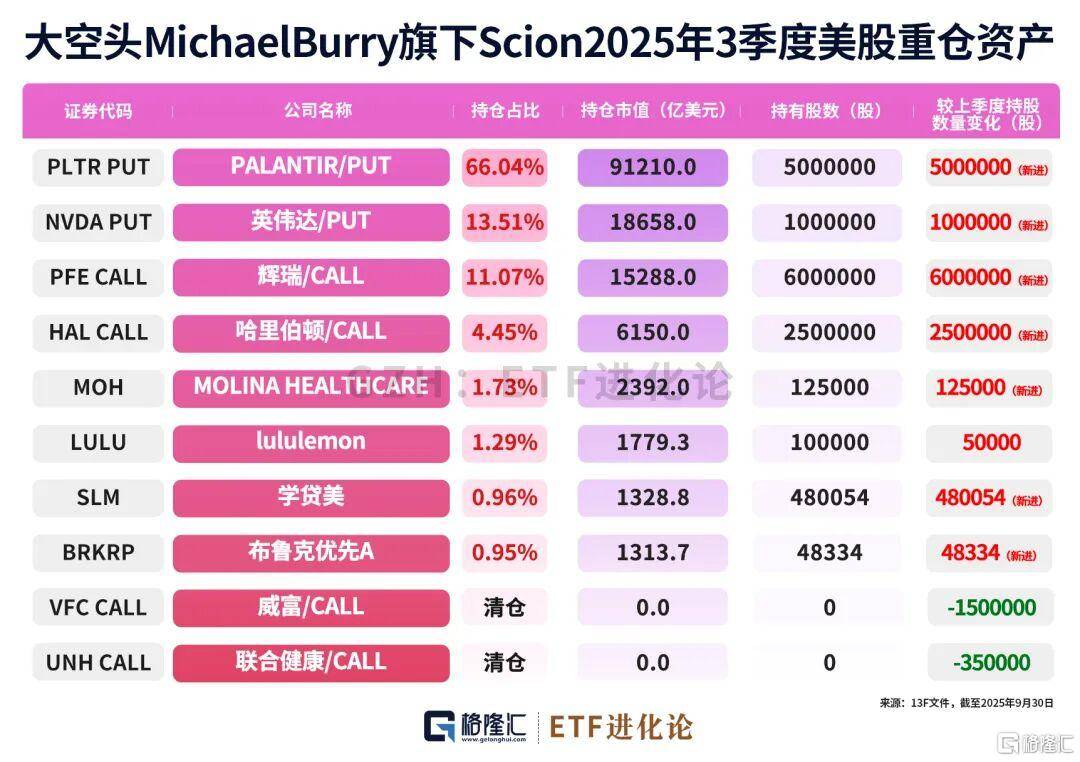
Market Overview - Bitcoin's sharp decline on Monday triggered a "Black Tuesday" in US stocks, impacting the Asia-Pacific markets, with Japan and South Korea experiencing a drop of 4% at one point [1] - However, A-shares staged a strong rebound in the afternoon, led by energy storage and new energy sectors, with significant gains in electric power and grid stocks, as well as solar and lithium battery concepts [1] Key Drivers - The primary catalyst for the global market turmoil is believed to be "tight US dollar liquidity" combined with high valuations in tech stocks, exacerbated by a major short seller targeting Palantir and Nvidia [1] - As signs of a resolution to the US government shutdown emerged, along with a rebound in Japanese and South Korean markets, domestic liquidity easing and relatively low valuation levels contributed to the afternoon surge in Hong Kong and A-shares [1] Short Selling Activity - Notable short seller Michael Burry's Scion Asset Management disclosed a significant position, with 80% of its portfolio in put options for Palantir and Nvidia, indicating a bearish outlook on these tech stocks [2][3] - Burry's commentary suggests a belief that the market has overestimated short-term demand for AI, leading to bubble-level capital investments, while the underlying growth engine is slowing [12] A-Share Market Performance - A-shares saw a volume-reduced rebound, with all three major indices turning positive in the afternoon; the Shanghai Composite Index rose by 0.23% and the ChiNext Index increased by 1.03% [14] - The energy storage and new energy sectors led the gains, with data from the National Energy Administration indicating that China's new energy storage capacity exceeded 100 million kilowatts, ranking first globally [14] ETF Inflows - Significant inflows were observed in various ETFs, with the top three being A500 ETF (7.89 billion), Hang Seng Technology ETF (4.28 billion), and Electric Grid Equipment ETF (4.05 billion) [16] - The overall estimated net inflow into the Shenzhen market ETFs reached 50.4 billion [14] Liquidity Concerns - Recent data indicated a surge in the Federal Reserve's overnight repurchase agreements, reaching 29.4 billion, and the usage of the Standing Repo Facility (SRF) peaked at 50.35 billion, raising concerns about liquidity [18][19] - The ongoing US government shutdown has been identified as a key factor contributing to the liquidity crunch, with expectations of a resolution potentially alleviating these concerns [24]