常备回购便利(SRF)

Search documents
特朗普提名美联储主席人选沃什拟大幅缩表 称每缩1万亿等效50基点降息 瑞穗警示或适得其反:美联储资产负债表已从8.9万亿降至6.6万亿美元
Sou Hu Cai Jing· 2026-02-04 07:11
Group 1 - The core viewpoint is that Kevin Warsh, the nominee for the Federal Reserve Chair by Trump, plans to significantly reduce the Fed's large balance sheet, suggesting that a reduction of approximately $1 trillion equates to a 50 basis point rate cut, which could optimize liquidity structure and create more flexible policy space for future monetary adjustments [1] - Mizuho Securities issued a warning that this balance sheet reduction plan may backfire, as the current reserve levels are nearly at their limit, which is essential for the orderly functioning of the federal funds market [1] - Historically, the U.S. has maintained financial market stability through an ample reserves framework, with the Fed holding a large amount of U.S. Treasuries to ensure sufficient liquidity in the banking system; reducing the balance sheet could lead to reserve scarcity, potentially causing overdrafts in bank accounts and increased overnight borrowing demand, amplifying market volatility and weakening the Fed's control over short-term interest rate targets [1] Group 2 - Konstantin proposed that if the balance sheet reduction continues, the optimal path would be to reference the proposal by Dallas Fed President Logan from September last year, linking the overnight repurchase agreements backed by Treasuries to a core short-term benchmark, replacing the current federal funds rate [2] - This adjustment would require the Fed to take more proactive measures in daily monetary market operations to hedge against the volatility risks brought by the balance sheet reduction, while also encouraging eligible counterparties to increase the frequency of using the Standing Repo Facility (SRF) [2] - Despite banks generally having concerns about borrowing directly from the central bank, the normalization of SRF usage could become an effective tool for balance sheet reduction and encourage banks to hold more Treasuries, thereby reducing financing risks [2]
如何理解美联储重启扩表?
一瑜中的· 2025-12-13 14:55
Core Viewpoint - The Federal Reserve announced the initiation of the Reserve Management Purchases (RMP) tool starting December 12, with a plan to purchase $40 billion of short-term Treasury securities in the first month, maintaining a high level of purchases in subsequent months. This RMP is expected to inject approximately $150 billion in reserves into the market, lasting until Q2 2026, primarily focusing on ultra-short-term Treasury securities [2][5][25]. Group 1: Actions by the Federal Reserve - The RMP is a significant highlight of the December FOMC meeting, aimed at maintaining adequate reserve levels and addressing seasonal fluctuations in the Treasury General Account (TGA) [5][6]. - The RMP will primarily purchase short-term Treasury securities, with 75% of purchases targeting securities with maturities of 1-4 months [25][26]. - The RMP is expected to last at least until Q2 2026, with a target reserve balance of around $3 trillion, requiring an injection of approximately $150 billion in reserves [6][28]. Group 2: Economic Implications of RMP - The RMP is expected to improve short-term liquidity, benefiting the stock market by facilitating "loose trading" conditions. However, it is not equivalent to quantitative easing (QE) and may have limited effects on long-term interest rates and financing costs for the real economy [7][35]. - The RMP's operational scale is designed to counteract seasonal liquidity pressures, particularly during tax payment periods, which can tighten market liquidity [6][29]. Group 3: Current Liquidity Conditions - The current reserve levels are slightly below the reasonable range, with the reserve balance to nominal GDP ratio at 9.5% and the reserve balance to total bank assets ratio at 11.8% [8][45]. - Maintaining adequate reserve levels is crucial for the effective implementation of the Federal Reserve's "floor system" monetary policy framework, which relies on sufficient reserves to control market interest rates [9][51]. - The liquidity conditions are tighter than desired, but the situation is better than during the previous QT phase, reducing the risk of a liquidity crisis [41][60].


如何理解美联储重启扩表?
Huachuang Securities· 2025-12-12 04:28
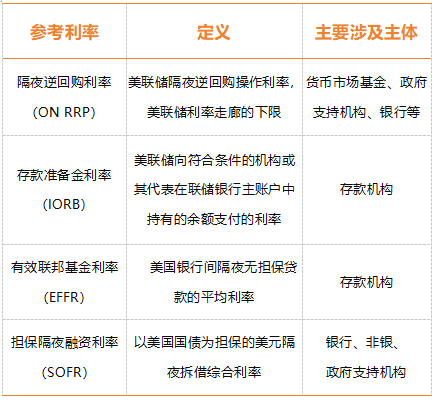
Group 1: Federal Reserve Actions - The Federal Reserve announced the restart of the Reserve Management Purchases (RMP) tool, starting December 12, with an initial plan to purchase $40 billion in short-term Treasury securities in the first month[2] - The RMP is expected to inject approximately $150 billion in reserves into the market, continuing until Q2 2026[4] - The purchase structure will focus on ultra-short-term Treasury securities, with 75% of purchases planned for maturities of 1-4 months[4] Group 2: Economic Implications - The RMP aims to improve short-term liquidity, benefiting the U.S. stock market's "loose trading" environment[5] - However, RMP is not equivalent to quantitative easing (QE) and is expected to have limited effects on long-term interest rates and the cost of financing for the real economy[5] - The RMP's operational scale may need to be adjusted based on seasonal fluctuations in the Treasury General Account (TGA) and overall liquidity demands[4] Group 3: Current Liquidity Conditions - The current reserve levels are slightly below the reasonable range, with reserves to nominal GDP ratio at 9.5% and reserves to total bank assets at 11.8%[7] - The reasonable reserve balance is estimated to be around $3 trillion, indicating a need for the RMP to maintain adequate liquidity levels[22] - Compared to the end of QT-1, the current reserve levels are more ample, as they were 6.4% and 7.9% respectively at that time[7] Group 4: Market Indicators - The effective federal funds rate (EFFR) and the secured overnight financing rate (SOFR) have shown signs of liquidity tightening, with SOFR recently exceeding the interest on excess reserves (IOER) for consecutive weeks[8] - The EFFR-IOER spread has been narrowing, indicating a potential liquidity shortage in the banking system, although the situation is better than in 2019[9]
美元流动性紧张局面的成因与展望
Xin Lang Cai Jing· 2025-12-10 05:56
Core Viewpoint - Since 2025, the liquidity in the US money market has shifted from relative abundance to a phase of tightness, influenced by the Federal Reserve's quantitative tightening (QT) policy and US fiscal factors. However, factors causing dollar liquidity tightness are showing signs of improvement moving forward [1][18]. Group 1: Current State of Dollar Liquidity - The US money market liquidity has been tightening since 2025, primarily reflected in increased volatility and marginally higher financing costs in the repurchase (repo) market [2][20]. - The secured overnight financing rate (SOFR) has consistently exceeded the effective federal funds rate (EFFR) since September, indicating liquidity pressure in the repo market [2][21]. - The SOFR-EFFR spread reached 36 basis points (BP) on October 31, the highest since October 1, 2019, and has shown signs of remaining elevated, with an average of 9 BP as of November 21, compared to just 1 BP in August [2][20]. Group 2: Causes of Liquidity Tightness - The ongoing impact of the Federal Reserve's QT since June 2022 has transitioned from a quantitative to a qualitative effect, leading to a significant reduction in liquidity [6][27]. - The US Treasury General Account (TGA) balance has fluctuated significantly, with a notable decrease from $818 billion in February to around $3 billion, contributing to liquidity withdrawal from the market [8][26]. - The usage of the Standing Repo Facility (SRF) has surged, with daily averages of $11.5 billion and $6.5 billion during two periods of heightened market tension in 2025, indicating increased reliance on this tool amid tightening conditions [4][22]. Group 3: Implications and Future Outlook - The tightening of dollar liquidity is expected to impact financial markets, with potential adjustments in asset prices across equities, bonds, and cryptocurrencies due to rising financing costs [12][31]. - The Federal Reserve's recent decision to halt QT and the resumption of normal fiscal spending are expected to alleviate liquidity pressures in the near term [15][33]. - Future measures may include enhancing the effectiveness of the SRF and potentially resuming asset purchases to stabilize liquidity conditions, with indications that the Fed is closely monitoring the evolving liquidity landscape [16][34].
华尔街严阵以待年底“钱荒”,美联储本周或暗示重启“印钞”?
Jin Shi Shu Ju· 2025-12-09 15:04
Core Viewpoint - Wall Street banks are preparing to address rising pressures in the money market as the year-end approaches, which may prompt the Federal Reserve to consider measures to rebuild liquidity buffers in a $12.6 trillion market [2] Group 1: Federal Reserve Actions - The Federal Reserve will hold a meeting this week, marking its first since halting the reduction of its balance sheet, with indications that bank reserves are no longer ample [2] - Analysts suggest that the Fed may need to take specific actions to alleviate market tensions, such as resuming direct purchases of securities to replenish reserves [2] - Fed Chair Jerome Powell may provide clues about the next steps following the monetary policy meeting, with expectations that he will indicate a closer watch on front-end rates and the necessity to increase reserves [2][3] Group 2: Market Conditions - The overnight general collateral repo rate is trading around 4.25%, which is 60 basis points higher than the Fed's interest on reserves balance rate, assuming a 25 basis point rate cut is made [2] - The increase in Treasury issuance since summer has drained cash from the short-term market, leading to reduced funds in the banking system and higher rates [3] - The current level of reserves stands at $2.88 trillion, with differing opinions among Wall Street strategists on when the Fed will need to begin reserve management purchases [3] Group 3: Liquidity Support Tools - The usage of the Standing Repo Facility (SRF) reached a record $50.4 billion, indicating difficulties in finding counterparties for cash lending [3][4] - Despite the rise in SRF usage, a series of repo rates still exceed the rates offered by this tool, suggesting ongoing liquidity challenges [4] - Strategists from Bank of America and JPMorgan see this as a sign that the Fed may need to provide short-term liquidity to ease year-end constraints [5] Group 4: Market Operations - JPMorgan's short-term interest rate strategist suggested that the Fed could conduct regular temporary open market operations to address year-end balance sheet demands [5] - The benefits of regular repos include certainty in financing and the ability to lock in year-end funds, which can provide additional confidence to market participants [6]
BBMarkets:缩表刚停、利率再飙,美联储离重启QE还有多远?
Sou Hu Cai Jing· 2025-11-14 07:01
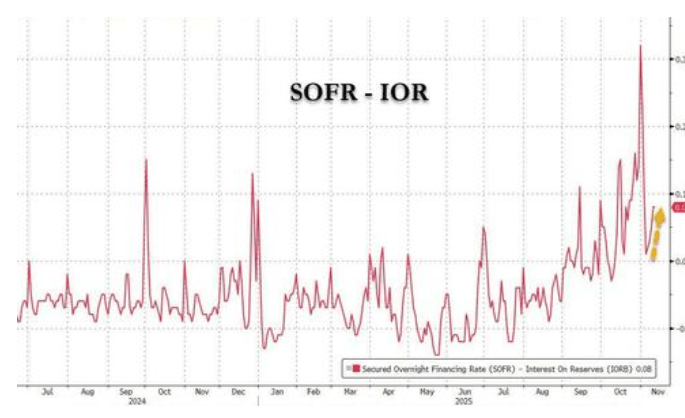
Core Viewpoint - The U.S. money market is signaling liquidity concerns again, with the Secured Overnight Financing Rate (SOFR) rising and the gap between SOFR and the Interest on Reserves (IOR) widening to 8 basis points, indicating a shift from ample to scarce reserves in the banking system [2][3] Group 1: Liquidity Signals - The three-party repo rate has also risen above the IOR by 0.8 basis points, suggesting a tightening liquidity environment [2] - As of early November, the Federal Reserve's reserve balance was approximately $3.1 trillion, significantly lower than the pandemic peak of $4.3 trillion [3] - Historical patterns indicate that when the Effective Federal Funds Rate (EFFR) approaches or exceeds the IOR, the Fed typically slows or halts balance sheet reduction [3] Group 2: Market Reactions - Market participants are already pricing in expectations for balance sheet expansion, with predictions that the Fed may announce Reserve Management Purchases as early as December, injecting $750 billion to $1 trillion monthly into the system [5] - The Treasury's plan to increase the General Account (TGA) balance from $75 billion to $850 billion by year-end will likely withdraw equivalent reserves from the system [5] - Regulatory pressures, particularly the Supplementary Leverage Ratio (SLR) year-end checks, are causing large banks to reduce their balance sheets, further tightening liquidity [5] Group 3: Federal Reserve's Stance - Federal Reserve officials have shown a subtle shift in tone, acknowledging that reserves are nearing the lower end of the ample range, with a growing likelihood of policy adjustments if necessary [6] - Futures data indicates a 70% probability of the Fed initiating technical balance sheet expansion in December, up from 30% a month prior [6] - The transition from surplus to scarcity in reserves is expected to be bumpier than anticipated due to regulatory, fiscal, and year-end demand pressures [6]
华尔街陷融资成本分歧:小摩与花旗对SOFR走势各执一词,押注相反交易策略
Zhi Tong Cai Jing· 2025-09-16 01:32
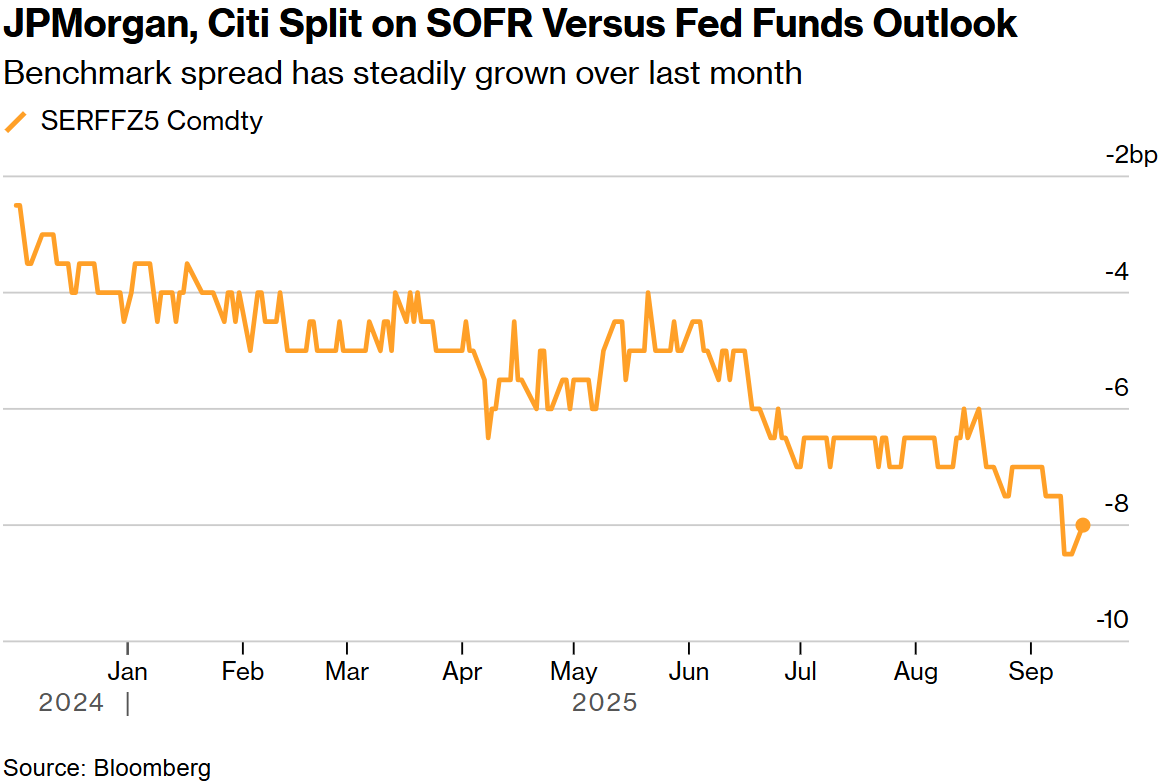
Core Viewpoint - Wall Street strategists are divided on whether the U.S. financing market will become more accommodative in the coming months, primarily due to increased volatility in overnight borrowing costs [1] Group 1: Market Dynamics - A series of events is driving up short-term interest rates, including the U.S. Treasury issuing more short-term bonds to rebuild cash reserves and the Federal Reserve reducing its balance sheet [1] - The use of key overnight lending tools by the central bank has dropped to nearly zero, raising investor concerns about the sharp rise in borrowing costs [1] - The Secured Overnight Financing Rate (SOFR) has been above the Federal Reserve's target rate since late August [1] Group 2: Divergent Views from Major Banks - JPMorgan, led by Teresa Ho, expects overnight rates to ease by year-end and recommends traders to buy December SOFR futures while selling equivalent federal funds futures [3] - JPMorgan anticipates the spread between SOFR (currently at 4.42%) and the 30-day federal funds rate (currently at 4.33%) to narrow by the end of 2025 [3] - Citigroup, led by Jason Williams, believes financing costs will remain high until year-end and suggests traders short December SOFR contracts relative to federal funds [4] Group 3: Future Projections - Citigroup expects SOFR to gradually rise in the coming months, citing guidance from the Treasury regarding increased Treasury bill auction sizes in October [4] - Barclays has exited a position betting on a narrowing spread between September SOFR and federal funds, indicating ongoing upward pressure on financing costs [4] - Morgan Stanley strategists believe market conditions may ease as soon as next month, suggesting a long position on the SOFR relative to federal funds spread for October 2025 [4] Group 4: Consensus on Historical Context - Both JPMorgan and Citigroup agree that the situation from September 2019, when financing costs surged and the Federal Reserve injected hundreds of billions into the financing market, is unlikely to repeat [5]