美国经济不确定性

Search documents
美联储洛根:美国经济中的不确定性仍在持续,最大的不确定性之一来自科技行业
Sou Hu Cai Jing· 2026-02-21 02:14
Group 1 - The core viewpoint is that uncertainty in the U.S. economy persists, particularly influenced by the technology sector [1] - The Federal Reserve maintains a cautiously optimistic stance regarding the economy returning to its inflation target, while acknowledging ongoing inflationary risks [1] - Concerns exist that economic demand may exceed supply, contributing to inflationary pressures [1] Group 2 - The employment market is stabilizing, which supports the Federal Reserve's decision to keep interest rates unchanged in January [1]
美国1月ADP就业人数大幅不及预期
Sou Hu Cai Jing· 2026-02-04 14:17
Group 1 - The core point of the article highlights the disappointing performance of the US ADP employment data for January, which fell to 22,000 from a previous value of 37,000, significantly below the expected 48,000, indicating a struggling job market [2] - The current US economic situation presents a dilemma for the Federal Reserve, as it faces a weak job market while also contending with persistent inflationary pressures [2] - The Federal Funds Rate is currently set between 3.5% and 3.75%, which is not considered low, and poses negative pressure on the real economy, leading to uncertainty regarding sustained positive growth [2] Group 2 - The article suggests that the US economy may not be as strong as it appears, with various uncertainty factors accumulating, which could lead to significant changes when a tipping point is reached [3]

美国9月核心PCE物价指数年率下降
Sou Hu Cai Jing· 2025-12-06 07:40
Group 1 - The core PCE price index in the U.S. for September decreased from 2.9% to 2.8% year-on-year, while the month-on-month rate remained stable at 0.2% [2] - The PCE data supports the Federal Reserve's potential decision to cut interest rates by 25 basis points, which may alleviate financing cost pressures on the U.S. real economy [2] - Consumer confidence index is low, with the personal consumption expenditure month-on-month rate dropping from 0.2% to 0%, below the expected 0.1% [2] Group 2 - The ISM manufacturing PMI has declined for nine consecutive months, remaining below the growth line, indicating ongoing economic challenges [2] - The U.S. economy faces significant uncertainty, which is also reflected in the capital markets, suggesting potential for increased volatility ahead [2] - The previous correction in the U.S. stock market may not be sufficient, indicating a possibility of a deeper downturn in the near future [2]
美国11月ISM制造业PMI继续下降
Sou Hu Cai Jing· 2025-12-02 01:43
Group 1 - The core point of the article highlights that the US manufacturing sector is experiencing a continuous contraction, with the ISM manufacturing PMI declining from 48.7 to 48.2 in November, marking nine consecutive months of decline [2] - The efforts made by the Trump administration to revitalize the manufacturing sector through various policies have not yielded the desired results, as the sector continues to shrink under the impact of tariffs and other policies [2] - Revitalizing the manufacturing sector requires more than just financial investment; it necessitates the cultivation of skilled workers and coordination of supply chains, indicating that deep-rooted social issues in the US pose significant challenges to this goal [2] Group 2 - The downturn in the manufacturing sector reflects broader economic stagnation in the US, characterized by high levels of uncertainty that hinder corporate investment and operations, contributing to increased social unrest [2] - A worsening job market and persistently low consumer confidence indices suggest that if consumer spending, a crucial pillar of the US economy, declines sharply, an overall economic downturn will be inevitable [2] - Even if the Federal Reserve accelerates interest rate cuts, the effectiveness of loose monetary policy in supporting the US economy may be limited, akin to a drop in the bucket [2]
美国人捂紧钱包,商家没底气打折,美版“双十一”这回要遇冷?
Sou Hu Cai Jing· 2025-11-27 13:05
Core Viewpoint - The upcoming holiday shopping season in the U.S. is expected to be subdued due to high tariffs, persistent inflation, and a cooling job market, leading consumers to adopt a "downgrade consumption" approach [3][4][9]. Consumer Behavior - The annual "Black Friday" shopping event is anticipated to see a record 186.9 million shoppers, but sales growth from Black Friday to the end of the year is expected to slow, with sales projected to exceed $1 trillion but grow only by 3.7% to 4.2%, down from 4.8% last year [5][6]. - Consumers are becoming more budget-conscious, with a Deloitte survey indicating a 4% decrease in spending during Black Friday compared to last year, reversing a trend of increasing spending since 2020 [7][8]. - Lower-income consumers (under $50,000) are expected to reduce spending by 12%, while those earning over $200,000 anticipate an 18% decrease [7]. Economic Indicators - The U.S. economy is showing signs of weakness, with the Federal Reserve's Beige Book indicating a decline in overall consumer spending and a slight drop in employment [10][11]. - Retail sales in September rose by only 0.2%, below the expected 0.4%, and consumer confidence dropped to its lowest level since April [10][11]. - Inflation remains a concern, with the Consumer Price Index (CPI) rising 3% year-over-year in September, and expectations of continued high inflation [11]. Market Dynamics - The reduced discounting during the holiday season is attributed to importers bearing most of the tariff costs, which has compressed retail margins and limited promotional space [8][11]. - The uncertainty surrounding U.S. tariff policies and ongoing inflationary pressures are contributing to a lack of consumer confidence, with many feeling financially burdened [11][15]. Future Outlook - The performance of this holiday shopping season could significantly impact economic growth expectations and influence the Federal Reserve's monetary policy decisions, particularly regarding interest rates [14][15]. - Upcoming economic data releases, including GDP figures, will be crucial for assessing the overall economic trajectory [14].

美国9月零售销售月率下降
Sou Hu Cai Jing· 2025-11-25 14:04
Core Insights - The U.S. retail sales for September decreased from a previous value of 0.6% to 0.2%, indicating a downturn in consumer spending, which is a crucial pillar of the U.S. economy [2] - The U.S. Producer Price Index (PPI) year-on-year increased from 2.6% to 2.7%, while the month-on-month PPI rose from -0.1% to 0.3%. This suggests a potential slight rebound in inflation, which could impact future Consumer Price Index (CPI) data [2] - There is significant divergence among Federal Reserve members regarding future monetary policy, leading to uncertainty in the Fed's policy direction [2] - Recent indications suggest that the Federal Reserve is likely to continue with a 25 basis point rate cut in the upcoming December meeting, which could provide some support to the U.S. real economy and benefit the capital markets [2] - The U.S. economy is currently facing substantial uncertainty, exacerbated by various internal and external conflicts, making the Fed's gradual rate cuts insufficient to address the downward pressure on the economy [2] - The potential for "black swan" events adds to the concerns regarding the economic outlook, indicating a less optimistic future for the U.S. economy [2]

美国再现地区银行信贷危机,个别现象还是行业问题?
2 1 Shi Ji Jing Ji Bao Dao· 2025-10-20 11:24
Core Viewpoint - Recent failures of regional banks in the U.S., specifically Zions Bank and West Alliance Bank, have raised concerns about the stability of the banking sector, particularly regarding loan practices and potential fraud [1][2][3] Summary by Sections Bank Failures and Market Reaction - Zions Bank and West Alliance Bank faced significant issues due to alleged fraud by borrowers, leading to a sharp decline in the KBW Regional Banking Index by over 4%, marking its lowest level since August [1][2] - The VIX index, often referred to as the "Wall Street Fear Index," surged over 22% on October 16, indicating heightened market anxiety [1] Specific Cases of Fraud - Zions Bank's legal troubles stem from two real estate mortgage loans totaling $60 million issued to related special purpose investment entities, where fund managers allegedly manipulated loan structures and breached trust [2][3] - The bank has reported a $60 million loss provision due to "obvious false statements and default behaviors" related to these loans [3] Financial Stability of Zions Bank - Despite recent issues, Zions Bank's overall business remains stable, with total assets around $87 billion and a loan and lease portfolio of approximately $60 billion [3] - The bank's securities investment stands at $19 billion, with expectations that losses may decrease if the Federal Reserve lowers interest rates [3] Broader Banking Sector Concerns - The rising operational costs in the banking sector are a significant risk signal, with the S&P Regional Bank Index down 2.16% year-to-date, contrasting with a 13.3% increase in the S&P 500 [4] - Regional banks, which are crucial for community financing, face risks due to concentrated business in real estate loans, making them vulnerable to market downturns [4][6] Market Capitalization and Size of Regional Banks - The total market capitalization of U.S. regional banks is approximately $971.19 billion, with a significant number of institutions varying greatly in size [5][6] - Zions Bank, with a market value of $7.9 billion, exemplifies the challenges faced by smaller banks in the current economic climate [6] Economic and Regulatory Environment - The banking sector is under pressure from high floating losses in securities investments, estimated at nearly $400 billion, which could lead to capital management challenges if interest rates do not decrease [7] - Inflationary pressures and rising debt burdens on households and businesses may lead to increased loan defaults, posing further risks to banks [7][8] Economic Outlook - The current economic situation in the U.S. is uncertain, with potential impacts from government shutdowns and trade policies complicating the economic landscape [8] - Upcoming economic data releases, such as the Consumer Price Index, will be critical in assessing inflationary trends and their effects on the banking sector [8]
僵局持续 美政府本轮“停摆”时间或为史上最长
Jing Ji Guan Cha Wang· 2025-10-14 09:37
Core Viewpoint - The ongoing government shutdown in the United States has reached its 13th day, with warnings that it may become the longest in U.S. history, impacting various sectors and adding uncertainty to an already unstable economy [1] Government Shutdown Impact - The shutdown has caused partial stagnation of federal government functions, affecting travel, education, culture, technology, and defense sectors [1] - The last major government shutdown lasted 35 days from late 2018 to early 2019, marking the longest shutdown to date, primarily due to disputes over the construction of the U.S.-Mexico border wall [1] Political Negotiations - House Speaker Johnson indicated that the Republican Party is willing to negotiate with the Democratic Party on healthcare issues, but only if the latter first compromises to restore government operations [1]
降息25个基点 特朗普满意吗?
Sou Hu Cai Jing· 2025-09-18 17:51
Core Points - The Federal Reserve announced a 25 basis point interest rate cut, marking its first reduction of the year, amidst concerns over slowing job growth and persistent inflation [1][3][4] - The decision to lower rates is seen as a response to multiple economic uncertainties, including the impact of tariffs on prices [3][4] - Observers note that while the rate cut aligns with expectations, it may not alleviate the dissatisfaction expressed by the Trump administration towards the Fed [3][6] Economic Indicators - The U.S. job market is showing signs of weakness, with non-farm payrolls increasing by only 22,000 in August, significantly below market expectations [4] - The inflation rate remains above the Fed's long-term target of 2%, with the Consumer Price Index (CPI) rising by 2.9% year-on-year in August, the largest increase since January [4] - The Fed's median forecast for U.S. GDP growth in 2025 is 1.6%, with an unemployment rate of 4.5% and an inflation rate of 3% [5] Future Projections - The Fed's dot plot indicates a median forecast of a total of 50 basis points in rate cuts over the remaining two policy meetings of the year, with only one anticipated cut in 2026 [3][7] - The probability of another 25 basis point cut in the October meeting has risen to 87.7%, up from 74.3% the previous day [7] - Analysts suggest that while rate cuts may stimulate demand, ongoing issues such as tariffs and immigration policies could continue to negatively impact consumer and business confidence [7]
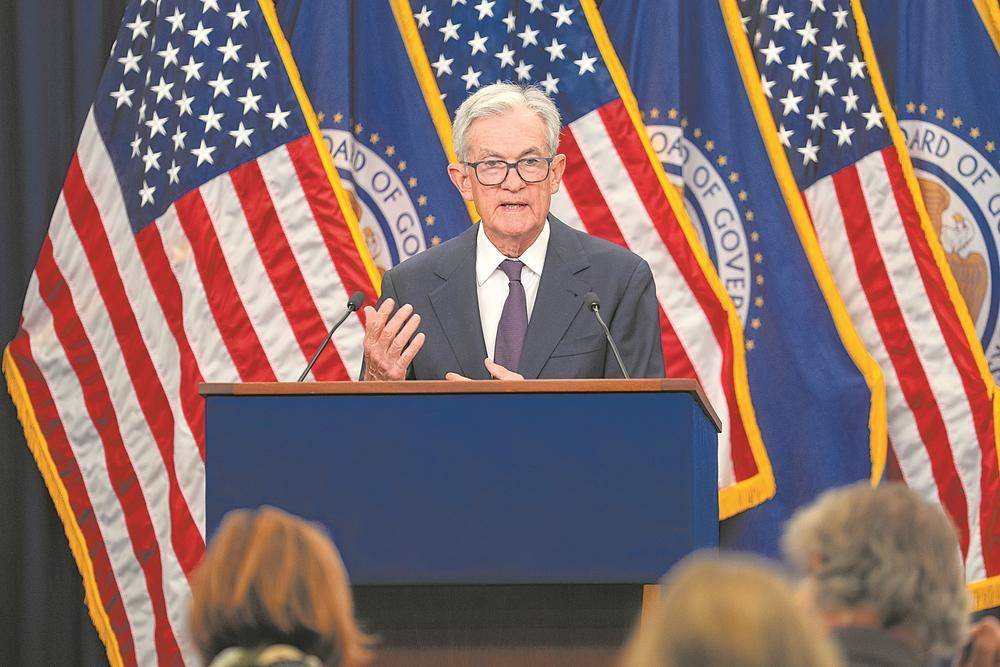
美联储宣布降息 分析人士称美国经济面临多重不确定性
Sou Hu Cai Jing· 2025-09-18 12:23
Core Viewpoint - The Federal Reserve announced a 25 basis point reduction in the federal funds rate target range to between 4.00% and 4.25%, raising questions about its potential impact on the U.S. economy [1] Group 1: Federal Reserve Actions - The Federal Reserve's decision to lower interest rates reflects concerns over employment rather than inflation risks, indicating a focus on the weakening job market [5] - The recent rate cut is seen as insufficient to meet the demands of the Trump administration, which has been pressuring the Fed for more significant reductions [2][4] Group 2: Economic Context - The U.S. economy is facing multiple uncertainties, including slowing job growth and persistent high inflation, with tariffs continuing to impact prices [5] - Analysts suggest that the combination of interest rate cuts and tariffs may complicate the Fed's ability to control inflation [4]