
银行信贷风险

Search documents
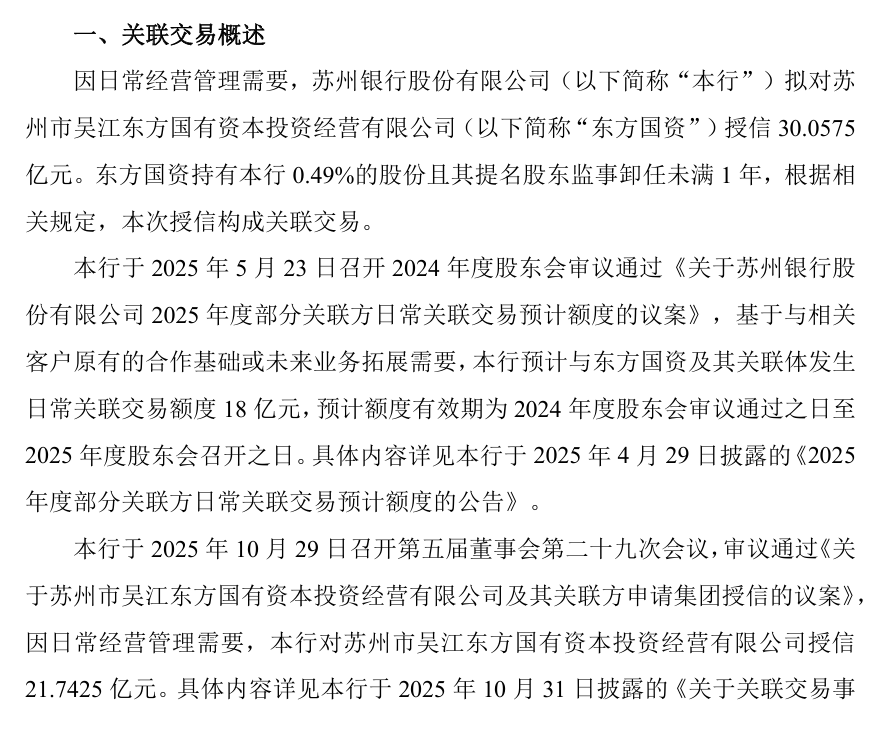
利润跌27%、授信涨67%:苏州银行关联授信30亿
Xin Lang Cai Jing· 2026-02-14 06:00
Group 1 - Suzhou Bank has significantly increased its credit limit to Dongfang Guozi, despite the latter facing a sharp decline in net profit and performance issues [2][3] - The credit extension to Dongfang Guozi is classified as a "related party transaction," as Dongfang Guozi holds 0.5% of Suzhou Bank's shares, raising concerns about the lack of constraints in credit approval processes [2] - The credit limit for Dongfang Guozi has escalated from an initial expected amount of 1.8 billion to 2.17425 billion within six months, and further to 3.01 billion, exceeding the original annual limit by 67% [2][4] Group 2 - Dongfang Guozi's financial performance has deteriorated, with a net profit of 370 million in 2024, a slight decrease from 380 million in 2023, and a further drop to 50 million in the first half of 2025, marking a 27% decline [3][4] - The company's total assets grew to 45.52 billion, but total liabilities increased at a faster rate of 15.91%, leading to heightened financial leverage and pressure [4] - The 3.01 billion credit from Suzhou Bank is nearly three times Dongfang Guozi's annual revenue, indicating a liquidity support rather than a sustainable operational funding [4] Group 3 - Suzhou Bank has faced similar risks in past credit decisions, as evidenced by its recent legal issues with Xuelang Environment, which highlighted potential delays in risk management [5][6] - Xuelang Environment's financial troubles were apparent before Suzhou Bank extended credit, with significant losses reported and a drastic decline in net assets [6] - The bank's overdue loan balance has surged from 2.12 billion at the end of 2023 to 3.45 billion by the end of 2024, indicating a growing concern over asset quality [7][8] Group 4 - Despite maintaining a low non-performing loan ratio of 0.83% and a high provision coverage ratio of 420.59%, underlying asset quality issues are emerging [7][8] - The growth of overdue loans has outpaced the bank's total asset growth, revealing potential challenges in credit asset quality amid macroeconomic adjustments [7][8] - The bank's criteria for classifying non-performing loans have become less stringent, allowing more overdue loans to remain classified as "watch" or "overdue," which may mask underlying risks [8][9]


美国再现地区银行信贷危机,个别现象还是行业问题?
2 1 Shi Ji Jing Ji Bao Dao· 2025-10-20 11:24
Core Viewpoint - Recent failures of regional banks in the U.S., specifically Zions Bank and West Alliance Bank, have raised concerns about the stability of the banking sector, particularly regarding loan practices and potential fraud [1][2][3] Summary by Sections Bank Failures and Market Reaction - Zions Bank and West Alliance Bank faced significant issues due to alleged fraud by borrowers, leading to a sharp decline in the KBW Regional Banking Index by over 4%, marking its lowest level since August [1][2] - The VIX index, often referred to as the "Wall Street Fear Index," surged over 22% on October 16, indicating heightened market anxiety [1] Specific Cases of Fraud - Zions Bank's legal troubles stem from two real estate mortgage loans totaling $60 million issued to related special purpose investment entities, where fund managers allegedly manipulated loan structures and breached trust [2][3] - The bank has reported a $60 million loss provision due to "obvious false statements and default behaviors" related to these loans [3] Financial Stability of Zions Bank - Despite recent issues, Zions Bank's overall business remains stable, with total assets around $87 billion and a loan and lease portfolio of approximately $60 billion [3] - The bank's securities investment stands at $19 billion, with expectations that losses may decrease if the Federal Reserve lowers interest rates [3] Broader Banking Sector Concerns - The rising operational costs in the banking sector are a significant risk signal, with the S&P Regional Bank Index down 2.16% year-to-date, contrasting with a 13.3% increase in the S&P 500 [4] - Regional banks, which are crucial for community financing, face risks due to concentrated business in real estate loans, making them vulnerable to market downturns [4][6] Market Capitalization and Size of Regional Banks - The total market capitalization of U.S. regional banks is approximately $971.19 billion, with a significant number of institutions varying greatly in size [5][6] - Zions Bank, with a market value of $7.9 billion, exemplifies the challenges faced by smaller banks in the current economic climate [6] Economic and Regulatory Environment - The banking sector is under pressure from high floating losses in securities investments, estimated at nearly $400 billion, which could lead to capital management challenges if interest rates do not decrease [7] - Inflationary pressures and rising debt burdens on households and businesses may lead to increased loan defaults, posing further risks to banks [7][8] Economic Outlook - The current economic situation in the U.S. is uncertain, with potential impacts from government shutdowns and trade policies complicating the economic landscape [8] - Upcoming economic data releases, such as the Consumer Price Index, will be critical in assessing inflationary trends and their effects on the banking sector [8]
金价银价突然大跳水 网友急了:我刚买就跌
Mei Ri Jing Ji Xin Wen· 2025-10-18 04:19
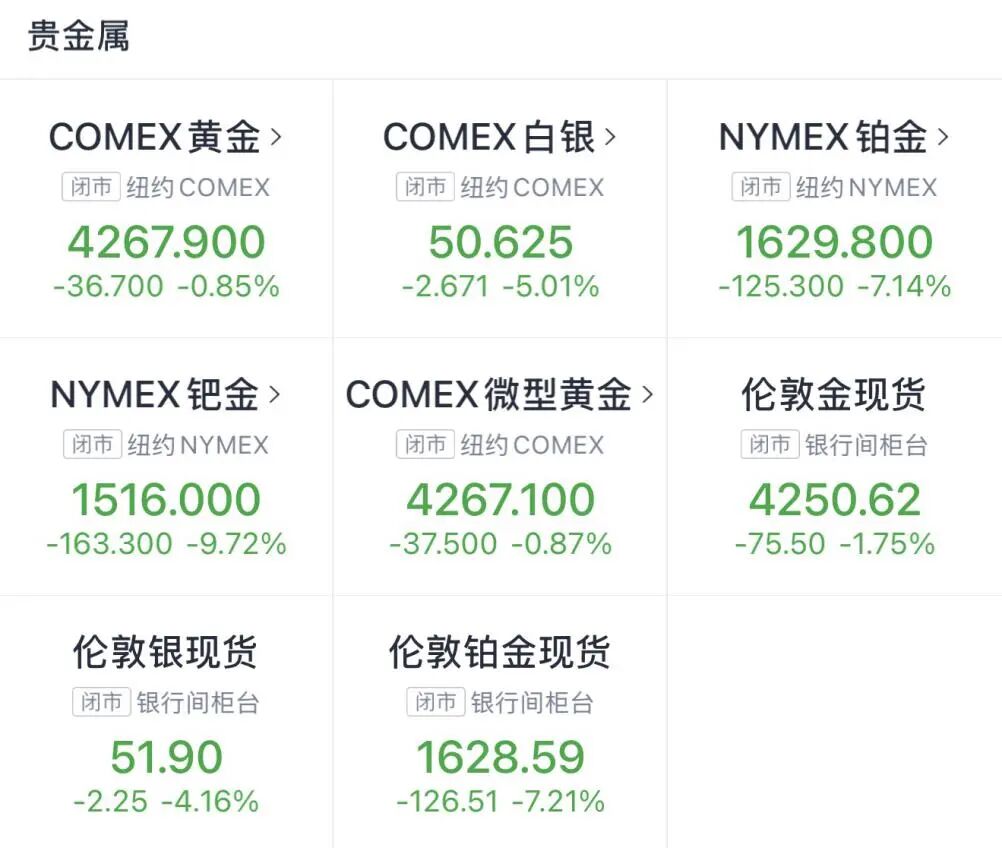
Core Viewpoint - Precious metals futures have continued to decline, with spot silver experiencing its largest drop in six months, while gold prices briefly hit a historical high before plummeting below $4200 per ounce [1][2][3] Group 1: Market Performance - On October 17, spot silver fell over 6%, marking a significant decline, while spot gold reached a high of $4267.90 before closing at $4251.45, down 1.73% [1][2] - COMEX silver futures closed at $50.63 per ounce, down 5.01%, and NYMEX platinum futures dropped over 7%, closing at $1629.80 per ounce [2][3] - NYMEX palladium futures saw a significant decline of over 9%, closing at $1516 per ounce [2][3] Group 2: Influencing Factors - The drop in gold prices was influenced by a series of factors, including a more moderate tone from U.S. President Trump regarding trade issues, which has cooled the market for precious metals [13] - Market assessments of the ongoing Russia-Ukraine conflict and the stabilization of the U.S. dollar index and stock market have also contributed to reduced safe-haven demand [14][16] - Technical indicators showed that gold was in an overbought state, with the relative strength index (RSI) exceeding 88, suggesting potential for price consolidation in the short term [17] Group 3: Consumer Impact - The volatility in gold prices has affected consumers and retailers, with reports of delayed shipments and order cancellations from gold merchants due to fluctuating market prices [19][20] - Consumers have expressed frustration over purchasing gold products only to see prices drop shortly after, leading to complications in order fulfillment [19][20] - The current market conditions have prompted discussions about the complexities of liquidating gold investments, with banks and retailers having different policies regarding buyback and pricing [20][21][22]
金价银价突然大跳水,网友急了:我刚买就跌
Mei Ri Jing Ji Xin Wen· 2025-10-18 04:15
Group 1 - Precious metals futures continued to decline, with spot silver dropping over 6%, marking the largest decline in six months, while spot gold briefly hit a historical high before plunging below $4200 per ounce [1] - As of the market close, spot gold was reported at $4251.45 per ounce, down 1.73%, and COMEX silver futures fell over 5%, closing at $50.63 per ounce [2][3] - NYMEX platinum futures saw a significant drop of over 7%, returning all gains from the previous two trading days, closing at $1629.80 per ounce [6] Group 2 - The sharp drop in gold prices was attributed to several factors, including a more moderate tone from U.S. President Trump regarding trade issues, which has cooled the market for precious metals [14] - Concerns about regional bank credit risks did not escalate, and the stabilization of the dollar index and U.S. stocks dampened safe-haven sentiment [14] - The relative strength index (RSI) for gold reached a peak of 88, indicating an overbought market condition [14] Group 3 - The volatility in gold prices has affected consumer behavior, with reports of delayed shipments and order cancellations from gold retailers due to fluctuating market prices [15][17] - Retailers are facing challenges as they either hold inventory at previous prices or source products post-order, leading to potential losses and order rejections [15][17] - The current environment remains supportive for gold due to expectations of interest rate cuts, geopolitical risks, and ongoing concerns in the banking sector [15]
新动态,大提振!昨夜,A50猛拉!
Zheng Quan Shi Bao· 2025-10-18 01:13
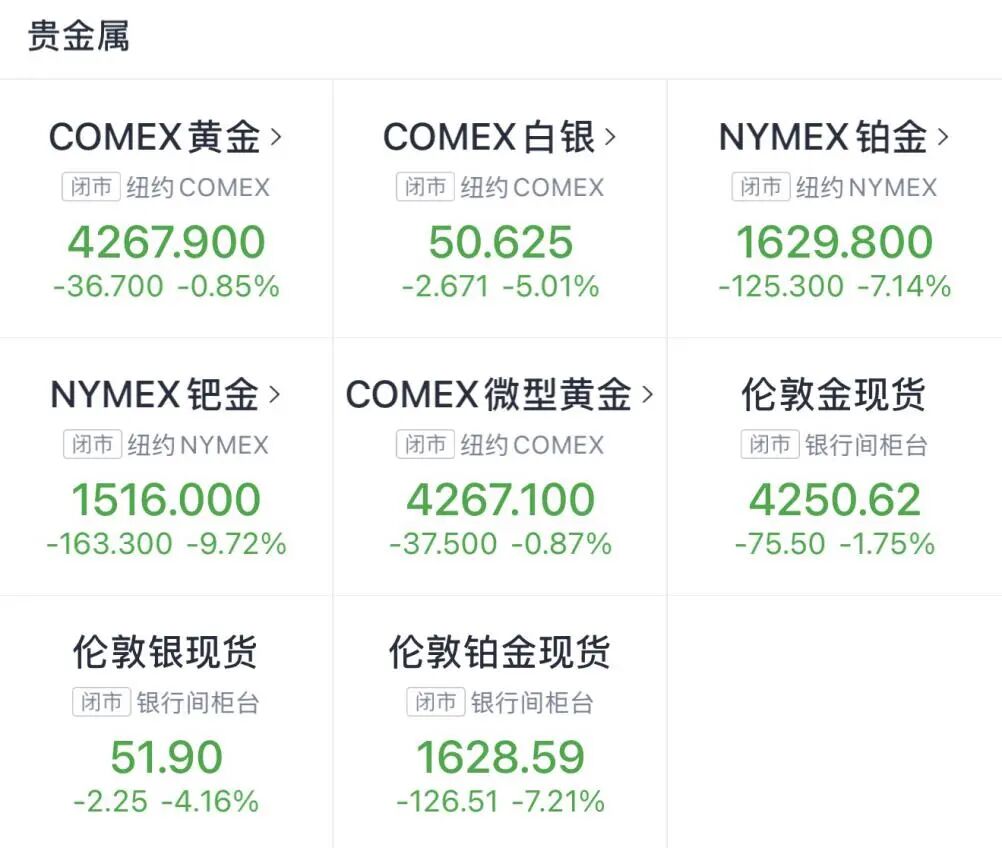
Market Performance - The U.S. stock market rebounded, benefiting from strong tech stocks, rising expectations for interest rate cuts in October, and easing risk sentiment in bank stocks [1] - On October 17, all three major U.S. indices closed higher: the Dow Jones Industrial Average rose 0.52% to 46,190.61 points, the S&P 500 increased by 0.53% to 6,664.01 points, and the Nasdaq Composite gained 0.52% to 22,679.97 points [1] - For the week, the Dow Jones rose 1.56%, the S&P 500 increased by 1.7%, and the Nasdaq gained 2.14% [1] European Market Performance - European stock indices closed lower, with Germany's DAX down over 1.5%, France's CAC40 down 0.18%, and the UK's FTSE 100 down 0.86% [2] Chinese Market Performance - The Nasdaq China Golden Dragon Index initially dropped over 1.3% but later rebounded, closing down 0.14% [2] - Specific stocks showed varied performance, with Pony.ai down over 5% and Futu Holdings up over 4% [2] Commodity Market - International gold prices fell over 3%, dropping below $4,200 per ounce, with spot gold closing down 1.73% at $4,251.448 per ounce [7] - The decline in gold prices led to significant losses in gold stocks, with Kinross Gold down over 9% and Barrick Gold down over 6% [8] Economic Sentiment - Analysts noted that easing trade tensions boosted market sentiment, with confidence expressed in the ability of U.S. officials to resolve issues favorably [6] - The recent turmoil in regional banks has subsided, alleviating market fears [6] Federal Reserve Outlook - White House economic advisor Kevin Hassett indicated that the anticipated three interest rate cuts are just the beginning [11] - The Federal Reserve is expected to lower the federal funds rate target range by 25 basis points to 4%-4.25% in the upcoming FOMC meeting [12] - Fed officials emphasize the importance of controlling inflation while maintaining sufficient tightening to support economic growth [12]

新动态,大提振!昨夜,A50猛拉!
证券时报· 2025-10-18 01:00
Market Performance - The U.S. stock market rebounded, benefiting from strong tech stocks, rising expectations for interest rate cuts in October, and easing risk sentiment in bank stocks [1][6] - As of October 17, all three major U.S. indices closed higher: the Dow Jones Industrial Average rose by 0.52% to 46,190.61 points, the S&P 500 increased by 0.53% to 6,664.01 points, and the Nasdaq Composite gained 0.52% to 22,679.97 points [1][2] - For the week, the Dow Jones rose by 1.56%, the S&P 500 increased by 1.7%, and the Nasdaq gained 2.14% [1] European Market Trends - European stock indices closed lower, with the German DAX index dropping over 1.5%, the French CAC40 index down by 0.18%, and the UK FTSE 100 declining by 0.86% [2] Chinese Market Insights - The Nasdaq China Golden Dragon Index initially fell over 1.3% but later fluctuated and closed down slightly by 0.14% [2] - Specific stocks such as Pony.ai and Kingsoft Cloud saw declines of over 5% and 4% respectively, while Futu Holdings and Tiger Brokers experienced gains of over 4% and 2% respectively [2] Commodity Market Movements - International gold prices fell sharply, dropping over 3% during trading [7][8] - As of the close, spot gold was down 1.73% at $4,251.448 per ounce, while COMEX gold fell by 0.85% to $4,267.9 per ounce [8][9] - The decline in gold prices led to significant drops in gold stocks, with Kinross Gold falling over 9% and Barrick Gold down more than 6% [9] Economic Sentiment and Predictions - Analysts noted that easing trade tensions have improved market sentiment, with confidence expressed in the ability of U.S. officials to resolve issues favorably [6] - The White House economic advisor indicated that the anticipated three interest rate cuts are just the beginning, suggesting further easing may be on the horizon [14] - The Federal Reserve's stance remains cautious, with expectations of a 25 basis point cut to the federal funds rate target range of 4% to 4.25% at the upcoming FOMC meeting [13]

'Cockroaches' or 'isolated events'? Banks face credit nerves
American Banker· 2025-10-17 19:43
Core Insights - Regional bank CEOs are attempting to reassure investors about the credit quality of their portfolios amid fears of a credit crisis linked to alleged loan fraud [1][10] - The recent credit issues stem from several banks facing losses related to Tricolor Holdings and First Brands Group, both of which have been accused of fraud [2][4][14] Group 1: Credit Quality Concerns - The banking sector is experiencing heightened scrutiny due to credit issues, with some banks reporting significant losses, including Fifth Third taking a $200 million hit related to Tricolor [11][12] - Analysts have noted that despite recent credit problems, many banks reported improvements in criticized loans and nonperforming assets, indicating overall confidence in credit metrics [7][9] Group 2: Market Reactions - The KBW Nasdaq Regional Banking Index saw a stabilization after a significant drop of approximately 7% earlier in the week, reflecting investor jitters [10][11] - Comments from JPMorgan Chase CEO Jamie Dimon about potential fraud have contributed to market anxiety, suggesting that the issues may not be isolated incidents [4][10] Group 3: Bank Responses and Strategies - Bank executives, including those from Truist and Fifth Third, emphasized the importance of clarity in reporting and monitoring practices within the non-depository financial institution (NDFI) lending sector, which has grown to represent about 10% of all U.S. bank loans [5][6][13] - Some banks, like U.S. Bancorp, have expressed confidence in their underwriting processes and do not plan to change them despite the recent credit issues [16][18]


美国地区银行遭贷款欺诈 美银行板块股价暴跌
Yang Shi Xin Wen· 2025-10-17 11:26
Core Viewpoint - Two major regional banks in the U.S., Zion Bank and Western Alliance Bank, faced loan fraud incidents, leading to significant stock price declines and heightened concerns about credit risk in the banking sector [1] Group 1: Company Impact - Zion Bank reported $60 million in bad debts from two commercial and industrial loans and has initiated fraud lawsuits against relevant parties [1] - Western Alliance Bank confirmed it provided credit services to the involved borrowers and has also filed fraud lawsuits [1] Group 2: Market Reaction - On the day of the news, both banks' stock prices dropped over 10%, contributing to a 6.3% decline in the U.S. regional bank index [1] - The total market value of 74 large U.S. banks decreased by over $100 billion as a result of these events [1]

