美欧贸易摩擦

Search documents
中信证券:美欧裂痕扩大带来的市场影响
Xin Lang Cai Jing· 2026-01-29 00:23
Core Viewpoint - The report highlights the increasing urgency and necessity for European defense expansion and significant infrastructure investment plans, driven by recent geopolitical tensions between the US and Europe, particularly in light of the Greenland incident and public confrontations at the Davos Forum [1] Group 1: European Defense and Infrastructure - The urgency, necessity, and proactivity of European defense expansion are on the rise [1] - The pace of European defense expansion and major infrastructure investment plans is expected to accelerate [1] - The issuance scale of sovereign bonds in Europe may further increase [1] Group 2: Interest Rates and Market Dynamics - In the absence of the European Central Bank restarting bond purchases, long-term interest rates on European sovereign bonds are expected to continue rising [1] - The military and security-related industries in Europe are experiencing a "certainty premium" increase, although overall indices may be suppressed by US-EU trade friction [1] Group 3: US Treasury Bonds and European Financial System - The unique market depth and liquidity of the US Treasury market, along with the deep integration of the European financial system with the US, limit Europe's ability to use US Treasury bond sales as a countermeasure against the US [1] Group 4: China-Europe Cooperation - Amidst the widening US-EU divide and rising uncertainties in Europe's external trade and security environment, a window for strengthening pragmatic cooperation between China and Europe is expected to open [1]

欧行定调维稳降息消散
Jin Tou Wang· 2026-01-23 02:54
Core Viewpoint - The Euro is experiencing a slight decline against the US Dollar, with the exchange rate at 1.1746, reflecting a cautious market sentiment amid ongoing trade tensions and policy uncertainties between the US and Europe [1][2]. Group 1: European Central Bank (ECB) Policy - The ECB has maintained its deposit facility rate at 2%, signaling stability in monetary policy, with no immediate need for adjustments as inflation is expected to stabilize around the 2% target [1]. - The ECB has revised its GDP growth forecasts for the Eurozone, projecting a growth rate of 1.4% for 2025 and 1.2% for 2026, driven primarily by domestic demand [1]. - Inflation expectations have been adjusted to 2.1% for 2025 and 1.9% for 2026, indicating that while service sector inflation remains sticky, overall inflation is on track [1]. Group 2: Market Dynamics and Euro Strength - The Euro's strength is attributed to the weakening of the US Dollar, driven by concerns over US tariffs and trade relations, leading to reduced demand for dollar-denominated assets [2]. - Investor sentiment has shifted towards the Euro as a safer asset amid geopolitical uncertainties, with institutions viewing it as a "relatively minimal loss" option [2]. - The market is currently in a cautious state, with the Euro benefiting from a stable policy backdrop while the Dollar's appeal diminishes [2]. Group 3: Technical Analysis - The Euro to Dollar exchange rate is currently in a narrow trading range, with key support levels at 1.1669 and 1.1595, while resistance is noted around 1.18 [3]. - The market is expected to remain within the 1.1650-1.1750 range in the short term, influenced by ECB policy stability and ongoing trade tensions [3]. - Key upcoming events to monitor include the ECB meeting on February 5, progress in US-EU trade negotiations, and US economic data releases, which may impact short-term market movements [3].
欧洲议会冻结美欧贸易协议批准程序
财联社· 2026-01-20 16:34
Core Viewpoint - The European Parliament has announced the suspension of the approval process for the trade agreement reached with the United States last July, marking the EU's initial response to President Trump's recent pressure tactics [1] Group 1: Trade Relations - President Trump announced on social media that starting February 1, a 10% tariff will be imposed on goods imported from Denmark, Norway, Sweden, France, Germany, the UK, the Netherlands, and Finland [1] - The tariff rate is set to increase to 25% from June 1, contingent upon reaching an agreement regarding the U.S. "complete and total purchase of Greenland" [1]


欧洲议会冻结美欧贸易协议批准程序
Yang Shi Xin Wen· 2026-01-20 15:44
Core Viewpoint - The European Parliament has announced the suspension of the approval process for the trade agreement reached with the United States in July of last year, marking the EU's first response to President Trump's recent pressure tactics [1] Group 1: Trade Relations - President Trump announced on social media that starting February 1, a 10% tariff will be imposed on goods imported from Denmark, Norway, Sweden, France, Germany, the UK, the Netherlands, and Finland [1] - The tariff rate is set to increase to 25% starting June 1, contingent upon reaching an agreement regarding the "complete and total purchase of Greenland" by the United States [1]
英大证券晨会纪要-20260120
British Securities· 2026-01-20 06:10
Market Overview - The A-share market is expected to maintain a volatile adjustment phase in the short term, following a rapid rise and subsequent consolidation [1][10] - On Monday, the three major indices of the A-share market showed mixed performance, with the Shanghai Composite Index closing in the green while the ChiNext Index fell after a brief rise [1][10] - The market structure is characterized by more stocks rising than falling, with notable strength in sectors such as precious metals, electric grid equipment, and aerospace, while the AI application sector continues to adjust [1][10] Short-term Market Dynamics - The trading volume has decreased, with the total turnover dropping to 2.7 trillion yuan, increasing the probability of adjustment [1][8] - Escalating trade tensions between the US and Europe have heightened global market risk aversion [1][8] - The upcoming peak of annual report forecasts in January is creating a battleground between performance expectations and fundamental verification, particularly for some popular themes in technology [1][8] Mid-term Market Outlook - The mid-term positive trend remains unchanged, with the global interest rate cut cycle entering its second half, leading to a macro liquidity environment of both internal and external easing [2][9] - There is a clear trend of reallocating household wealth towards the stock market, providing solid support for continued market entry of mid-to-long-term funds [2][9] - The current market is not in a trend decline but rather in a structural optimization phase during consolidation, offering entry points for quality stocks as valuations are repaired [2][9] Sector Analysis - The precious metals sector has shown strong performance, driven by factors such as the onset of the Federal Reserve's interest rate cut cycle, increased geopolitical tensions, and strong demand for gold as an inflation hedge [6][7] - The aerospace and military sectors have also seen significant gains, supported by stable growth in defense budgets and ongoing geopolitical conflicts that may catalyze further investment [7][8] - The report suggests focusing on segments like aerospace, military technology, and defense information systems, which are expected to benefit from policy support and emerging growth points [7][8]
德法对美关税威胁分歧 沪金高位窄幅震荡
Jin Tou Wang· 2026-01-20 06:01
Group 1 - Gold futures are currently trading around 1050.86 CNY per gram, with a 1.10% increase, reaching a high of 1053.74 CNY and a low of 1047.80 CNY during the session [1] - The short-term outlook for gold futures indicates a sideways movement [1] Group 2 - Germany and France have differing approaches to addressing the threat of tariffs from the Trump administration, rooted in their economic structures and relations with the U.S. [2] - Germany, heavily reliant on the U.S. market, prefers diplomatic dialogue to mitigate potential losses in key industries like automotive and machinery [2] - France focuses on maintaining European sovereignty and strategic independence, advocating for a strong counter-response to Trump's policies, which may escalate trade tensions [2] - The cautious stance of Germany reflects its role as a buffer in U.S.-EU relations, potentially leading to internal disagreements within the EU [2] Group 3 - The Shanghai gold futures market shows a strong upward trend since September 2025, with prices rising from a low of 760 to around 1020 [3] - Recent trading patterns indicate active capital inflow and strong buying support, with key price levels identified at 1000 for support and 1030 for resistance [3] - The market is characterized by a bullish arrangement in moving averages, with MACD indicators showing a bullish crossover, although momentum appears to be weakening [3] Group 4 - Resistance levels for gold are identified between 1045 and 1050, while support levels are noted between 1040 and 1042 [4]
长江有色:地缘溢价点燃涨势及尖端科技需求稀缺性 20日锡价或大涨
Xin Lang Cai Jing· 2026-01-20 03:29
Core Viewpoint - The recent surge in tin prices is driven by a combination of favorable macroeconomic conditions and geopolitical risks affecting key supply regions, particularly in the Democratic Republic of Congo [1] Group 1: Market Dynamics - Tin prices have seen a significant increase, with London tin closing at $49,840, up $2,075 or 4.34% from the previous trading day, with a trading volume of 812 contracts and an open interest of 26,817 contracts [1] - The inventory of tin at the London Metal Exchange (LME) increased by 505 tons to 6,440 tons, indicating a tightening supply situation [1] - Domestic futures for tin opened lower but showed a strong recovery, with the main contract rising to 404,040 yuan, reflecting a market sentiment shift [1] Group 2: Supply Constraints - Tin supply is facing multiple rigid constraints from geographical, policy, and resource levels, contributing to a solid foundation for price increases [2] - Key producing countries like Myanmar are experiencing production delays, while Indonesia's short-term governance on informal mining is limiting actual supply [2] - Domestic production is also constrained, with some companies reducing operating rates due to raw material shortages, leading to low processing fees for tin concentrate [2] Group 3: Demand Drivers - The demand for tin is undergoing structural changes, primarily driven by the explosive growth in AI infrastructure and the semiconductor industry, significantly increasing the consumption of tin-based solder [2] - The transition to renewable energy and the electrification of vehicles are also contributing to a long-term and stable demand for tin [2] - Traditional consumer electronics continue to provide steady support, but the growth narrative has shifted towards high-tech and green industries [2] Group 4: Industry Chain Dynamics - High tin prices are reshaping the entire tin industry chain, with profits and pressures unevenly distributed across different segments [3] - Upstream mining companies are benefiting from resource scarcity, maintaining high profit margins, while midstream smelting companies are experiencing a split, with larger firms faring better than smaller ones [3] - Downstream processing, particularly solder manufacturers, are facing significant cost pressures, leading to reduced operating rates and a search for alternative materials [3] Group 5: Market Outlook - Current market prices are high, but transactions are limited to rigid demand, creating a cautious atmosphere [4] - In the short term, tin prices are likely to remain in a high volatility range supported by macroeconomic easing, geopolitical risk premiums, and low inventory levels [4] - Potential turning points include the realization of supply increases from major producing countries and the impact of high prices on demand sustainability [4]

格陵兰岛紧张局势加剧 日本股市下跌 债券收益率创历史新高
Ge Long Hui· 2026-01-20 02:54
Group 1 - The Japanese stock market has continued its downward trend, marking the fourth consecutive day of decline, driven by rising domestic bond yields and escalating geopolitical tensions [1] - Japanese Prime Minister Fumio Kishida announced early elections on February 8, leading to a surge in government bond yields to historical highs, further pressuring the stock market [1] - Kishida's campaign pledge to suspend the food consumption tax has raised investor concerns regarding fiscal discipline and future government borrowing needs, which has negatively impacted bond markets and weakened stock valuations [1] Group 2 - The threat from former President Trump to impose tariffs on multiple European countries unless Washington is allowed to purchase Greenland has heightened trade tensions, adversely affecting global risk appetite and impacting the Japanese stock market [1] - Strategists warn that rising yields are becoming a significant disadvantage for the stock market, with Nomura Securities analysts indicating that increasing interest rates may drag down stock prices [1] - The tariff threats affecting European markets appear to be spreading to Asia, contributing to the negative sentiment in the Japanese market [1]
释新闻|欧盟酝酿报复美国夺岛关税,拟启动的“贸易火箭筒”是什么?
Xin Lang Cai Jing· 2026-01-20 00:13
Core Viewpoint - The EU is considering reactivating a tariff list against $93 billion worth of US goods in response to President Trump's tariff threats, with discussions on the feasibility of using the Anti-Coercion Instrument (ACI) underway [1][11][12]. Group 1: EU's Response to US Tariff Threats - The EU is contemplating the reactivation of a tariff list that was previously postponed until February 6, targeting $93 billion worth of US imports [1][11]. - French President Macron has stated that the EU will push for the activation of the ACI if the US imposes tariffs [1][11]. - The ACI is described as a "trade rocket launcher," allowing the EU to impose tariffs, restrict exports, and limit investments, primarily aimed at deterring economic coercion [1][11][12]. Group 2: ACI's Background and Potential Activation - The ACI was established to respond to economic coercion without violating international law, but it has never been activated since its inception in December 2023 [3][12]. - The EU has a four-month period to assess cases of coercion before a qualified majority of member states can decide to activate the ACI [4][13]. - The ACI's design often references cases involving China, indicating its broader deterrent purpose [4][13]. Group 3: Economic Implications and Member States' Stance - Analysts predict that if the US imposes a 25% tariff, it could reduce European GDP growth by 0.2%, highlighting the economic stakes involved [15]. - EU member states are currently prioritizing dialogue with the US over immediate activation of the ACI, reflecting a cautious approach [15][18]. - Countries like Germany and Italy have warned against hastily activating the ACI without sufficient legal grounds, emphasizing the importance of maintaining US-EU relations [16][18]. Group 4: Political Context and Future Considerations - The current US tariff threats are seen as politically motivated, lacking economic rationale, which may influence the EU's response strategy [17][18]. - The EU is considering delaying the approval of the US-EU trade agreement in light of the current tensions, with some officials suggesting that any related content should be postponed [17][18]. - The EU aims to leverage potential retaliatory tariffs to influence US domestic politics ahead of the November midterm elections [17][18].
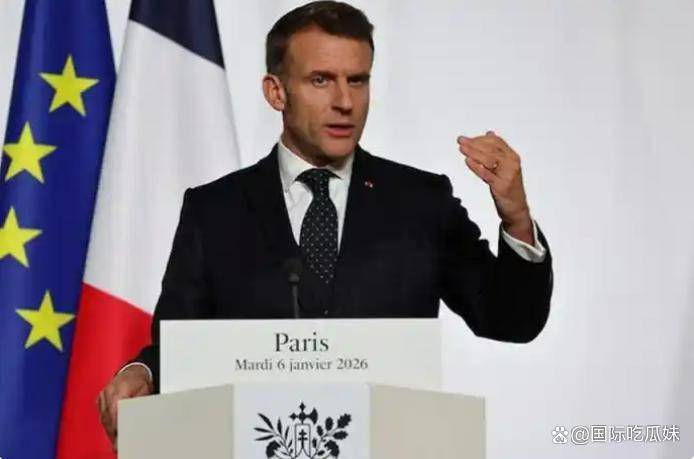
突发特讯!马克龙回应美国关税威胁:不排除启动欧盟最强硬贸易反制工具!美欧贸易战一触即发?
Sou Hu Cai Jing· 2026-01-18 13:16
Group 1 - The core issue is the renewed tension in US-EU relations due to US tariff threats, with French President Macron indicating a willingness to invoke the EU's anti-coercion tool if necessary [1][3] - The tariff dispute was ignited by the US imposing a 10% tariff on goods from eight European countries starting February 1, escalating to 25% in June, aimed at pressuring Europe to support the US acquisition of Greenland [3] - The anti-coercion tool, effective from October 2023, is designed to counter unilateral economic bullying, allowing EU member states to request investigations into economic coercion and potentially implement retaliatory measures [5] Group 2 - Macron's response has fostered a consensus among several European leaders, including those from the UK, Sweden, and Norway, condemning the US tariff threats and rejecting economic coercion [7] - There are concerns within the EU regarding the implementation of the anti-coercion tool, as it requires a qualified majority from member states, with some countries like Germany cautious due to potential economic repercussions [7] - The existence of the anti-coercion tool signals a shift towards mutual deterrence in US-EU relations, indicating that Europe will no longer passively accept tariff bullying, which could reshape transatlantic trade dynamics [9]