老登

Search documents
A股收评:沪指跌0.64%,创业板指跌超1.5%,大金融、大消费板块逆势走高,有色金属及光伏产业股走低
Jin Rong Jie· 2026-02-05 07:14
Core Viewpoint - The A-share market experienced a decline in early trading, but major financial sectors such as banks and brokerages provided support, leading to a mixed performance across various sectors, with significant activity in consumer and emerging concepts [1] Market Performance - The three major A-share indices closed lower, with the Shanghai Composite Index down 26.29 points (0.64%) at 4075.92, the Shenzhen Component down 203.56 points (1.44%) at 13952.71, and the ChiNext Index down 51.24 points (1.55%) at 3260.28 [1] - Total market turnover reached 2.19 trillion yuan, with over 3700 stocks declining [1] Sector Highlights - Major financial sectors, including banks and brokerages, showed strong performance, with Xiamen Bank hitting a ceiling price, marking a new high since June 2021, and Chongqing Bank rising over 7% [1] - Consumer sectors, including media, tourism, food and beverage, retail, and healthcare, saw collective gains, with stocks like Haixin Food and Anji Food hitting ceiling prices [1] - New consumption concepts such as the "grain economy" and "pet economy" also experienced upward momentum, reflecting positive market expectations for consumer recovery [1] - AI application concepts rebounded, with stocks in AI animation, marketing, and media rising, including companies like Qunxing Toys and Yaowang Technology hitting ceiling prices [1] - Real estate concepts continued to strengthen, with multiple stocks like Jingtou Development and Huangting International hitting ceiling prices, adding vibrancy to the market [1] Declines in Specific Sectors - The non-ferrous metals, gold, and silver sectors faced significant declines, with stocks like Silver Nonferrous and Hunan Silver hitting their lower limits [2] - The photovoltaic industry chain, including space photovoltaic and equipment, saw a sell-off, with stocks like Junda Co. and Shuangliang Energy hitting their lower limits [2] - The power equipment sector also declined, with companies like Zhongheng Electric and Keshida hitting their lower limits [2] - The semiconductor and storage chip sectors continued to retreat, with stocks like Juguang Technology and Changfei Optical Fiber experiencing significant declines [2] Insights from Analysts - Dongfang Securities noted that the recent rebound after a significant drop indicates a stronger expectation for market stability, suggesting a potential shift towards a "slow bull" market [7] - Tianfeng Securities highlighted that this year's "Spring Festival excitement" may be more sustained due to policy expectations and trends in household investment towards equity assets, with consumer demand expected to release earlier than in previous years [8] - CITIC Securities identified low-orbit communication satellite chains as a key investment hotspot in the commercial aerospace industry, anticipating a transition from technology validation to large-scale industrialization around 2026 [8]

复盘2025年商业舆论事件,人们为何如此愤怒
3 6 Ke· 2026-01-07 12:49
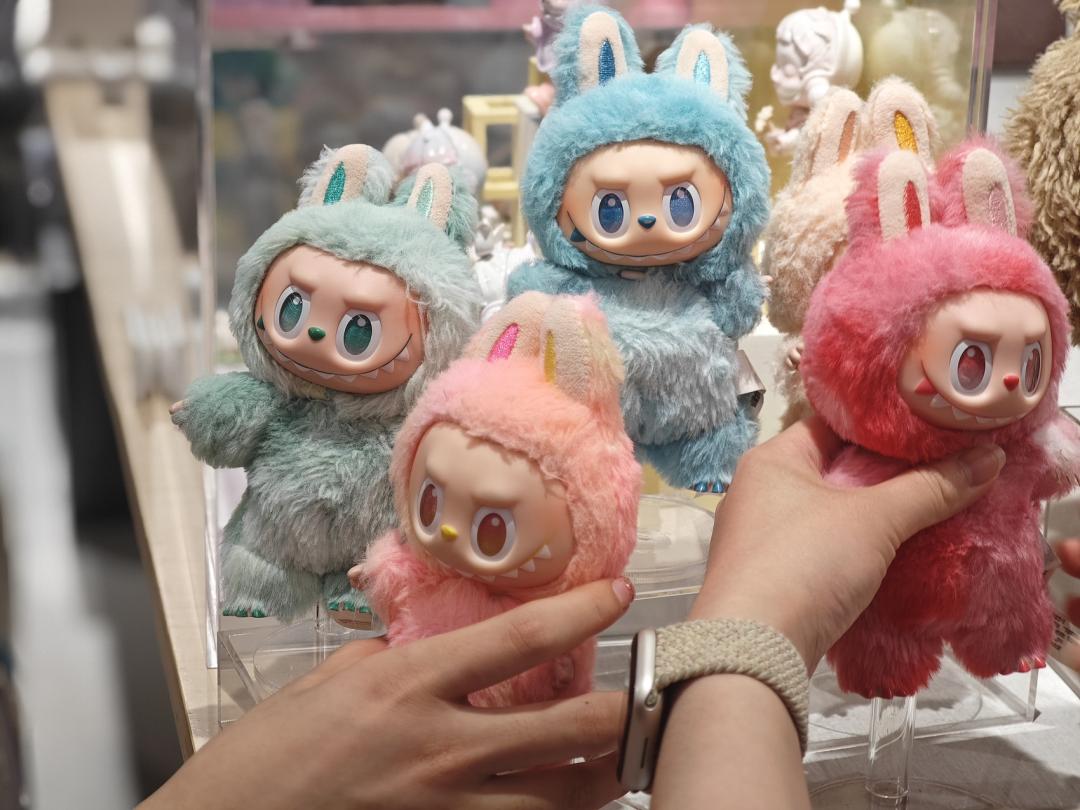
Core Insights - The annual words "Rage bait" and "brain rot" reflect how digital platforms reshape thoughts and behaviors, highlighting the significant role of emotions in driving interactions and commercial outcomes [1] - The concept of "emotional value" has gained prominence, influencing consumer behavior and brand perception, as seen in the success of products like LABUBU and the backlash against brands that misalign with public sentiment [2][3] Group 1: Emotional Value and Consumer Behavior - LABUBU's popularity illustrates a shift in consumer behavior, where emotional satisfaction and participation in trends become key drivers of success, especially in a context of economic slowdown [3][4] - The rapid rise and subsequent decline of LABUBU in the second-hand market indicate that once a product becomes ubiquitous, its appeal diminishes, emphasizing the need for uniqueness in consumer goods [4][6] - The term "emotional value" is often used to describe non-utilitarian satisfaction derived from products, but its vague nature necessitates deeper exploration to understand its various implications [6][7] Group 2: Media Influence and Public Sentiment - The rise of social media and algorithm-driven content has amplified emotional responses, particularly anger, which can lead to rapid dissemination of sentiments and potential backlash against brands [15][18] - The phenomenon of "old school" or "老登" reflects a societal shift towards critiquing traditional narratives and embracing micro-narratives, indicating a growing desire for authenticity and relatability in public discourse [10][12] - The decline of traditional media has resulted in a polarized public discourse, where the absence of neutral reporting exacerbates tensions and complicates brand management in the face of public scrutiny [26][27] Group 3: Brand Management and Public Relations - The emergence of entrepreneur IPs, characterized by relatable and down-to-earth personas, highlights the importance of authenticity in brand representation, though it carries risks if personal missteps occur [22][23] - Companies face challenges in managing public perception, especially in an environment where emotional responses can quickly escalate into crises, necessitating a more strategic approach to communication [24][26] - The lack of a mediating voice in public discourse can lead to increased pressure on brands and entrepreneurs, making it essential for companies to navigate the complexities of modern communication effectively [27][28]


不是年轻人嫌弃“老登”,是时代在出清“老登”
虎嗅APP· 2025-12-12 09:32
Core Viewpoint - The term "Old Deng" has become a widely recognized label in various sectors, indicating traditional industries and brands that are perceived as outdated or lacking innovation, particularly among younger consumers [5][10]. Group 1: Characteristics of "Old Deng" Brands - "Old Deng" brands are typically from traditional industries with low technological content, heavily reliant on channel construction and often family-owned, maintaining strong ties with political and business relationships [5][10]. - The essence of "Old Deng" consumption focuses on "preservation of value," with products like Moutai liquor, fuel vehicles, luxury goods, and cultural artifacts being favored, reflecting a preference for stability and understated sophistication [5][10]. - Brands that have been labeled as "Old Deng" often fail to resonate with younger consumers due to a lack of empowerment in decision-making during social drinking scenarios, leading to a negative perception of products like liquor [8][9]. Group 2: Evolution of Brands - The phenomenon of "brand aging" occurs as consumer demographics shift, with brands that were once popular among older generations losing appeal to younger consumers, exemplified by the transition of Hai Lan's Home from a trendy brand to one associated with older generations [17][18]. - The historical context of brands shows that many successful companies emerged during the rapid urbanization of the 1990s, capitalizing on the economic boom, but they now face the risk of becoming "Old Deng" as consumer preferences evolve [22][24]. - The case of Gome and its founder Huang Guangyu illustrates how a once-innovative business can struggle to adapt to changing market conditions after a significant period of absence from the industry [28][30]. Group 3: The Future of "Middle Deng" Companies - Current "Middle Deng" companies, which have validated their business models and possess strong cash flows, face the challenge of avoiding the "Old Deng" label as they struggle to innovate and grow user bases [35][36]. - Companies like Alibaba and Baidu are at risk of becoming "Old Deng" as their core businesses mature, but their ventures into AI and other emerging technologies provide opportunities to remain relevant [36][39]. - The ongoing technological advancements in areas such as drones, robotics, and AI suggest that companies maintaining their innovative spirit are less likely to transition into the "Old Deng" category [39].