
股市下跌

Search documents
东京股市日经股指三连跌
第一财经· 2026-03-30 09:28
Market Performance - The Tokyo stock market experienced significant declines on March 30, with the Nikkei 225 index falling for the third consecutive trading day, closing down by 2.79% [3] - The Tokyo Stock Exchange Price Index dropped by 2.94%, influenced by multiple negative factors including ongoing tensions in the Middle East, rising international oil prices, and a decline in all three major U.S. stock indices on the previous trading day [3] - The Nikkei index saw a drop of over 2800 points at one point, with a peak decline exceeding 5%, but the losses narrowed as investor sentiment shifted to a wait-and-see approach [3] Closing Figures - At the close, the Nikkei index was down 1487.22 points, settling at 51885.85 points [3] - The Tokyo Stock Exchange Price Index decreased by 107.35 points, ending at 3542.34 points [3] Sector Performance - Most of the 33 industry sectors on the Tokyo Stock Exchange experienced declines, with the securities and commodity futures trading, transportation machinery, and glass and ceramic products sectors showing the largest drops [3] - The only sector that saw a slight increase was the oil and coal products sector [3]


欧洲股市、美股股指期货全线跳水,超微电脑盘前跌超5%,科技巨头、芯片股普跌
21世纪经济报道· 2026-03-23 09:15
Market Overview - The Asia-Pacific stock market experienced a significant decline on March 23, with European markets also opening lower. The Euro Stoxx 50 index fell nearly 1.7%, while the German DAX index dropped close to 2%. The European Stoxx 600 index decreased by 1.6%, marking an 11% decline from its February peak [1][2]. U.S. Market Performance - U.S. stock index futures saw a collective drop, with the Dow Jones futures down by 0.61%, the S&P 500 futures down by 0.73%, and the Nasdaq 100 futures down by 0.82% [2]. Technology and Semiconductor Sector - Major U.S. tech and semiconductor stocks faced pre-market declines. Micron Technology fell over 3.5%, TSMC dropped more than 2%, and AMD decreased nearly 2%. Other notable declines included Facebook, Google, and Amazon, each down over 1%. Additionally, Advanced Micro Devices saw a pre-market drop exceeding 5%, following a significant decline of over 33% in the previous week [4][5]. Gold and Mining Stocks - The international gold and silver markets experienced a sharp decline, with spot gold falling below $4100 per ounce and spot silver dropping below $61 per ounce. This volatility also impacted U.S. gold mining stocks, with significant pre-market losses reported: Sibanye Stillwater down 9.7%, Newmont down 7%, and Barrick Gold down nearly 6% [6][9].







日韩股市大跌,韩股跌超7%触发暂停交易
21世纪经济报道· 2026-03-09 00:31
Market Overview - The Japanese Nikkei 225 index opened lower, breaking below 53,000 points, and was reported at 52,374.46 points, down 5.84% [1][2] - The Korean Composite Index (KOSPI) fell over 7%, with major companies like Samsung Electronics and SK Hynix dropping more than 7% [1] - The KOSPI 200 futures triggered an emergency mechanism due to a 5% drop, leading to a 5-minute trading suspension [1] Bond and Commodity Markets - The yield on Japan's 10-year government bonds rose by 4.5 basis points to 2.205% [3] - International oil prices surged, with WTI crude oil exceeding $100 per barrel for the first time since the outbreak of the Russia-Ukraine conflict, rising over 18% to $107.85 per barrel [3] - The average price of regular gasoline in the U.S. increased to $3.45 per gallon, a 16% rise since the onset of the Iran conflict [3] Geopolitical Impact - Gold prices experienced a sharp decline of over $100, falling below $5,070 [4] - The geopolitical tensions have impacted global shipping, with the U.S. government proposing a $200 billion maritime reinsurance plan [4]

美股关键指数飙升24%,专家预测油价或涨至150美元/桶
21世纪经济报道· 2026-03-07 15:20
Group 1 - The ongoing conflict between the U.S. and Iran is significantly impacting international oil prices, with reports of an Iranian attack on a Marshall Islands-flagged oil tanker, which Iran claims is a "U.S. asset" [1] - Kuwait Oil Company has implemented "preventive cuts" to oil production and refining due to the current regional situation, indicating readiness to resume normal production when conditions allow [1] - On March 6, international crude oil futures saw substantial gains, with WTI crude rising by 12.21% to $90.9 per barrel, marking a weekly increase of 35.6%, while Brent crude rose by 8.52% to $92.69 per barrel, with a weekly increase of 27.88% [1] Group 2 - The ongoing conflict has led to a decline in U.S. stock markets, with the Dow Jones down 0.95% and the Nasdaq down 1.59% on March 6, reflecting a broader trend of declines across major indices [3] - The Chicago Board Options Exchange Volatility Index (VIX) surged to its highest level since April of the previous year, reaching 29.49 points with a 24% increase, indicating heightened market volatility [3] - As the conflict escalates, Kuwait has begun reducing oil production due to rapidly depleting storage capacity, with Saudi Arabia and the UAE also nearing storage limits [4] Group 3 - Qatar has halted liquefied natural gas production, and it may take weeks to months to return to normal supply levels even if the conflict ceases immediately [4] - Energy export countries in the Gulf region may stop oil and gas production within weeks, with predictions that oil prices could soar to $150 per barrel and natural gas prices to $40 per million British thermal units if shipping through the Strait of Hormuz is disrupted [4] - Concerns are growing that without a swift resolution to military actions, the oil market could face a rapid collapse, potentially pushing prices above $150 per barrel [5]

These stocks in the S&P 500 have dropped the most since the U.S. and Israel attacked Iran
MarketWatch· 2026-03-06 16:18
Core Viewpoint - A disappointing employment report on Friday negatively impacted stock markets, particularly affecting cruise operators [1] Group 1: Employment Report Impact - The employment report was worse than expected, contributing to a decline in stock prices [1] - The negative sentiment from the employment data led to increased selling pressure in the market [1] Group 2: Cruise Operators - Cruise operators experienced significant losses, with their stocks being particularly hammered due to the broader market downturn [1] - The disappointing employment figures raised concerns about consumer spending, which is critical for the cruise industry [1]

Dow tumbles nearly 800 points as surging oil prices raise fears about economic toll of Iran conflict
Youtube· 2026-03-05 21:30
Market Overview - Stocks are experiencing a decline today, with the Dow down approximately 800 points, the S&P 500 down about 40 points, and the Nasdaq down by around half a percent [1] - The Russell 2000 index is the hardest hit, showing a decrease of about 2% [1] Sector Performance - Some of the year's leading sectors, including industrials, materials, and staples, are now among the biggest laggards [1] - Conversely, the consumer discretionary sector is managing to achieve slight gains despite the overall market downturn [1]

迪拜股市跳水近5%,韩股两日猛跌20%,泰国股市重挫8%停牌
新浪财经· 2026-03-04 10:22
Market Performance - Dubai stock market fell by 4.7% and Abu Dhabi stock market declined by 3.5% after resuming trading on March 4 [2] - Major Asia-Pacific stock indices experienced collective declines, with the South Korean stock market triggering a circuit breaker and the Thai SET index plummeting by 8%, leading to a trading halt [2] Trading Suspension - The Thai Futures Exchange (TFEX) announced the suspension of trading for stock index futures, stock index options, and single stock futures [4] - Earlier, TFEX also suspended online silver futures trading [4] Index Movements - The Nikkei 225 index dropped over 4%, falling below 54,000 points, with its volatility index reaching the highest level since August 2024 [5] - The South Korean Composite Index saw a significant decline, with a drop of 12% at one point, erasing all gains from February [5] Economic Forecasts - Citibank's report indicates that if oil prices remain above $82 per barrel this year, South Korea's GDP growth rate for 2026 could decrease by 0.45 percentage points [5] - The same report predicts a 0.6 percentage point increase in South Korea's Consumer Price Index (CPI) inflation rate and a 2.25 percentage point decline in the current account balance under the same oil price assumptions [5] Market Strategy - Morgan Stanley's private bank equity strategist noted that the strong performance of the South Korean stock market this year has led to profit-taking, which is expected [5] - The strategist suggested that as long as the Iran conflict remains manageable, market pullbacks present buying opportunities [5]

日韩股市双双收跌,韩国综指跌超12%
第一财经· 2026-03-04 07:06
Group 1 - Hyundai Motor experienced a decline of nearly 16% [1] - Samsung Electronics saw a drop of nearly 12% [1] - The Nikkei 225 index closed down over 3% [1]
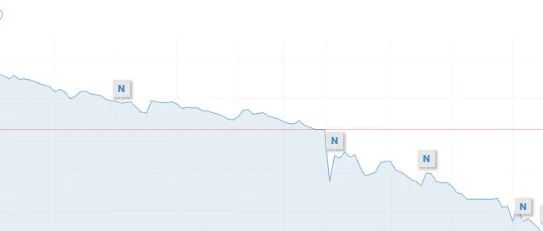
迪拜股市跳水近5%,韩股两日猛跌20%,泰国股市重挫8%停牌
21世纪经济报道· 2026-03-04 06:24
Market Overview - The Asia-Pacific stock markets experienced a collective decline, with the South Korean stock market triggering a circuit breaker and the Thai SET index plummeting by 8%, leading to a trading halt [1][2]. Index Performance - The Nikkei 225 index fell over 4%, dropping below 54,000 points, while the volatility index reached its highest level since August 2024 [3]. - The South Korean Composite Index saw a significant drop, with a two-day cumulative decline of 20%, erasing all gains from February [3]. Economic Impact - Citibank's report indicates that if oil prices remain above $82 per barrel this year, South Korea's GDP growth rate for 2026 could decrease by 0.45 percentage points. The report also forecasts a 0.6 percentage point increase in the Consumer Price Index (CPI) and a 2.25 percentage point decline in the current account balance [4]. Investment Strategy - Morgan Stanley's private banking equity strategist noted that the strong performance of the South Korean stock market this year has led to profit-taking, which is expected. The strategist views any pullback as a buying opportunity, provided the Iran conflict remains manageable [4].

【环球财经】就业数据疲软 纽约股市三大股指5日均下跌
Xin Hua Cai Jing· 2026-02-06 06:17
Market Overview - The New York stock market experienced a decline on February 5, with all three major indices closing lower due to weak employment data and continued tech stock sell-offs. The Dow Jones Industrial Average fell by 592.58 points to 48,908.72, a decrease of 1.20%. The S&P 500 dropped by 84.32 points to 6,798.4, down 1.23%. The Nasdaq Composite decreased by 363.993 points to 22,540.586, a decline of 1.59% [1]. Employment Data - Challenger, Gray & Christmas reported that U.S. employers laid off 108,100 workers in January, significantly higher than the previous month's 35,500, marking the highest level since October 2025 and the highest January layoffs since 2009 [1][2]. - The U.S. Department of Labor's JOLTS report indicated that job openings in December 2025 were 6.542 million, below the consensus estimate of 7.245 million, and the previous month's figure was revised down from 7.15 million to 6.928 million [2]. - Initial jobless claims for the previous week were reported at 231,000, exceeding the consensus estimate of 212,000 and the prior week's 209,000 [2]. Company Performance - Alphabet Inc. reported quarterly earnings that exceeded market expectations but projected capital expenditures for 2026 to be between $175 billion and $185 billion, which is more than double the 2025 figure. The market reacted negatively, leading to a 0.6% decline in its stock price on February 5 [3]. - Qualcomm also reported quarterly earnings above market expectations; however, its guidance for the current quarter fell short of market predictions, resulting in a significant stock price drop of 8.46% to $136.3 per share [3].
