视觉AI

Search documents
星宸科技(301536)2025 年报点评
Huachuang Securities· 2026-03-11 13:25
Investment Rating - The report maintains a "Strong Buy" rating for the company, expecting it to outperform the benchmark index by over 20% in the next six months [7][22]. Core Insights - The company achieved a revenue of 2.972 billion yuan in 2025, representing a year-over-year growth of 26.28%. The net profit attributable to shareholders was 308 million yuan, with a year-over-year increase of 20.33%. In Q4 alone, revenue reached 806 million yuan, marking a year-over-year growth of 49.01% and a quarter-over-quarter increase of 5.60% [1][7]. - The company is transitioning into a multi-domain platform SoC provider, leveraging its core technology advantages in "perception + computation + connectivity" to expand into emerging fields such as automotive LiDAR and mobile imaging devices [7]. - The company has increased its investment in Yuan Chuan Micro, raising its stake from 3.3% to 6.6%, to collaborate on LPU architecture inference chips, which are expected to be significant in future technology routes [7]. Financial Summary - The company forecasts total revenue to grow to 3.801 billion yuan in 2026, with a year-over-year growth rate of 27.9%. Net profit is expected to reach 634 million yuan, reflecting a substantial increase of 105.5% [3][8]. - Earnings per share (EPS) is projected to rise from 0.73 yuan in 2025 to 1.50 yuan in 2026, with a price-to-earnings (P/E) ratio of 110 in 2025, decreasing to 54 in 2026 [3][8]. - The company’s total assets are estimated to grow from 5.215 billion yuan in 2025 to 7.222 billion yuan by 2028, indicating a strong asset growth trajectory [8].
黑马图像模型被Nano Banana技术负责人点赞!15人华人小队,DDIM之父&CVPR最佳论文作者带队
量子位· 2026-03-06 03:36
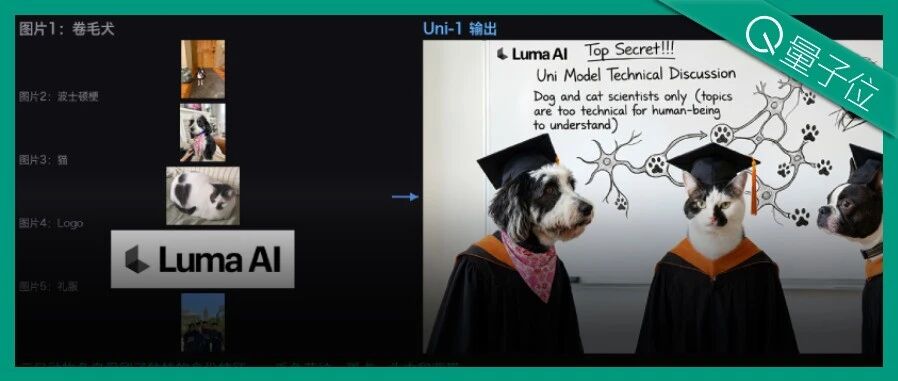
Core Viewpoint - Luma AI has launched a new model, Uni-1, which competes directly with Google's Nano Banana Pro and GPT Image 1.5, showcasing advanced capabilities in image understanding and generation [1][6]. Group 1: Model Capabilities - Uni-1 is a unified model for image understanding and generation, featuring abilities such as character pose transfer, storyboard generation, draft and material combination, draft-to-comic transformation, multi-reference scene composition, draft-guided photo editing, UV mapping generation, and greeting card creation with text [3][6]. - In various authoritative task evaluations, Uni-1 not only matches the performance of Nano Banana Pro and GPT Image 1.5 but also achieves world-leading results in certain tasks [6]. - The model excels in generating a Chinese New Year greeting card, accurately rendering text and images, outperforming both GPT Image 1.5 and Nano Banana Pro in text clarity and design [11][12]. Group 2: Performance Comparisons - For multi-reference scene composition, Uni-1 accurately integrates features from multiple reference images, maintaining identity characteristics and organizing them into a coherent scene, while competitors struggled with basic integration [15][16]. - In information graphic extraction tasks, Uni-1 successfully reproduces the layout and all visible text from a real-world poster, while its competitors failed to maintain text accuracy and layout integrity [21]. - The model demonstrates superior capabilities in converting rough sketches into professional-grade comics, maintaining detail and composition accuracy [26]. Group 3: Team and Technology - The impressive results of Uni-1 come from a small team of fewer than 15 researchers, led by notable figures in the field, including Song Jiaming and Shen Bokui, who have made significant contributions to diffusion models and computer vision [8][40][41]. - The core philosophy of Uni-1 is to unify image understanding and generation into a single model, allowing for simultaneous modeling of time, space, and logic, which enhances both understanding and generation capabilities [46][48]. Group 4: Industry Implications - The success of Uni-1 suggests that unified models may represent the future direction of visual AI, enabling complex tasks to be performed within a single framework [51]. - The achievement of a world-class product by a small team highlights that top-tier AI research does not necessarily require large teams or unlimited resources, emphasizing the importance of the right technological approach [52].

SHEIN宣布在广东追加投资超百亿;库克暗示苹果下一个重大突破是视觉AI丨Going Global
创业邦· 2026-03-01 10:35
Core Insights - The article highlights significant developments in the cross-border e-commerce and technology sectors, focusing on major companies' investments and market expansions in Southeast Asia and Europe [2][3]. Group 1: E-commerce Developments - TikTok Shop has launched a special incentive policy for cross-border e-commerce in Southeast Asia, offering up to $500 for key merchants meeting daily GMV targets and additional incentives for other merchants [5]. - SHEIN plans to invest over 10 billion yuan in Guangdong over the next three years to build a smart supply chain, aiming for over 100 billion yuan in export revenue by 2025 [6]. Group 2: Robotics and AI Innovations - Zhiyuan Robotics has officially entered the German market, unveiling a full range of general-purpose robots and signing a strategic cooperation agreement with Minth Group to accelerate local deployment in Europe [10][11]. - Qianwen, an AI assistant under Alibaba, is set to launch various AI hardware products globally, including AI glasses and headphones, enhancing its capabilities beyond mobile applications [14][15]. Group 3: Strategic Partnerships and Collaborations - CATL and BMW have signed a memorandum of understanding to collaborate on battery passport trials and supply chain carbon footprint reduction, marking an expansion of their long-standing partnership [16][17]. - Skyworth will take over Panasonic's TV business in North America and Europe, focusing on leveraging Skyworth's resources for product development while Panasonic retains operations in Japan [18]. Group 4: Major Corporate Moves - Google has integrated its robotics software company Intrinsic into its core business, aiming to enhance its capabilities in physical AI and industrial robotics [21]. - Apple CEO Tim Cook indicated that visual AI will be a key technological breakthrough for the company, potentially impacting future product lines like the iPhone 17 and Vision Pro [22].


视觉AI龙头冲刺港股IPO,年收入复合增长59.2%,大模型收入超6000万
3 6 Ke· 2026-02-13 12:18
Core Viewpoint - The company, Jishijiao, has submitted its prospectus to the Hong Kong Stock Exchange, indicating its entry into the capital market as a computer vision-focused enterprise AI solution provider. The company has experienced rapid revenue growth, with a compound annual growth rate (CAGR) of 59.2% from 2022 to 2024, driven by the overall expansion of the Chinese computer vision market, which is projected to grow at a CAGR of 37.7% over the next five years [1][7]. Revenue Growth - From 2022 to 2024, the company's revenue increased from 101.6 million yuan to 257.3 million yuan, with the revenue for the first nine months of 2025 reaching 136 million yuan [2]. - The introduction of a large model solution in 2024 contributed 62.12 million yuan to the revenue, accounting for 24.1% of total revenue in that year [1][4]. Business Segmentation - The company's main business is divided into two categories: AI computer vision solutions and large model solutions. The AI computer vision solutions include standardized, customized, and integrated hardware and software products [2]. - The AI vision solutions generated 195 million yuan in revenue in 2024, representing 75.9% of total revenue, with standardized AI solutions seeing a revenue share increase from 10.8% in 2022 to 20.9% in the first nine months of 2025 [3]. Profitability and Financial Performance - The company achieved an adjusted net profit of 20.49 million yuan in 2024, marking a turnaround from previous losses, with an overall gross margin improvement from 30.6% in 2022 to 40.2% in 2024 [5]. - The gross margin for standardized AI solutions reached 80.1%, significantly enhancing overall profitability [5]. Cash Flow and Accounts Receivable - Despite improvements in profitability, the company continues to experience negative operating cash flow, with net cash flow from operations improving from -78 million yuan in 2022 to -18 million yuan in 2024 [6]. - Trade receivables increased from 42 million yuan to 178 million yuan during the same period, with days sales outstanding worsening from 99 days to 379 days by the end of September 2025 [6]. Market Position and Competition - The company holds a market share of only 1.6%, ranking eighth in a highly fragmented market, with the leading competitor holding a 12.1% share [8]. - The competitive landscape is characterized by intense competition and weak pricing power, with the company needing to balance technology and pricing while facing long payment cycles [8][9]. Industry Outlook - The Chinese computer vision solutions market is expected to grow at a CAGR of 37.7% from 2024 to 2029, reaching a market size of 182.4 billion yuan, with the emerging segments targeted by the company projected to grow even faster at a CAGR of 54.3% [7].
在谷歌深耕14年,华人研究员创立视觉AI公司,计划融资5000万美元
机器之心· 2026-01-11 02:17
Core Insights - Two former Google researchers are founding a new visual AI company named Elorian, aiming to develop advanced AI models that can understand and process text, images, videos, and audio simultaneously [1][8] - The company is currently in discussions to raise approximately $50 million in seed funding, with Striker Venture Partners potentially leading the investment round [1] Group 1: Founders' Background - Andrew Dai, a former senior AI researcher at Google DeepMind, has 14 years of experience in AI research and management, contributing to the development of the Gemini large AI model [3] - Yinfei Yang, a former AI researcher at Apple, has extensive experience in multimodal models and has worked at Google Research, Amazon, and Redfin, focusing on visual-language representation and multimodal learning [5] Group 2: Company Vision and Goals - Elorian's primary goal is to create a multimodal AI model capable of visual understanding and analysis of the real world by processing images, videos, and audio [8] - While robotics is a potential application area, the company envisions a broader range of applications that have not yet been disclosed [8]


从“特斯拉门徒”到“赋能滴滴”:智驾江湖中场,在夹击中爆发
Di Yi Cai Jing Zi Xun· 2025-12-26 11:35
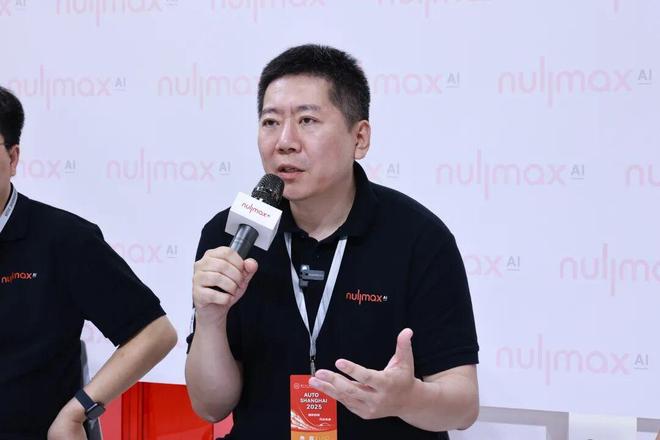
Core Insights - Nullmax, founded by a former Tesla executive, received a strategic investment in the C1 round from a domestic automotive-grade chip company, highlighting its credibility in an industry focused on "software-hardware integration" and "vertical integration" [1] - The company aims to position itself as an AI company rather than just a supplier for automotive firms, with a vision of expanding its technology beyond the automotive sector [1][2] - Nullmax's approach combines a "vision-centric" strategy with multi-sensor fusion, allowing it to stand out as a leading independent AI company capable of achieving "software-defined intelligent driving" [1][5] Company Development - The founder, Xu Lei, transitioned from Qualcomm to Tesla, where he played a key role in developing Autopilot, before establishing Nullmax in 2016 to focus on the rapid growth of ADAS in China [2][3] - The company initially collaborated with Didi on a project that faced challenges due to Didi's strategic shift, leading to a focus on a more flexible "platformization" strategy [3][6] - Nullmax has developed a middleware layer that abstracts hardware interfaces, allowing its software to be compatible across various chip platforms, enhancing deployment flexibility [5][6] Business Model - Nullmax's business model is more adaptable compared to traditional Tier 1 suppliers, focusing on high-margin, low-inventory risk "pure software licensing" [6] - The company aims to leverage its software platform to deploy solutions across different regions and chip platforms, emphasizing a pragmatic approach to business development [6][9] - The potential for rapid scalability is evident, with expectations of reaching a million vehicle scale in the next five years through partnerships with leading Tier 1 companies [7][9] Future Prospects - Nullmax is exploring applications beyond automotive, including industrial AGVs, agricultural machinery, and specialized robots, indicating a strategy to diversify its market presence [9][10] - The company is expanding into international markets, including Europe and Southeast Asia, through localized partnerships with Tier 1/OEMs to adapt to regional traffic regulations and chip ecosystems [9][10] - As the industry evolves, Nullmax aims to capitalize on its visual AI capabilities to drive innovation across various sectors, positioning itself for future growth opportunities [10]

新股消息 | 星宸科技(301536.SZ)拟港股上市 中国证监会要求补充说明超额配售权行使后的预计募集资金数量等
智通财经网· 2025-12-12 11:51
Group 1 - The China Securities Regulatory Commission (CSRC) announced supplementary material requirements for eight companies, including Starshine Technology, which is required to clarify the expected fundraising amount after the exercise of the over-allotment option [1] - Starshine Technology has submitted its application to the Hong Kong Stock Exchange on September 26, with CICC and CITIC Securities International as joint sponsors [1] - The CSRC requested Starshine Technology to provide legal opinions on various matters, including the progress of capital registration changes after the completion of restricted stock vesting and compliance with overseas investment filing procedures for its Taiwan branch [1][2] Group 2 - Starshine Technology is a leading fabless designer and supplier of visual AI SoCs, focusing on empowering various industries with its "visual + AI" core framework and "perception + computation + connectivity" technology advantages [2] - As of June 30, 2025, the company has successfully designed and developed over 600 SoC products, with a cumulative shipment of 454 million SoCs during the reporting period [2] - The company's solutions are widely applied in smart security, smart IoT, and smart automotive sectors, and it is expanding into rapidly growing markets, including 3D perception applications and the intelligent robotics market [2]
2亿元并购落袋 星宸科技仍有待解题
Bei Jing Shang Bao· 2025-10-22 15:44
Core Viewpoint - The semiconductor industry is experiencing a surge in mergers and acquisitions, with companies like Starry Technology actively expanding their presence in various core sectors, despite facing challenges such as declining profit margins and revenue growth without profit [1][8]. Group 1: Mergers and Acquisitions - Starry Technology completed the acquisition of a 53.3% stake in Shanghai Furui Kun for 210 million yuan, marking a significant step in its aggressive expansion strategy [1]. - The company has been rapidly establishing a dual capital platform (A+H shares) within a short timeframe, indicating its ambitious growth plans [6]. Group 2: Market Position and Growth - Starry Technology has become a leading player in the global visual AI chip market, holding a 26.7% market share in 2024, with significant shares in security visual AI SoC and NVR/NAS visual AI SoC [4]. - The company is witnessing a shift in its revenue structure, with smart security contributing 64.9% of revenue in the first half of 2025, while smart IoT and smart vehicle segments are also gaining traction [8]. Group 3: Financial Performance - In the first half of 2025, Starry Technology reported revenue of 1.402 billion yuan, an 18.57% year-on-year increase, but net profit declined by 7.47% to 120 million yuan, highlighting a contradiction of revenue growth without profit [8]. - The company's gross margin has been under pressure, decreasing from 40.6% to a low of 33.1% in the first half of 2025, indicating challenges in maintaining profitability amid market fluctuations [9]. Group 4: Sales and Customer Concentration - The sales model of Starry Technology heavily relies on distributors, with distributor revenue accounting for over 90% of total sales, which poses risks related to the dependency on distributor capabilities [10]. - The concentration of revenue from the top five customers has remained high, with contributions never falling below 82.9%, raising concerns about revenue stability if any major customer adjusts their purchasing strategies [10].
视觉中国与凌川科技达成战略合作
Zheng Quan Ri Bao Zhi Sheng· 2025-10-20 06:05
Core Viewpoint - Visual China and Lingchuan Technology have signed an investment framework agreement to establish a strategic partnership focusing on AI visual chips, multimodal large model training and inference, and intelligent computing solutions [1] Group 1: Strategic Cooperation - The partnership will create a multi-level strategic cooperation relationship between Visual China and Lingchuan Technology [1] - Visual China will leverage its status as a listed company and its expertise in multimodal large model applications to help Lingchuan Technology expand its market for high-end intelligent video chips [1] - Both companies plan to establish a joint venture to achieve resource complementarity and win-win development [1] Group 2: Technological Advancements - Lingchuan Technology will provide comprehensive intelligent computing solutions to meet the research and service needs of Visual China and its partners in multimodal model development [1] - This collaboration aims to promote technological upgrades and model innovation in the AIGC content industry [1] - The partnership is expected to offer more efficient and intelligent services to global visual content creators and users, aligning with the national cultural digitalization strategy [1]
商汤科技上半年实现营收23.58亿元,亏损收窄至11.62亿元
Ju Chao Zi Xun· 2025-09-30 03:32
Core Insights - SenseTime Group achieved significant business growth in the first half of 2025, with revenue reaching RMB 2.358 billion, a year-on-year increase of 35.6% [2] - The revenue from generative AI reached RMB 1.816 billion, growing by 72.7% year-on-year, accounting for 77.0% of the total revenue [2] - The adjusted net loss narrowed to RMB 1.162 billion, a decrease of 50% year-on-year, validating the company's operational strategy of focusing on core areas, optimizing structure, and enhancing efficiency [2] Financial Performance - The gross profit was RMB 908 million, with a gross margin of 38.5% [2] - Trade receivables amounted to RMB 3.159 billion, reflecting a 95.5% year-on-year increase, indicating improved sales and delivery efficiency [2] - As of June 30, 2025, the company had cash reserves of RMB 13.158 billion, providing ample support for continued investment in large model foundations, industry applications, and ecosystem development [2] Strategic Initiatives - The business growth is attributed to the deepening of the "1+X" strategy, which integrates computing infrastructure, large model research, and large model applications [3] - The multi-modal large model "Riri Xin" has achieved a leading position in both domestic and international markets, with the V6.5 version showcasing breakthroughs in reasoning, efficiency, and intelligent analysis [3] - In the visual AI sector, the company has optimized its revenue structure and improved profit margins and cash flow through a strong market share and high-quality customer strategies [3] Innovation and Development - SenseTime's "X Innovation Business" has made significant progress in smart driving, smart healthcare, home robotics, and smart retail, with successful implementations in various sectors [3] - The smart driving solution has been mass-produced and implemented in GAC Trumpchi models, while the smart healthcare initiative has launched the "AI Pediatrician" in collaboration with Shanghai Xinhua Hospital [3] - The home robot "Yuan Luobo" has won the "Intelligent Chess Robot" championship on both JD and Tmall platforms for three consecutive years [3]