负责任的积极财政政策

Search documents
日本自民党内有“高市别动队”?
日经中文网· 2026-03-01 00:33
Group 1 - The core viewpoint of the article highlights the resurgence of the old Abe faction within the Liberal Democratic Party (LDP) in Japan, with 49 members elected, more than double the previous count, indicating a strengthening of political alliances supporting Prime Minister Sanna Takashi [2][5] - The article notes that members who supported Takashi in past elections have successfully regained their seats, suggesting a consolidation of power and influence within the LDP, particularly in relation to fiscal policies such as tax reductions [2][4] - There is an emphasis on the strategic moves being made by Takashi's allies to strengthen her position within the party, including efforts to ensure her re-election as party president without a vote, which is crucial for maintaining stability in the LDP [5] Group 2 - The article discusses the impact of political funding issues on the old Abe faction, which faced setbacks in the recent elections but still managed to increase its representation significantly [5] - It mentions the existence of various groups within the LDP, such as the "Conservative Unity Association" and the "Responsible Fiscal Policy Promotion Group," which are aimed at supporting Takashi's agenda and enhancing her political base [5] - The article indicates that Takashi's term as LDP president will end in September 2027, highlighting the importance of her current political maneuvers for future leadership stability [5]

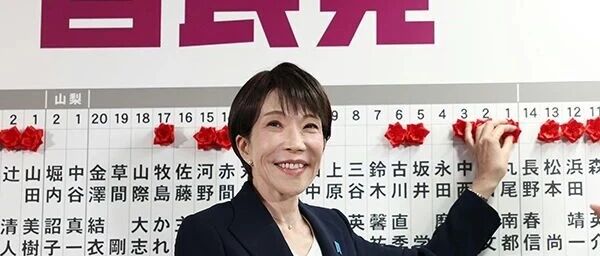
“高市早苗真正的考验才刚开始”
第一财经· 2026-02-10 07:56
Core Viewpoint - The recent Japanese House of Representatives election resulted in a significant victory for the ruling Liberal Democratic Party (LDP), which secured 316 seats, marking a historic achievement in post-war Japan. However, internal conflicts within the LDP and the challenges faced by Prime Minister Kishi Sanae raise concerns about the party's future direction and governance [3][4]. Group 1: Election Results and Political Landscape - The LDP's victory with over two-thirds of the seats is unprecedented in post-war Japan, indicating a strong mandate for the party [3]. - The opposition parties, including the Constitutional Democratic Party and the Komeito, formed a new coalition called the "Center Reform Alliance," which won 49 seats, while the Japan Innovation Party secured 36 seats [3]. - The political landscape is characterized by a shift towards a more right-leaning coalition, as the LDP seeks to align with the Japan Innovation Party following the dissolution of its long-standing alliance with the Komeito [8]. Group 2: Economic Policies and Challenges - Kishi's proposed "responsible active fiscal policy" aims to stimulate economic growth through increased deficits, interest rate suppression, and tax relief, amidst rising inflation [6]. - Japan's government debt is projected to reach approximately 230% of GDP by 2025, with interest payments alone amounting to 16 trillion yen, which is 180% of the military budget for 2026 [6]. - The lack of clarity regarding funding sources to address the substantial fiscal gap raises concerns about the sustainability of Japan's fiscal policies [6]. Group 3: Constitutional Revisions and Security Concerns - Kishi has expressed intentions to create an environment for a national referendum on constitutional amendments, particularly regarding Japan's nuclear policy and security documents [8]. - The potential revision of the "Three Non-Nuclear Principles" has sparked public protests, reflecting societal apprehension about the government's militaristic shifts [8]. - Analysts warn that the LDP's rightward shift could lead to increased tensions with neighboring countries, necessitating vigilance from regional stakeholders [8].

“高市早苗真正的考验才刚开始”,她还要面对这些问题
Di Yi Cai Jing· 2026-02-10 07:18
Group 1 - The core viewpoint of the article highlights the challenges faced by Japan's Prime Minister, Kishi, following the recent elections, including internal party conflicts and unresolved scandals [1][3] - The Liberal Democratic Party (LDP) won 316 seats in the House of Representatives, marking a historic achievement of over two-thirds of the seats, while opposition parties collectively secured 49 seats [1] - Kishi's economic policies have been criticized as lacking depth, particularly her shift from "active fiscal policy" to "responsible active fiscal policy," raising concerns about the sustainability of Japan's debt, projected to reach 230% of GDP by 2025 [2] Group 2 - Kishi's administration is under scrutiny for its ties to the Unification Church and unresolved financial scandals, which may impact her governance moving forward [3] - The proposed fiscal measures, including increased deficits and tax relief, have not disclosed specific funding sources to cover the anticipated fiscal gap, causing market unease [2] - Kishi's push for constitutional amendments and a shift towards a more right-leaning government coalition raises alarms among neighboring countries regarding Japan's security policies [4]
高市早苗将解散众议院提前大选
Bei Jing Shang Bao· 2026-01-20 16:57
Core Viewpoint - Japanese Prime Minister Sanna Takashi announced the dissolution of the House of Representatives on January 23, leading to an early election, with the voting scheduled for February 8, marking the shortest interval between dissolution and voting in post-war Japan [1][2]. Group 1 - The upcoming election aims to seek public trust regarding the ruling Liberal Democratic Party (LDP) and its coalition agreement with the Japan Innovation Party, as well as to address issues like inflation through proposed tax cuts [2]. - The LDP is currently under pressure as it does not hold a majority in both houses of the National Diet, necessitating support from opposition parties for budget approvals [2][3]. - Takashi's strategy appears to be leveraging stable cabinet approval ratings to convert public support into more seats in the House of Representatives, aiming for a majority to reduce reliance on smaller parties [2]. Group 2 - The dissolution of the House of Representatives has faced criticism from opposition parties and media, raising concerns about a "political vacuum" that could delay the review process of the 2026 budget, complicating its passage by the end of March [3]. - The current political climate suggests skepticism regarding the timing of the dissolution, especially given the pressing need for stable governance [3].
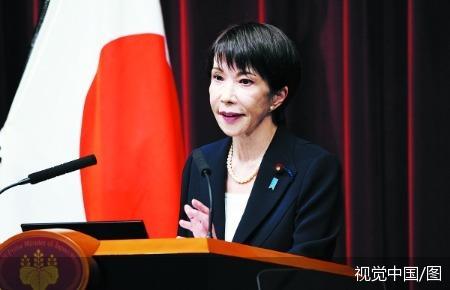
高市早苗宣布将解散众议院提前举行大选
Ren Min Ri Bao· 2026-01-19 23:33
Core Viewpoint - Japanese Prime Minister Fumio Kishida announced the dissolution of the House of Representatives for an early election, aiming to escape accountability and expand party seats amid rising public discontent over inflation and political scandals [1][2]. Group 1: Election Announcement - The House of Representatives will be dissolved on January 23, with the election announcement on January 27 and voting on February 8, marking the shortest interval of 16 days between dissolution and voting in post-war Japan [1]. - The current term for the House of Representatives was originally set to end in October 2028, with this dissolution occurring just over 15 months after the last election [1]. Group 2: Political Strategy - Kishida aims to gain public trust through the election by discussing the ruling coalition agreement with the Japan Innovation Party and promoting "responsible active fiscal policy" [1]. - The ruling Liberal Democratic Party (LDP) seeks to secure a majority in the House of Representatives to alleviate pressure from opposition parties, which currently hold significant influence due to the LDP not having a majority in both houses [2]. Group 3: Opposition and Criticism - The dissolution has faced criticism from opposition parties and media, suggesting it is a tactic to divert attention from pressing issues such as inflation and political scandals [2]. - Concerns have been raised about the potential "political vacuum" created by the election, which could delay the review process of the 2026 budget, complicating timely approval before the end of March [2][3].
上野千鹤子:真是“亡国内阁”
Xin Lang Cai Jing· 2025-12-03 09:30
Core Viewpoint - The article discusses the criticism of the Japanese government's supplementary budget proposal for the fiscal year 2025, which amounts to 18.3034 trillion yen (approximately 831.1 billion RMB), with a significant portion funded through new government bonds [1][2]. Group 1: Budget Details - The supplementary budget approved by the government totals 18.3034 trillion yen, with 11.696 trillion yen raised through new government bonds to cover funding gaps [1][2]. - The budget reflects the government's ongoing commitment to "responsible active fiscal policy" despite the substantial borrowing involved [1]. Group 2: Criticism - Ueno Chikako, a prominent sociologist and professor emeritus at the University of Tokyo, criticized the scale of the supplementary budget, suggesting it indicates a failure of governance, referring to the cabinet as a "nation-destroying cabinet" [2].
日本要学美国设“政府效率部”,引发质疑
Huan Qiu Shi Bao· 2025-11-24 22:44
Core Points - Japan plans to establish a new office to review subsidies and tax reductions, reflecting Prime Minister Suga's commitment to "responsible active fiscal policy" [1] - The new office will be led by Finance Minister Katayama and is expected to be fully operational by next year, with its first meeting scheduled for next month [1] - The office's main tasks include reviewing tax reduction measures, evaluating the effectiveness of high subsidies, and improving administrative efficiency across departments [1] - The establishment of this office is based on a coalition agreement between the Liberal Democratic Party and the Japan Innovation Party [1] Group 1 - The new office is referred to as "Japan's version of DOGE" and aims to eliminate ineffective tax and subsidy policies [1] - There are concerns regarding the potential challenges in implementing reforms due to existing vested interests and departmental barriers [1] - Katayama emphasized the need for broad consensus and understanding to ensure the sustainability of reforms [1] Group 2 - In contrast, the U.S. Government Efficiency Department, which aimed to cut $1 trillion in federal spending, was reportedly dissolved amid controversies [2] - Katayama noted that simply replicating the U.S. model would not work within Japan's parliamentary cabinet system [2] - The establishment of the efficiency department is seen as an opportunity to reduce waste and enhance transparency, but skepticism remains regarding its effectiveness due to past reform experiences and ongoing debates [2]
日本首相方针误读 日元大幅贬值
Jin Tou Wang· 2025-10-24 09:38
Core Viewpoint - The Japanese yen continues to depreciate despite a higher-than-expected CPI of 2.9% in September, as market bets on further yen depreciation persist. Prime Minister Fumio Kishida emphasizes an "economy first, finance later" principle as the foundation of his administration's policies [1]. Group 1 - The market has begun to bet on yen depreciation since Fumio Kishida took office, viewing him as a successor to Abenomics, despite his previous opposition to interest rate hikes [1]. - Kishida's administration has clarified its stance, indicating a separation from dovish policies, suggesting that continued bets on significant yen depreciation may misinterpret Kishida's team's approach [1]. - Kishida's team has stated that their core policy will be based on the principle of "economy first, finance later," with a focus on responsible and proactive fiscal policies [1]. Group 2 - The administration plans to strategically deploy fiscal spending to ensure fiscal sustainability by reducing the debt-to-GDP ratio, thereby stabilizing market confidence [1]. - The current trading range for USD/JPY is constrained by an upward trend line and a downward pressure line around 153.20-153.70, with key support levels identified at 152.00, 150.70, and 149.00 [1].
消息人士:日本新首相正准备推出大规模经济刺激计划以应对通货膨胀,规模或超过去年的13.9万亿日元
Sou Hu Cai Jing· 2025-10-22 04:15
Core Points - The new Prime Minister, Sanna Takashi, is preparing an economic stimulus plan that may exceed last year's 13.9 trillion yen (approximately 921.9 billion USD) to help households cope with inflation [1][3] - The plan will focus on three main pillars: anti-inflation measures, investments in growth industries, and national security spending [3] - This stimulus plan represents Takashi's first major economic initiative since taking office and reflects her commitment to what she calls "responsible active fiscal policy" [3] - The specific scale of the stimulus plan is still being finalized, with a potential announcement as early as next month [3]