消费税减税

Search documents
日银三月议息按兵不动-中东冲突-油价冲击对日本市场的影响
2026-03-22 14:35
Summary of Key Points from the Conference Call Industry Overview - The focus is on the Japanese economy and the impact of high oil prices and geopolitical tensions in the Middle East on monetary policy and market dynamics [1][2][3]. Core Insights and Arguments - **Monetary Policy Outlook**: The Bank of Japan (BOJ) is expected to maintain its current interest rate policy, with potential rate hikes in April or June 2026. The likelihood of a June hike is favored due to a dovish committee stance and historical caution from Governor Ueda [1][4][5]. - **Impact of High Oil Prices**: Rising oil prices are expected to weaken domestic demand in Japan, leading to a more cautious BOJ approach. Conversely, the U.S. Federal Reserve is experiencing a drop in rate cut expectations due to inflation pressures [1][3][5]. - **Economic Recovery Drivers**: The recovery in Japan is shifting from consumer spending to corporate capital expenditure, driven by the AI industry revolution, which is expected to sustain macroeconomic growth above potential levels over the next two years [1][8]. - **Yen Depreciation**: The yen's safe-haven status is diminished due to high oil prices, with a critical intervention point at 160. Short-term fluctuations are influenced by geopolitical tensions and U.S. monetary policy [1][12][13]. - **Consumption Tax Cut**: A proposed consumption tax cut in 2027 could lower CPI by approximately 1.5 percentage points and provide a short-term GDP boost of about 0.2 percentage points, but it raises concerns about Japan's long-term fiscal stability [1][7]. Additional Important Content - **Investor Sentiment**: There is a divergence in expectations between domestic and foreign investors regarding BOJ policy adjustments, with domestic investors leaning towards a June hike due to concerns over domestic demand [4][5]. - **Oil Price Scenarios**: Three potential scenarios for oil prices are outlined: stabilization and gradual decline, prolonged high prices, and further spikes. Each scenario presents different implications for Japan's economic growth and inflation [6]. - **Sectoral Impact of Oil Prices**: A 10% increase in oil prices could reduce corporate profits by 1% to 1.25%, with varying effects across sectors. The Nikkei 225 index is projected to decline by approximately 8.4% for every 10% rise in oil prices [15][16]. - **Market Outlook**: Despite the oil price shock, there remains optimism for the Japanese stock market due to ongoing positive momentum from government policies and foreign investment inflows [16][17][18]. - **Valuation Perspective**: The current valuation of the Japanese stock market is seen as offering medium to long-term investment opportunities, especially if corporate governance and policy improvements continue [18].
日本自民党内有“高市别动队”?
日经中文网· 2026-03-01 00:33
Group 1 - The core viewpoint of the article highlights the resurgence of the old Abe faction within the Liberal Democratic Party (LDP) in Japan, with 49 members elected, more than double the previous count, indicating a strengthening of political alliances supporting Prime Minister Sanna Takashi [2][5] - The article notes that members who supported Takashi in past elections have successfully regained their seats, suggesting a consolidation of power and influence within the LDP, particularly in relation to fiscal policies such as tax reductions [2][4] - There is an emphasis on the strategic moves being made by Takashi's allies to strengthen her position within the party, including efforts to ensure her re-election as party president without a vote, which is crucial for maintaining stability in the LDP [5] Group 2 - The article discusses the impact of political funding issues on the old Abe faction, which faced setbacks in the recent elections but still managed to increase its representation significantly [5] - It mentions the existence of various groups within the LDP, such as the "Conservative Unity Association" and the "Responsible Fiscal Policy Promotion Group," which are aimed at supporting Takashi's agenda and enhancing her political base [5] - The article indicates that Takashi's term as LDP president will end in September 2027, highlighting the importance of her current political maneuvers for future leadership stability [5]

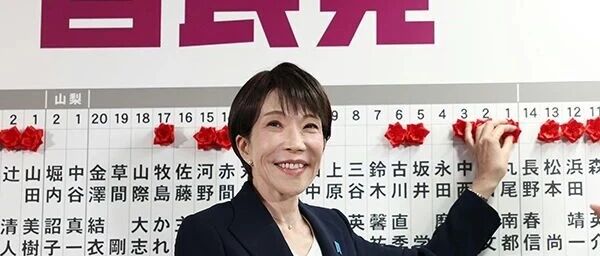
小川淳也当选日本中道改革联合新党首
日经中文网· 2026-02-13 08:29
Core Viewpoint - The election of Junya Ogawa as the new representative of the Center Reform Union is crucial for revitalizing the party after a significant defeat in the recent House of Representatives election, where the party's seats dropped from 167 to 49 [2][5]. Group 1: Election and Leadership - Junya Ogawa, aged 54, has been elected as the new leader of the Center Reform Union, succeeding Yoshihiko Noda and Tetsuo Saito, who resigned due to the party's poor performance in the elections [2][4]. - Ogawa received 27 votes from the 49 members of the House of Representatives affiliated with the Center Reform Union during the election [4]. - His term as party leader will last until the end of March 2027, and he aims to provide stability and hope for the future to the Japanese public [2]. Group 2: Party Challenges and Goals - The new leadership is expected to be formed quickly, with participation in the special session of the Japanese National Assembly scheduled for February 18 [2]. - The party faces the challenge of addressing the significant loss of seats and the need for internal harmony, as the Komeito party members secured 28 seats, while those from the Constitutional Democratic Party only obtained 21 [5]. - Ogawa's leadership will focus on key issues such as tax reduction and social security reform, with differing views on how to implement these changes [5].

日本财务大臣片山皋月:计划讨论动用全部盈余的可能性
Jin Rong Jie· 2026-02-10 02:25
Core Viewpoint - Japan's Finance Minister, Shunichi Suzuki, indicated the possibility of utilizing foreign exchange reserve surpluses to fund consumption tax reductions, although no definitive decision has been made yet [1] Group 1 - The government plans to discuss the potential use of all surpluses from foreign exchange reserves [1] - A temporary measure of food sales tax exemption will be implemented prior to the introduction of a tax credit system [1]
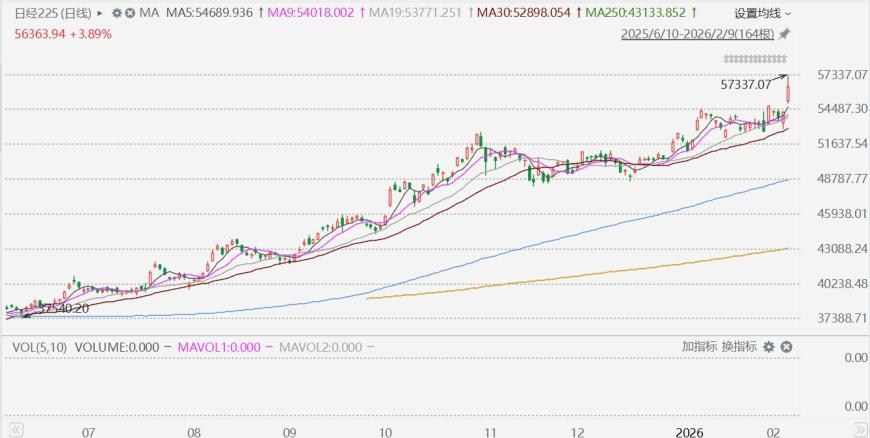
高市“碾压式”大胜!日股收涨近4%,再创历史新高,年内累涨11.97%
Ge Long Hui· 2026-02-09 06:55
Core Viewpoint - The Nikkei 225 index reached a historical high, with a significant increase following the ruling party's overwhelming victory in the House of Representatives election, indicating potential positive market sentiment and investment opportunities in Japan [1]. Group 1: Market Performance - On February 9, the Nikkei 225 index surged over 5% to 57,337.07 points during intraday trading, ultimately closing up 3.89% at 56,363.94 points, marking a record closing high [1]. - The Nikkei 225 index has accumulated a year-to-date increase of 11.97% [1]. Group 2: Political Impact - The ruling Liberal Democratic Party won decisively in the House of Representatives election, securing 316 out of 465 seats [1]. - Morgan Stanley suggests that the election results may favor the Nikkei index, with large-cap, high liquidity, high beta stocks, and defense-related stocks likely to outperform the market in the short term [1]. Group 3: Economic Policy Outlook - If the expansionary fiscal policy trend is maintained during the budget review period, and if Japan and the U.S. emphasize coordination on defense strategy, the effectiveness of high trade strategies may continue temporarily [1]. - The market should assess the actual effectiveness of Japan's government efficiency department, and it may be premature to view the consumption tax reduction debate as a positive factor for domestic demand-related stocks [1].
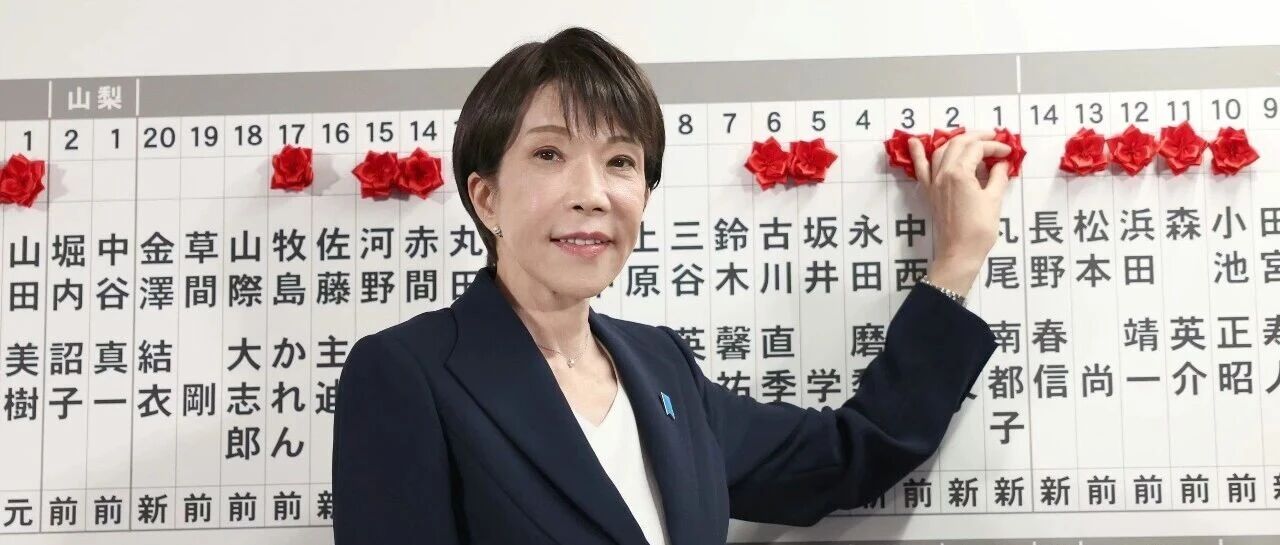
高市增强政策推动力,提参拜靖国神社
日经中文网· 2026-02-09 01:52
Core Viewpoint - The Japanese government, led by Prime Minister Sanna Takashi, is expected to enhance its policy implementation capabilities following significant gains in the House of Representatives elections by the ruling Liberal Democratic Party (LDP) [1][2]. Group 1: Tax Policy and Economic Measures - The LDP has committed to accelerating discussions on reducing the food consumption tax to zero within two years, utilizing non-deficit sources such as tax revenue [2][3]. - There are internal divisions within the LDP regarding the consumption tax, with about 20% of candidates preferring to maintain the current rate, indicating cautious sentiment amidst financial market sensitivities [3][4]. - The government plans to implement a "subsidy tax credit" system to alleviate the burden on low- and middle-income households while also pursuing social security reforms [4]. Group 2: Constitutional and Security Reforms - Prime Minister Takashi expressed intentions to amend the constitution, particularly regarding the Self-Defense Forces, following the LDP's acquisition of over two-thirds of the seats in the House of Representatives, which allows for constitutional amendment proposals [5][6]. - The government aims to enhance defense cooperation with the U.S. and other countries, addressing threats from China, Russia, and North Korea, and is considering increasing defense spending to over 2% of GDP [9]. Group 3: Legislative Process and Budget Priorities - The 2026 budget and tax reform bills are prioritized, with discussions expected in a special session in mid-February, although challenges remain due to the dissolution of the House of Representatives [6][7]. - The LDP's majority allows it to control all permanent committee chair positions, facilitating a more stable legislative process, although cooperation with opposition parties may be necessary for passing certain bills [7][8].
外媒:大选后抛售潮若现,日本央行不会出手救高市
Huan Qiu Shi Bao· 2026-02-05 22:46
Group 1 - The Japanese bond market has experienced significant volatility due to concerns over the potential suspension of the "consumption tax," which may worsen the fiscal situation [1] - The yield on ultra-long-term Japanese government bonds surged to historical highs, prompting questions about whether the Bank of Japan will intervene following the elections on February 8 [1] - The Bank of Japan is currently hesitant to intervene in the bond market, as the risks of intervention outweigh the potential benefits, reflecting the high costs associated with such actions [1] Group 2 - Analysts suggest that the current state of the bond market may be a calm before a storm, with investor concerns about Japan's fiscal outlook making the bond market susceptible to sudden sell-offs [2] - Political parties in Japan are competing to promise consumption tax cuts in response to high prices, raising alarms among European financial institutions and media about the potential negative impact on Japan's fiscal health [2] - The International Monetary Fund reports that Japan's government debt is projected to reach 229.6% of GDP by 2025, the highest among all economies surveyed, indicating a precarious fiscal situation [2]
日本大选朝野各党都瞄准消费减税
日经中文网· 2026-01-28 08:00
Core Viewpoint - The article discusses the challenges faced by Japanese citizens due to rising prices outpacing wage growth, leading to political debates on consumption tax reduction ahead of the upcoming House of Representatives election on February 8 [2][4]. Group 1: Consumption Tax Debate - Various political parties in Japan are proposing to lower the consumption tax, with differences in the extent, target, and duration of the reductions being points of contention [2]. - The ruling Liberal Democratic Party (LDP) and the Japan Innovation Party propose to eliminate the consumption tax on food within two years, with Prime Minister Sanna Takashi emphasizing a target implementation by the fiscal year 2026 [2][4]. - The Constitutional Democratic Party and Komeito have formed a coalition advocating for a clear source of funding for tax reductions, aiming for implementation by autumn [5]. Group 2: Economic Support Policies - Political parties are incorporating various economic support measures in their campaign platforms to address the current inflation, with a focus on household financial assistance [2]. - The National Democratic Party has proposed a fixed consumption tax rate of 5% until wage growth exceeds inflation by 2% [5]. Group 3: Energy Policy - There is a narrowing gap between the ruling party and the main opposition regarding energy policies, with the middle path allowing for conditional nuclear power plant restarts [6]. - The ruling party and the middle path coalition advocate for expanding renewable energy, while other parties call for the abolition of certain promotion systems [6]. Group 4: Foreign Policy - The LDP plans to tighten regulations on foreign ownership of land and property, emphasizing the need for secure coexistence with foreign residents [7]. - The National Democratic Party supports stricter limitations on foreign land acquisition, while the Japan Innovation Party proposes a population strategy for managing foreign immigration [7]. Group 5: Diversity and Inclusion - Some parties emphasize the importance of diversity, with proposals for multicultural coexistence and anti-discrimination laws aimed at including foreigners [8].
野村:日本”特拉斯冲击“再升温:选举减税的政策博弈与日本财政担忧
野村· 2026-01-26 02:49
Investment Rating - The report does not explicitly state an investment rating for the industry Core Insights - Japan is experiencing a "Truss Shock" similar to the UK, characterized by concerns over fiscal discipline and rising bond yields due to proposed tax cuts [33][60] - The government is pushing for a temporary reduction of the food consumption tax to 0%, which may lead to long-term fiscal implications and market skepticism regarding the sustainability of such policies [37][29] - The fiscal policy under Prime Minister Kishi is described as "active but responsible," aiming to balance economic stimulation with fiscal discipline, although market confidence in this approach is wavering [20][52] Summary by Sections Consumption Tax Reduction - The discussion around reducing the consumption tax has shifted from concern to a likely reality, driven by political pressures and the upcoming elections [4][7] - The ruling coalition, including the Liberal Democratic Party and the Japan Innovation Party, supports a temporary reduction of the food consumption tax to 0% for two years [30][17] Rising Bond Yields and Fiscal Concerns - Japan's long-term bond yields have surged, raising fears about fiscal sustainability and the impact of tax cuts on government finances [8][41] - The market is reacting negatively to the perceived lack of fiscal discipline, leading to a "triple sell-off" scenario affecting government bonds, stocks, and the yen [13][64] Policy Tools and Constraints - The report outlines the government's fiscal strategy, which includes measures to address inflation and stimulate the economy while maintaining some level of fiscal discipline [19][20] - There is a concern that the proposed tax cuts may not have a clear funding source, leading to increased market skepticism about the government's fiscal management [37][60] Election Impact and Market Reactions - The upcoming House of Representatives election is expected to influence market dynamics, with potential volatility in bond auctions and fiscal policy announcements [87][83] - The report highlights the uncertainty surrounding the government's ability to maintain fiscal stability amidst proposed tax cuts and rising interest rates [41][38]
海外投资者正在卖出日本国债,高市早苗:世界存在对减税的误解
日经中文网· 2026-01-23 07:45
Core Viewpoint - Concerns regarding Japan's fiscal policy have intensified, leading to a significant sell-off of Japanese government bonds (JGB) by overseas investors, while optimism about the stock market remains intact due to expectations of economic growth [2][4][7]. Group 1: Fiscal Concerns - Overseas investors predominantly express a "sell" sentiment towards Japanese government bonds, with Alpha Management maintaining a 100% short position since April of the previous year [4]. - The sell-off of Japanese bonds has been exacerbated by Prime Minister Kishi's announcement of plans to dissolve the House of Representatives and implement a temporary zero tax on food consumption [7]. - The yield on newly issued 10-year Japanese government bonds reached 2.38%, marking a 27-year high, reflecting rising long-term interest rates due to persistent inflation and the Bank of Japan's interest rate hikes [7][6]. Group 2: Stock Market Optimism - Despite fiscal concerns, stock market investors are optimistic about Japan's economic growth, with some hedge funds viewing the current market as a once-in-a-lifetime opportunity [8]. - Analysts predict that if the ruling Liberal Democratic Party maintains power, the Nikkei average index could rise above 60,000 points, driven by infrastructure investments and rising prices [9]. - Recent data indicates that overseas investors net purchased over 1.2 trillion yen in Japanese stocks during the first week of January, the largest scale since October 2025 [11]. Group 3: Political and Economic Implications - Concerns have been raised about potential political instability and fiscal imbalance, drawing parallels to the "Truss shock" in the UK, which resulted from large-scale tax cuts leading to market turmoil [12]. - Prime Minister Kishi emphasized that the government would not rely on special public bonds for funding tax cuts and aims to communicate the importance of fiscal sustainability to the market [15][16]. - Kishi's administration claims that the primary balance has achieved a surplus for the first time in 28 years, and the proposed tax cuts are designed to be more fiscally responsible compared to opposition party proposals [16].