
质量风格

Search documents
量化点评报告:三月配置建议:关注顺周期主线
GOLDEN SUN SECURITIES· 2026-03-04 11:57
- The "Six-Cycle Model" identifies economic phases using the three-month difference in medium- and long-term loan pulses (TTM YoY). As of January, the model entered Phase 6, "Monetary Expansion," indicating a defensive allocation strategy[7][11] - The "Analyst Industry Prosperity Index" evaluates industry performance expectations. The index shows that the cyclical and growth sectors are in an expansion phase, with the cyclical sector entering this phase in January 2025[12][13] - The "Industry Relative Strength Index (RS)" ranks industries based on cross-sectional returns. Industries with RS > 90% by April are likely to lead the market. As of February 2026, seven industries, including non-ferrous metals and petrochemicals, showed RS > 90% signals[15][16] - The "Style Factor Analysis" evaluates factors like small-cap, value, quality, and growth based on three metrics: odds, trend, and crowding. Small-cap and value factors scored highest, while growth and quality factors showed weaker trends[30][32][36][39] - The "Industry Configuration Model" uses two approaches: the "Industry Prosperity Model" (high prosperity + strong trend, avoiding high crowding) and the "Industry Trend Model" (strong trend + low crowding, avoiding low prosperity). March recommendations include cyclical sectors like chemicals and coal[46][48][50] - The "Inventory Cycle Reversal Model" identifies industries in recovery phases with low inventory pressure. Current recommendations include oil services, coal chemicals, and rare metals. Historical backtests show strong absolute and excess returns[55][56][57] - The "Odds and Win Rate Strategies" include three models: "Odds-Enhanced," "Win Rate-Enhanced," and "Odds + Win Rate." These models optimize asset allocation based on risk budgets. Historical performance shows annualized returns of 6.7%-7.9% with low drawdowns[58][61][64]
我们基金经理榜单是如何筛选的?有哪些基金经理今年值得关注?
Sou Hu Cai Jing· 2026-01-08 13:06
Core Viewpoint - The article emphasizes the importance of "long-term excess return stability" as the primary criterion for selecting fund managers, highlighting the significance of consistent performance over time rather than short-term gains [2][11]. Group 1: Key Metrics for Fund Selection - The main indicator for selecting fund managers is "long-term excess return stability," which reflects three key dimensions: stable fund manager style, sustained alpha capability, and large strategy capacity [2]. - The observation method involves comparing fund performance against corresponding style beta indices, with a stable line indicating stable excess returns [2]. - A preference is shown for funds with consistent excess returns rather than those with sporadic high performance, which may be influenced by luck [2]. Group 2: Notable Fund Managers - Several fund managers from E Fund are highlighted for their stable excess returns, including Yang Zhenshao, Chen Hao, Wang Xiaocheng, Qi He, and Zhang Qinghua, all of whom have demonstrated strong performance over extended periods [4][5][7][8][9]. - Zheng Xi, a veteran fund manager with 19 years of experience, is noted for his consistent performance in the technology sector, achieving significant returns in 2025 [12]. - Wu Yang is recognized for his ability to adapt investment strategies in response to market changes, showcasing flexibility in portfolio management [18][21]. Group 3: Market Insights - The article discusses the current underperformance of quality style investments, suggesting that the market may soon favor these strategies as economic conditions improve [24][27]. - The article indicates that the consumer index is currently undervalued, with a PE ratio of 19.5, suggesting potential for future growth as market conditions stabilize [26][27]. - The overall strength of E Fund's investment team is highlighted, suggesting that a strong research platform and talent development contribute to the consistent performance of its fund managers [28].

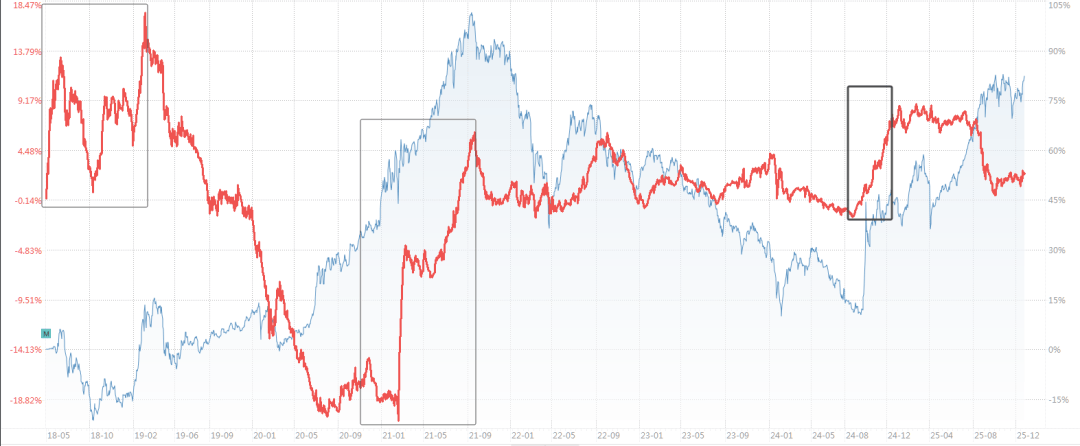
2026为什么要关注质量风格?
Xin Lang Cai Jing· 2025-12-30 04:39
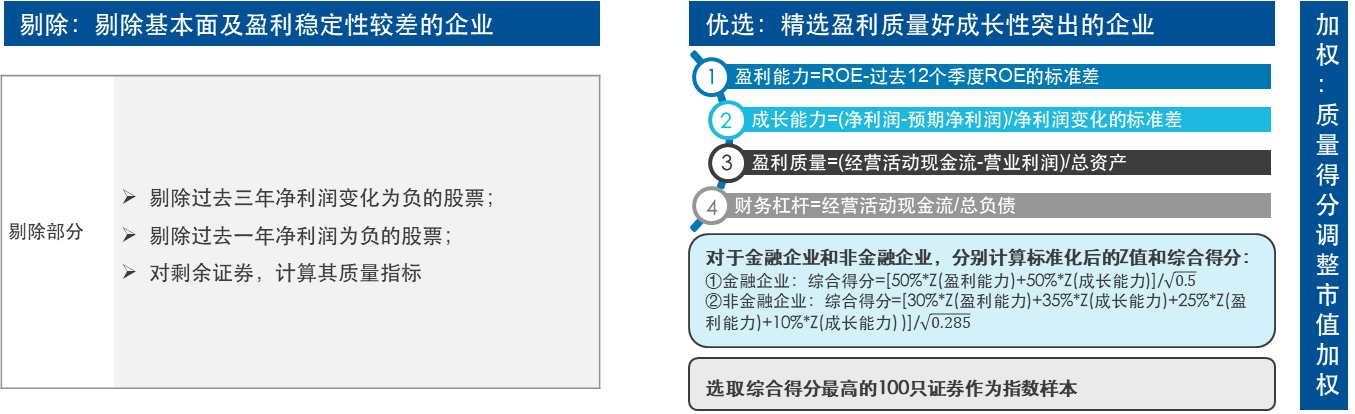
Core Viewpoint - The CSI 500 Quality Growth Index, with its unique "quality + growth" dual screening logic, has become a premium target in the mid-cap growth sector, attracting capital in the current A-share market focused on high-quality development and certainty in returns [1]. Group 1: Index Characteristics - The CSI 500 Quality Growth Index is a "smart beta" index that selects core assets from the CSI 500 Index, providing high elasticity typical of mid-cap stocks while establishing a solid risk baseline through stringent quality screening [1]. - The index employs a rigorous selection mechanism, eliminating continuously loss-making companies to ensure profitability, and further screening based on earnings volatility to select stable profit candidates [1]. - The final selection includes 100 high-quality stocks based on four core indicators: profitability, growth potential, profit quality, and financial leverage, ensuring a high ROE level and avoiding financial pitfalls [1]. Group 2: Industry Distribution and Risk Management - The index has a balanced industry distribution, covering emerging sectors such as new energy, semiconductors, and high-end manufacturing, with the top ten weighted stocks accounting for only 21.53%, effectively diversifying single-stock and industry risks [1]. Group 3: Future Outlook - Looking ahead to 2026, multiple favorable factors are expected to enhance the investment value of the CSI 500 Quality Growth Index, including a continued friendly liquidity environment and an increase in market funds prioritizing equity asset allocation [4]. - Earnings elasticity is anticipated, with a potential earnings bottom for the entire A-share market expected by the end of 2025 or early 2026, making mid-cap growth stocks particularly sensitive to this turning point [4]. - The index's constituent stocks include 36% national-level specialized and innovative enterprises, aligning with the government's focus on high-quality development and technological innovation, which may benefit from ongoing policy support [4]. Group 4: Investment Vehicle - The E Fund CSI 500 Quality Growth ETF (code 159606) tracks this index, offering convenient on-market trading and enabling investors to easily access 100 high-quality mid-cap growth stocks, aligning with the backdrop of high-quality development [4].
基本面量化系列研究之四:企业盈利能力评价指标的演进与优化
CMS· 2025-11-21 07:32
Core Insights - The report focuses on the evolution and optimization of profitability evaluation indicators, particularly the Return on Equity (ROE) within the PB-ROE framework, utilizing DuPont analysis to dissect the structure and potential issues of the ROE metric [1][4] - The report introduces a comprehensive profitability factor by optimizing the indicator system based on the analysis of ROE, aiming to enhance the dual optimization of the PB-ROE strategy framework in both valuation and profitability aspects [1][4] Section Summaries 1. In-depth Exploration of ROE and Profitability Styles - The PB-ROE strategy combines valuation levels with shareholder return rates, reflecting a company's ability to generate profits from shareholder capital, which directly influences net asset growth [10][14] - The relationship between ROE and GDP indicates that listed companies, as a significant part of the economy, have shown substantial growth in revenue, with the total revenue of A-share companies exceeding 72 trillion yuan in 2024, compared to 3.37 trillion yuan in 2004 [14][15] - ROE is categorized under quality style in investment factors, reflecting a company's financial health, profitability, reliability, and long-term growth potential [22][26] 2. ROE and DuPont Analysis - ROE is tested using both quarterly and TTM (Trailing Twelve Months) metrics, with the quarterly ROE factor showing a higher average Rank IC of 4.06% compared to 2.78% for TTM [28][29] - Historical high ROE stocks tend to underperform in future price performance, while portfolios constructed based on future ROE show significant excess returns, indicating the importance of ROE stability [33][34] - DuPont analysis breaks down ROE into three components: net profit margin, total asset turnover, and equity multiplier, providing a comprehensive assessment of a company's profitability, operational efficiency, and leverage [42][46] 3. ROE De-leveraging Analysis - The report discusses the linear separation of leverage factors from ROE, highlighting the economic relationship between ROA and ROE, and the limitations of ROA as a profitability measure [3][15] - The introduction of RONOA (Return on Net Operating Assets) and FCFFIC (Free Cash Flow Return on Invested Capital) aims to provide more accurate profitability assessments by excluding non-core operating activities and mitigating earnings management risks [4][6] 4. Comprehensive Profitability Factor - The integration of stable ROE, stable ROIC, stable RONOA, and FCFFIC forms a comprehensive profitability factor, enhancing the performance of the PB-ROE strategy [4][6] - The active quantitative stock selection strategy based on the PB-ROE framework has achieved an annualized return of 20.42% since 2010, significantly outperforming benchmarks like the CSI 800 [4][6]
中金:日历效应视角下 年末或可关注质量风格的配置机会
智通财经网· 2025-11-19 00:23
Group 1 - The report from CICC highlights the existence of calendar effects in the market, influenced by the rhythm of earnings disclosures, dividend events, and seasonal changes in institutional investors' risk preferences [1][3] - Small-cap style shows significant volatility in the first half of the year, with overall improvement in the second half; the small-cap style underperformed in April, with the CSI 2000 index excess returns of -2.3% and -2.2% [1][2] - Growth style exhibits a "high first, low last" characteristic, with significant excess returns in January and June-July, achieving a win rate of 90.9% [1][2] Group 2 - Quality style demonstrates a "strong at both ends" pattern, with January (excess return of 1.4%, win rate of 81.8%) and December (excess return of 0.5%, win rate of 80%) being the strongest months for quality style [2] - Dividend style performs well in April and August, with win rates of 83.3%, while June and October show significantly lower excess win rates [2][3] - The internal mechanisms of calendar effects are linked to the timing of earnings disclosures and dividend announcements, which influence investor focus and fund flows towards stocks with better fundamentals [3]
年末或可关注质量风格的配置机会,自由现金流ETF(159201)近20个交易日合计“吸金”超15亿元
Mei Ri Jing Ji Xin Wen· 2025-11-14 01:59
Group 1 - The report by CICC summarizes the calendar effect exhibited by mainstream styles in the A-share market, highlighting that the growth style portfolio shows significant excess returns in January and June/July, with a win rate of 90.9% [1] - The quality style demonstrates a "strong at both ends" pattern, with January (excess return of 1.4%, win rate of 81.8%) and December (excess return of 0.5%, win rate of 80%) being the advantageous months for this style [1] - The 800 quality index also performs relatively well in January and December, indicating strong seasonal trends for quality stocks [1] Group 2 - On November 14, the Free Cash Flow ETF (159201) experienced a slight decline of approximately 0.5%, while leading stocks such as Huaren Health, Hailu Heavy Industry, and CIMC Vehicles showed gains [1] - The Free Cash Flow ETF has seen net inflows in 19 out of the last 20 trading days, totaling over 1.5 billion yuan, indicating significant capital attraction [1] - The latest scale of the Free Cash Flow ETF reached 6.464 billion yuan, marking a new high since its inception and outperforming similar products [1] Group 3 - The Free Cash Flow ETF (159201) and its linked funds (A: 023917; C: 023918) closely track the National Index of Free Cash Flow, selecting stocks with positive and high free cash flow after liquidity, industry, and ROE stability screening [1] - The index is characterized by high quality and strong risk resistance, making it suitable for core portfolio allocation and long-term investment needs [1] - The fund management fee is set at an annual rate of 0.15%, and the custody fee at 0.05%, both representing the lowest rates in the market, maximizing benefits for investors [1]