
贸易关税战

Search documents
煌上煌:公司卤制品原材料无直接从国外采购的情况
Zheng Quan Ri Bao Wang· 2025-10-14 10:44
Core Viewpoint - The company, Huangshanghuang (002695), confirmed that it does not directly procure raw materials from abroad, mitigating the impact of the current trade tariff war on its supply chain [1] Group 1 - The company sources certain products (such as beef, chicken feet, and chicken tips) through domestic trading companies, indicating a limited reliance on international procurement [1] - The current trade tariff war has not had a direct effect on the company's raw material procurement, ensuring stable supply [1]

投降美国恶果来了!日本关键数据全面披露,损失高达3.5万亿日元
Sou Hu Cai Jing· 2025-08-22 05:58
Core Insights - The recent trade agreements between Japan and the EU signal a potential end to Trump's trade war, but the long-term impacts are just beginning to emerge [1] - The new trade agreement between the US and Japan has resulted in a significant increase in tariffs, from an initial threat of 50% down to 15%, which is still a substantial rise from the previous 2.5% [1] - Japanese companies are projected to face a loss of approximately 3.5 trillion yen (around 238 billion USD) in operating profits due to US tariff policies [3] Group 1: Economic Impact on Japanese Companies - The 42 major Japanese companies analyzed are primarily in the automotive, electrical, and machinery sectors, indicating that these industries will bear the brunt of the economic pressure [3] - The overall sentiment among Japanese businesses regarding future economic conditions is pessimistic, especially for small enterprises facing intensified market competition [3] Group 2: Strategic Shifts and Industry Trends - The US's macroeconomic policies are limiting Japan's ability to achieve substantial profits, as previous trade surpluses are now constrained by US policy controls [3][5] - The trend of industrial relocation is becoming more pronounced, with the US focusing on revitalizing its manufacturing sector, which may lead to Japanese industries being compelled to shift operations back to the US [5] - The forced investment requirement of 550 billion USD from Japan further exacerbates the likelihood of industry relocation, regardless of Japan's willingness [5] Group 3: Long-term Consequences for Japan's Economy - The consequences of the current trade agreements could be disastrous for Japan, as the US is targeting industries that are foundational to Japan's economic stability [7] - The potential relocation of these key industries could lead to a significant economic downturn for Japan, with severe implications for its overall economic health [7]


美国白宫:从8月1日起将加拿大输美商品关税税率从25%上调至35%!安大略省长:加拿大必须回击,建议对美钢铝征收50%关税进行反制
Ge Long Hui· 2025-08-01 07:09
Core Viewpoint - The U.S. White House announced an increase in tariffs on Canadian goods from 25% to 35% effective August 1, which has prompted a strong response from Canadian officials [1] Group 1: Tariff Changes - The U.S. has raised the tariff rate on Canadian imports from 25% to 35% starting August 1 [1] - This decision is part of ongoing trade tensions between the U.S. and Canada [1] Group 2: Canadian Response - Ontario Premier Doug Ford emphasized that Canada should not accept any incorrect actions and must retaliate [1] - Ford suggested imposing a 50% tariff on U.S. steel and aluminum to protect Canadian workers and businesses [1] - He highlighted Canada's position as the largest energy and mineral supplier to the U.S. and called for a united front among the Canadian government, workers, and businesses to create a more competitive and independent economy [1]

越南被本国企业质疑:可能惹恼中国,值得吗?
Guan Cha Zhe Wang· 2025-07-14 08:27
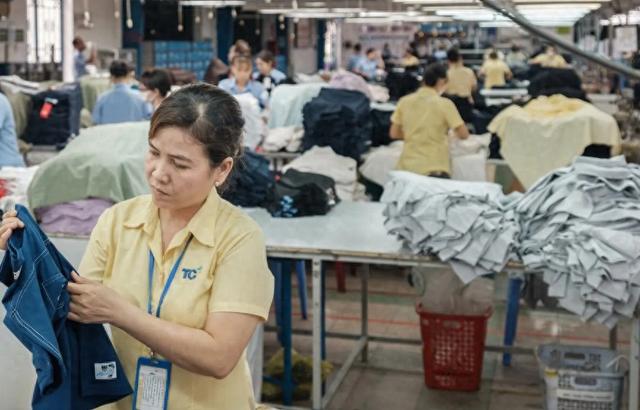
Core Points - The recent trade agreement between the U.S. and Vietnam has raised concerns among Vietnamese businesses regarding its implications, particularly the new 20% tariff on exports to the U.S. and the ambiguous "transshipment" clause [1][2][4] - The "transshipment" clause could impose a 40% tariff on goods deemed to be routed through Vietnam, which may significantly impact companies relying on Chinese materials [1][6][8] - The lack of clarity in the agreement has left many companies uncertain about the actual tariffs they will face, especially those using Chinese components in their products [2][5][6] Industry Impact - Vietnam's textile industry, which heavily relies on Chinese imports for up to 70% of its raw materials, is particularly vulnerable to the new tariffs and the "transshipment" clause [4][5][6] - The overall export volume from Vietnam to the U.S. is critical, as one-third of its exports go to the U.S., and any increase in tariffs could threaten economic growth [5][6][8] - The agreement may also affect Vietnam's competitive advantage in manufacturing, as companies are now evaluating how the new tariffs compare with those of neighboring countries [6][7] Business Reactions - Business leaders, such as the chairman of Thanh Cong Garment, express concerns about the potential challenges posed by the new tariffs and the vagueness of the "transshipment" definition [2][4] - Consulting firms are advising clients to navigate the uncertainties of the new trade agreement, highlighting the risks associated with the "transshipment" clause [5][6] - The Vietnamese government is under pressure to clarify the terms of the agreement and its implications for local businesses, especially in light of the significant reliance on Chinese supply chains [7][10]
航运衍生品数据日报-20250428
Guo Mao Qi Huo· 2025-04-28 11:02
1. Report Industry Investment Rating - Not mentioned in the provided content 2. Core Viewpoints of the Report - In the current macro - environment with unstable factors, it is advisable to remain on the sidelines. However, for investors with a higher risk tolerance, they can gradually go long on peak - season contracts when the price drops to the current level. The 06 contract is not as promising as the 08 contract. Currently, the price around 1600+ points is relatively low. The recent decline is mainly due to the suppression of macro - pessimistic funds and the weakness of the spot market. The concept of rush - re - export has been basically falsified. As the 04 contract approaches delivery, the 06 contract will gradually follow the delivery logic. The transfer of some idle ships on the US route to the European route in May has increased the supply on the European route, but this is a one - time event and does not significantly affect the supply during the peak season in July and August. The freight rate in early May has maintained the April level, and the freight rate in June this year lacks the upward slope compared to previous years, while the 8 - month freight rate still has two months of peak - season extension after June [10]. 3. Summary According to Relevant Contents 3.1 Shipping Derivatives Data - Shanghai Export Container Freight Index (SCFI) is currently at 1348, down 1.62% from the previous value; China Export Container Freight Index (CCFI) is at 1112, up 0.13% from the previous value. Among different routes, SCFI - US West is at 2141, up 1.81%; SCFIS - US West is at 1368, down 13.80%; SCFI - US East is at 3257, up 0.18%; SCFI - Northwest Europe is at 1260, down 4.26%; SCFIS - Northwest Europe is at 1508, up 7.56%; SCFI - Mediterranean is at 2129, down 1.48% [4]. - For EC contracts, the current values of EC2506, EC2508, EC2510, EC2512, EC5602, and EC2504 are 1365.1 (up 0.49%), 1613.0 (up 2.28%), 1304.9 (up 0.41%), 1476.1 (up 0.76%), 1312.0 (up 0.61%), and 1440.6 (up 0.11%) respectively. The current positions of EC2506, EC2508, EC2410, EC2412, EC2602, and EC2504 are 40348 (down 4120), 31861 (down 1441), 16123 (down 739), 4056 (down 192), 2714 (down 92), and 875 (down 34) respectively. The current month - spreads of 4 - 6, 6 - 8, and 8 - 10 are 75.5 (down 5.1), - 247.9 (down 29.3), and 308.1 (up 30.7) respectively [4]. 3.2 Market Conditions Review - The EC market is in a moderately strong and volatile state [7]. - The spot freight rate market is under pressure. After the price increase in March and April for price stabilization failed, the small - scale price increase in late April had poor coordination among major shipping companies. It is expected that the price in early May will remain between 2000 - 2500 US dollars, but the shipping capacity in late May is close to 300,000 TBU. If more ships from the US route are transferred, it will be unfavorable for the development of freight rates. The average price in April was around 2000 US dollars [8]. 3.3 Political Factors - The US - China trade tariff war has cast a pessimistic expectation on the future economy and trade volume. Recently, both sides have shown signals of peace talks, but it is still a stage of accumulating chips and bargaining. US Treasury Secretary Scott Bessent said that the current tariffs are unsustainable, and it may take 2 - 3 years to reach a comprehensive trade agreement. Trump also stated that he will not lower tariffs on China unless China gives some benefits to the US [9]. 3.4 Other News - The Trump administration is considering multiple tariff plans on Chinese goods, including reducing the tariff rate to about 15% - 65% or implementing a "graded plan" [5]. - Apple is planning to transfer the production of all iPhones sold in the US from China to India to avoid future tariff issues [6]. - US retailers are worried that Trump's trade war and increasing volatility will lead to empty shelves, price hikes, and store closures [6].