超豪华汽车市场

Search documents
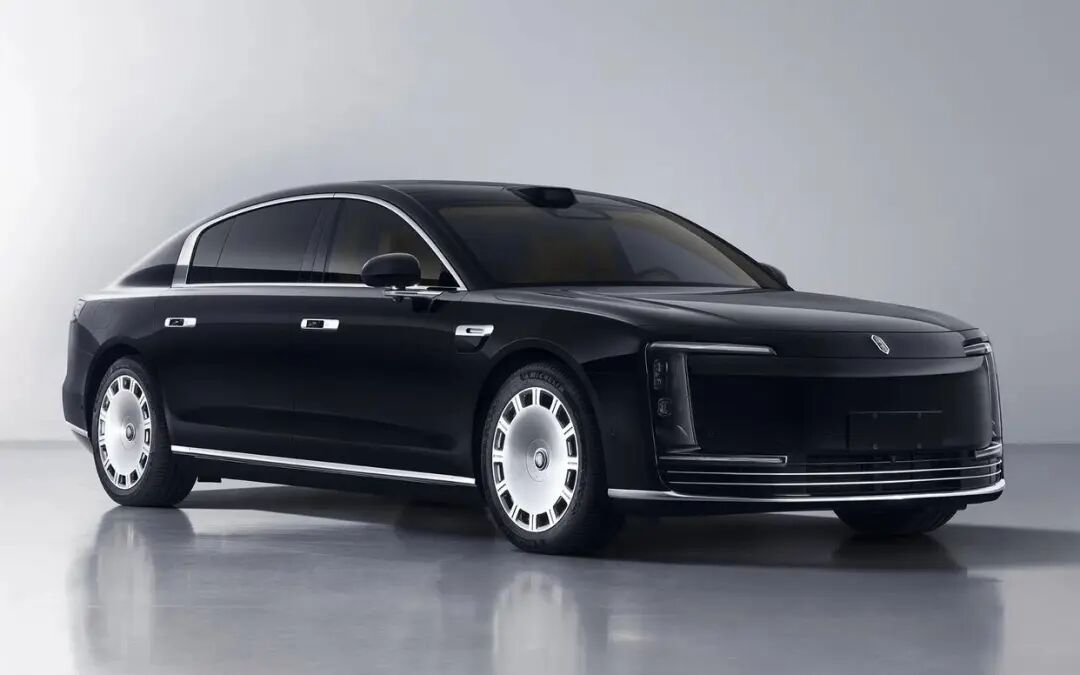
增程系统功率升级!新款尊界S800申报
Xin Lang Cai Jing· 2026-02-24 11:05
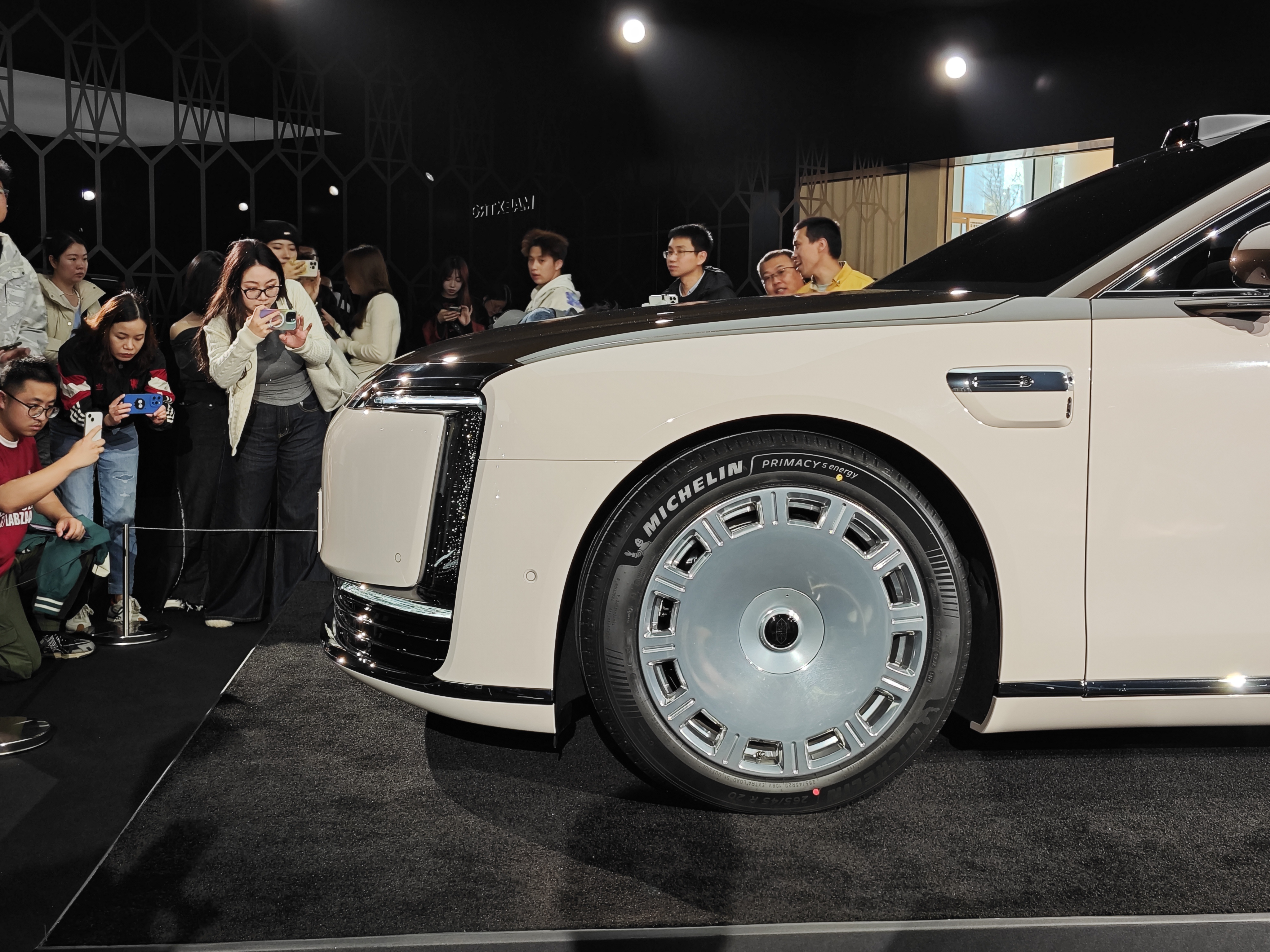
Core Viewpoint - The new model of the ZunJie S800 has received approval from the Ministry of Industry and Information Technology, featuring upgrades in power and design elements, indicating a strong market presence and future growth potential for the brand [1][5][11]. Group 1: Vehicle Specifications - The new ZunJie S800 has upgraded its range extender power from 125kW to 127kW [1]. - The vehicle maintains its dimensions at 5480×2000×1536mm with a wheelbase of 3370mm, offering 20/21-inch wheel options [3][9]. - The chassis features a front double-wishbone and rear five-link structure, equipped with dual-chamber air suspension and continuously variable damping [3][9]. Group 2: Design and Technology - The design philosophy of "Heaven, Earth, and Humanity" continues with a closed grille and vertically arranged headlight groups, enhancing brand recognition [1][3]. - The vehicle supports L3-level intelligent driving architecture, equipped with 36 sensors including 4 LiDARs and 11 cameras, utilizing Huawei's advanced driving system [3][9]. Group 3: Market Performance - The ZunJie S800, launched on May 30 last year, has quickly gained popularity, with over 1,000 pre-orders within the first hour and exceeding 8,000 orders in 50 days [5][11]. - In December of last year, the sales volume reached 4,376 units, showcasing strong market demand [11]. Group 4: Strategic Outlook - The ZunJie brand aims to fill the gap in the domestic ultra-luxury car market, challenging the long-standing dominance of foreign brands in the million-level luxury car segment [7][13]. - Future plans include high-end versions of the S800 and the development of luxury MPVs and SUVs, indicating a commitment to high-quality production [7][13].


江淮汽车(600418):公司信息更新报告:尊界S800销量持续爬坡,35亿定增注册获同意
KAIYUAN SECURITIES· 2026-01-09 02:15
Investment Rating - The investment rating for the company is "Buy" (maintained) [1] Core Views - The company has seen a significant increase in sales of its luxury model, the Zun Jie S800, with a total of 3.73 million vehicles sold in December 2025, representing a year-on-year increase of 42.2%. However, the overall vehicle sales for the year were 384,100, reflecting a decline of 4.7% due to pressures in the traditional automotive sector. The forecast for 2026 and 2027 has been adjusted upwards, anticipating revenues of 514.9 billion (-0.7%), 801.4 billion (+131.8%), and 1,285.3 billion (+405.8%) respectively, with net profits expected to be -2.0 billion (-6.6%), 21.6 billion (+5.8%), and 77.7 billion (+40.0%) [6][7]. Summary by Relevant Sections Sales Performance - The Zun Jie S800 has achieved over 18,000 pre-orders within 175 days of its launch, with December 2025 deliveries expected to exceed 4,000 units. The model has consistently ranked first in the luxury sedan market priced above 700,000 yuan, surpassing competitors like Porsche and BMW [7]. Market Outlook - The luxury car market is expected to remain resilient, with strong consumer purchasing power. The upcoming models, including a standard and long-wheelbase MPV, are anticipated to further support sales in 2026. The approval of a 3.5 billion yuan capital increase will fund the production of 200,000 mid-to-high-end electric vehicles, enhancing the company's delivery capabilities [6][7]. Financial Projections - The company’s revenue is projected to grow significantly in the coming years, with a forecasted revenue of 801.4 billion in 2026, marking a 131.8% increase from 2025. The net profit is expected to turn positive in 2026, reaching 2.16 billion yuan [9][12].
超豪华汽车市场没有捷径可走
3 6 Ke· 2025-12-28 13:49
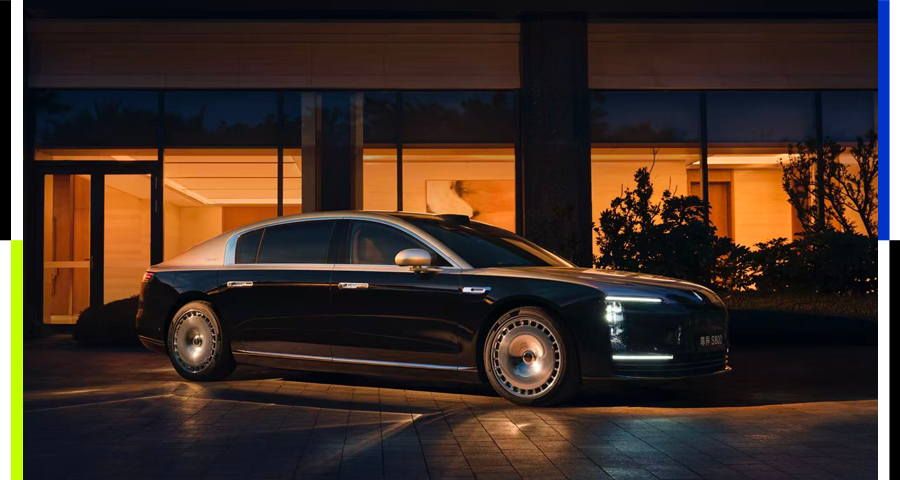
Core Insights - The ultra-luxury automotive market in China is transitioning from a "single narrative" to a "systematic engineering" approach, indicating a shift in how products are developed and delivered [2] - The performance of the ZunJie S800 highlights the importance of stable delivery capabilities and user trust in a highly competitive market, rather than just sales figures [3][4] - The ZunJie S800 has achieved significant delivery milestones, with over 2,200 units delivered in November and a record daily delivery of over 200 units on December 25 [3][6] Market Dynamics - The ultra-luxury segment is driven by "trust costs" rather than just demand, with user decisions based on brand reputation and manufacturing reliability [4][6] - The user base for the ZunJie S800 is evolving, with an increasing number of customers transitioning from traditional luxury brands, indicating a shift in consumer perception and acceptance [4][16] Manufacturing and Delivery - The ZunJie S800's growth reflects a highly industrialized manufacturing process, characterized by stable order conversion and consistent production rhythms, rather than explosive sales spikes [6][7] - The manufacturing system is designed for high-quality output without compromising delivery standards, ensuring low variability in product quality [6][11] Safety and Technology - In the context of electric vehicles, battery safety is a critical concern, requiring a systematic approach to mitigate risks associated with complex operational environments [9][12] - The Huawei Whale Battery Platform 2.0 emphasizes a comprehensive safety design, integrating multiple protective measures to enhance overall vehicle safety [11][12] Collaborative Model - The ZunJie S800 employs a "deep co-creation" collaboration model with Huawei, which enhances efficiency and redefines responsibility boundaries in product development [14][16] - This collaborative approach aligns well with the ultra-luxury market's demand for low error rates and high consistency in product delivery [14][16] Consumer Perception - The "ZunJie Effect" reflects a growing consumer trust in the ZunJie S800, transitioning from initial curiosity to a broader acceptance among high-end users [16][17] - The luxury perception in the new energy era is increasingly based on system reliability and engineering capabilities, rather than historical brand prestige [17]
超豪华汽车市场没有捷径可走
36氪· 2025-12-28 13:34
Core Viewpoint - The ultra-luxury automotive market in China is transitioning from a "single narrative" to a "systematic engineering" approach, emphasizing stable delivery and reliability over mere sales figures [2][4]. Delivery Performance - The ZunJie S800 has shown consistent delivery capabilities since its launch in May 2025, with monthly deliveries exceeding 2,200 units in November and reaching around 3,000 units by year-end, marking a historical record with daily deliveries surpassing 200 units [3][4]. - The delivery process has been characterized by a steady upward trend without significant spikes or drops, indicating a robust manufacturing and management system [4][9]. Market Dynamics - The market for ultra-luxury vehicles is driven by "trust costs" rather than just demand, with consumers making decisions based on brand reputation and manufacturing reliability [6][7]. - The user base for the ZunJie S800 is evolving, with an increasing number of customers transitioning from traditional luxury brands, leading to shorter decision-making cycles and higher rates of repeat purchases [6][21]. Manufacturing and Quality Assurance - The ZunJie S800's growth reflects a highly industrialized manufacturing process, with stable order conversion and consistent production rhythms, ensuring high-quality delivery without compromising standards [9][10]. - The manufacturing logic behind the ZunJie S800 focuses on small-batch, high-standard production to maintain consistency in quality and performance [9][10]. Safety and Technology - In the context of electric vehicles, battery safety is a systemic risk, and the ZunJie S800 incorporates a comprehensive safety design to mitigate potential hazards [12][13]. - The Huawei Whale Battery Platform 2.0 emphasizes a systematic approach to safety, integrating multiple protective measures to ensure reliability under various conditions [15][16]. Collaborative Model - The ZunJie S800 employs a "deep co-creation" collaboration model with Huawei, integrating technical capabilities into the entire vehicle system, which enhances efficiency and accountability [19][21]. - This collaboration aligns with the ultra-luxury market's need for low tolerance for errors and high consistency, leveraging Huawei's expertise in system engineering [19][22]. Market Perception and Trust - The "ZunJie Effect" reflects a growing trust among consumers, transitioning from initial curiosity to acceptance and recommendation within high-end user circles [21][22]. - The luxury perception in the new energy era is increasingly based on trust in systematic engineering capabilities rather than historical brand prestige [22].
30多万的玛莎拉蒂被一抢而空,销售:不建议买
盐财经· 2025-12-16 10:54
Core Viewpoint - Maserati, the Italian luxury car brand, is experiencing significant price reductions on its Grecale model, leading to increased sales and inventory clearance efforts [2][3]. Group 1: Price Reductions and Sales Performance - Maserati has implemented multiple rounds of price cuts on the Grecale model, with discounts making the price drop from an official range of 650,800 to 1,038,800 yuan to as low as 388,800 yuan, representing a reduction of over 260,000 yuan, or approximately 60% off [2]. - The electric version of the Grecale has seen even steeper discounts, with a price drop from 898,800 yuan to 358,800 yuan, a reduction of 540,000 yuan, or about 40% off [2]. - A dealer in Beijing confirmed that the low-spec version of the Grecale has sold out nationwide, indicating strong demand following the price cuts [3]. Group 2: Inventory and Production Challenges - Reports indicate that Maserati has only produced a limited batch of the electric Grecale, and there are concerns about future production due to unsold inventory and potential maintenance issues for customers [3]. - The delay in the arrival of these imported vehicles, caused by the pandemic, has compounded the urgency for Maserati to clear its inventory, leading to the current aggressive pricing strategy [3]. Group 3: Market Trends and Competitive Landscape - Maserati's sales in China have been declining, with a peak of 14,400 units in 2017, dropping to just 1,228 units in 2024, a decline of 71% [3]. - The overall luxury car market in China is facing challenges, with significant declines in import volumes for other luxury brands such as Bentley and Rolls-Royce, indicating a broader trend affecting the segment [4]. - Maserati has been rumored to be for sale, but the parent company Stellantis has denied these claims, indicating a focus on restructuring and revitalizing the brand in the Chinese market [4].
一口气推五款新车,尊界开启军团作战模式,暗含两重隐患?
3 6 Ke· 2025-11-26 23:33
Core Insights - The luxury brand ZunJie plans to expand its product lineup by introducing SUV and MPV models next year, adding to its existing S800 model, resulting in a total of three series and six models [1][4][24] - The new models will be positioned slightly below the S800, indicating a strategy to lower price barriers in the ultra-luxury market [4][5] - ZunJie aims to create a comprehensive product strategy that includes both upward and downward market coverage, with the S800 high-end version pushing price limits further [4][5] Product Strategy - ZunJie is completing its product category layout by covering sedans, SUVs, and MPVs, thereby solidifying its position in the ultra-luxury market [4][5] - The pricing strategy for the new models will be below 700,000 yuan, breaking the traditional pricing barriers of ultra-luxury brands [4][5] - The introduction of the high-end version of the S800 is expected to elevate the brand's market presence and pricing strategy [4][5] Market Dynamics - The aggressive expansion into multiple vehicle categories reflects a shift in the luxury market, where brands are compelled to diversify their offerings [5][24] - ZunJie's S800 has achieved significant sales, with over 18,000 units sold within 175 days of launch, outperforming traditional luxury models [6][7] - The brand's success is attributed not only to pricing but also to understanding the core needs of ultra-luxury consumers, such as advanced technology and unique user experiences [9][11] Financial and Technical Foundations - ZunJie's rapid product rollout is supported by a solid market foundation established by the S800, which has generated substantial sales and brand trust [6][7] - The company has a robust production capacity, with plans for a new factory capable of producing 200,000 electric vehicles annually, backed by significant investment [12][13] - The technological capabilities of the platform used for the S800 allow for the development of various vehicle types, ensuring feasibility for the new models [12][13] Challenges and Risks - There are concerns regarding product differentiation, as the new models may risk becoming too similar, potentially leading to a lack of unique identity in the ultra-luxury market [14][15][19] - The brand's ability to maintain premium pricing across its new models is uncertain, especially in a competitive market with established luxury brands [22][24] - The success of ZunJie's strategy will depend on its ability to create distinct value propositions for its new offerings, beyond just price [22][24]
BBA最后的堡垒,快守不住了
虎嗅APP· 2025-10-11 09:53
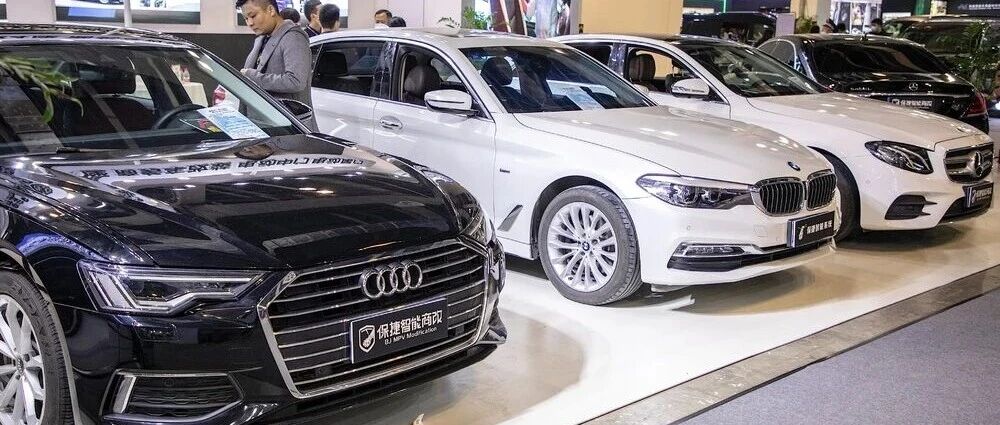
Core Viewpoint - The German luxury car trio, BMW, Mercedes-Benz, and Audi (BBA), is losing market share in China due to the rapid rise of domestic electric vehicle brands, particularly in the entry-level and mid-range luxury segments [4][8]. Market Dynamics - The entry-level luxury sedan market, represented by models like the BMW 3 Series, Audi A4L, and Mercedes-Benz C-Class, has seen significant price reductions, with the Mercedes-Benz C260L's price dropping to around 25 million yuan after subsidies [4]. - Despite price cuts, sales have not improved significantly, with Mercedes-Benz C-Class and Audi A4L sales dropping by 16% and 27% respectively in the first half of 2025, while BMW 3 Series saw a slight increase [4][5]. - The market share of new energy vehicles in the 200,000 to 300,000 yuan price range has increased from 60% to 63.3% year-on-year, further squeezing traditional luxury entry-level cars [4]. Financial Impact - BMW reported a 24.6% decline in deliveries for its popular models X3/X4 and a staggering 70.8% drop for i3/i4 in the first half of the year [5]. - In Q3 2023, BMW's sales in China were 147,100 units, down 0.4% year-on-year, while Mercedes-Benz's sales fell by 27% to 125,100 units [5]. - The financial performance of BBA has been adversely affected, with Mercedes-Benz's net profit plunging 55.8%, Audi's down 37.5%, and BMW's decreasing by 29% in the first half of 2025 [6]. Competitive Landscape - The mid-size luxury sedan market is also experiencing price competition, with the BMW 5 Series seeing a price drop of 40% from 439,900 yuan to approximately 260,000 yuan [6]. - Domestic electric vehicle brands are now targeting the ultra-luxury segment, with models like BYD's Yangwang U8 and NIO's ET9 directly competing with BBA's high-end offerings [6][7]. - NIO's ET9 surpassed BMW 7 Series and Audi A8L in sales in its first month, while Huawei's Zun Jie S800 received over 14,000 pre-orders within 109 days, indicating a shift in consumer preferences [7][11]. Historical Context - The Chinese luxury car market has undergone a significant transformation from 2010 to 2020, with market size growing from approximately 300,000 units to 2.2 million units, while BBA's market share dropped from 94.03% in 2012 to 63% in 2020 [8][9]. - Domestic brands have increasingly penetrated the luxury market, with Li Auto capturing nearly 10% market share and NIO holding a 40% share in the pure electric vehicle segment above 300,000 yuan by 2024 [9][10]. Challenges for Domestic Brands - While domestic brands have made strides in the ultra-luxury market, they face challenges in brand recognition and consumer trust compared to established players like BBA [16][18]. - The international market presence of these brands remains limited, and their success in the ultra-luxury segment will depend on their ability to enhance brand perception globally [18].



BBA最后的堡垒,快守不住了
商业洞察· 2025-10-10 09:29
Core Viewpoint - The article discusses the significant shift in the Chinese luxury car market, highlighting the decline of traditional German brands (BBA: BMW, Benz, Audi) due to the rapid rise of domestic electric vehicle brands, particularly in the entry-level and mid-range luxury segments [3][4][10]. Group 1: Market Dynamics - Over the past two decades, BBA has established itself as a symbol of luxury in China, but is now losing market share in the entry-level luxury sedan segment, where prices have dropped significantly [3][4]. - In the first half of 2025, the sales of Benz C-Class and Audi A4L fell by 16% and 27% respectively, while BMW 3 Series saw a slight increase [3]. - The market share of new energy vehicles in the 200,000 to 300,000 yuan price range has increased from 60% to 63.3% year-on-year, further squeezing the market for traditional luxury entry-level cars [3][4]. Group 2: Financial Impact - BBA's financial performance has been adversely affected, with Benz's net profit dropping by 55.8%, Audi's by 37.5%, and BMW's by 29% in the first half of 2025 [4]. - The mid-range luxury sedan market is also experiencing price cuts, with the entry-level BMW 5 Series seeing a price reduction of 40% [4]. Group 3: Competition from Domestic Brands - Domestic brands like NIO and BYD are increasingly targeting the ultra-luxury market, with models like the NIO ET9 and BYD's Yangwang U8 directly competing with BBA's offerings [4][5]. - NIO's ET9 surpassed BMW 7 Series and Audi A8L in sales shortly after its launch, indicating a shift in consumer preference [5]. - The Huawei-backed ZunJie S800 received over 14,000 pre-orders within 109 days, suggesting a strong market response that could challenge BBA's dominance [5][19]. Group 4: Historical Context and Future Outlook - The luxury car market in China has evolved significantly from 2010 to 2020, with BBA's market share dropping from 94.03% in 2012 to 63% in 2020 [7][10]. - By 2024, BBA's combined market share is projected to fall to 35%, while domestic brands like Li Auto and AITO are gaining traction [10]. - The competition in the ultra-luxury segment remains challenging for domestic brands, as they must overcome brand perception issues and establish a strong market presence [24][26].

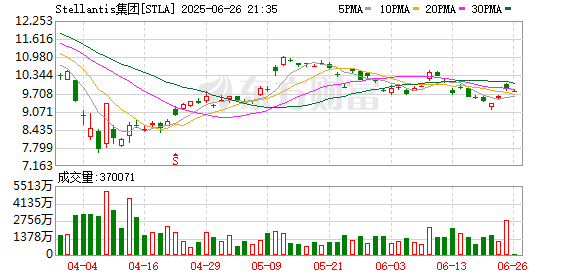
“跑车皇后”在华销量创新低 母公司Stellantis集团再度否认抛售事宜
Zhong Guo Jing Ying Bao· 2025-06-26 13:35
Core Viewpoint - Maserati, known as the "Queen of Sports Cars," is reportedly not for sale despite rumors, as confirmed by Stellantis Group officials [2][4]. Group 1: Maserati's Sales Performance - Maserati's global sales significantly declined in 2024, dropping from 26,689 units in 2023 to 14,725 units, a decrease of over 40% [2][4]. - In China, Maserati's sales fell from 4,680 units in 2022 to 1,209 units in 2024, with its market share dropping from 20% to 8.2% during the same period [4]. - The decline in sales is attributed to decreased demand for Western luxury imports, a drop in Grecale model sales, and inventory reduction measures [4]. Group 2: Financial Performance - Maserati's adjusted operating income and net income also saw declines in 2024, influenced by reduced sales and product mix [4]. - Stellantis Group reported a net revenue of €156.9 billion in 2024, a 17% decrease from 2023, with net profit dropping by 70% to €5.5 billion [7]. Group 3: Leadership Changes - Stellantis Group appointed a new CEO, Antonio Filosa, on June 23, 2025, as part of a management restructuring aimed at reversing the company's declining performance [3][7]. - Filosa's leadership experience in North and South America is expected to bring a new direction to the company [8]. Group 4: Market Trends - The overall luxury car market is experiencing a downturn, with Maserati's sales reflecting a broader trend of weakened demand among high-end consumers [5][6]. - In contrast, other luxury brands like Ferrari, Bentley, and Rolls-Royce are performing relatively better despite facing some sales declines [6].