通胀恐慌

Search documents
格林大华期货早盘提示-20260401
Ge Lin Qi Huo· 2026-03-31 23:42
Report Industry Investment Rating - No information provided Core Viewpoints - The conflict in the Middle East, especially the situation in the Strait of Hormuz, has a significant impact on the global economy and financial markets. The potential closure of the Strait of Hormuz could lead to a sharp increase in oil prices, which in turn affects inflation, interest rates, and bond yields. The global economy is facing downward pressure due to factors such as high oil prices and the US's wrong policies [2][3]. Summary by Related Catalogs Global Economic Logic - Trump is willing to end the military action against Iran even if the Strait of Hormuz remains largely closed. Iran's parliament has passed a management plan for the Strait of Hormuz, giving the Iranian armed forces a control role [1][2]. - There is a 40% probability that the conflict will continue until June, and if so, oil prices may exceed $200 per barrel, and US gasoline may reach $7 per gallon [2]. - The IEA has announced the release of 400 million barrels of strategic oil reserves, but the actual global release speed is no more than 3 million barrels per day, while the supply gap caused by the obstruction of the Strait of Hormuz is 11 - 16 million barrels per day [2][3]. - Analysts from Nomura and Goldman Sachs have warned that traders face extremely high risks in the current environment [2]. Impact on Financial Markets - The Fed Chairman's statement that the Fed tends to keep interest rates unchanged in the context of an energy shock has alleviated market concerns about the Fed tightening monetary policy to curb inflation [1]. - High - end believes that the Fed will eventually cut interest rates, referring to the situation in 1990 when the Fed cut rates during an oil supply shock [1]. - The decoupling of bonds and oil has become a key signal, with the market logic shifting from inflation panic to recession concerns and fiscal stimulus expectations [1]. - Global central banks are selling US Treasuries at the fastest pace in more than a decade, and the yen is under pressure [1]. - The Nasdaq futures have broken through support levels, and the AI - induced industry substitution and the Middle East situation may trigger a new round of large - scale selling, which may have a significant negative impact on US consumption [3].

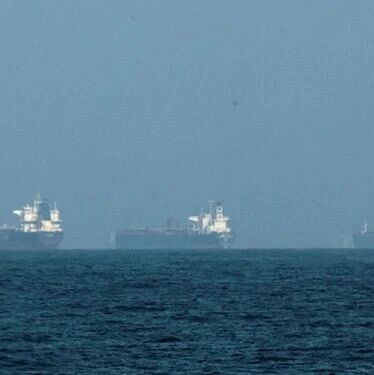
油价将突破每桶100美元?
日经中文网· 2026-03-06 02:58
Group 1 - The article discusses Iran's strategy to increase oil prices by threatening to block the Strait of Hormuz and attacking oil facilities in neighboring countries, aiming to pressure the U.S. into a ceasefire [2][4][8] - Predictions indicate that if tanker transportation does not quickly resume, oil prices could exceed $100 per barrel, with some estimates suggesting prices could reach $140 per barrel if the blockade lasts a year [6][4] - The geopolitical tensions have led to significant increases in various commodity prices, including a 70% rise in European natural gas prices and a peak in aluminum futures prices not seen in nearly four years [4][6] Group 2 - The U.S. administration, particularly President Trump, is concerned about rising oil prices affecting voter sentiment ahead of the midterm elections, which could influence decisions regarding military engagement [8][9] - The article highlights the potential economic impact of rising oil prices, estimating that a price increase to the $90-$100 range could raise inflation rates in developed countries by 0.7 percentage points [6] - The situation poses a dilemma for the U.S. regarding the political risks of continuing military action against Iran, with oil price trends being a critical factor in decision-making [9]

白银价格预测:受美PPI数据火爆打压银价险些跌破38美元,美联储降息前景支撑白银窄幅震荡
Sou Hu Cai Jing· 2025-08-16 07:43
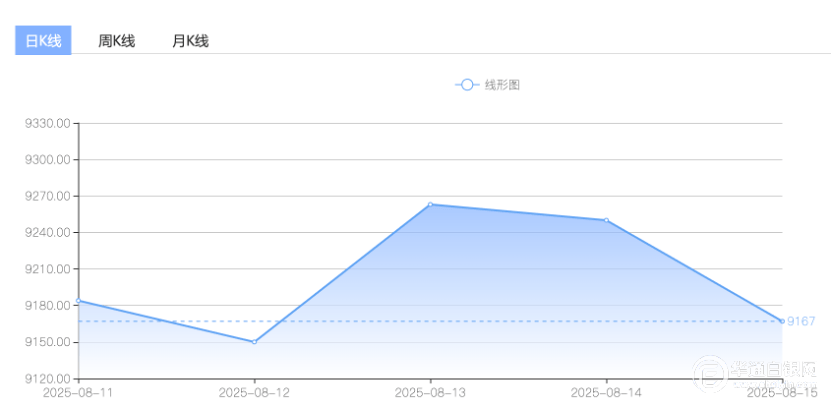
Core Viewpoint - Silver prices have temporarily halted their decline from recent highs but lack upward momentum, necessitating caution before making significant bets [1] Group 1: Market Performance - Silver prices fluctuated below the 200-hour moving average, indicating a potential downward channel [2] - During the Asian trading session, silver attracted some low-level buying, recovering from a drop in the previous day from the $38.70 to $38.75 range, which was a three-week high [2] - The price rose above $38.00 in the last hour of trading, despite lacking bullish support [2] Group 2: Economic Indicators - The dollar index declined, and the strong producer price index from Thursday had a diminishing impact, as traders believe the Federal Reserve will resume rate cuts in September, which is seen as a key factor for reviving precious metal demand [2] - New inflation fears seem to weaken market expectations for more aggressive easing policies from the Federal Reserve, which, along with a generally risky environment, hinders bullish bets on silver [2] Group 3: Technical Analysis - Silver continues to show resilience below the 200-hour simple moving average and has rebounded from the support level of the recent upward channel [5] - Any subsequent rise is likely to encounter strong resistance around the $38.20 to $38.25 range, with a sustained breakout potentially pushing prices to the $38.50 to $38.55 range and possibly reaching the recent high near $38.75 [5] - Conversely, weakness below the $37.80 area could drag silver prices down to the next relevant support level around $37.00, with further selling seen as a trigger for bearish traders, potentially retesting the monthly low near $36.20 [5]
全球风险偏好,正在急剧下降
格隆汇APP· 2025-04-01 11:01
Core Viewpoint - The article discusses the potential impact of Trump's tariff policies on global markets, suggesting that it may lead to a significant downturn in the economy and stock markets, particularly in the U.S. [2][14] Group 1: Market Reactions - Global investors are concerned that Trump's aggressive tariff policies could drag the global economy into a recession [14] - The U.S. stock market is experiencing a decline, with the Nasdaq expected to drop by 4% to 16,668 points under a neutral scenario, and potentially 10% to 15,700 points under a pessimistic scenario [20] - Gold prices are rising as investors seek safe-haven assets amid market volatility [2][27] Group 2: Economic Predictions - Goldman Sachs provided two scenarios regarding the impact of tariffs: a 13% tariff leading to a 7% increase in S&P 500 EPS and a 25% tariff leading to a 3% increase [10] - Moody's has raised the probability of a U.S. recession from 15% to 40%, while Goldman Sachs increased its forecast from 20% to 35% [10] - Long-term inflation concerns are at their highest in over three decades, with consumers increasingly worried about rising prices [10] Group 3: Investment Strategies - Investors are advised to consider using VIX for hedging against market volatility [21] - In the Hong Kong market, there is potential for gradual positioning in core technology stocks, especially if the U.S. market continues to decline [22] - The article suggests that the Hong Kong market has already priced in various negative factors, indicating a potential for recovery if conditions improve [23] Group 4: Long-term Outlook - The article posits that despite current market challenges, historical patterns suggest that significant downturns are often followed by prolonged bull markets [29][30] - The underlying strength of the U.S. economy and the quality of companies may support a rebound in the stock market [30] - Investors are encouraged to focus on company performance during earnings season, with a preference for those showing strong results [31]