金融避险

Search documents
品牌焕新、服务升级,《浦银避险市场展望蓝皮书》连续八年发布
Zhong Guo Jin Rong Xin Xi Wang· 2026-01-11 09:56
Core Viewpoint - The release of the "Puhua Risk Avoidance 2026 Market Outlook Blue Book" marks the eighth annual report by Pudong Development Bank, emphasizing the importance of risk management services in navigating uncertain markets and supporting stable operations for various clients [1][2]. Group 1: Brand and Service Upgrade - The "Puhua Risk Avoidance" brand has been upgraded to "Puhua Risk Avoidance+" to provide more comprehensive and efficient risk management services [1][11]. - The brand aims to assist clients in managing risks more simply and effectively, emphasizing a commitment to enhancing service quality and expanding service boundaries [13]. Group 2: Economic Context and Opportunities - The report highlights the role of risk management services as a crucial link between financial markets and the real economy, contributing to high-level opening-up and resource optimization [2]. - The launch of the Hainan Free Trade Port on December 18, 2025, presents new opportunities for the financial industry, with Pudong Development Bank actively participating in its development [2][4]. Group 3: Market Outlook and Strategic Insights - The blue book forecasts that global economic growth will continue to be asynchronous, with a focus on balancing domestic macro policies among demand cultivation, industrial upgrading, and risk mitigation [6][9]. - It emphasizes the need for market participants to anchor their strategies in the underlying logic of financial markets and their own capabilities to build sustainable profit systems [9]. Group 4: Collaborative Efforts and Innovations - The event featured discussions among representatives from various sectors, including government and financial institutions, to explore new strategies for empowering the real economy through risk management [14]. - Pudong Development Bank has successfully launched pilot cross-border asset management projects in Hainan, showcasing its commitment to leveraging local policy advantages [14].



俄罗斯黄金密集运抵,中国战略储备争分夺秒!
Sou Hu Cai Jing· 2025-12-30 23:25
Group 1 - The core point of the article highlights a significant increase in gold imports from Russia to China, reaching $1.9 billion in the first 11 months of the year, nearly a tenfold increase compared to the same period last year [1][3] - In just two months, China has acquired approximately 13.4 tons of physical gold from Russia, marking an unprecedented scale in the history of precious metal trade between the two countries [3] - There is a discrepancy between the official data showing an increase of less than 1 ton in gold reserves in October and the actual amount purchased from Russia, indicating a time lag in the reporting of gold imports [3] Group 2 - In October, China sold $11.8 billion in U.S. Treasury bonds, bringing its holdings to the lowest level since 2008, reflecting a strategic adjustment in its asset structure [5] - The urgency of this asset reallocation is driven by concerns over potential instability in the U.S. financial system and the safety of foreign exchange reserves [5][7] - China is also stockpiling essential commodities such as oil, food, and rare minerals as part of a broader strategy to create a "bulletproof vest" against potential geopolitical risks [7][8] Group 3 - The current strategic layout aims to ensure that even in the event of significant geopolitical tensions, China will have sufficient resources to maintain stability, leveraging its domestic supply chains and strong ties with Russia [8][10] - The emphasis on reorganizing assets and preparing for various risks is seen as crucial for maintaining control over future economic and operational conditions [10]
白银价格,为何突然大涨?
Sou Hu Cai Jing· 2025-12-10 02:58
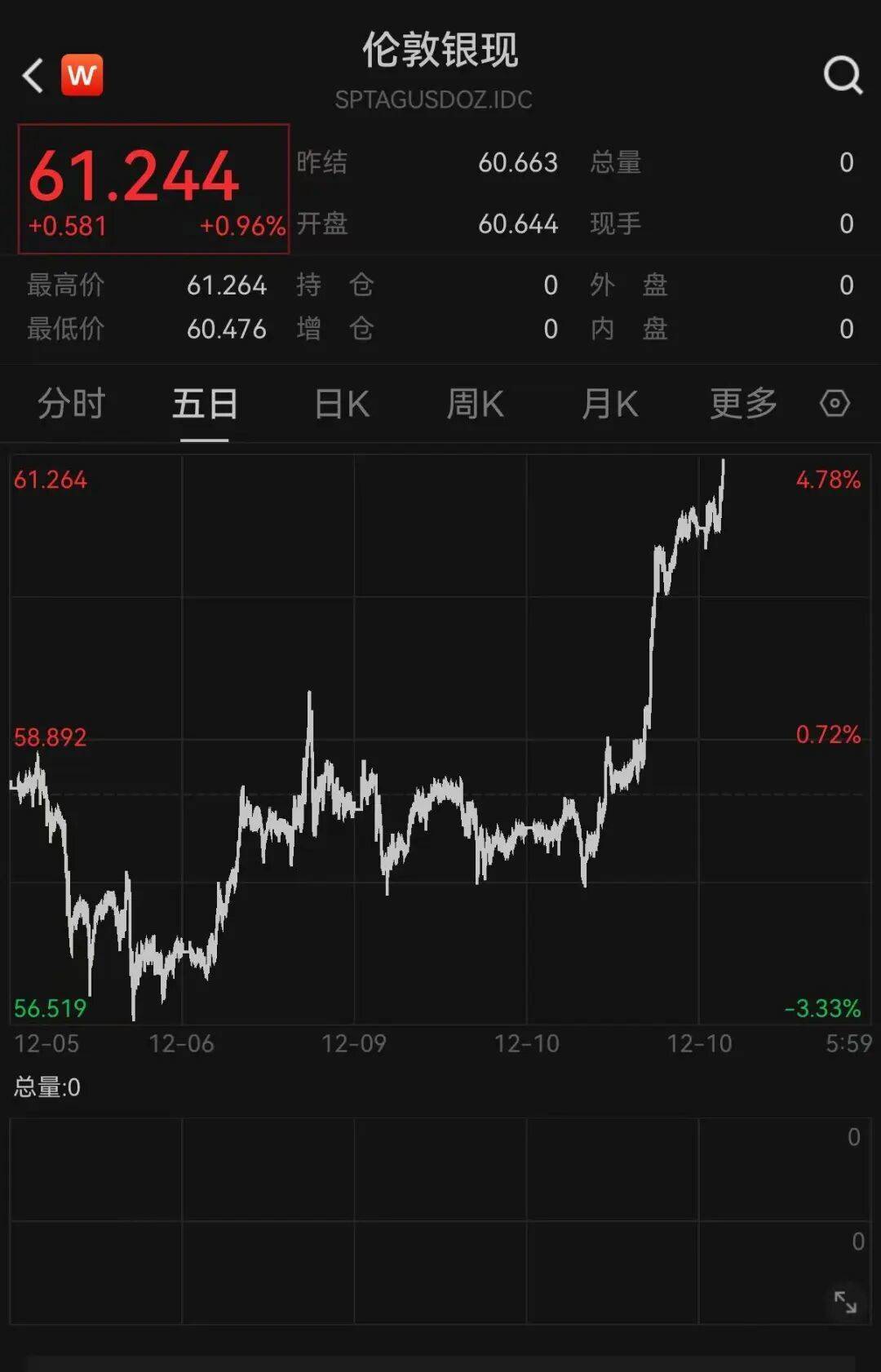
Core Viewpoint - The silver market is experiencing significant price increases, with both spot and futures prices reaching new highs due to rising demand and various economic factors [1][3][4]. Price Movement - As of December 10, the spot price of silver in London reached $61.244 per ounce, marking an increase of nearly 1% [1]. - On December 9, silver prices surged over 4%, breaking the important $60 per ounce threshold for the first time [3]. - Year-to-date, silver prices have risen by approximately 110% [3]. Demand Drivers - Increased demand for precious metals is attributed to rising debt levels in major Western economies and the associated risks of currency devaluation [3]. - Silver's smaller market size compared to gold makes it more sensitive to fluctuations in the dollar, leading to higher volatility [3]. Supply and Economic Factors - Continuous supply tightness, declining global inventories, and expectations of an upcoming interest rate cut by the Federal Reserve are supporting silver prices [4][6]. - The probability of a 25 basis point rate cut by the Federal Reserve in December is estimated at 87.6% [5]. Industrial Demand - Silver's industrial applications, particularly in photovoltaic technology and AI computing, are contributing to strong demand [5]. - The increasing share of silver used in solar panels and AI servers is creating robust industrial demand [5]. Market Strategy - Analysts suggest maintaining long positions in silver futures, while cautioning about the risks associated with high volatility [6]. - Future price movements may experience fluctuations as supply-demand dynamics begin to stabilize [6].
每天进口1100万桶,中国为何疯狂囤石油?传递出怎样的信号?
Sou Hu Cai Jing· 2025-11-04 11:10
Core Insights - China has significantly increased its oil imports, with daily imports exceeding 11 million barrels, surpassing Saudi Arabia's production levels [3][5] - A substantial portion of these imports, estimated at 1 to 1.2 million barrels per day, is being stored in national reserves, indicating a strategic move rather than mere consumption [3][7] Group 1: Market Dynamics - The international oil market has experienced unprecedented volatility, with prices soaring to $130 per barrel during the early stages of the Russia-Ukraine conflict, followed by a decline to around $65 by 2025 due to geopolitical tensions and sanctions [5][7] - China's strategy of accumulating oil during price dips is akin to shopping during a sale, allowing for significant cost savings on imports, which can amount to hundreds of billions of yuan annually [7][13] Group 2: Strategic Positioning - China's oil import strategy is characterized by a calculated approach, waiting for optimal market conditions rather than engaging in panic buying [9][11] - The country has developed strong bargaining power with major oil-producing nations, enabling it to secure favorable terms for its imports [11][20] Group 3: Energy Security - China’s oil import structure is notably reliant on sensitive regions, with approximately 25% of its crude oil sourced from Russia and Iran, making it vulnerable to geopolitical risks [15][17] - The country’s strategic oil reserves, currently estimated at 1.2 to 1.3 billion barrels, are three times larger than those of the United States, providing a buffer against potential supply disruptions [29][31] Group 4: Future Preparedness - The ongoing accumulation of oil reserves is part of a broader strategy to prepare for potential global energy shocks, ensuring that China can maintain economic stability even in extreme scenarios [20][37] - The implementation of advanced technologies, such as blockchain for tracking oil supply, enhances the efficiency and responsiveness of China's oil reserve management [33][35]
巴西大豆因为涨价滞港:中国48小时“反杀”!坐地涨价找错了对象
Sou Hu Cai Jing· 2025-10-28 02:23
Core Viewpoint - Brazilian soybean exporters misjudged China's price sensitivity, leading to a significant cancellation of orders and a shift in China's sourcing strategy towards other countries like Argentina and Uruguay [1][9]. Group 1: Market Dynamics - In early October, nearly 2 million tons of soybeans were stranded at Brazilian ports due to a sudden halt in Chinese purchases, with 1.8 million tons of orders canceled within 48 hours [1][9]. - Brazilian exporters raised soybean prices from $400 per ton at the beginning of the year to $650 per ton by October, a 62.5% increase, believing they had leverage over China [3][5]. - The price surge was attributed to logistical delays and adverse weather conditions, but the actual supply remained robust, with Brazil's soybean production expected to reach 180.92 million tons in 2025 [5][7]. Group 2: China's Response - China quickly pivoted to procure soybeans from Argentina, signing contracts for 1.3 to 3 million tons at prices $30 to $40 lower than Brazilian soybeans [9][11]. - China's soybean reserves of 45 million tons and stable domestic production allowed it to withstand the supply disruption without panic [11][15]. - The feed industry in China has been reducing soybean meal usage, which could decrease demand by 15 million tons annually, further diminishing reliance on Brazilian imports [11][13]. Group 3: Future Implications - China's diversified sourcing strategy now includes countries like Canada and Russia, reducing its previous dependency on Brazilian soybeans [19][21]. - The upcoming harvest period in Brazil and potential developments in U.S.-China trade negotiations could further impact soybean pricing and sourcing dynamics [19][21]. - The situation highlights a shift in supply chain control, with China demonstrating strategic resilience and adaptability in response to Brazilian pricing tactics [21].
本波黄金上涨的4个原因
Sou Hu Cai Jing· 2025-09-23 02:52
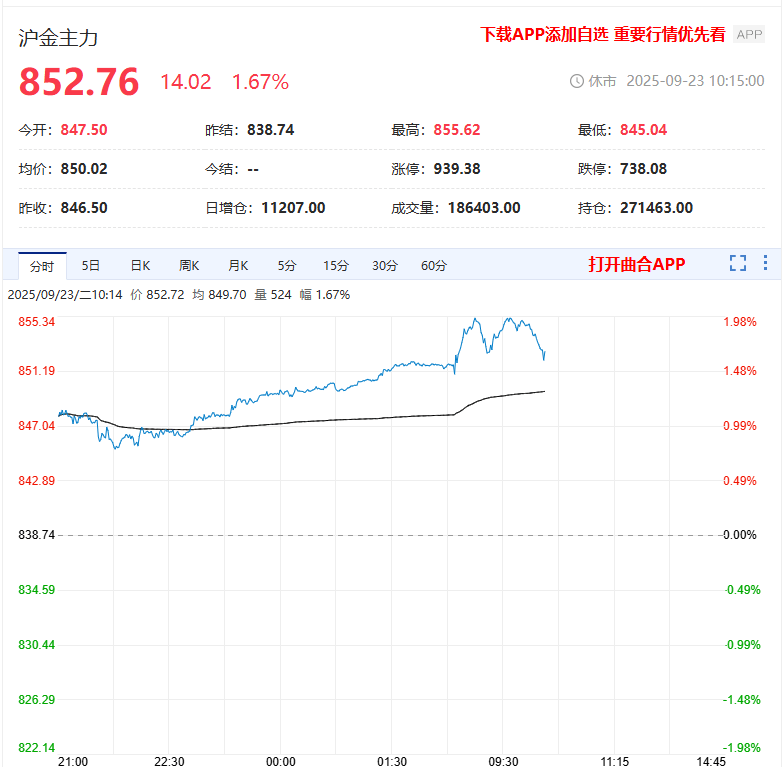
Group 1 - The core factors driving the recent rise in gold prices include a global low interest rate environment due to the pandemic, U.S. financial sanctions on Russia leading to de-dollarization, financial hedging amid trade wars, and regional conflicts such as the Russia-Ukraine war and the Israel-Palestine conflict [1][2]. Group 2 - The first factor is the low interest rate environment created by the pandemic, where central banks globally, including the U.S. and Eurozone, lowered interest rates to stimulate their economies. This environment is favorable for gold, especially after the recent rate cuts by the Federal Reserve [1]. - The second factor is the de-dollarization trend resulting from U.S. sanctions on Russia, which has led to increased gold reserves among central banks globally. For instance, as of September 3, global central bank gold reserves have surpassed U.S. Treasury holdings for the first time in 30 years [2]. - The third factor involves financial hedging due to trade wars and tariffs, which has increased the demand for gold as a safe-haven asset [2]. - The fourth factor is the impact of regional conflicts, which have heightened geopolitical risks and further driven investors towards gold [2].