
长线资金入市

Search documents
荀玉根:预计26年A股各类增量资金合计2万亿
Xin Lang Cai Jing· 2026-02-28 00:24
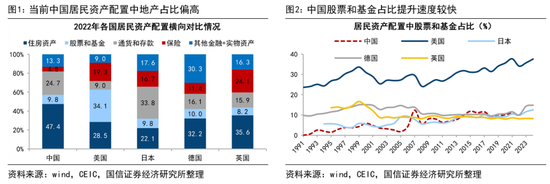
Group 1 - The core conclusion indicates that nearly half of Chinese residents' asset allocation is in real estate, with fixed income increasing significantly over the past 21 years, while equity allocation remains below 10% [1][31] - The historical context shows that from 1982 to 2000, the upgrade of the industrial structure in the U.S. drove a long bull market in U.S. stocks, alongside pension system reforms that shifted residents' asset allocation towards equities, reaching a current equity allocation of 34% [1][31] - Currently, China is in a similar phase to the early 1980s in the U.S., with a gradual shift in residents' asset allocation towards equities, and it is projected that total incremental funds in the A-share market will reach 2 trillion yuan by 2026 [1][31] Group 2 - The current state of Chinese residents' asset allocation shows a high proportion in real estate and a low proportion in equity assets, with real estate accounting for 47% of total assets in 2022, which is higher than the U.S. (29%), Japan (22%), Germany (32%), and the UK (36%) [3][33] - The proportion of equity assets held by Chinese residents has been increasing but remains significantly lower than in developed countries, with stocks and funds accounting for 9.8% of total assets in 2022, compared to 34% in the U.S. [4][34] - Since 2000, the evolution of Chinese residents' asset allocation has transitioned from real estate to fixed income, with expectations of a future tilt towards equity assets [8][36] Group 3 - The evolution of asset allocation in China can be divided into three phases: prior to 2018, where real estate was heavily favored; from 2018 to 2021, where the focus shifted towards standardized assets; and post-2021, where there is a further inclination towards fixed income [10][39] - The period from 2018 to 2021 saw a regulatory shift with the introduction of asset management regulations, leading to a significant increase in the scale of public funds from 12 trillion yuan at the beginning of 2018 to 26 trillion yuan by the end of 2021 [10][39] - Since 2021, the focus has shifted further towards fixed income due to economic challenges, with a notable decline in stock prices and a significant drop in real estate prices [12][41] Group 4 - The historical evolution of U.S. residents' asset allocation provides insights, with a pivotal shift occurring in 1980, driven by structural changes in the economy and pension reforms that encouraged investment in equities [14][43] - The long bull market in U.S. stocks from 1982 to 2000, characterized by a 15.7% annualized return, was supported by favorable macroeconomic policies and technological advancements [14][44] - Pension reforms in the U.S. during the 1980s significantly increased the scale of pension funds, which in turn led to a substantial increase in equity investments, with the share of stocks in pension fund investments rising from 3% in 1980 to 48% by 2000 [17][47] Group 5 - Currently, China's asset allocation is in a slow preparatory phase for a shift towards equities, with incremental changes expected but not a rapid transition [21][50] - The ongoing structural transformation in China's economy and improvements in policy frameworks for long-term capital entering the market are gradually progressing [22][51] - By 2026, it is anticipated that there will be an incremental increase in equity allocation, estimated at 2 trillion yuan, although the impact may be less significant compared to previous years due to the current market conditions [28][58]

安联资管总经理张光:将百年安联集团专业的资产负债匹配管理体系引入中国
Shang Hai Zheng Quan Bao· 2025-12-25 18:50
Core Viewpoint - Allianz Asset Management aims to leverage its century-long expertise in asset-liability management to establish itself as a leading asset management institution in China, focusing on diversified sources of asset returns in a low-interest-rate environment [1][2]. Group 1: Investment Strategy - The company is actively reducing reliance on single fixed-income yields and expanding into equity dividends and growth returns, as well as increasing exposure to alternative assets [1]. - In fixed income, the strategy involves rigorous credit research to identify mispriced opportunities, while in equities, the focus has shifted from merely high dividend yields to assessing the quality, sustainability, and growth potential of dividends [1][4]. - The alternative investment strategy aims to find high-quality assets that are less correlated with traditional assets, leveraging the company's investment and financing synergies [1][4]. Group 2: Risk Management - Allianz Group's risk management philosophy, developed over 130 years, emphasizes a comprehensive risk control system that spans the entire investment process, ensuring a scientific balance between investment and risk management [2][3]. - The company has integrated Allianz Group's investment and risk management experience with local practices in China, achieving a total asset management scale exceeding 350 billion yuan, with 85% from third-party funds [2]. Group 3: Research and Talent - The core investment team comprises seasoned professionals with an average of over 15 years of experience from various sectors, including insurance asset management, public funds, and brokerage firms [3]. - The company has established a dual-track research system that combines macro insights with micro-depth analysis, focusing on risk-driven asset allocation and in-depth credit research in fixed income [3]. Group 4: Future Strategies - The company plans to implement three main strategies: asset-liability synergy, refined investment processes, and long-term performance assessment [5]. - The investment approach will prioritize high-quality dividend assets in the core portfolio while selectively choosing growth-oriented assets for satellite positions, enhancing efficiency through detailed credit management [5]. Group 5: Long-term Investment Philosophy - The regulatory environment is shifting towards encouraging long-term investments, prompting a change in investment logic from short-term trading to long-term dividend-focused strategies [6][7]. - The company aims to become a stable and constructive long-term force in the capital market, emphasizing the importance of comprehensive asset-liability management and proactive risk management from the product development stage [7].
中金公司:A股有望迈向“长期”“稳进” 新范式
Xin Lang Cai Jing· 2025-12-09 07:47
Core Insights - The report from China International Capital Corporation (CICC) indicates that the A-share market has experienced five long cycles since 2005, and it is currently positioned for a "long-term" and "steady" new paradigm [1][4] Group 1: Paradigm Changes - CICC highlights two significant potential paradigm shifts: first, the rapid growth of household savings, which has surpassed 160 trillion yuan, combined with a low interest rate environment where bank deposit rates and government bond yields are below 2% [2][5] - The dividend yield of the CSI 300 index is expected to exceed government bond yields in 2024, supported by improved corporate cash flows and regulatory backing, making stocks one of the few potential high-return assets available [2][5] - The second shift involves long-term capital entering the market, with insurance funds' investments in stocks and securities expected to rise from 4.1 trillion yuan at the end of 2024 to 5.6 trillion yuan by the third quarter of 2025, increasing the allocation to 15%, above the historical average of around 12.5% [2][5] Group 2: Market Dynamics - If the influx of household funds and long-term investments aligns with an improved market performance, it could create a positive feedback loop, enhancing the capital market ecosystem and potentially leading the A-share market into a new paradigm that breaks the cycle of frequent rotations [2][5]

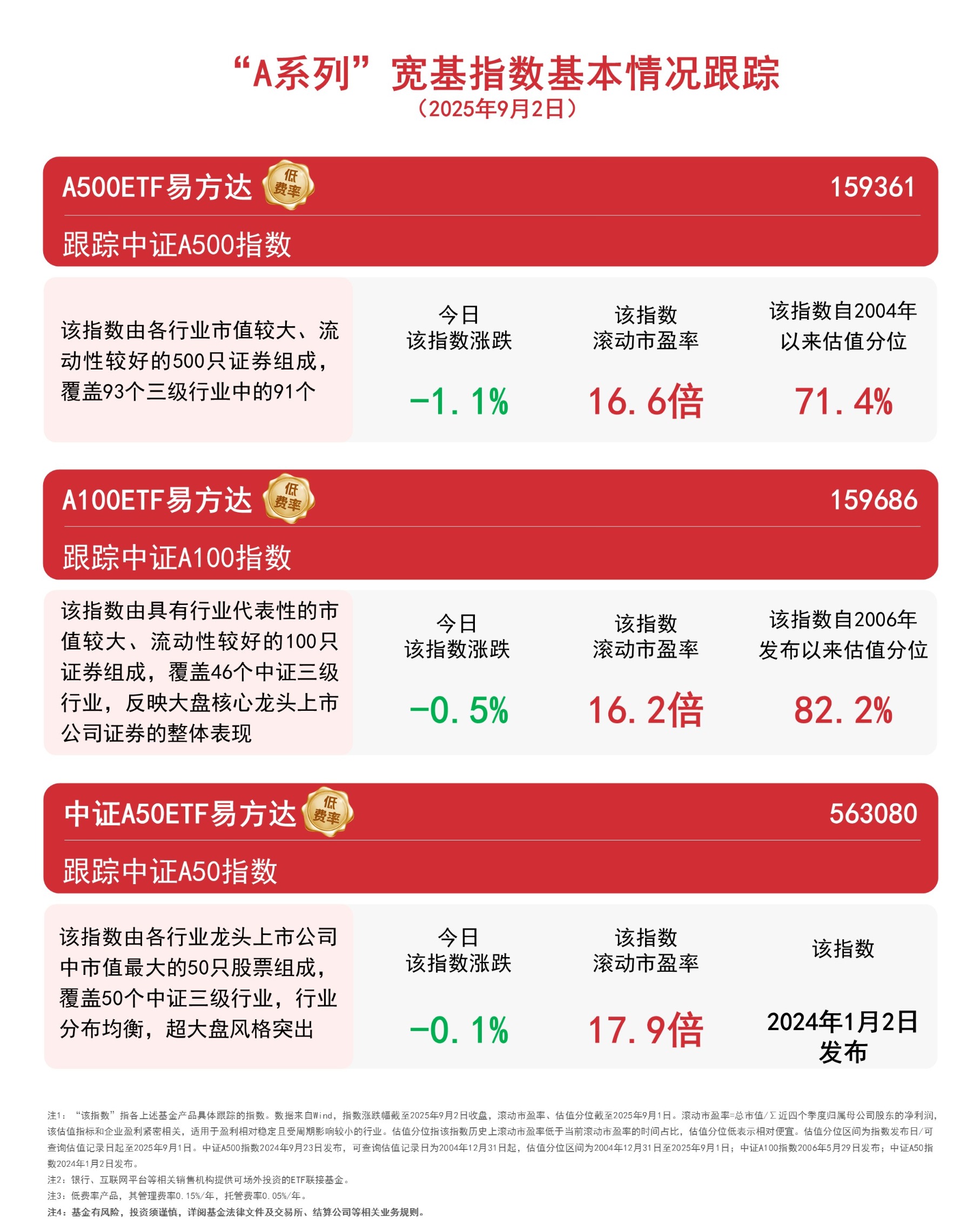
A500ETF易方达(159361)全天净申购达6000万份,机构称长线资金正在加大入市力度
Mei Ri Jing Ji Xin Wen· 2025-09-02 12:40
Group 1 - The core viewpoint of the article indicates that the A-share market is experiencing a decline, with the CSI A500 index down by 1.1%, the CSI A100 index down by 0.5%, and the CSI A50 index down by 0.1% [1] - Despite the market decline, there is a significant inflow of long-term capital, as evidenced by the net subscription of 60 million units in the E Fund A500 ETF (159361) [1] - Huaxi Securities reports that the proportion of A-shares held by insurance funds reached a historical high in the first half of the year, suggesting that long-term capital is increasing its market presence, which may contribute to a "slow bull" market trend [1]
监管层“真金白银”稳定A股市场预期
Xin Hua Wang· 2025-08-12 06:27
Core Viewpoint - Recent policies from multiple departments aim to enhance market vitality, encourage long-term capital investment, and stabilize market expectations, highlighting the attractiveness of A-shares for long-term investment [1][2][3] Policy Measures - The China Securities Depository and Clearing Corporation has reduced stock transaction transfer fees by 50%, which is expected to benefit investors by approximately 5 billion yuan annually [2] - Regulatory bodies have introduced a series of measures to stabilize market expectations and boost investor confidence, including lowering trading costs and enhancing market service capabilities [2][3] Market Valuation - A-share valuations are at historical lows, with the average price-to-earnings (P/E) ratio for the Shanghai Composite Index at 12.53 times and the Shenzhen Composite Index at 29.89 times, indicating a relative undervaluation compared to global markets [4] - The P/E ratios for major A-share indices are at their lowest levels in four years, suggesting a favorable entry point for long-term investors [4][5] Long-term Investment Potential - The current market conditions are attracting long-term capital, with institutional investors beginning to consider building positions as the market approaches a bottom [6] - Insurance and pension funds, as significant sources of long-term capital, have the potential to support the stable operation of the capital market, although their current market participation is relatively low compared to developed markets [7]
周观点:关注7月政策窗口期的落地机会-20250716
Great Wall Securities· 2025-07-16 02:22
Group 1: Economic Indicators - The domestic CPI has remained around 0 since April 2023, with June CPI showing a year-on-year increase of 0.1% after four consecutive months of decline [1] - The June PPI decreased by 3.6% year-on-year, marking the 33rd consecutive month in negative territory, with production materials and living materials both showing significant declines [2][3] - The decline in prices is attributed to factors such as the deep adjustment in the real estate market, pessimistic income expectations, and overcapacity in emerging industries like new energy and photovoltaics [3] Group 2: Policy Recommendations - To address the low price environment, it is essential to implement more proactive macroeconomic policies, including effective fiscal and monetary measures [3] - The report suggests expanding government-led investment demand, focusing on new infrastructure and urban renewal, and utilizing special government bonds to stimulate the economy [3][5] - There is a need to enhance consumer demand by increasing residents' income, particularly for low- and middle-income groups, and stabilizing property and stock market incomes [5] Group 3: Market Outlook - The report indicates that the upcoming policy window in July is expected to bring more favorable policies, which may boost market risk appetite [6][7] - The market is currently lacking a clear mainline, but sectors such as technology growth (semiconductors, AI, consumer electronics) and new consumption industries are highlighted as having upward potential [8] - The focus on long-term investments from insurance funds is expected to increase, as new policies are set to encourage stable and value-oriented investments [7]

红利ETF国企(530880)冲击三连涨,长线资金加码高股息
Sou Hu Cai Jing· 2025-05-09 07:47
Core Viewpoint - The approval of additional insurance funds for long-term stock investments is expected to enhance the demand for high-dividend and high free cash flow assets, thereby optimizing the investor structure and increasing the stability and resilience of the capital market [1] Group 1: Market Performance - As of May 9, the Dividend ETF for State-owned Enterprises (530880) rose by 0.31%, marking a third consecutive increase, with constituent stocks such as Jiangsu Jinzhong (600901) up by 3.38% and Shanghai Bank (601229) up by 2.01% [1] Group 2: Insurance Fund Investment - The National Financial Regulatory Administration plans to approve an additional 60 billion yuan for long-term stock investment trials, bringing the total approved and planned scale to 222 billion yuan [1] - The influx of long-term capital into the market is anticipated to increase the demand for high-dividend and high free cash flow assets [1] Group 3: Investment Recommendations - According to a report from Zhongtai Securities, the dividend attributes of bank stocks are highlighted, suggesting that investors should actively consider the investment value of bank stocks [1] - The Dividend ETF for State-owned Enterprises closely tracks the Shanghai Stock Exchange State-owned Enterprises Dividend Index, which includes 30 securities with high cash dividend rates and stable dividends [1] Group 4: Fund Performance - Since its inception, the highest monthly return of the Dividend ETF for State-owned Enterprises has been 4.63% as of May 8, 2025 [1] - The management fee for the Dividend ETF for State-owned Enterprises is 0.45%, and the custody fee is 0.10%, making it one of the lowest in comparable funds [1]
进一步扩大保险资金长期投资试点范围,大力推动中长期资金入市,自由现金流ETF易方达(159222)成交活跃
Mei Ri Jing Ji Xin Wen· 2025-05-07 08:28
Group 1 - A-shares indices opened significantly higher today, with high free cash flow assets performing strongly, including stocks like Zhenhua Heavy Industries, Laibao High-tech, Tailong Co., Laofengxiang, and Hisense Home Appliances, all rising over 3% [1] - The news conference by the State Council Information Office introduced a "package of financial policies to support market stability and expectations," including plans to approve 60 billion yuan for long-term investments by insurance funds and adjustments to solvency regulatory rules, reducing stock investment risk factors by 10% [1] - The China Securities Regulatory Commission (CSRC) will promote the entry of medium- and long-term funds into the market, focusing on improving corporate governance and performance while increasing the scale and proportion of various long-term funds [1] Group 2 - The E Fund Free Cash Flow ETF (159222) tracks the Guozheng Free Cash Flow Index, which is primarily distributed across the automotive, home appliance, oil and petrochemical, and coal industries [2] - The index categorizes companies into two main types: low-valuation cyclical assets like oil and petrochemicals, and high-quality assets primarily in the automotive and home appliance sectors, focusing on companies with stable fundamentals and business models [2]
瑞银、高盛、摩根士丹利发声!
券商中国· 2025-04-09 01:56
Core Viewpoint - The article discusses the impact of tariff shocks on global capital markets, particularly focusing on the Chinese A-share market and the perspectives of major financial institutions like UBS, Goldman Sachs, and Morgan Stanley regarding investment strategies in the current environment [1][2]. Group 1: UBS Insights - UBS analyst Meng Lei suggests that the recent movements in the A-share market may have already priced in potential negative impacts from tariffs, referencing historical data from 2018 where major indices experienced about a 3% decline on the first day of tariff news but stabilized thereafter [3][4]. - Current valuation levels in the A-share market provide a cushion against downside risks, with the Shanghai-Shenzhen 300 Index and all A-shares having static P/E ratios of 11.7x and 13.8x, respectively, both below their five-year averages by 0.7 standard deviations [4]. - The market's stability requires significant net inflows of capital, with institutions like Central Huijin increasing their holdings in ETFs to support market stability [4][5]. Group 2: Goldman Sachs Perspective - Goldman Sachs' chief strategist Liu Jinjun emphasizes that U.S. tariffs affect the fair value of Chinese stocks through multiple variables, including direct income shocks to exporters and potential policy responses [6]. - Liu anticipates that the market may experience downward pressure until trade and policy uncertainties are resolved, suggesting a cautious approach to investment in the short term [6]. Group 3: Morgan Stanley Analysis - Morgan Stanley's Laura Wang indicates that the A-share market is more resilient and should be viewed as a hedging or diversification option amid ongoing market volatility [7][8]. - Wang notes that the sensitivity of A-share investors to policy changes is lower due to the predominance of retail investors, which may lead to more stable performance compared to offshore markets [8].
A股风格持续切换关注行业均衡配置!A500ETF(159339)今日成交额达5.4亿元,日内深V反弹
Jie Mian Xin Wen· 2025-03-25 11:50
Group 1 - The A-share market is experiencing a style switch from growth to value, with significant capital inflows into traditional industries like electricity and coal, while technology sectors such as internet services and semiconductors face substantial outflows [1] - A500ETF (159339) tracks the A500 index, covering 63% of A-share market revenue and 70% of net profit, indicating stable performance and representing core A-share assets [1] - The A500 index is characterized by industry balance, ESG screening, connectivity, and market capitalization balance, making it more representative and investment-friendly compared to traditional indices like CSI 300 [2] Group 2 - The A-share market's non-financial sector revenue growth is highly correlated with nominal GDP growth, with expectations of profit recovery in the financial sector, particularly for brokers and insurers [3] - The upcoming earnings season may see a temporary convergence of excess returns in technology stocks, as market focus shifts back to fundamentals following the earnings announcements [3] - Government policies aimed at stabilizing the real estate and stock markets are expected to improve investor sentiment, with long-term capital inflows potentially reaching 1.7 trillion yuan this year [2]