AI+传统行业

Search documents
AI+传统行业:重塑产业链的挑战
2 1 Shi Ji Jing Ji Bao Dao· 2026-01-29 07:30
Core Insights - The integration of AI into traditional industries, such as steel, is becoming a significant topic, with experts emphasizing the shift from tool application to deep embedding in business processes, enhancing efficiency and reshaping business models [1][5] Group 1: AI in Steel Industry - FindSteel Network is a pioneer in applying AI within the steel distribution sector, addressing challenges in B2B transactions by automating information processing and improving efficiency [3] - The steel industry is currently experiencing a transformation, with high demand for industrial steel and declining demand for construction steel, prompting the need for AI to reduce costs and enhance efficiency [3] - FindSteel Network has developed technologies that automate the processing of supplier quotes and customer inquiries, significantly improving operational efficiency [3] Group 2: AI's Broader Impact - AI is expected to have a structural impact across various industries, including energy, light industry, infrastructure, medical, and electronics, prompting industry leaders to leverage AI capabilities to reshape supply chains [5] - Companies like Alibaba and Baidu are utilizing AI to create new paradigms in foreign trade and B2B growth, respectively, focusing on intelligent collaboration and data-driven strategies [5][6] - The importance of establishing standards, ecological collaboration, and cross-entity cooperation is highlighted as essential for the sustainable and scalable application of AI in industries [6] Group 3: Future Directions - The integration of AI with traditional industries is seen as a means to enhance China's manufacturing capabilities and improve its position in the global supply chain [6] - The Chinese Electronic Commerce Association emphasizes the need for an open and fair environment in global digital trade to support all enterprises [6]
瑞银胡知鸷:“AI+传统行业”潜力远未释放 中国市场是全球配置关键增量
Shang Hai Zheng Quan Bao· 2026-01-19 18:45
Group 1 - The core viewpoint is that China's capital market is rapidly evolving and is expected to become a significant player in global investment, particularly in emerging technologies like AI [2][3] - By 2025, the Chinese technology sector is anticipated to experience a surge in innovation and growth, positioning China as a key market for international capital diversification [3][4] - UBS has seen a dramatic increase in trading volume, growing over 30 times from 2019 to 2025, indicating a significant leap in the scale of China's capital market [4][5] Group 2 - The MSCI China Index is currently trading at a price-to-earnings ratio of approximately 13 times, which is slightly above its ten-year average, suggesting it is undervalued compared to other emerging markets [5][6] - The integration of AI technology into traditional industries is seen as a major driver of economic growth in China, with significant potential yet to be realized [6][7] - UBS predicts that the Hong Kong IPO market will lead globally in fundraising in 2025, with expectations of raising over 300 billion HKD and listing between 150 to 200 companies in the first half of 2026 [6][7] Group 3 - UBS aims to deepen its integrated service model and enhance its offerings to meet diverse client needs, focusing on providing comprehensive financial services [7][8] - The company plans to leverage its global network to assist Chinese enterprises in expanding internationally, facilitating various financing needs such as IPOs and cross-border mergers [7][8] - UBS has established itself as a key player in the Chinese market, being the first foreign-invested full-licensed securities firm, which strengthens its role in supporting technological innovation [8]



杨德龙:本轮牛市行情愈演愈烈 赚钱效应明显提升 | 立方大家谈
Sou Hu Cai Jing· 2025-08-20 11:23
Core Viewpoint - The A-share market has experienced significant gains due to low domestic interest rates, ample liquidity, policy support, and a shift of household savings into the capital market, alongside increasing expectations for a rate cut by the Federal Reserve in September [1][2][3] Market Performance - The Shanghai Composite Index has risen over 1% and surpassed 3700 points, indicating a strong upward trend and increased profitability for investors, attracting more external capital, including foreign investments [1][3] - The total market capitalization of A-shares has exceeded 100 trillion yuan, marking a historical high, with trading volumes consistently above 2 trillion yuan [4] Economic Factors - The Federal Reserve is expected to cut interest rates by 25 basis points in September, with potential further cuts by the end of the year, which could lower the benchmark rate below 4% [2][3] - The U.S. government debt has surpassed 37 trillion dollars, increasing concerns about debt repayment pressures and prompting calls for monetary easing to stabilize the economy [2] Policy Support - The Chinese government has emphasized the importance of stabilizing the real estate and stock markets, with recent meetings highlighting the need for a more inclusive and attractive capital market [3][4] - Institutional investors, including insurance funds and pension funds, have increased their allocations to equity assets, contributing to market liquidity [4] Consumer Behavior - There is a noticeable trend of household savings being redirected to the capital market, driven by low interest rates on savings accounts, with one-year deposit rates falling below 1% [4] - The shift in consumer behavior is expected to support the ongoing bull market, which is anticipated to last for two to three years, characterized by a slow and steady growth rather than rapid fluctuations [4] Technological Advancements - The fourth industrial revolution, particularly the application of artificial intelligence, is gaining momentum, with significant developments in AI models for specialized fields such as aerospace [5][6] - The humanoid robot sector is emerging as a potential new industry, attracting global attention and investment opportunities [6] Monetary Policy - The People's Bank of China has indicated a commitment to a moderately loose monetary policy, aiming to promote reasonable price recovery and stimulate consumption [7][8] - The government has set a GDP growth target of around 5% and a CPI target of 2%, with measures in place to boost consumer spending and achieve these goals [8]
前海开源首席经济学家杨德龙:股市是房地产后下一个能承接居民储蓄大转移的市场
Xin Lang Ji Jin· 2025-05-24 09:19
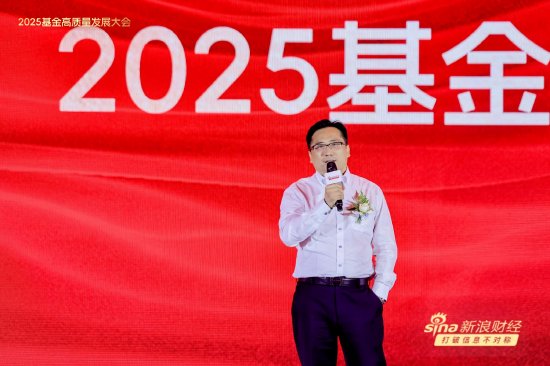
Group 1: Conference Overview - The 2025 Fund High-Quality Development Conference was held in Shenzhen, organized by Sina Finance, gathering top experts from academia, private and public equity fund leaders, brokerage leaders, and chief economists to discuss new paths for high-quality development in the fund industry [1] Group 2: Insights from Yang Delong - Yang Delong, Chief Economist and Fund Manager at Qianhai Kaiyuan, shared insights from attending the Berkshire Hathaway Annual Shareholders Meeting, emphasizing the importance of value investing and patience in the Chinese stock market [3][4] - He noted that Warren Buffett, despite reducing his U.S. stock holdings significantly, retains $350 billion in cash, indicating a strategic approach to waiting for market opportunities [4][5] - Yang highlighted Buffett's impressive track record, achieving a 5,500-fold return over 60 years, and the importance of long-term investment strategies [5] Group 3: Value Investing in A-Share Market - Yang argued that the A-share market, despite its shorter history, has produced stocks with returns exceeding 100 times, making it suitable for value investing [6] - He pointed out that many investors believe they cannot make money in the A-share market, but attending shareholder meetings of successful companies like Kweichow Moutai reveals the potential for wealth creation through long-term investments [6][7] Group 4: Shift in Investment Trends - The real estate market's golden investment period is over, with a significant shift expected towards the stock market as a new avenue for wealth accumulation [7] - Currently, only about 5% of Chinese household assets are allocated to stocks and funds, compared to over 50% in the U.S., indicating a potential for substantial capital inflow into the stock market [7] Group 5: Future Investment Opportunities - Yang emphasized the importance of identifying value investment methods and adapting to market changes, particularly in sectors like technology and AI [8][9] - He predicted that 2025 would mark the year of mass production for humanoid robots, presenting new investment opportunities in this sector [9][10] - The central government's unprecedented focus on the stock market is expected to boost investor confidence and lead to a new wave of opportunities in equity investments [10]