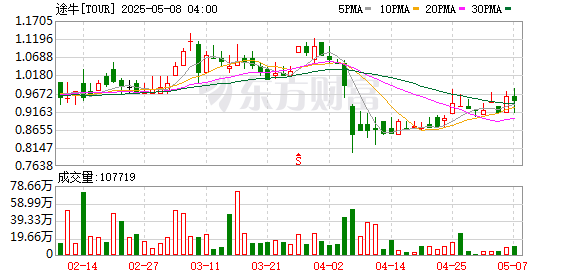
AI+旅游

Search documents
探索“AI+旅游”人才培养融合创新模式
Xin Hua Ri Bao· 2026-01-14 21:21
Core Insights - The integration of artificial intelligence (AI) in the education sector is enhancing talent cultivation in the tourism industry, addressing the mismatch between talent supply and industry demand in Jiangsu [1][4]. Group 1: Talent Supply and Demand Mismatch - There is a significant gap between the talent supply and the evolving needs of the tourism industry, with traditional course offerings failing to keep pace with emerging fields like smart tourism and AI marketing [2][3]. - The current educational focus is heavily weighted towards traditional tourism management, leading to a shortage of professionals in digital roles such as data analysts and smart operation specialists [2][3]. - The lack of interdisciplinary courses and a cohesive training system hampers the development of composite talents needed for the "tourism+" model, which combines various sectors [2][3]. Group 2: Practical Training Barriers - Most educational institutions have superficial collaborations with tourism enterprises, limiting students' exposure to core processes like product planning and smart system operations [3]. - Companies are reluctant to invest in training due to high costs and the high turnover rate of interns, which exacerbates the disconnect between education and industry needs [3]. Group 3: AI-Driven Talent Development Pathways - AI can be leveraged to create a responsive curriculum that aligns with real-time industry demands, incorporating advanced courses in areas like AI-driven tourism data analysis and smart tourism systems [4][5]. - The introduction of personalized learning platforms and AI tools can help bridge the gap in composite talent by integrating knowledge from various disciplines [5][6]. - Enhanced collaboration between educational institutions and tourism enterprises through AI can streamline the training process, ensuring that students acquire relevant skills and experience [6]. Group 4: Future Directions - The focus on AI-enabled talent cultivation is essential for the high-quality development of the tourism industry in Jiangsu, aiming to produce professionals with digital literacy and cross-disciplinary capabilities [6].
途牛旅游网创始人兼CEO于敦德:AI+旅游 推动行业创新
Sou Hu Cai Jing· 2026-01-06 09:00
Group 1 - The core viewpoint is that the tourism market is expected to thrive in 2025 due to increasing consumer demand, personalized travel experiences, and the rapid recovery of inbound and outbound tourism [2] - The company has reported continuous quarterly profitability, indicating strong business growth amidst evolving travel demands [2] - The company is focusing on channel diversification and product supply diversity to meet the growing travel needs [2] Group 2 - The company is expanding its channels through a combination of "online live streaming + offline stores," actively targeting lower-tier markets and establishing a dedicated live streaming team [4] - The product supply is being enhanced with high-quality group travel brands and an increase in private and small group tours, alongside the development of customized products [4] - Technological innovation is being prioritized, with a focus on data-driven operations and the development of AI tools to improve customer experience and operational efficiency [4] Group 3 - In the new year, the company will continue to prioritize customer-centric approaches, enhancing its dynamic packaging system and expanding high-quality travel product offerings [5] - The aim is to better meet the deep and personalized consumption needs of users, thereby improving travel experiences and satisfaction [5]


【财经分析】2025年旅游业“K型分化”明显 后市AI变量不容小觑
Xin Hua Cai Jing· 2025-12-25 07:15
Core Insights - The domestic tourism market in China is expected to enter a new development phase by the end of 2025, characterized by steady growth and a "K-shaped differentiation" trend, where high-end and basic travel products are favored [1][4] Group 1: Market Performance - In 2025, the domestic tourism market is projected to see a steady increase, with significant growth in both high-end and basic travel products, reflecting a widening price range [1][4] - Data from the first eleven months of 2025 shows that domestic air travel reached 710 million passengers, a year-on-year increase of 5.4%, while railway passenger volume hit 4.28 billion, up 6.6% [2] - Domestic residents' travel expenditure reached 4.85 trillion yuan, an increase of 11.5% year-on-year, indicating a robust recovery compared to pre-pandemic levels [2] Group 2: K-shaped Differentiation - The "K-shaped differentiation" in the tourism market indicates that while many high-end products are thriving, some star-rated attractions are experiencing a decline in bookings, highlighting a structural supply-demand imbalance [4][5] - The trend reflects a shift in consumer preferences towards more personalized and immersive travel experiences, particularly among younger generations [4][5] Group 3: AI's Role in Tourism - AI is becoming a critical variable in the tourism industry, enhancing service offerings and operational efficiency through digitalization [6] - Companies like Tuniu and Ctrip are integrating AI into their services, resulting in significant increases in user engagement and decision-making efficiency [6] - Despite current limitations in data sharing, the potential for AI to transform the industry remains significant, particularly in personalized travel solutions [6][7]
从行程规划到目的地全流程数字化服务,马蜂窝用AI重新定义旅行体验
Huan Qiu Wang Zi Xun· 2025-08-29 12:12
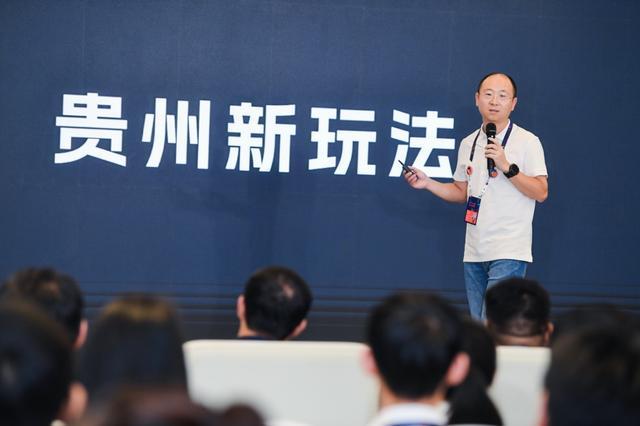
Core Insights - The article highlights the integration of AI in the tourism industry, showcasing how it serves as a core engine for the transformation towards "personalized scalability" in travel services [1][3]. Group 1: AI Innovations - The company introduced several AI-driven products at the 2025 China International Big Data Industry Expo, including AI itinerary planning, AI travel assistant app, and upgraded destination intelligent systems "AI You Guizhou" and "AI You Xijiang" [1][3]. - The upgraded destination intelligent systems feature a card-based layout for clearer presentation of core functions, achieving full-process digital integration of destination services [3]. Group 2: Efficiency Improvements - "AI You Xijiang" introduced a dual mechanism for document verification, significantly reducing manual checks to 15% and tripling verification efficiency [3]. - The average response time for complaints has been reduced from 48 hours to 4 hours through a new three-tier processing system [3]. Group 3: Enhanced User Experience - The AI itinerary planning product offers personalized travel solutions based on extensive real data, covering itineraries, accommodations, transportation, and budgets [5]. - The AI travel assistant app provides comprehensive services, including visa guidance, real-time translation, and local activity exploration, enhancing the experience for independent travelers [5]. Group 4: Future of Tourism - The CEO emphasized that AI is not just a technological showcase but a practical tool that enhances industry efficiency and user experience, driving the tourism sector from traditional services to an intelligent ecosystem [5].
众信旅游:公司在“AI+旅游”领域的探索主要集中在利用人工智能技术提升服务效率等方面
Zheng Quan Ri Bao Zhi Sheng· 2025-08-05 14:12
Core Viewpoint - The company is focusing on the exploration of "AI + tourism" to enhance service efficiency, optimize user experience, and expand innovative business models [1] Group 1 - The company has launched the "U护航" tourism retail full-cycle service plan, leveraging years of retail channel experience [1] - The service plan utilizes a leading self-operated product system and a wide supplier network [1] - The company is upgrading and constructing an intelligent service platform through the use of big data and artificial intelligence technologies, aiming for digitalization of business processes [1]

众信旅游(002707.SZ):在“AI+旅游”领域的探索主要集中在利用人工智能技术提升服务效率等方面
Ge Long Hui· 2025-08-05 07:19
Core Viewpoint - The company is focusing on the exploration of "AI + tourism" to enhance service efficiency, optimize user experience, and expand innovative business models [1] Group 1: AI Integration in Tourism - The company is utilizing artificial intelligence technology to improve service efficiency and user experience [1] - The retail brand has launched the "U Protection" tourism retail full-cycle service plan, leveraging years of retail channel experience [1] - The company aims to upgrade and construct an intelligent service platform through big data and AI technologies, achieving digitalization of business processes [1] Group 2: Business Model Innovation - The company is relying on its leading self-operated product system and extensive supplier network to support its AI initiatives [1] - The focus on digital transformation is intended to assist the industry in iterative upgrades [1]
众信旅游:推出"U护航"旅游零售全周期服务方案
Jin Rong Jie· 2025-08-05 04:39
Core Viewpoint - The company is actively exploring the integration of AI technology in the tourism sector to enhance service efficiency, optimize user experience, and innovate business models [1] Group 1: AI Integration Efforts - The company's efforts in the "AI + tourism" domain focus on utilizing artificial intelligence to improve service efficiency and user experience [1] - The retail brand has launched the "U Escort" tourism retail full-cycle service plan, leveraging years of retail channel experience [1] - The company aims to build an intelligent service platform by utilizing big data and AI technologies, achieving digitalization of business processes [1] Group 2: Business Model Innovation - The company is expanding its innovative business models through the integration of AI and digital technologies [1] - The self-operated product system and extensive supplier network are key components in supporting the company's AI initiatives [1] - The overall goal is to facilitate industry iteration and upgrade through these technological advancements [1]
社会服务行业周观点:金融政策助力服务消费,暑期旅游高景气可期-20250630
AVIC Securities· 2025-06-30 05:13
Investment Rating - The industry investment rating is "Overweight," indicating that the growth level of the industry is expected to be higher than that of the CSI 300 index over the next six months [4][26]. Core Insights - Financial policies are expected to boost service consumption, with a promising outlook for summer tourism. The combination of seasonal demand, policy support, and AI empowerment is anticipated to drive the tourism market [8][21]. - The summer tourism peak is projected to occur in early July, with family and child travelers making up a significant portion of the demand. The trend of off-peak travel is also highlighted, with specific regions showing increased hotel booking activity [2][20]. Market Performance Summary - The social service sector index experienced a weekly increase of 4.61%, ranking 8th among 31 sectors. The sub-industry performance varied, with professional services leading at 5.70% [1][9]. - Notable individual stock performances included significant gains for companies like Electric Science Institute (16.54%) and Tianmu Lake (14.09%) [1][9]. Industry News Dynamics - The report highlights various initiatives aimed at enhancing tourism experiences, such as the launch of a smart service platform in Zhejiang and promotional activities in Chongqing to attract tourists [22][23]. - The integration of AI technologies in cultural tourism is reshaping visitor experiences, with innovative applications enhancing service efficiency and customer engagement [20][21].
AI改变“诗与远方”打开方式
Zhong Guo Jing Ji Wang· 2025-05-16 23:01
Group 1 - The core viewpoint is that AI technology, represented by DeepSeek, is rapidly penetrating various industries, including tourism, and is driving the digital transformation of the sector [1][2] - During the recent "May Day" holiday, AI applications were prominently featured in tourist destinations, with AI tour guides and platforms providing personalized travel planning and services [1] - Major online travel platforms like Ctrip, Tongcheng, Tuniu, and Mafengwo are integrating AI tools to enhance travel itinerary planning and booking services, leveraging vast data and resources to improve service efficiency and order conversion [1][2] Group 2 - The explosion of "AI + tourism" is a result of both supply and demand factors, with younger generations preferring personalized travel experiences that AI can facilitate [2] - AI helps businesses capture and address consumers' core and personalized needs, reducing customer acquisition costs and fostering innovation in travel products and services [2] - The current application of AI in tourism is still in the experimental stage, with ongoing improvements needed in areas such as reliability, user experience, and commercial transaction processes [3]
【高端访谈】途牛于敦德:“AI+旅游”潜力巨大 应用牵引强化垂直研发
Xin Hua Cai Jing· 2025-05-08 00:37
Core Insights - The integration of AI technologies, exemplified by DeepSeek, is rapidly transforming the tourism industry, with significant implications for online travel platforms like Tuniu [2][3] Group 1: AI's Impact on the Tourism Industry - AI is expected to have a transformative impact on the tourism sector, potentially surpassing the effects of the transition from PC internet to mobile internet [3] - The information technology advancements in the tourism industry provide a solid foundation for AI applications, which will promote high-quality development [3] - AI is adapting to changing consumer demands, allowing for personalized travel planning and making customized travel experiences more accessible and efficient [4] Group 2: Innovations in Consumer Interaction - AI is expected to bridge the gap between supply and demand, fostering innovation in business models, including new interactive channels like live streaming [4] - The introduction of audio interaction modes and multi-language capabilities will enhance services for inbound and outbound tourism [4] Group 3: Tuniu's AI Development Strategy - Tuniu is focusing on integrating large models with supply chain data to create practical travel solutions, addressing the challenge of aligning AI capabilities with real-world applications [5][6] - The company is employing a strategy of using smaller models for simple queries and larger models for complex tasks, optimizing efficiency and responsiveness [6] Group 4: Launch of AI Assistant "Xiao Niu" - Tuniu launched its AI assistant "Xiao Niu" on April 1, which connects various business needs to different APIs, enhancing user experience in travel planning [7] - The assistant significantly reduces the time required for users to compare prices and plan itineraries, completing the process in under 10 seconds [7][8] - The usage of "Xiao Niu" saw a notable increase during the May Day holiday, particularly in major cities like Nanjing, Beijing, and Shanghai [8] Group 5: Future Directions - Tuniu is leveraging open-source models like DeepSeek and Tongyi Qianwen for its AI development, fostering collaboration and innovation in AI applications [8] - The company aims to continuously innovate in AI applications to enhance the connection between consumers and tourism resources [8]