
RWA(真实世界资产)代币化

Search documents
酒店业融资革命:如何用RWA代币化破解资金困局,实现轻资产扩张?
Sou Hu Cai Jing· 2025-11-08 07:56
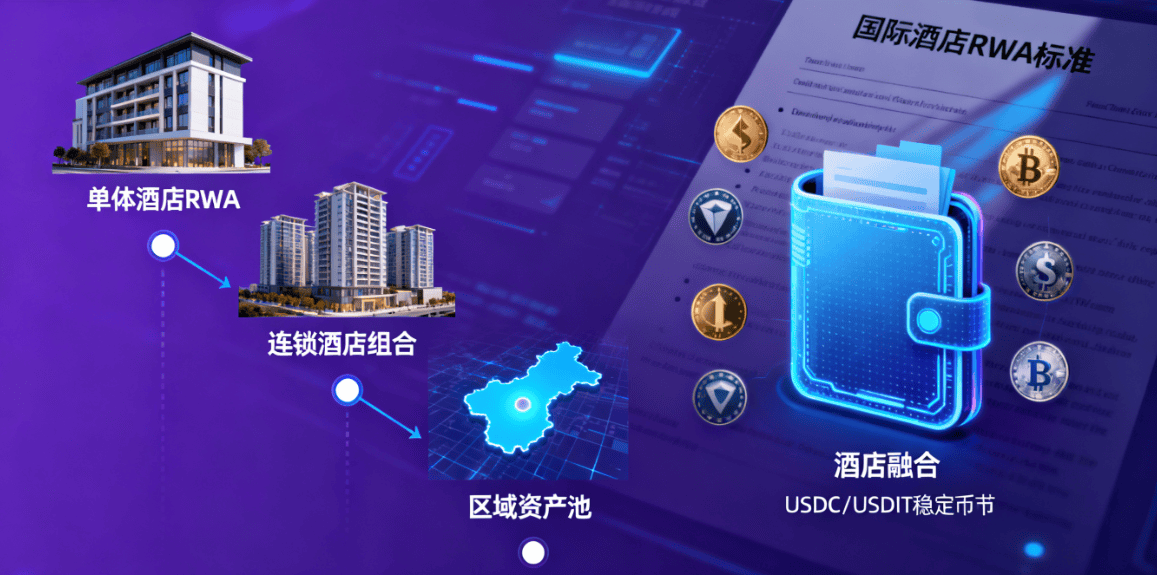
Core Insights - The traditional financing channels for the hotel industry are becoming increasingly constrained, leading to the emergence of an innovative model that "breaks down" hotel assets, thereby rewriting industry rules [1] Financing Challenges - High cost of capital: Bank loan interest rates remain elevated, and private equity financing costs are generally above 15% annually, significantly eroding profit margins [3] - Poor asset liquidity: Hotels are heavy assets with long monetization cycles, making it difficult to obtain liquidity support quickly when funds are tight [3] - Severe valuation discounts: The capital market generally undervalues hotel assets, making it hard for quality assets to reflect their true value [3] - Low decision-making efficiency: Traditional financing processes can take 3-6 months, leading to missed investment opportunities [3] RWA Tokenization - RWA (Real World Asset) tokenization is opening new financing channels for the hotel industry by converting physical assets into divisible, transparent, and highly liquid digital rights through blockchain technology [5] - The case of Sanya Rosewood Hotel demonstrates this practice by digitizing room usage rights and connecting to international capital markets via a Hong Kong SPV structure, allowing for early capital recovery and establishing stable cash flow channels [5] Transparency and Flexibility - Cash flow is transparent and verifiable: Key operational metrics like RevPAR (Revenue Per Available Room) are updated daily, enhancing investor confidence through real-time transparency compared to traditional financial reports [7] - Asset rights can be split: Hotel assets can be divided into three layers of rights, allowing for the design of more flexible and adaptable investment products for investors [8] Cross-Border Investment - The RWA framework facilitates cross-border investments, enabling investors to participate in cash flow sharing from hotels in popular markets such as Southeast Asia and Central Asia [9] Tokenization Steps - Step 1: Revenue rights tokenization is the easiest to implement, based on daily/monthly RevPAR or revenue data on-chain, allowing for on-chain dividends without changing asset ownership [11] - Step 2: Contract rights tokenization involves lease and management contracts, backed by legal or auditing firms, suitable for operational and light-asset projects [13] - Step 3: Ownership rights tokenization involves digitizing property registration documents and notarized materials, maximizing asset value release for owners with complete ownership [14] Data Integrity and Automation - Data credibility is fundamental: Using oracles to automatically synchronize operational data from PMS systems ensures the authenticity of on-chain data, with auditing firms verifying cash flow against on-chain records [16] - Smart contracts can be executed automatically, interfacing with hotel PMS systems to trigger on-chain contracts based on data, enabling programmable revenue distribution without manual intervention [17] Liquidity Mechanism Innovation - A compliant framework is established for a whitelist secondary market trading mechanism, allowing token transfers among KYC-verified investors, combined with automated market maker models for token price discovery [18] Evolution of Asset Pools - The development path will gradually evolve from single hotels to chains and regional hotel asset pools, potentially leading to the creation of "Southeast Asia Selected Service Hotel Asset Pool Tokens" for risk diversification and enhanced returns [19] Integration with Crypto Ecosystem - Some pioneering projects are attempting to allocate part of the profits to mainstream crypto assets, creating a dual-driven model of "cash flow + asset appreciation," with stablecoins like USDC/USDT likely becoming mainstream tools for dividends and settlements [20] Industry Standards - As regulatory sandbox trials progress in regions like Hong Kong and Singapore, industry valuation, auditing, and dividend standards will gradually be established, forming an "International Hotel RWA Standard" similar to STR global benchmarks [21]

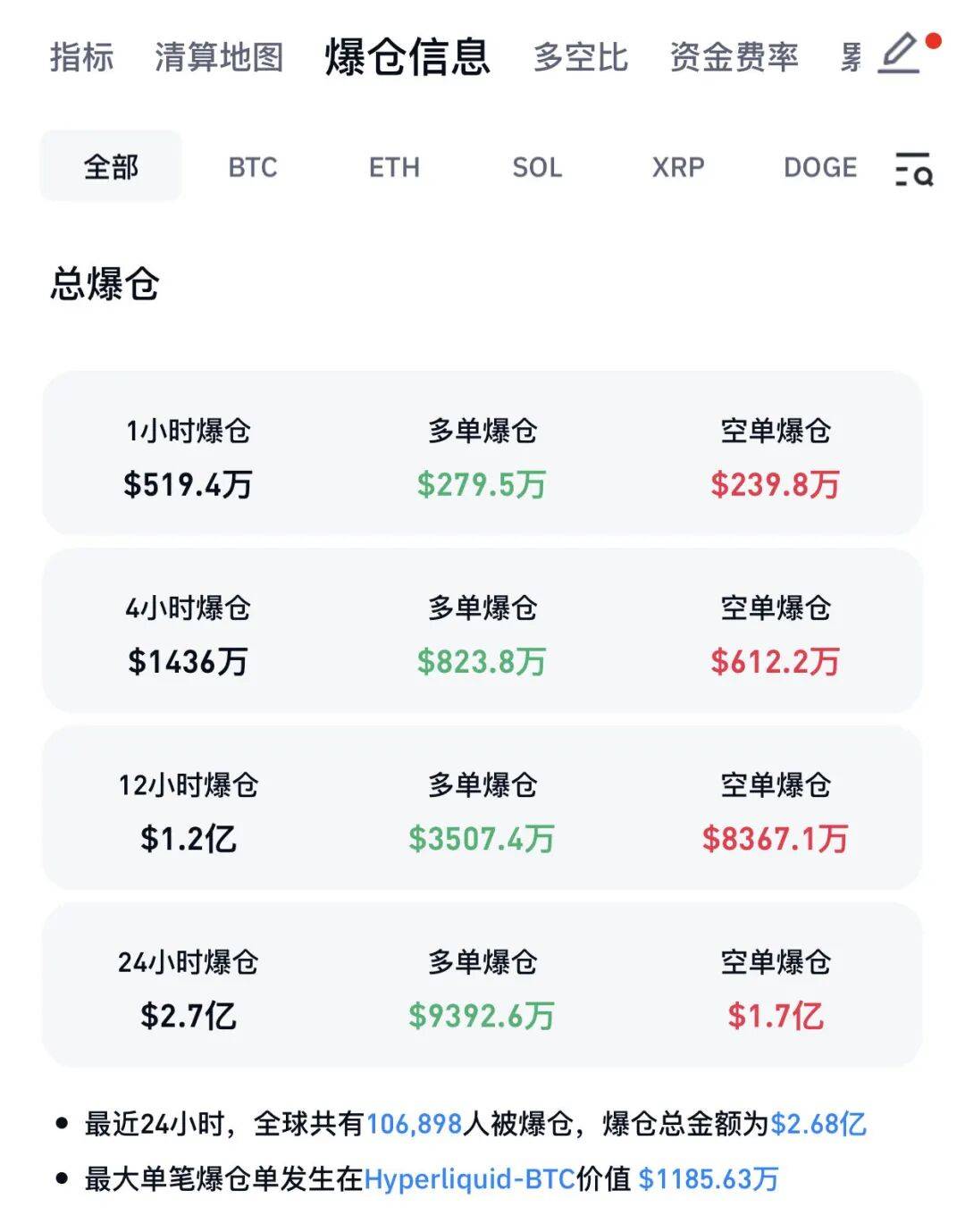
集体上涨!全球超10万人爆仓
Sou Hu Cai Jing· 2025-10-20 07:14
Group 1 - The Federal Reserve is expected to lower interest rates by 25 basis points with a probability of 99% during its upcoming meeting on October 28-29 [3] - The Federal Reserve will host a payment innovation conference on October 21, focusing on stablecoins, artificial intelligence, and tokenization, indicating significant developments in the tokenization of real-world assets [2] - The current international monetary system is facing challenges, including the loss of the dollar's dominance and the emergence of digital currencies, which may lead to increased volatility in asset prices [4] Group 2 - The traditional dollar hegemony is being questioned due to its disconnection from Chinese production capacity, leading to a dilemma in balancing liquidity demand and currency stability [4] - Experts suggest that China should explore the integration of Central Bank Digital Currency (CBDC) with stablecoins and real-world assets to maintain value stability and efficiency [4] - The International Monetary Fund (IMF) has indicated that while the global financial system appears stable, there are underlying risks that could lead to significant disruptions [4]
速递|GLP-1代币化上链!这家上市药企率先开启RWA试点融资
GLP1减重宝典· 2025-08-19 10:01
Core Viewpoint - The article discusses the strategic partnership between Hanyu Pharmaceutical and KuCoin to launch a pilot project for the tokenization of real-world assets (RWA) based on future revenue rights from innovative drug research and development, particularly focusing on GLP-1 peptide drugs [2][4]. Group 1: Company Overview - Hanyu Pharmaceutical, established in 2003, specializes in peptide formulations, active pharmaceutical ingredients, small nucleic acids, and innovative drug CDMO, being one of the few companies in China to achieve large-scale production of peptide APIs [7]. - The company went public in 2011 as "China's first peptide stock" on the Growth Enterprise Market [7]. Group 2: Financial Performance - From 2011 to 2017, Hanyu's revenue grew from 166 million to 1.246 billion, with net profit increasing from 80.47 million to 330 million [8]. - However, due to the implementation of national centralized procurement in 2018, the company faced significant losses, with revenue dropping from 1.246 billion to 431 million between 2018 and 2023, and continuous negative net profit [8]. Group 3: Recovery and Growth - Hanyu Pharmaceutical has seen a turnaround due to its focus on GLP-1 drugs, leveraging its core technologies in solid-phase synthesis, liquid-phase synthesis, and biocatalysis to efficiently produce GLP-1 analogs like Liraglutide and Semaglutide [8][9]. - The company has secured multiple overseas orders for GLP-1 APIs since 2023, with significant shipments expected in Q4 2024 [9]. Group 4: Production and Regulatory Compliance - Hanyu's production facilities have met FDA cGMP standards, with the Dragonhua R&D center passing FDA inspections and the Wuhan production base also successfully undergoing checks [8][11]. - The company is expanding its Wuhan API production base with an additional investment of 300 million to increase capacity to ton-level [11]. Group 5: Market Position and Future Prospects - Hanyu Pharmaceutical is positioned as a leader in the GLP-1 market, being one of the few companies capable of developing nearly all marketed peptide APIs and having unique advantages in synthesizing long-chain peptides [10]. - The FDA approved Hanyu's Liraglutide injection in December 2024, marking it as the first approved biosimilar of Liraglutide [11].

到83.7%及21.7%,PE处于七年来43.1%分位数,相关板块短期会有较高的超额收益
ZHONGTAI INTERNATIONAL SECURITIES· 2025-07-21 02:04
Market Overview - The Hang Seng Index rose 2.8% last week, closing at 24,825 points, while the Hang Seng Tech Index increased by 5.5% to 5,538 points, breaking out of a stagnation since May[1] - Average daily trading volume decreased by 3.1% to over HKD 246.6 billion, but remains at an active level, with a net inflow of HKD 22.5 billion through the Stock Connect[1] - The real estate sector was the only sector to decline, while healthcare, consumer discretionary, and materials sectors rose by 12.1%, 6.1%, and 3.7% respectively[1] Sector Performance - The information technology sector is expected to see earnings growth of 27.3% and 17.4% over the next two years, with a PE ratio at the 37.5th percentile over the past seven years[1] - The healthcare sector is projected to grow earnings by 83.7% and 21.7% in the next two years, with a PE ratio at the 43.1st percentile, indicating potential for high excess returns in the short term[1] Economic Indicators - China's GDP growth for Q2 2025 is expected to be 5.2%, with a 5.3% growth for the first half of the year, exceeding expectations and potentially reducing the need for aggressive stimulus policies[1] - Despite the Hong Kong Monetary Authority's actions to withdraw HKD from the market, the 1-month HIBOR fell to 1.07%, indicating ample liquidity in the market[1] Investment Strategy - The report suggests maintaining a defensive position in high-dividend sectors such as telecommunications, utilities, and finance, while looking for opportunities in AI computing, semiconductor equipment, and biomedicine[1] - The report highlights the importance of monitoring changes in U.S. Federal Reserve policies and corporate mid-term earnings guidance for future market direction[1] Industry Dynamics - The AI sector saw a significant rise, with the stock of InnoVision (2121 HK) surging 10% to a three-month high, while Fourth Paradigm (6682 HK) raised HKD 1.3 billion for R&D in smart devices and blockchain[2] - In the automotive sector, Great Wall Motors (2333 HK) reported a 1% increase in revenue but a 10.2% drop in net profit for the first half of the year, underperforming compared to peers like Geely (175 HK)[2] Healthcare Sector Insights - The Hang Seng Healthcare Index surged 11.9% last week, driven by the government's initiation of adjustments to the basic medical insurance drug list, which may benefit innovative drugs[3] - The government's new procurement policies are expected to favor high-quality products, potentially improving the operating environment for leading innovative drug companies[12]