
新能源智能汽车

Search documents
顺义科创:能进能退,做一个“耐心”的产业培育者
FOFWEEKLY· 2026-03-16 10:00
Core Viewpoint - The article emphasizes the importance of being a long-term nurturer of industries rather than chasing short-term projects in a competitive market, advocating for a patient capital approach to foster sustainable growth in technology sectors [2][4]. Group 1: Industry Development and Investment Strategy - In 2025, China is accelerating its move towards the global technology frontier, with local hard-tech companies emerging in fields like AI, semiconductors, and biomedicine, supported by significant investments from state-owned enterprises [3]. - The investment strategy of Shunyi Technology Innovation Group focuses on being an "industry organizer" rather than merely a financial investor, aiming to create a complete ecosystem that integrates capital and services [7][11]. - Shunyi Technology Innovation Group has invested in 20 funds with a total scale exceeding 1000 billion yuan, contributing 2.5 billion yuan and supporting over 170 projects, showcasing its commitment to long-term industrial development [11]. Group 2: Unique Operational Model - Shunyi's operational model includes a clear division of responsibilities among its departments, ensuring a comprehensive support system for enterprises from incubation to industrialization [11]. - The "district-town linkage" model enhances Shunyi's reach in industry cultivation, with partnerships to establish town-level investment funds tailored to local industrial strengths [12]. - The focus on integrating government guidance with market mechanisms aims to create a closed-loop system of "fund + implementation + ecosystem," positioning Shunyi as a core capital engine for high-end manufacturing and technological innovation [12]. Group 3: Long-term Nurturing and Exit Strategy - The concept of "patient capital" is central to Shunyi's investment philosophy, emphasizing the need for a systematic nurturing process that respects industry rules and supports long-term growth [17]. - Shunyi's exit strategy is designed to be a natural outcome of the growth process, ensuring that exits align with the maturity of the invested enterprises [19]. - The nurturing system includes an online and offline integrated support framework, significantly reducing response times to enterprise needs and providing comprehensive assistance throughout different stages of development [18]. Group 4: Future Vision and Recommendations - The collaboration with Tsinghua alumni seed funds aims to create a high-precision radar for early detection of innovative projects, enhancing Shunyi's ability to identify and support potential industry leaders [16]. - The article advocates for a return to value creation in venture capital, encouraging more patient capital to support early-stage hard-tech projects that require long-term technological breakthroughs [23]. - The ultimate goal is to establish Shunyi as a preferred location for the industrialization of top-tier technological achievements, fostering a self-sustaining cycle of innovation and growth [16][24].


顺义区区长崔小浩:建设面向未来的现代化平原新城
Xin Jing Bao· 2026-01-28 15:42
Core Insights - The article highlights the significant improvements in transportation efficiency and urban development in Shunyi District, Beijing, with a focus on the upcoming R4 subway line and major traffic projects aimed at enhancing connectivity and convenience for residents [1][12][13]. Economic Development - During the "14th Five-Year Plan," Shunyi District achieved an average GDP growth of approximately 5.5% annually, with industrial output increasing by 20% compared to 2020 [2]. - The district has seen a substantial rise in high-value modern service industries, which now account for over 70% of the economy, and has successfully integrated nearly 500 technology achievements from the "Three Cities" initiative [2]. Urban Infrastructure - Shunyi's road network density ranks first in the city, and the average PM2.5 concentration has improved by nearly 30% since 2020, reaching 25 micrograms per cubic meter [2]. - The district plans to enhance its urban landscape significantly during the "15th Five-Year Plan," aiming for a modernized and eco-friendly city by 2030 [4]. Social Welfare - The district has made notable advancements in social welfare, ranking in the top three citywide for education and healthcare improvements, including the addition of over 30,000 school places and the opening of new medical facilities [3]. Future Goals - The "15th Five-Year Plan" aims for an average GDP growth of around 5% and a 10% annual increase in industrial output, with a focus on technological innovation and sustainable development [4][6]. - Shunyi plans to establish a comprehensive modern industrial system, particularly in the high-end manufacturing and modern service sectors, with a target industrial output exceeding 300 billion yuan by 2030 [6][7]. Transportation Projects - Key transportation projects, including the R4 subway line and major highways, are set to significantly reduce travel times, with the R4 line enabling access to the Capital Airport in under 10 minutes [1][12][13]. - The district aims to enhance its transportation infrastructure as a foundational element for urban development and economic growth, ensuring efficient connectivity for residents and businesses alike [14]. International Cooperation - Shunyi is positioned as a critical hub for international trade and logistics, with plans to develop a national-level air cargo logistics hub and enhance its role in global economic cooperation, particularly with Germany and Europe [10][11].
北京顺义:推动港产城融合发展 现代化产业体系加速构建
Zhong Guo Jing Ji Wang· 2026-01-14 14:16
Group 1 - The core viewpoint of the news is that Shunyi District is making significant progress in integrating port, industry, and city development during the 14th Five-Year Plan period, achieving a GDP growth of approximately 5.5% annually, reaching a total of 250 billion yuan [1] - Shunyi District has successfully hosted high-level international events like the HICOOL Global Entrepreneur Summit, aiming to exceed 10,000 participants and projects by 2025 [1] - The Capital International Airport has expanded to 227 destinations, leading the nation in route coverage, while the airport's economic zone has ranked first in development index for three consecutive years [1] Group 2 - Shunyi District is recognized as a major hub for high-end manufacturing, with significant advancements in the new energy smart vehicle sector, and the smart connected vehicle industry cluster has been selected as a national-level characteristic industry cluster [2] - The third-generation semiconductor sector is projected to grow by 18% by 2025, marking the highest growth rate in three years, with key projects like Zhanxin Electronics and Qichip Micro successfully introduced [2] - The automotive industry in Shunyi has produced 14 million vehicles since 2002, generating a total output value of 1.5 trillion yuan, with major manufacturers and R&D centers established in the area [2] Group 3 - Shunyi District plans to enhance commercial supply and stimulate market vitality by attracting 30 new flagship stores and developing international and quality consumption [3] - The Capital Airport Economic Zone is expected to see a 10% increase in business scale and a 22% rise in total profits by 2025, with over 700 new enterprises entering the zone [3] - The economic zone ranks first among 17 national-level airport demonstration zones in comprehensive evaluation index, indicating a strengthening competitive advantage [3]

密云 以水兴业 “双擎”并驱
Bei Jing Ri Bao Ke Hu Duan· 2025-12-17 22:11
Group 1: New Energy Smart Vehicles - The focus of the development in Miyun District is on the new energy smart vehicle industry, which is expected to drive the local economy beyond 10 billion yuan [3][4] - The Beiqi New Energy Xiangjie Super Factory in Zhongguancun Miyun Park is a high-end intelligent manufacturing base, utilizing advanced automation and green production techniques [3][4] - The production of the Xiangjie S9T model has gained market recognition, contributing to the rapid growth of the new energy vehicle sector in the region [3][4] Group 2: Life and Health Services - The establishment of the Peking University Huairou Medical Center in Miyun is a significant boost for the life and health services industry [7][8] - The Zhongguancun (Miyun) Life and Health Service Industrial Park focuses on various sectors, including biomedicine and medical devices, with an annual output value of approximately 6 billion yuan [8][9] - The park aims to implement a "front store and back factory" model to enhance the integration of health services and manufacturing [9] Group 3: Industrial Development and Ecosystem - Miyun District has a 20-year history of automotive industry development, with a complete supply chain now established [4][5] - The district is planning to build a key component supply industrial park to enhance the resilience of the industrial chain [5] - The Zhongguancun Miyun Park is recognized for its efforts in fostering a favorable business environment, including financial support and talent development initiatives [14][15] Group 4: Innovation and Technology - The park is focusing on new quality productivity and the transformation of traditional enterprises, with a particular emphasis on intelligent manufacturing [10][11] - The establishment of major scientific facilities in Huairou Science City is expected to enhance the ecological and environmental industry in the region [11] - The park is actively engaging in collaborations between enterprises and research institutions to accelerate the commercialization of scientific achievements [11] Group 5: Future Development Plans - The district is set to implement a development plan for the life and health industry from 2024 to 2030, aiming for an annual growth rate of 12.1% [9] - The Zhongguancun Miyun Park is committed to continuous innovation and high-quality development, leveraging its strengths in various industries [17]
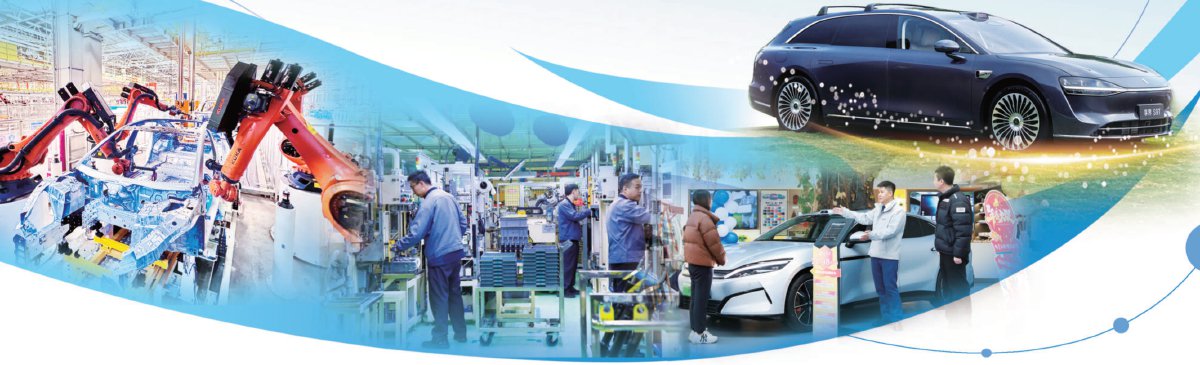
我国首个以发展新质生产力为主题的综保区开关运作
Zhong Guo Xin Wen Wang· 2025-12-16 03:27
Core Viewpoint - The Beijing E-Town Comprehensive Bonded Zone has officially commenced operations, marking it as China's first bonded zone focused on developing new quality productivity [1] Group 1: Operational Highlights - The first batch of bonded goods, consisting of imported valve equipment, was transported using an unmanned vehicle, showcasing the application of autonomous driving technology in the logistics of bonded goods in Beijing [1] - The bonded zone covers an area of 0.61 square kilometers and is strategically located near two airports in Beijing and the Tianjin port, serving the North China region [1] Group 2: Development Focus - The first phase of the bonded zone has established approximately 100,000 square meters of high-standard industrial space, focusing on four leading industries: next-generation information technology, high-end automobiles and new energy smart vehicles, biotechnology and health, and robotics and smart manufacturing [1] - The bonded zone integrates data systems related to autonomous driving and smart city infrastructure, enabling a visualized presentation of the entire logistics process from the port to the bonded zone [1] Group 3: Logistics and Supply Chain - The zone aims to provide seamless connectivity between internal and external logistics, offering enterprises traceable and dynamically adjustable smart logistics services, thereby enhancing supply chain responsiveness and operational resilience [1]
如何做好新能源智能汽车产业?首都侨智发展大会上专家建言
Bei Jing Ri Bao Ke Hu Duan· 2025-11-05 09:21
Core Insights - The 2025 Capital Overseas Intelligence Development Conference focused on the dialogue of the new energy intelligent vehicle industry, emphasizing breakthroughs in core technologies, industrial ecosystem construction, and international cooperation for high-quality development in Beijing's intelligent connected vehicle sector [1][8] Industry Overview - Beijing has established a complete industrial chain in the intelligent connected vehicle sector, from core technology research and development to vehicle manufacturing and application scenarios [3] - The city aims to enhance its policy support system and invites overseas Chinese and enterprises across the supply chain to collaborate for the high-quality development of the automotive industry [3] Technological Advancements - Experts discussed the transition from L2 level intelligent driving assistance to L3 conditional automated driving, highlighting the technical challenges and commercialization keys [3] - The conference featured insights on AI technology's role in reshaping cabin interaction experiences, addressing three core issues: rational definition, standardized design, and maintaining international leadership [4] - A focus on "vehicle-road-cloud integration" technology was presented, showcasing its potential to solve safety and cost challenges in advanced automated driving [4] Collaborative Opportunities - The conference highlighted the synergy between intelligent connected vehicles and embodied robots, with the potential to create a trillion-level new industry [5] - Leading enterprises shared their experiences in optimizing user experience in intelligent driving, large-scale production paths for L3, and innovations across various dimensions such as regulations, AI systems, and safety frameworks [7] Future Directions - The event served as a platform for multi-party exchanges, linking international resources and supporting the breakthrough of technological bottlenecks in Beijing's intelligent connected vehicle industry [8] - Beijing aims to integrate innovation chains, industrial chains, capital chains, and talent chains to build a global leading intelligent connected vehicle industry hub, contributing to the globalization of China's automotive industry [8]
北京推进平原新城建设 顺义90个项目拟融资158亿元
Xin Jing Bao· 2025-10-31 11:03
Core Insights - Beijing Shunyi District is actively seeking 90 high-quality projects in key industrial areas, with a total investment of 93 billion yuan and financing needs of 15.8 billion yuan [1][2] Group 1: Project Overview - The 90 projects cover various sectors including new energy smart vehicles, third-generation semiconductors, healthcare, intelligent manufacturing, and modern services [1] - In the new energy smart vehicle sector, there are 10 projects with a total investment of 13.6 billion yuan and financing needs of approximately 2.6 billion yuan [1] - The aerospace sector includes 2 projects with a total investment of 2.4 billion yuan and financing needs of about 300 million yuan [1] - The third-generation semiconductor sector has 7 projects with a total investment of 4.1 billion yuan and financing needs of around 400 million yuan [1] - The intelligent equipment sector consists of 16 projects with a total investment of 7 billion yuan and financing needs of 1.8 billion yuan [1] - The healthcare sector features 29 projects with a total investment of 17.9 billion yuan and financing needs of 2.5 billion yuan [1] - The modern services sector includes 21 projects with a total investment of 28.8 billion yuan and financing needs of 8 billion yuan [1] - The intelligent manufacturing sector has 5 projects with a total investment of 19.2 billion yuan and financing needs of 200 million yuan [1] Group 2: Economic Context - Shunyi District has a solid economic foundation, with an average GDP growth of 5.8% since the 14th Five-Year Plan, reaching nearly 240 billion yuan last year [2] - The district is characterized by strong industrial features, particularly in high-end manufacturing, where it produces one out of every three cars in Beijing [2] - In the healthcare sector, Shunyi has established the only "Rare Disease Drug Guarantee Pilot Zone" in the country, showcasing its unique industrial advantages [2] - The modern service industry in the district includes over 200 aviation service companies and accounts for more than 50% of the indoor exhibition area in the city [2] Group 3: Strategic Initiatives - Shunyi is positioned as a significant window for international exchanges, with the Capital International Airport ranking among the top globally in passenger traffic [3] - The district hosts over 950 foreign-funded enterprises, including more than 80 multinational companies, and has nearly 10,000 foreign residents [3] - Shunyi has established a Foreigners' Entry and Exit Service Hall to provide efficient services for permanent residency, visas, and tax payments [3] - The district has hosted six HICOOL Global Entrepreneurs Summits, facilitating collaboration among 34,000 projects and 45,000 entrepreneurs from 167 countries and regions [3] - Current focus areas include new energy smart vehicles, aerospace, third-generation semiconductors, intelligent equipment, healthcare, and four modern service sectors: aviation services, business exhibitions, industrial finance, and technology services [3]
“平原新城创投行”走进北京顺义 90个优质项目拟融资158亿元
Zhong Guo Xin Wen Wang· 2025-10-29 11:11
Group 1 - The "Pingyuan New City Venture Capital Event" in Beijing's Shunyi District showcased 90 quality projects with a total investment of 93 billion yuan and a financing demand of 15.8 billion yuan [1] - Key industries highlighted include new energy smart vehicles, third-generation semiconductors, healthcare, intelligent manufacturing, and modern services [1][2] - Specific project details include 10 projects in new energy smart vehicles with a total investment of 13.6 billion yuan and a financing demand of approximately 2.6 billion yuan [1] Group 2 - Shunyi District has a solid economic foundation, with an average GDP growth of 5.8% since the 14th Five-Year Plan, reaching nearly 240 billion yuan last year [2] - The district is a hub for high-end manufacturing, with significant contributions from the new energy smart vehicle industry, where one in three cars produced in Beijing comes from Shunyi [2] - Shunyi has established itself as a unique area for rare disease drug security in the healthcare sector and has a strong presence in the modern service industry with over 200 aviation service companies [2][3] Group 3 - Shunyi's open advantages include being a key international communication window with the Beijing Capital International Airport, which ranks among the top globally for passenger traffic [3] - The district hosts over 950 foreign-funded enterprises, including more than 80 multinational companies, and has established a foreigner service hall for efficient immigration services [3] - The event featured financing promotions from companies such as Beijing Mainline Technology Co., Ltd. and Beijing Anlong Biopharmaceutical Co., Ltd., with a total signing amount of 300 million yuan [3]
90个优质项目面向社会融资158亿元
Bei Jing Qing Nian Bao· 2025-10-28 18:15
Core Insights - The Shunyi District of Beijing is actively seeking to attract investment by promoting 90 high-quality projects across key industries, with a total investment of 93 billion yuan and a financing demand of 15.8 billion yuan [1][2]. Group 1: Project Overview - The 90 projects cover various sectors including new energy smart vehicles, third-generation semiconductors, healthcare, intelligent manufacturing, and modern services [1]. - Specific project details include: - New energy smart vehicles: 10 projects, total investment of 13.6 billion yuan, financing demand of approximately 2.6 billion yuan [2]. - Aerospace: 2 projects, total investment of 2.4 billion yuan, financing demand of approximately 300 million yuan [2]. - Third-generation semiconductors: 7 projects, total investment of 4.1 billion yuan, financing demand of approximately 400 million yuan [2]. - Intelligent equipment: 16 projects, total investment of 7 billion yuan, financing demand of 1.8 billion yuan [2]. - Healthcare: 29 projects, total investment of 17.9 billion yuan, financing demand of 2.5 billion yuan [2]. - Modern services: 21 projects, total investment of 28.8 billion yuan, financing demand of 8 billion yuan [2]. - Intelligent manufacturing: 5 projects, total investment of 19.2 billion yuan, financing demand of 200 million yuan [2]. Group 2: Economic Development - Shunyi District has shown strong economic performance, with an average GDP growth of 5.8% during the 14th Five-Year Plan, reaching nearly 240 billion yuan last year [3]. - The district is focusing on five high-end manufacturing sectors and four modern service sectors to establish itself as a hub for industrial development in the capital [3]. - The new energy smart vehicle industry is particularly significant, with one in three cars produced in Beijing coming from Shunyi [3]. Group 3: Infrastructure and Support - Shunyi District has established a robust infrastructure with over 900 medical institutions and 11 international schools, catering to 40% of the city's student population [4]. - The district is implementing a 100 billion yuan investment guidance fund to support enterprise financing and development [4]. - A high-standard business environment is being created, including tailored services for enterprises and a comprehensive policy support system [4]. Group 4: Future Initiatives - The "Pingyuan New City Venture Capital Event" aims to create an efficient platform for investment and financing, aligning financial resources with the needs of the new city [5]. - Future events will expand to other areas such as Daxing, Fangshan, and Yizhuang, promoting a collaborative mechanism among government, enterprises, and funds [5].
科技成果如何从实验室走向生产线?首都产业一线科技人才现身说法
Xin Jing Bao· 2025-10-21 12:19
Core Insights - The event highlighted the importance of collaboration among enterprises, industry chains, and government policies to drive innovation and overcome technological bottlenecks in key sectors [1][2][4] Group 1: Industry Collaboration - The event featured leaders from various sectors, including integrated circuits, new energy vehicles, and equipment manufacturing, who shared their experiences in translating research outcomes into production [1][2] - The Beijing Integrated Circuit Industry-Education Integration Base serves as a collaborative platform for academia and industry, focusing on technology development, talent cultivation, and achievement transformation [1][2] Group 2: Practical Experiences - Industry leaders shared their journeys in overcoming technical challenges, emphasizing the need for a collaborative ecosystem rather than isolated efforts [2][3] - The development of domestic memory chips was highlighted as a strategic move in the semiconductor industry, showcasing advancements in manufacturing capabilities and equipment performance [2] Group 3: Youth Engagement - The event encouraged students and industry workers to engage in practical learning and to understand the significance of their contributions to national development [4][5] - Young scholars expressed their commitment to contributing to the semiconductor industry, recognizing the importance of aligning personal aspirations with national needs [6]