
防沙治沙

Search documents
新疆今年计划完成“三北”工程任务超千万亩
Xin Lang Cai Jing· 2026-02-13 19:33
Group 1 - The core focus is on consolidating the achievements of the Tarim Desert's edge-locking project, with plans to complete the expansion of 9.38 million acres by 2025 and over 10 million acres for the "Three-North" project by 2026 [1] - Xinjiang is implementing a multi-faceted strategy for desert management, including "South Locking, East Expansion, North Increase, West Protection, and Central Blocking" to combat desertification [1] - The region emphasizes the importance of technology and expert collaboration, having established 234 local ecological construction standards and achieved 283 technological results [1] Group 2 - The initiative involves diverse stakeholders, including state-owned enterprises, private companies, NGOs, and local farmers, to enhance desert management efforts [1] - Specific measures, referred to as the "Nine Sand Measures," have been introduced to strengthen water, land, and electricity guarantees, alongside increased utilization of brackish water [1] - The project aims to create a comprehensive protective network against desertification, integrating efforts across regions and sectors [1][2]
905万亩背后的鄂尔多斯担当:寒冬治沙战犹酣
Zhong Guo Xin Wen Wang· 2026-01-30 07:40
Core Viewpoint - The news highlights the ongoing ecological restoration efforts in Ordos City, Inner Mongolia, focusing on desertification control and sustainable development initiatives, particularly in the Kubuqi Desert and the Mu Us Sandy Land [1][2][3]. Group 1: Ecological Restoration Efforts - Ordos City has made significant progress in ecological restoration, completing 19.05 million acres of the "Three-North" project in 2025, with 8.6 million acres specifically for desertification control [1]. - The governance rates for the Kubuqi Desert and Mu Us Sandy Land have reached 50% and 85%, respectively, showcasing a commitment to ecological improvement [1]. - The city employs a systematic approach to build ecological defenses, including green belts and various engineering projects to combat desertification [2]. Group 2: Technological Innovation - Ordos is leveraging technological innovation as a key support for its ecological initiatives, implementing over 20 major technology projects aimed at advancing intelligent and mechanized desertification control [3]. - The mechanization rate for desertification control has reached 75%, resulting in a 30% reduction in labor costs and a fivefold increase in efficiency [3]. Group 3: Economic Benefits and Community Impact - The city is exploring pathways to convert ecological benefits into economic gains, with local companies employing automated processes to enhance efficiency and reduce costs for local farmers [4]. - By 2025, the area dedicated to the production of feed crops is expected to reach 15 million acres, contributing to a total forestry and grassland output value exceeding 8.5 billion yuan [4]. - Policies promoting local employment and cooperative projects have led to an average income increase of over 30,000 yuan per person for local farmers [4]. Group 4: Community Engagement and Recognition - The efforts in desertification control are supported by a strong community spirit, with local workers and volunteers actively participating in restoration projects [5]. - Recognition has been given to individuals and groups for their contributions to ecological restoration, reinforcing the commitment to sustainable practices and community involvement [5].

提升本地化要素保障能力
Xin Lang Cai Jing· 2026-01-06 22:38
Group 1 - The core viewpoint emphasizes the importance of ecological protection through sand control and afforestation in Qinghai Province, which faces significant challenges due to its vast and scattered desertified land [1] - The region has made notable progress in large-scale engineering sand control, but sustainable development requires enhanced support systems for seedling supply and technological backing [1] - There is a need to establish local breeding bases for drought-resistant and salt-tolerant plants, particularly in key areas like the Qaidam Basin and Gonghe Basin, to improve the resilience of local ecosystems [1] Group 2 - The article highlights the challenges in sourcing sand-fixing materials, primarily relying on straw, which has seen price increases, thus raising the costs of sand control projects [2] - It suggests the establishment of cross-regional seedling supply bases to facilitate the flow of production factors and support the sand control efforts [2] - The need for local specialized teams is emphasized, as the short construction period and challenging terrain hinder progress; training local farmers in simple machinery operation and planting techniques is recommended [2] - The long-term nature of sand control projects is acknowledged, with a call to extend the sand industry chain and enhance community participation for sustainable and high-quality development [2]
新疆持续推进塔克拉玛干沙漠边缘阻击战调查
Jing Ji Ri Bao· 2026-01-06 07:38
Core Viewpoint - China is making significant progress in combating desertification, achieving a zero growth target for land degradation during the 14th Five-Year Plan period, and is the largest contributor to global greening efforts [1] Group 1: Achievements in Desertification Control - Xinjiang has implemented a green ecological barrier around the Taklamakan Desert, marking it as the world's longest desert green barrier [2] - The Taklamakan Desert edge battle has achieved a milestone with the completion of a 3,046 km green barrier, effectively encircling the desert [2] - By 2025, Xinjiang aims to complete 13.76 million acres of the "Three-North" project, with 9.38 million acres of expansion along the desert edge [3] Group 2: Sustainable Development Strategies - The focus is on sustainable development through a dual approach of increasing income and greening, with ongoing efforts to expand the green protective belt [3][4] - The strategy includes defining key battlefields around the desert edge, targeting areas vulnerable to wind and sand hazards [3] - Local governments are encouraged to adopt tailored approaches for sand control, integrating ecological and economic benefits [10][12] Group 3: Economic Integration and Industry Development - The development of a sand industry is crucial for sustainable desertification control, with initiatives to enhance the economic value of desert resources [14][18] - The integration of ecological construction with industry development is evident in regions like Aksu, where local economies are benefiting from the cultivation of fruit trees and eco-tourism [16] - The promotion of unique desert industries, such as black goji berry production, is contributing to local economic growth and ecological sustainability [14][16]

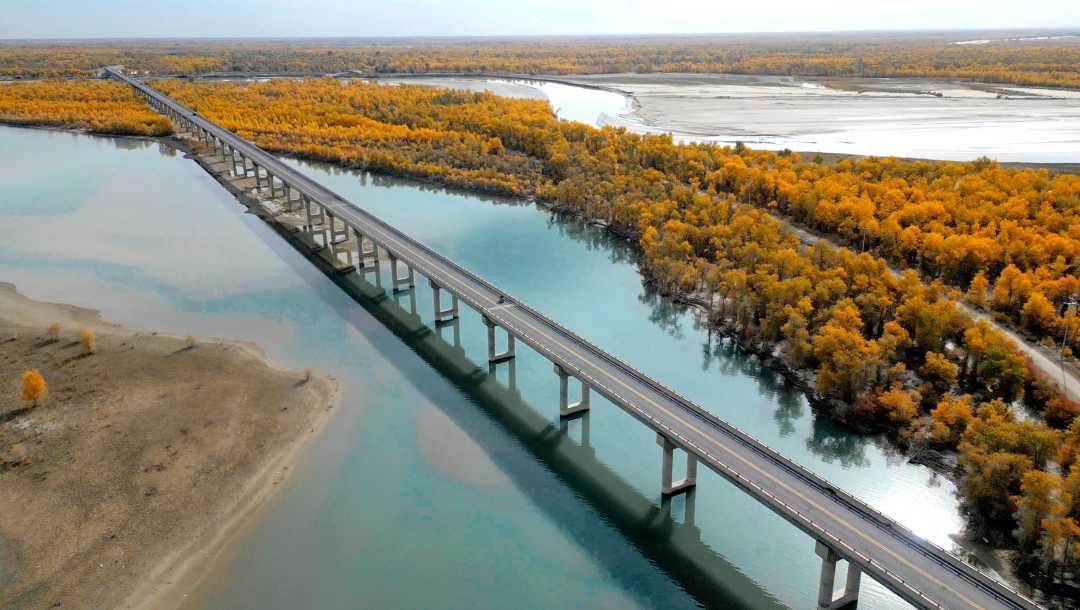
沙漠“绿围脖”越织越厚
Xin Lang Cai Jing· 2026-01-04 22:08
Core Viewpoint - China is making significant progress in combating desertification, achieving a zero growth target for land degradation during the 14th Five-Year Plan period, and is the largest contributor to global greening efforts [1] Group 1: Achievements in Desertification Control - The Taklamakan Desert has been encircled by a green ecological barrier, the longest of its kind in the world, marking a significant achievement in desertification control [2] - The green barrier around the Taklamakan Desert has a total length of 3,046 kilometers, with the completion of the last planting area in November 2024 [2] - By 2025, Xinjiang aims to complete 13.76 million acres of the "Three-North" project, with 9.38 million acres of expansion along the desert's edge [2][3] Group 2: Strategies for Sustainable Development - The focus for 2025 includes delineating key battlefields around the Taklamakan Desert, targeting areas vulnerable to wind and sand damage [3] - The approach combines engineering, biological methods, and economic development to ensure sustainable sand control and greening efforts [4][11] - Local governments are encouraged to adopt tailored strategies based on specific environmental conditions, such as using photovoltaic technology for sand control in water-scarce areas [6][9] Group 3: Economic Integration and Community Involvement - The integration of ecological restoration with economic development is emphasized, with local communities benefiting from sustainable practices [11][13] - The development of specialty industries, such as black goji berry production, is being promoted to enhance both ecological and economic outcomes [11] - Community engagement in sand control projects is crucial, with models that allow local farmers to benefit directly from their involvement in greening efforts [7][8]
绘就绿色发展画卷 守护北疆绿水青山
Nei Meng Gu Ri Bao· 2025-11-18 01:37
Core Insights - Inner Mongolia has made significant progress in ecological restoration and desertification control, implementing a series of projects that have resulted in a "green wall" of 1,856 kilometers to effectively halt desert expansion [1][2][3] - The region is entering a "fast track" mode for sand prevention and control, with a target of treating an average of 60,000 acres per day in 2024 [2][3] - The implementation of a "paid vacation" system for grasslands has led to improved ecological conditions and financial benefits for local herders [4][5] Ecological Restoration Efforts - Inner Mongolia has invested over 100 billion yuan in ecological protection and restoration since the 14th Five-Year Plan, completing ecological construction tasks covering 11 million acres, with over 6.5 million acres focused on desertification control [3][6] - The establishment of a million-acre saxaul and Cistanche industry base has transformed previously barren land into a green protective barrier, producing approximately 300 tons of fresh Cistanche annually [3] Grassland Management - The region has implemented a multi-faceted compensation mechanism for grassland ecological protection, linking ecological outcomes to subsidy distribution [4][5] - By 2025, 970 million acres of grassland will be under a "paid vacation" system, with 380 million acres designated as no-grazing areas for five years [5] Water Resource Management - Inner Mongolia has enhanced its water security capabilities, with significant improvements in water-saving irrigation techniques, reducing water usage by 30-35% compared to traditional methods [6][7] - The total water supply capacity in the region has reached 23.86 billion cubic meters, effectively meeting the water needs for urban, industrial, and agricultural development [7] - Water and soil loss has decreased significantly, with a reduction of 16,200 square kilometers in erosion areas, indicating a positive trend in ecological restoration [7]
(乡村行·看振兴)内蒙古东部边疆地区描摹幸福底色
Zhong Guo Xin Wen Wang· 2025-11-13 10:57
Group 1 - The article highlights the successful transformation of barren land into productive areas in Inner Mongolia's Xiang'an League through various initiatives, including labor-based compensation and ecological restoration projects [2][4]. - The "Xiang'an League model" employs methods such as "work for relief" to engage local farmers in sand control efforts, resulting in increased income and job opportunities [2][4]. - In 2023, the economic forestry projects created 1,978 job positions, with an average income increase of over 2,000 yuan per person [2]. Group 2 - The article discusses the establishment of community engagement platforms like "bench meetings" to enhance grassroots governance and problem-solving in local communities [6]. - These platforms have been implemented in 851 villages, facilitating 1,716 discussions and resolving 1,319 issues, thereby increasing community participation in decision-making [6]. - The healthcare system in the region has improved significantly, with the introduction of a medical community model that reduces patient burdens and enhances access to healthcare services [8]. Group 3 - The article emphasizes the integration of medical, insurance, and pharmaceutical services, benefiting 315,000 residents in the region [8]. - By 2025, the total medical insurance fund for county-level medical communities is projected to reach 8.97 billion yuan for employee insurance and 9.57 billion yuan for resident insurance [8]. - Educational collaborations have been established with 160 local schools and 98 prestigious institutions from Beijing, enhancing educational opportunities for local students [8].
【榆林】治沙绿化的新答卷
Shan Xi Ri Bao· 2025-10-28 22:37
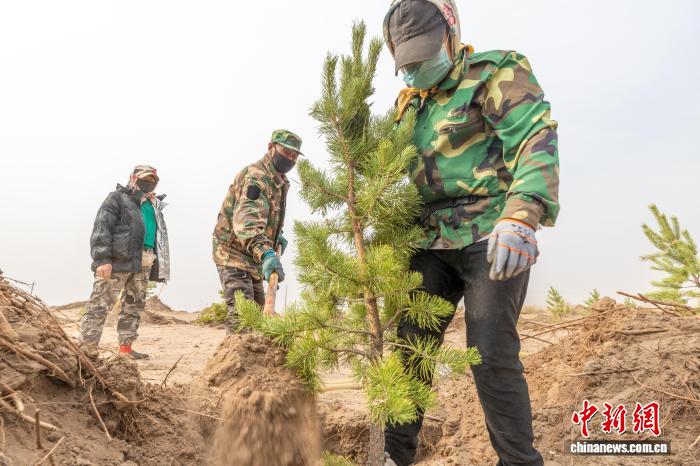
Core Viewpoint - The article highlights the significant progress made in desertification control and afforestation in Yulin, Shaanxi Province, showcasing various ecological restoration projects and innovative techniques that have transformed the region's landscape and improved environmental conditions [2][4][9]. Group 1: Desertification Control and Afforestation Efforts - Yulin has completed desertification control over 7000 acres in Yuyang District and 9800 acres in Shenmu City, with a total of 18.304 million acres of desertified land, accounting for 99.76% of Shaanxi's desertified land [2]. - Since the 18th National Congress, Yulin has implemented several ecological construction projects, including the "Three-Year Greening Action" and "Five-Year Forestry Construction Enhancement" [2][4]. - The city has achieved a forest coverage rate increase from 0.9% at the founding of New China to 36% currently, with a total forest area of 23.6 million acres [3][4]. Group 2: Technological Innovations in Ecological Restoration - Yulin has introduced various innovative techniques for desertification control, such as "narrow forest belts and large grids" for farmland protection and integrated technologies for ecological restoration [2][3]. - The city has constructed 22,000 sediment retention dams, intercepting 3.81 billion cubic meters of sediment, leading to a water and soil conservation rate of 58.8% [4]. Group 3: Economic and Social Benefits - The transformation of 1.5 million acres of farmland into stable, high-yield agricultural land has been achieved through the establishment of protective forest networks [5]. - The economic value of forestry has reached 12.25 billion yuan, with the development of green industries such as forest tourism and carbon sink forests contributing to local economic growth [5][9]. Group 4: Future Goals and Initiatives - Yulin aims to complete the desertification control tasks for moving sand areas within the year, as outlined in the provincial forestry work meeting [5]. - The city is focusing on comprehensive ecological governance across five major ecological spaces, implementing various tasks to enhance green coverage and ecological restoration [8][9].
防沙治沙还需用好沙
Jing Ji Ri Bao· 2025-10-27 00:04
Core Insights - Inner Mongolia's Alxa League has achieved a milestone in desertification control, with a cumulative treatment area exceeding 10 million acres, establishing a green defense line to improve the ecological environment in northern China and promote green development [1] - The region is responsible for 60% of the national desertification control tasks, emphasizing the importance of a sustained effort in combating desertification [1] - The focus of desertification control has shifted from merely stopping desert expansion to enhancing green coverage and solidifying the results of previous efforts [1] Group 1 - The implementation of "locking edge" projects has been recognized as an effective measure to prevent desert expansion, utilizing methods such as grass grids, biological sand fixation, and photovoltaic sand control [1] - There is still room for improvement in the scale, width, and quality of these locking edge projects, with future efforts aimed at expanding green areas [1] - Technological advancements are crucial for desertification control, with a need to address key technical bottlenecks and integrate technology with engineering solutions [2] Group 2 - The development of the sand industry is emerging as a new economic growth point, with desert tourism being a significant direction for utilizing desert resources [2] - The Badain Jaran Desert in Inner Mongolia was included in the World Heritage List, highlighting the potential for eco-tourism and sustainable development [2] - A principle of "suitable vegetation" is emphasized for desert management, advocating for a diversified investment mechanism and encouraging participation from various stakeholders in desertification control efforts [3]
内蒙古阿拉善防沙治沙突破1亿亩
Ren Min Ri Bao· 2025-10-21 20:54
Core Viewpoint - Inner Mongolia Alxa League has launched its autumn afforestation work, aiming to complete the task of planting 560,000 acres by the end of December 2025, highlighting the region's commitment to combating desertification and improving ecological conditions [1] Group 1: Afforestation Efforts - The afforestation initiative is part of a broader strategy that has seen over 10 million acres treated since the implementation of the "Three-North" project in 1978 [1] - The region's ecological efforts focus on using drought-resistant native species such as Haloxylon ammodendron, Caragana korshinskii, and Ziziphus jujuba, promoting a near-natural afforestation model [1] Group 2: Ecological Conditions - Alxa League is located in the westernmost part of Inner Mongolia, covering an area of 270,000 square kilometers, with an average annual precipitation of less than 200 millimeters and evaporation exceeding 3,000 millimeters [1] - The area is home to three major deserts: Badain Jaran, Tengger, and Ulan Buh, which together cover 94,700 square kilometers, accounting for 35.07% of Alxa League's land area and 83.04% of Inner Mongolia's total desert area [1] Group 3: Results of Efforts - The region has seen a dual increase in grassland vegetation coverage and forest coverage, alongside a dual decrease in desertified and sandy land areas, indicating the effectiveness of the ongoing ecological restoration efforts [1]